

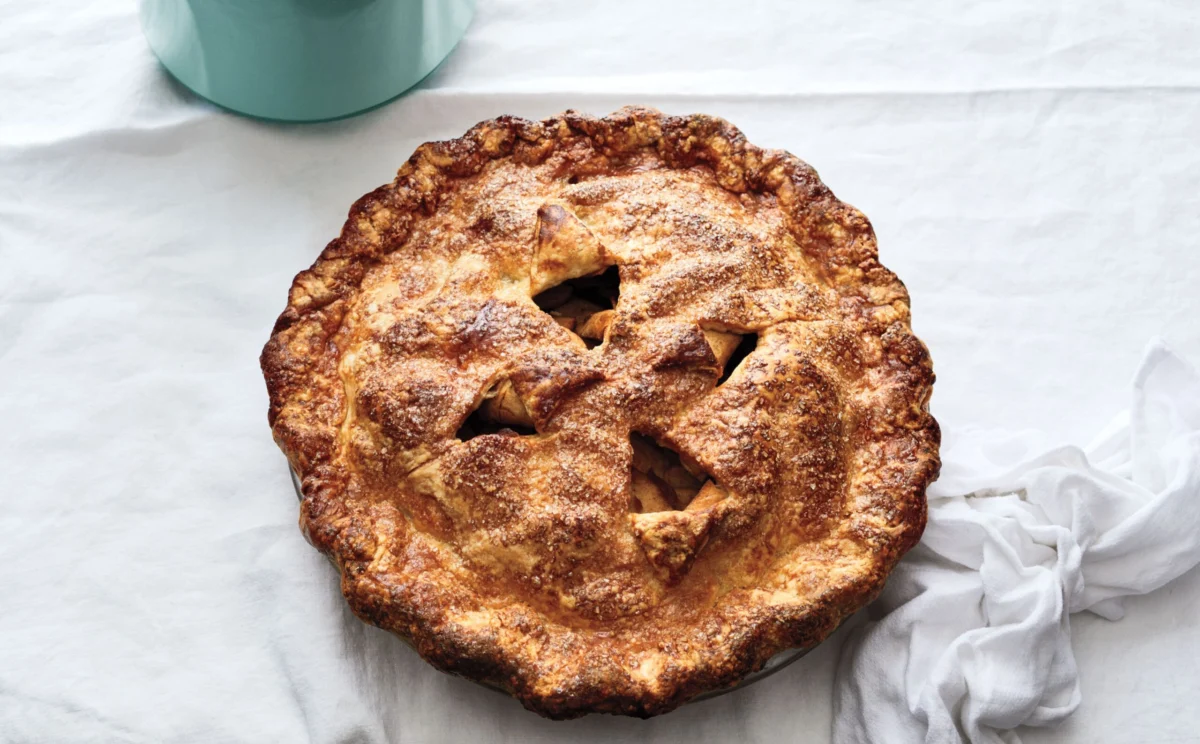
The enduring appeal of a meticulously crafted dessert is a testament to culinary excellence, and few recipes exemplify this better than cookbook author Claire Saffitz’s deep-dish apple pie. First published in 2016, this recipe has transcended seasonal trends to become a perennial favorite among home bakers and culinary professionals alike, consistently ranking as a top-tier choice for holiday tables, particularly Thanksgiving. Saffitz herself has famously characterized the process as "something you can’t rush," underscoring the intrinsic value of patience in achieving a superior outcome. This philosophy, coupled with an innovative approach to flavor concentration and ingredient selection, has cemented the pie’s status as a culinary benchmark over the past decade.
The Genesis and Enduring Popularity of a Culinary Icon
The recipe’s journey began in 2016 within the pages of Bon Appétit, a period when Claire Saffitz was already a rising star in the culinary world, known for her precise techniques and approachable yet sophisticated recipes. At its core, the deep-dish apple pie presented a challenge and a reward: a dessert that demanded significant time for preparation, baking, and resting, yet promised an unparalleled sensory experience. Its immediate success was not merely a fleeting trend but the start of a sustained run of popularity that has seen it revisited and revered year after year. Editors at Bon Appétit frequently cite this recipe as one of their most consistently viewed and highly rated, a testament to its reliability and the satisfaction it brings to those who undertake its creation. Its decade-long tenure at the pinnacle of reader preferences highlights a broader appreciation for classic, well-executed dishes in an increasingly fast-paced culinary landscape. The meticulous instructions and the promise of a truly exceptional result resonated deeply with a segment of the home baking community eager to elevate their skills and produce memorable dishes for special occasions.
The Art of Patience: Unpacking the "No Rush" Philosophy
Saffitz’s assertion that this pie "can’t be rushed" is not merely a suggestion but a fundamental principle embedded in the recipe’s success. The process involves several critical stages where time is an indispensable ingredient. Initially, the pie dough requires adequate chilling to allow the gluten to relax and the fats to firm up, preventing shrinkage and ensuring a flaky, tender crust. Skipping this step often results in tough dough that is difficult to work with and prone to shrinking excessively during baking. Following assembly, the extended baking time of 1.5 to 2 hours at 375°F is crucial for both the crust to achieve a deep golden-brown hue and, more importantly, for the apple filling to fully soften, release its juices, and meld its flavors. This prolonged exposure to heat ensures that the pectin in the apples breaks down sufficiently, transforming firm slices into a tender, yielding filling that is neither mushy nor undercooked. Finally, the often-overlooked resting period post-baking is vital. Allowing the pie to cool completely, often for several hours or even overnight, permits the filling to set properly, preventing it from collapsing into a watery mess upon slicing. This patient approach contrasts sharply with many contemporary recipes designed for speed, reinforcing the idea that some culinary masterpieces are born from deliberate, unhurried execution.
The Concentrated Essence: A Deep Dive into Flavor Development
The pie’s distinctively glossy, warmly spiced filling is a hallmark of its sophisticated flavor profile, a characteristic achieved through an ingenious method of flavor concentration. Unlike many apple pie recipes that rely solely on raw fruit and spices, Saffitz’s approach begins with simmering fresh apple cider. This reduction process intensifies the natural apple flavor, creating a viscous, potent syrup that forms the backbone of the filling. The addition of a fragrant vanilla bean during this simmering phase infuses the cider with deep, aromatic notes that elevate the overall complexity. The vanilla bean’s compounds, primarily vanillin, are fat-soluble and alcohol-soluble, but a gentle simmer in a water-based solution like cider effectively extracts their delicate fragrance, imbuing the syrup with a profound warmth. For those without a vanilla bean, the recipe thoughtfully provides an alternative: stirring in one tablespoon of vanilla extract after the reduced cider mixture is removed from the heat, ensuring the delicate vanilla compounds are not lost to evaporation.
Simultaneously, sliced apples are tossed with sugar and spices, allowing them to macerate and release their natural juices through osmosis. These juices, rich in pectin and natural apple flavor, are then incorporated into the simmering cider mixture, further enriching the syrup with fresh apple essence. This multi-layered approach to flavor development — reducing cider, infusing with vanilla, and capturing the apples’ own released liquids — creates an intensely apple-y syrup. This potent concentrate is then tossed with the sliced fruit just before the pie’s assembly, ensuring every piece of apple is coated in a rich, flavorful glaze that will bake down into a perfectly balanced and deeply satisfying filling. The technique effectively pre-concentrates the flavor and moisture, addressing common issues like watery fillings or lack of depth often found in less rigorously developed recipes.
The Apple Advantage: Selecting Varieties for Optimal Texture and Taste
The choice of apples is paramount to the success of this deep-dish pie, a detail Saffitz and Bon Appétit have consistently emphasized. Pink Lady apples are cited as the primary recommendation, lauded for their firm texture and bright, sweet-tart flavor profile. These characteristics make Pink Ladies exceptional for baking, as they maintain their structural integrity without turning to mush, while their inherent acidity perfectly balances the sweetness of the filling. Pink Lady apples, a cross between Lady Williams and Golden Delicious, originated in Australia in the 1970s and have gained significant global popularity for their distinctive blush and balanced taste.
However, recognizing the variability in apple availability, the recipe also offers excellent alternatives. Honeycrisp, known for its explosive crispness and balanced sweet-tart taste, performs admirably in pies, though its high water content can sometimes require a slightly longer bake. Braeburn apples offer a similar firm texture and a distinctively tangy flavor, providing a robust counterpoint to sweeter elements. Jonagold apples, a cross between Jonathan and Golden Delicious, provide a honeyed sweetness with a hint of tartness and a good baking consistency, often praised for their aromatic qualities. Granny Smith, a classic choice for pies, is celebrated for its assertive tartness and firm flesh, which holds up exceptionally well under heat and prevents the pie from becoming overly sweet.
A key recommendation for achieving unparalleled complexity in apple pie is to utilize a mix of apple varieties. Combining two or more types, such as a tart Granny Smith with a sweeter Honeycrisp or an aromatic Pink Lady, introduces layers of flavor and texture that a single variety cannot achieve. This blend ensures a filling that is both sweet and tart, firm and tender, creating a more dynamic eating experience. This advice aligns with general culinary wisdom for fruit pies, where textural and flavor diversity prevents monotony. According to data from the U.S. Apple Association, popular baking apples like Honeycrisp and Granny Smith consistently rank among the top varieties consumed, indicating their widespread availability and suitability for such applications, particularly during the autumn harvest and holiday seasons.
Addressing Common Baking Inquiries: A Troubleshooting Guide
The recipe’s widespread adoption has naturally led to a set of recurring questions from home bakers, which Bon Appétit and Saffitz have systematically addressed, providing valuable insights that extend beyond this specific recipe.
Cider vs. Apple Cider Vinegar: A common point of confusion revolves around the use of apple cider. The recipe specifically calls for fresh, unfiltered apple cider—the kind typically consumed as a beverage. This is distinct from apple cider vinegar, an acetic acid product primarily used for its sharp tang in dressings or as a tenderizer in dough (where it is used in the pie dough for its tenderizing properties, but not the filling). Substituting vinegar for fresh cider in the filling would result in an overwhelmingly sour and unpalatable pie, drastically altering the intended flavor profile. This distinction is crucial for maintaining the sweet, concentrated apple essence of the filling.
To Peel or Not to Peel: The decision to peel apples is largely a matter of personal preference and aesthetic. Peeling the apples does contribute to a more uniform, smooth filling texture, which some bakers prefer. However, leaving the skins on will not "make or break" the pie. Cooked apple skins soften considerably during the long baking process and contribute additional fiber and nutrients, including antioxidants. If the slight textural difference of cooked skins is not a concern, skipping this step can save considerable preparation time without compromising the pie’s fundamental integrity or flavor. Historically, peeling was more common to ensure a refined texture, but modern culinary trends often embrace the rustic charm and nutritional benefits of unpeeled fruit.
Minimizing the Gap: A frequent frustration for pie bakers is the appearance of a gap between the baked filling and the top crust. This phenomenon occurs because, as apples cook, they soften and release moisture, causing them to shrink in volume. While some shrinkage is inevitable, it can be minimized by cutting the apples into thin, uniform slices rather than thicker wedges. More importantly, packing the apple slices evenly and snugly into the bottom crust before adding the top crust is key. This dense arrangement allows for less room for the apples to settle, reducing the void that forms during baking. Some bakers also slightly mound the apples in the center to account for this natural settling.
Indicators of Doneness: Determining when an apple pie is perfectly done requires more than just observing the crust. While a deeply golden-brown top crust is a good visual cue, the true indicator lies in the filling. The pie’s juices should be visibly thick and bubbling vigorously, particularly in the center. This vigorous bubbling signifies that the filling has reached a high enough temperature (typically above 200°F) for the starches and sugars to properly thicken and caramelize, ensuring the apples are tender and the sauce is set. For this particular deep-dish recipe, the recommended bake time of 1.5 to 2 hours at 375°F is a guideline; if the crust begins to darken too quickly before the filling appears ready, loosely tenting the pie with aluminum foil can prevent burning while allowing the interior to continue cooking. An internal temperature probe, inserted into the center of the filling (avoiding apples themselves, aiming for the liquid), should ideally read around 200-205°F for optimal consistency.
Store-Bought vs. Homemade Crust: While convenience is often a factor, using store-bought pie dough for this deep-dish recipe presents specific challenges. Most commercially available pie crusts are designed for standard pie dishes, not the larger dimensions of a deep-dish pan, potentially leading to insufficient coverage and difficulty in forming decorative edges. Furthermore, store-bought doughs often have different fat content and formulations compared to homemade versions, which can cause them to brown more rapidly and sometimes possess a less desirable flavor or texture. Given the extended bake time of Saffitz’s pie, a store-bought crust might become excessively dark or even burn before the filling is fully cooked. If using store-bought dough, vigilant monitoring and strategic tenting with foil are even more critical to prevent over-browning. Homemade dough, while requiring more effort, offers superior flavor, texture, and control over browning, making it the preferred choice for this demanding recipe.
Expert Insights and Broader Culinary Impact
Claire Saffitz’s deep-dish apple pie transcends being merely a recipe; it embodies a culinary philosophy. Saffitz, through her extensive work and public presence, has consistently advocated for a return to foundational baking principles, emphasizing precision, quality ingredients, and the value of time. This approach has resonated with a generation of home bakers, many of whom were introduced to her meticulous style through her popular online video series. Her work, including this pie recipe, has contributed to a broader movement valuing authentic, well-researched cooking over quick fixes.
Editors at Bon Appétit and other culinary publications frequently highlight the pie as an exemplary instance of a classic dish perfected. "It’s more than just a recipe; it’s a lesson in baking," an editor at Bon Appétit might infer, reflecting the sentiment, "It teaches patience, the science of flavor, and the reward of dedication. That’s why it’s remained a staff and reader favorite for so long." The recipe’s continued prominence, especially during peak holiday baking seasons like Thanksgiving, underscores its cultural significance. For many families, preparing a labor-of-love dessert like this apple pie becomes a cherished tradition, a focal point of the holiday meal, symbolizing warmth, generosity, and the comforts of home. It represents an investment of time and care, qualities often associated with celebratory feasts.
The implications extend to the broader food industry as well. The consistent demand for specific apple varieties, vanilla beans, and high-quality apple cider around Thanksgiving can be observed in retail trends, influencing procurement and marketing strategies for grocery stores and specialty food suppliers. This recipe contributes to maintaining interest in traditional baking methods and ingredients, potentially influencing consumer purchasing habits and supporting producers of these core components. In an era of ever-evolving food trends, the steadfast popularity of Saffitz’s apple pie serves as a powerful reminder of the timeless appeal of a classic, executed with thoughtful precision and a deep understanding of culinary craft. It is not just a dessert but a celebration of the baking process itself, inviting individuals to slow down, engage with their ingredients, and create something truly exceptional. Its legacy, already spanning a decade, suggests it will remain a beloved staple for many more years to come.
