

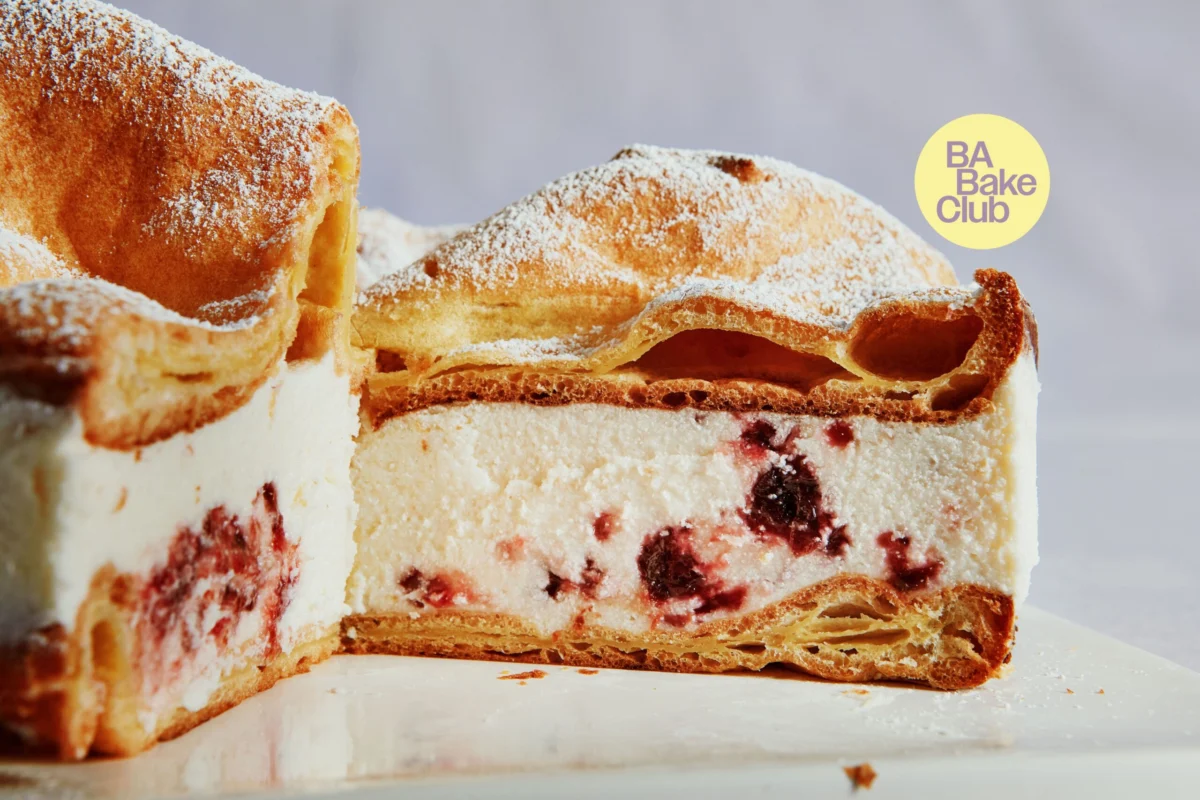
The Bon Appétit Bake Club, a dynamic digital community fostering culinary curiosity among home bakers, has recently captivated its members with a reimagined version of Karpatka, the iconic Polish "Carpathian Mountain cake." Under the expert guidance of senior test kitchen editors Jesse Szewczyk and Shilpa Uskokovic, the club provides a platform for enthusiasts to delve into sophisticated baking techniques and innovative recipes, offering a blend of instruction, interaction, and inspiration. This month’s featured Karpatka recipe exemplifies the club’s mission, transforming a traditional European classic with a modern, no-bake cheesecake twist that underscores both culinary heritage and contemporary appeal.
The Genesis and Evolution of the Bon Appétit Bake Club
Launched as a strategic initiative by Bon Appétit, a venerable name in American food media, the Bake Club represents a significant pivot towards community-driven content and interactive learning. Bon Appétit, with a history spanning over six decades, has consistently been a leading voice in culinary trends, known for its high-quality recipes, sophisticated photography, and engaging narratives. However, in an increasingly digital landscape, the publication recognized the imperative to foster deeper engagement beyond traditional print and web articles. The Bake Club emerged as a direct response to this need, creating a dedicated space where bakers could not only access curated recipes but also connect, share experiences, and learn directly from industry experts.
The club operates on a monthly cycle, with Szewczyk and Uskokovic, both seasoned professionals with extensive experience in recipe development and testing, selecting a "must-make" recipe. This selection process is meticulous, aiming to strike a balance between accessibility for home bakers and the opportunity for skill enhancement. Each recipe is accompanied by a deep dive into its mechanics, explaining the "why" behind specific ingredients and techniques, thereby transforming mere instruction into genuine culinary education. The interactive components are robust, including dedicated Q&A sessions, platforms for members to share photographs of their creations, an accompanying podcast offering further insights, and a vibrant group chat hosted on Substack. This multi-platform approach leverages the strengths of various digital tools to create a comprehensive and immersive learning environment.
Jesse Szewczyk and Shilpa Uskokovic: Guiding the Culinary Journey
At the heart of the Bon Appétit Bake Club are its two principal architects, Jesse Szewczyk and Shilpa Uskokovic. Szewczyk, renowned for his expertise in baking and pastry, often brings a creative and approachable perspective to complex techniques. His background in developing recipes that are both innovative and achievable for the home cook makes him an ideal guide for the club. Uskokovic, with her keen understanding of flavors and textures, complements Szewczyk’s approach by focusing on the nuances that elevate a good recipe to an exceptional one. Their combined experience in the Bon Appétit test kitchen ensures that every recipe shared with the club is meticulously tested, refined, and presented with clear, actionable advice. Their editorial leadership is crucial in maintaining the club’s professional journalistic tone while fostering an inclusive and supportive community.
The decision to feature Karpatka this month reflects the editors’ commitment to exploring diverse global culinary traditions and presenting them with a contemporary twist. This approach not only broadens the culinary horizons of the club members but also demonstrates how classic recipes can be adapted to suit modern tastes and lifestyles, without sacrificing their inherent charm or integrity.
Karpatka: A Polish Culinary Icon and Bon Appétit’s Creative Adaptation
Karpatka, often referred to as the Carpathian Mountain cake, is a dessert deeply embedded in Polish culinary heritage. Its name evokes the majestic Carpathian Mountains, likely due to its characteristic undulating choux pastry crusts, which mimic mountainous terrain. Traditionally, Karpatka is a grand cake comprising two distinct disks of tender, billowing pâte à choux, which serve as the housing for a rich, creamy filling. The classic filling is a delicate pastry cream, meticulously prepared and often lightened with whipped cream to achieve a luxurious, airy texture. This combination of crisp choux and velvety cream creates a harmonious contrast that has made Karpatka a beloved fixture at Polish celebrations and family gatherings for generations.
The pâte à choux itself is a fundamental French pastry dough, distinguished by its unique preparation method. Unlike other doughs, choux pastry is cooked twice: first on the stovetop to form a thick paste, and then baked, where its high moisture content creates steam, causing the pastry to puff up and form hollow interiors. This technique, though seemingly complex, yields an incredibly versatile product used in éclairs, profiteroles, and, in this case, the structural components of Karpatka. The delicate balance of flour, water, butter, and eggs is crucial for achieving the desired light, airy, and slightly chewy texture.
Bon Appétit’s rendition, however, introduces a compelling departure from tradition. While retaining the iconic pâte à choux exterior, the senior test kitchen editors opted to replace the classic pastry cream with a no-bake cheesecake filling. This choice is a testament to contemporary culinary trends that favor lighter, often less labor-intensive desserts, without compromising on flavor or presentation. The no-bake cheesecake offers a delightful tang and a smooth, creamy texture that contrasts beautifully with the delicate choux pastry.
Further elevating this adaptation is the inclusion of a homemade plum compote. Plums hold a significant place in Eastern European cuisine, often utilized in desserts, preserves, and savory dishes due to their natural sweetness and tartness. The compote, stained a vibrant red, is ribboned through the cheesecake filling, adding not only a burst of fruity flavor but also a striking visual element. The recipe thoughtfully addresses the common challenge of sourcing perfectly ripe plums, reassuring bakers that even less-than-ideal unripe plums will soften during cooking, their skins transforming the compote into a rich, saturated red hue. The addition of sugar and lemon juice during cooking is crucial; sugar enhances the plums’ natural sweetness and helps thicken the compote, while lemon juice brightens the overall flavor profile, balancing the richness of the cheesecake. The compote’s make-ahead flexibility, allowing for refrigeration for several days, provides a practical advantage for busy home bakers. For those seeking an even more casual approach, the option to substitute with store-bought jam further democratizes the recipe, making it accessible regardless of time constraints or ingredient availability.
A single packet of gelatin is ingeniously incorporated into the no-bake cheesecake filling. Gelatin, a protein derived from collagen, acts as a gelling agent, providing the necessary structure for the filling to be sliceable while maintaining a desirable soft, yielding texture that "submits to a spoon." This critical ingredient ensures the cake holds its dramatic form, making it a showstopper at any gathering, a testament to its visual appeal and inherent theatricality.
The Broader Implications: Food Media, Community, and Culinary Education
The Bon Appétit Bake Club, and its thoughtful approach to recipes like Karpatka, has significant implications for the landscape of food media and home baking.
The Digital Transformation of Culinary Content: The club exemplifies the ongoing evolution of food publications from static content providers to interactive, community-centric platforms. By integrating elements like podcasts, live Q&A sessions, and dedicated chat groups, Bon Appétit is not just publishing recipes; it is cultivating a dynamic ecosystem for learning and engagement. This model positions publishers as facilitators of communal learning, responding to a growing desire among consumers for authentic interaction and expert guidance.
The Rise of Interactive Learning Platforms: The partnership with Substack for the group chat highlights a broader trend in the creator economy. Platforms like Substack enable direct engagement between content creators (in this case, Bon Appétit’s editors) and their audience, fostering a sense of exclusivity and direct communication. This model allows for more nuanced discussions, troubleshooting, and real-time feedback, which are invaluable for complex subjects like baking.
Impact on Home Bakers: For the individual home baker, the Bake Club offers a structured pathway to skill development. The "deep dive" approach to recipes, explaining the scientific and artistic principles, empowers members to understand why certain techniques work, rather than simply following instructions. This deeper understanding fosters confidence, encourages experimentation, and ultimately expands their culinary repertoire. The community aspect provides a supportive network, reducing the isolation often associated with individual cooking endeavors and transforming it into a shared, enjoyable experience.
Preserving and Adapting Culinary Heritage: The Karpatka adaptation serves as a prime example of how culinary traditions can be honored while simultaneously being innovated upon. By retaining the iconic choux pastry and acknowledging its Polish roots, the recipe pays homage to its origins. However, the modern twist with a no-bake cheesecake and plum compote makes it appealing to a broader contemporary audience, potentially introducing a classic European dessert to those who might not have encountered it otherwise. This balancing act ensures that culinary heritage remains relevant and continues to evolve, rather than being confined to historical archives.
Conclusion
The Bon Appétit Bake Club, under the seasoned direction of Jesse Szewczyk and Shilpa Uskokovic, represents a forward-thinking model for culinary engagement in the digital age. Its commitment to detailed instruction, community interaction, and innovative recipe adaptation, as perfectly demonstrated by the reimagined Karpatka, not only enriches the home baking experience but also sets a new standard for how food media can connect with and educate its audience. By making complex techniques approachable and global flavors accessible, the club reinforces Bon Appétit’s enduring legacy while charting an exciting course for the future of culinary exploration. The "dramatic cake" is more than just a dessert; it is a symbol of a thriving, learning-oriented community pushing the boundaries of what home baking can achieve.
