

The classification of London Dry Gin remains one of the most misunderstood designations in the global beverage industry, frequently confused by consumers as a reference to either geographic origin or a specific flavor profile. In reality, the term represents a rigorous set of production standards and quality control measures codified by international law. Following a comprehensive feedback period involving consumers and industry stakeholders in 2019, the European Union implemented Regulation 2019/787, later amended by Regulation 2021/1465, to clarify these definitions. While the United Kingdom’s departure from the European Union resulted in the retention of the 2019 version of the act, the core technical requirements for what constitutes a "London Gin" remain consistent across these jurisdictions. Far from being a relic of the past, these regulations serve as a modern guarantee of purity, ensuring that any spirit bearing the name meets exacting chemical and procedural benchmarks.
Historical Context: From the Gin Craze to Technical Refinement
To understand the necessity of the London Dry Gin designation, one must look to the volatile history of gin production in the 18th and 19th centuries. During the infamous "Gin Craze" in London, spirits were often produced using substandard grains and hazardous additives. Distillers frequently utilized turpentine, sulfuric acid, and heavy sweetening agents to mask the harsh, often toxic, flavors of poorly distilled alcohol. The lack of regulation led to significant public health crises, prompting the British government to intervene through various Gin Acts, most notably in 1751.
The turning point for the industry arrived with the 1830 invention of the continuous column still by Aeneas Coffey. Unlike the traditional pot still, which produced lower-proof spirits with significant impurities, the column still allowed for the production of highly rectified spirits. A wine or mash in a pot still might only reach 50% alcohol by volume (ABV) in a single pass, but the column still could push the spirit to 96% ABV—the theoretical limit of distillation, known as the azeotropic point. This breakthrough allowed for the creation of a "clean" neutral base, eliminating the need for heavy sugar or flavorings to hide defects. This "dry" style of gin, pioneered in London, eventually became the gold standard for quality, leading to the "London Dry" designation used today.
The Technical Framework of Regulation 2019/787
Under current European and British law, the definition of London Gin is tiered, requiring the spirit to first meet the standards of "Distilled Gin" before satisfying additional, more stringent criteria. According to Section 21.a of Regulation 2019/787, the process begins with a base spirit of agricultural origin. This base must be distilled to an initial alcoholic strength of at least 96% ABV, ensuring it is a truly neutral ethanol before any flavoring occurs.
The subsequent phase involves the redistillation of this neutral spirit in the presence of Juniperus communis L. (juniper berries) and other natural botanicals. While many modern gins, such as Hendrick’s or Martin Miller’s, add flavoring essences or infusions after the final distillation, a London Gin is strictly prohibited from doing so. The law stipulates that all flavor must be imparted exclusively through the distillation process. Furthermore, the resulting distillate must leave the still at a minimum of 70% ABV.
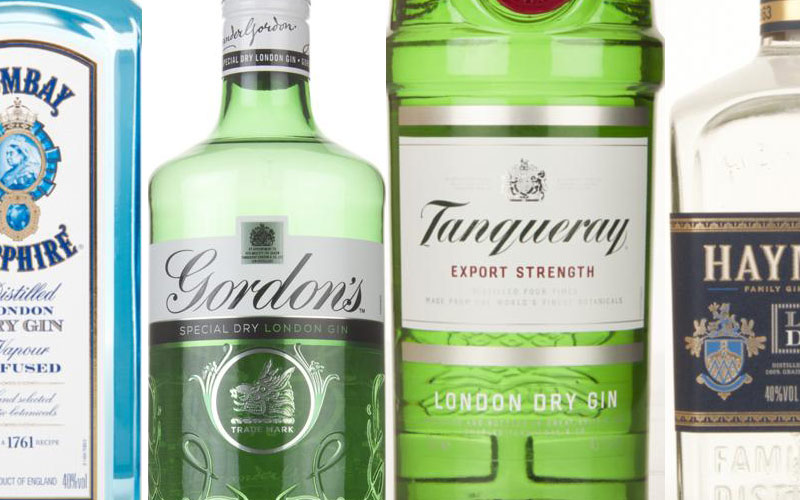
A critical distinction lies in the "Dry" component of the name. While a distilled gin may be sweetened, a London Gin is legally required to be dry. The regulations state that the final product cannot contain more than 0.1 grams of sweetening products per liter, expressed as invert sugar. This negligible amount is often used not for flavor, but as a carrier for tracer molecules—invisible "sugar dyes" used by major brands like Gordon’s to prevent counterfeiting and ensure brand protection in international markets.
Chemical Purity and the Methanol Standard
A primary function of the London Gin designation is the guarantee of chemical purity, specifically regarding methanol content. Methanol, or "wood alcohol," is a natural byproduct of fermentation but is toxic to humans. It has a lower boiling point (64.7°C) than ethanol (78.2°C), meaning it is the first substance to come off the still during the "heads" of a distillation run.
Historically, unscrupulous or uneducated distillers would include these heads in their final product to increase volume, leading to blindness or death in consumers. The London Gin specification mandates that the methanol content in the ethyl alcohol used must not exceed five grams per hectoliter of 100% vol. alcohol. While modern distillation technology has made methanol poisoning rare even among non-designated gins, the London Dry label remains a codified promise that the distiller has adhered to the highest possible standards of separation and safety.
The Botanical Debate: Predominance and Origins
Despite the rigid technical requirements for alcohol purity and distillation methods, the regulations surrounding flavor remain surprisingly subjective. Both EU and UK laws state that for a spirit to be called gin, the "juniper taste must be predominant." However, the legislation provides no numerical or chemical metric for measuring this predominance.
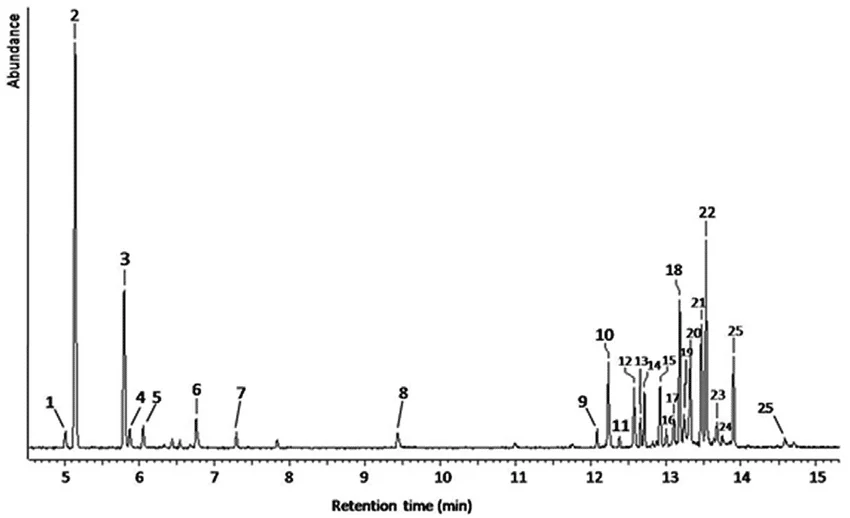
This lack of clarity has led to the rise of "Contemporary" or "New Western" style gins, where citrus, floral, or spice notes often rival the juniper. Because "predominance" is a sensory determination rather than a laboratory one, enforcement is difficult. Some high-end distilleries, such as Bombay Sapphire’s Laverstoke Mill, utilize Gas Chromatography-Mass Spectrometry (GC-MS) to analyze volatile compounds and ensure batch consistency. By identifying the "peaks" of alpha-pinene (juniper) and limonene (citrus), distillers can maintain a signature profile, yet the law does not currently require such empirical proof for the "London Dry" label.
Furthermore, the requirement that flavors be derived from "natural plant materials" creates unique hurdles for experimental distillers. Technically, the use of fungi (such as mushrooms in Radoune Gin) or animal products (such as the meat used in Portobello Road’s Pechuga Gin) would disqualify a spirit from the London Gin designation, as these do not fall under the botanical definition of "plants." However, the base spirit itself can be derived from animal byproducts like milk whey, provided it is distilled to the 96% purity standard.
Global Variations and Geographical Misconceptions
One of the most persistent myths is that London Dry Gin must be produced in London. Unlike Scotch Whisky, Cognac, or Champagne, London Dry Gin does not currently hold a Protected Geographical Indication (PGI) that restricts its production to a specific city or region. It is a process-based designation that can be legally manufactured anywhere in the world, from Mumbai to New York, provided the EU/UK technical files are followed.
In the United States, the Alcohol and Tobacco Tax and Trade Bureau (TTB) maintains a different set of standards. The U.S. definition of gin is more inclusive, focusing on spirits with a "main characteristic flavor derived from juniper berries" produced either by distillation or by the mixing of spirits with aromatics or extracts. The U.S. does not strictly codify the "London" prefix in the same way, often leading to a broader range of products being labeled simply as "Distilled Gin."
Efforts were made as recently as 2015 to seek GI status for London Dry Gin, which would have limited production to the UK capital. However, these efforts failed largely because the term had already become a global industry standard. Requiring a GI would have forced hundreds of established international brands to drop the "London Dry" name, causing massive market disruption.
Implications for the Modern Craft Spirits Market
As the "Ginnaissance" continues to expand the global spirits market, the London Dry designation serves as a vital anchor for traditionalism. For the consumer, the label guarantees a spirit that is clear, unsweetened, and free of artificial colors or post-distillation additives. This excludes popular "Pink Gins" or color-changing gins infused with butterfly pea flower, which must be labeled as "Distilled Gins" or "Spirit Drinks" rather than London Dry.
For distillers, the designation is a badge of technical proficiency. To produce a balanced, flavorful gin entirely within the still—without the "crutch" of post-distillation infusions—requires significant skill in botanical maceration and vapor infusion. While the "predominant juniper" clause remains legally vague, the industry’s self-regulation and the high barrier to entry for the London Dry process ensure that the category remains synonymous with quality.
In conclusion, the 2019 and 2021 regulatory updates have reinforced that London Dry Gin is defined by how it is made, not where it is made or what it tastes like. As technology like Gas Chromatography becomes more accessible, there is a possibility that future legislation may move toward numerical flavor standards. Until then, London Dry Gin remains a symbolic and procedural triumph of the 19th-century industrial revolution, maintaining its status as the most disciplined category in the world of white spirits.
