

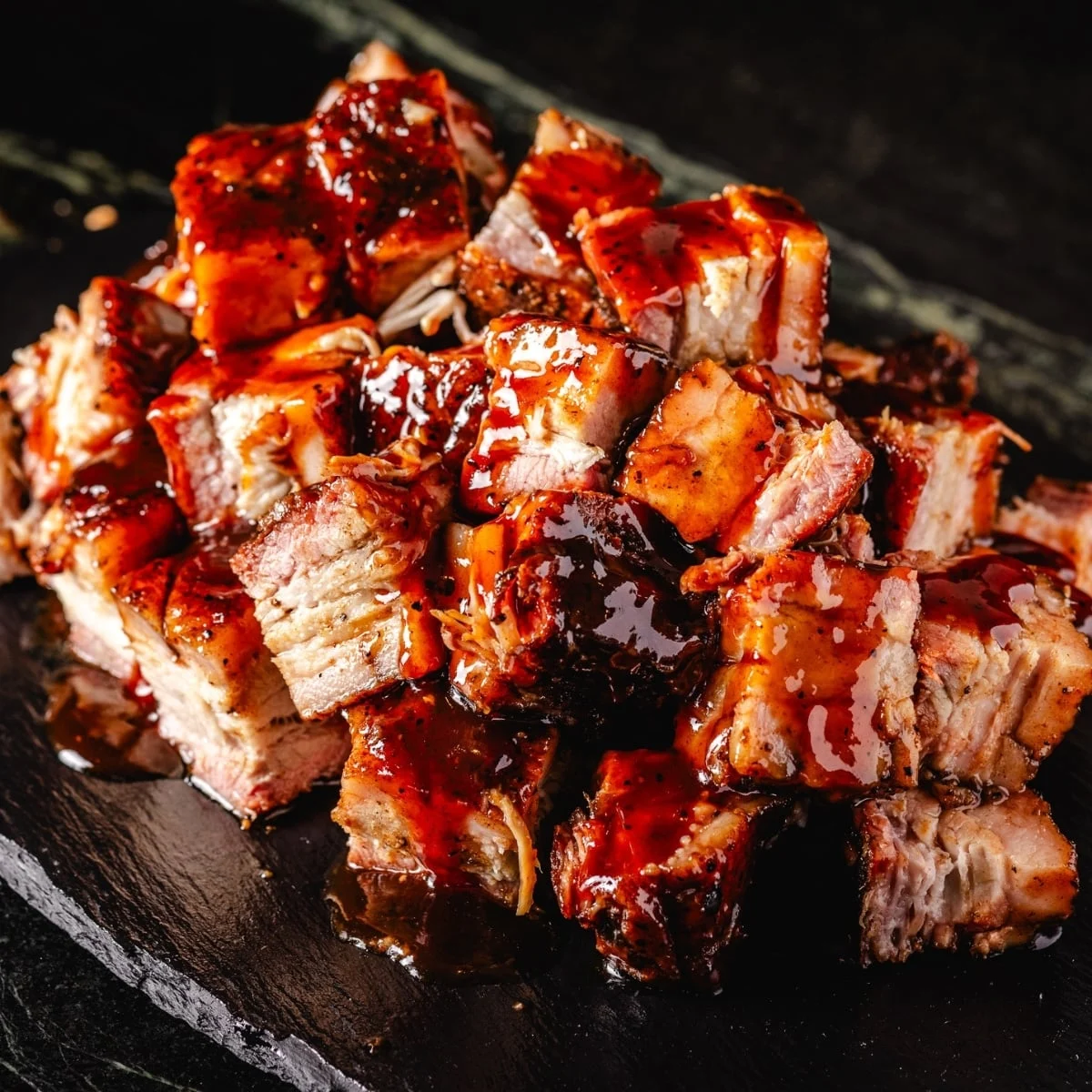
The evolution of American barbecue has seen a significant shift toward "meat candy" preparations, with pork belly emerging as a premier candidate for low-and-slow culinary techniques. Traditionally utilized for bacon production or salt pork, the whole pork belly has transitioned into a centerpiece of high-end barbecue competitions and domestic smoking enthusiasts alike. The Maple Bourbon BBQ Pork Belly represents a refined approach to this cut, prioritizing a minimalist four-ingredient profile that emphasizes the interplay between rendered animal fats, wood smoke, and the complex sugars found in maple-based glazes. Culinary experts note that the success of this dish relies less on a multitude of seasonings and more on the precise management of thermal breakdown within the meat’s connective tissues.
The Anatomy and Culinary Profile of Pork Belly
Pork belly is a boneless, fatty cut of meat derived from the underside of the hog. Unlike the leaner loin or the muscular shoulder, the belly is characterized by distinct layers of meat and subcutaneous fat. In a professional culinary context, the challenge of preparing pork belly lies in the rendering process. If cooked too quickly, the fat remains chewy and unpalatable; if cooked too long without moisture, the meat fibers can become desiccated.

The Maple Bourbon BBQ Pork Belly methodology addresses these challenges through a two-stage cooking process: an initial dry-smoke phase to develop color and flavor, followed by a braising phase to ensure tenderness. The use of a signature rib rub provides the necessary salinity and spice to penetrate the fat cap, while the bourbon-infused maple glaze introduces acidity and depth, cutting through the inherent richness of the pork.
Chronology of the Smoking Process
The preparation of a Maple Bourbon BBQ Pork Belly is a time-intensive endeavor that requires approximately six to eight hours from preparation to service. This timeline is dictated by the chemical requirements of "low-and-slow" cooking, which generally occurs at a consistent temperature of 225 degrees Fahrenheit (107 degrees Celsius).
- Phase One: Preparation and Scoring (Minutes 0–30): The process begins with scoring the fat cap of the pork belly in a crosshatch pattern. This technique increases the surface area exposed to the seasoning and smoke, while also providing channels for rendered fat to escape. A liberal application of rib rub is required to ensure a crust, known in barbecue circles as "bark," forms during the initial smoke.
- Phase Two: The Initial Smoke (Hours 1–4): The meat is placed in a smoker preheated to 225 degrees Fahrenheit. During this period, the meat undergoes the Maillard reaction, a chemical reaction between amino acids and reducing sugars that gives browned food its distinctive flavor. The smoke particles from hardwoods—typically hickory, oak, or fruitwoods—adhere to the surface of the meat.
- Phase Three: The Braising Stage (Hours 4–6): Once the pork belly reaches an internal temperature of approximately 165 degrees Fahrenheit, it enters the "stall," a point where evaporative cooling prevents the internal temperature from rising. To bypass this and break down the tough collagen, the meat is placed in a pan with a braising liquid (often apple juice or cider) and covered tightly with foil. This creates a high-moisture environment that accelerates the softening of the meat fibers.
- Phase Four: Glazing and Setting (Final 30–45 Minutes): The final stage involves removing the foil and applying a thick layer of Maple Bourbon Glaze. The meat is returned to the heat uncovered, allowing the sugars in the maple syrup to caramelize and the bourbon reduction to thicken into a tacky, glass-like finish.
Technical Data and Nutritional Analysis
From a nutritional and caloric standpoint, pork belly is one of the most energy-dense cuts available. A standard serving of this Maple Bourbon preparation contains approximately 1,241 calories. The macronutrient breakdown is heavily weighted toward lipids, with 121 grams of total fat per serving, of which 44 grams are saturated. The dish provides 22 grams of protein and 16 grams of carbohydrates, primarily derived from the sugars in the glaze.

| Nutrient | Amount per Serving |
|---|---|
| Calories | 1241 kcal |
| Total Fat | 121 g |
| Saturated Fat | 44 g |
| Cholesterol | 163 mg |
| Sodium | 260 mg |
| Total Carbohydrates | 16 g |
| Sugars | 12 g |
| Protein | 22 g |
The high fat content is essential for the mouthfeel and flavor delivery of the dish. During the smoking process, the internal temperature must be monitored with precision. Culinary professionals recommend the use of high-speed digital thermometers, such as the Thermapen ONE, to ensure the meat reaches a final internal temperature of 200 to 205 degrees Fahrenheit. At this specific range, the collagen has fully converted into gelatin, resulting in a "melt-in-the-mouth" texture.
The Role of Bourbon and Maple in Flavor Chemistry
The selection of maple and bourbon as the primary flavoring agents is supported by the science of food pairing. Maple syrup provides a complex sweetness that includes notes of caramel and vanilla. When reduced, these sugars provide the structural integrity needed for a barbecue glaze to adhere to the meat.
Bourbon, a distilled American whiskey made primarily from corn, introduces several key elements:

- Acidity: Helps balance the heavy fat content of the pork.
- Oak Tannins: Derived from the charred oak barrels used in the aging process, these tannins complement the natural wood smoke of the barbecue.
- Alcohol: Acts as a solvent, carrying flavor compounds deeper into the palate and enhancing the olfactory experience of the dish.
Industry analysts observe that the "bourbon-infused" trend in barbecue reflects a broader consumer interest in artisanal and spirit-based food products. The integration of high-quality spirits into sauces has moved from niche "smokehouse" menus to mainstream consumer recipes.
Expert Insights and the Home Pitmaster Movement
Susie Bulloch, a prominent figure in the barbecue industry and the founder of Hey Grill Hey, has been a vocal advocate for simplifying complex meat preparations for the domestic cook. Bulloch, who has appeared on the Food Network and holds multiple Guinness World Records in the culinary space, emphasizes that the accessibility of professional-grade pellet grills and digital thermometers has democratized the art of smoking meat.
"Pork belly might sound intimidating, but when you make it once you’ll see how simple and delicious it is," Bulloch states. Her methodology focuses on the "four-ingredient" rule, which suggests that high-quality meat does not require over-complication. This philosophy is part of a larger movement in the barbecue community that prioritizes technique and temperature over secret spice blends or proprietary equipment.

The rise of digital platforms and dedicated barbecue applications has further fueled this movement. Enthusiasts now share real-time data on "cooks," including ambient temperature fluctuations and wood pellet consumption rates. The Maple Bourbon BBQ Pork Belly has become a viral staple within these communities due to its visual appeal—often referred to as "pork belly burnt ends" when cubed—and its versatility as both an appetizer and a main course.
Serving Suggestions and Economic Impact
The versatility of the Maple Bourbon BBQ Pork Belly allows it to function in various service styles. When sliced into slabs, it serves as a decadent entrée; however, the most popular contemporary presentation involves cubing the belly into bite-sized "burnt ends." These cubes are frequently served as shareable appetizers at sporting events or social gatherings.
The popularity of these cuts has had a measurable impact on the meat industry. Historically, pork belly prices were dictated primarily by the demand for bacon. However, the surge in "belly-centric" barbecue recipes has created a year-round demand for whole bellies, occasionally leading to price volatility in the wholesale pork market. Retailers have responded by stocking "commodity" pork belly alongside higher-priced "heritage" breeds, such as Berkshire or Kurobuta, which offer superior intramuscular fat marbling.

Broader Implications for Barbecue Culture
The Maple Bourbon BBQ Pork Belly is more than a recipe; it is a reflection of the modern American palate’s preference for bold, contrasting flavors—sweet, salty, smoky, and fatty. As barbecue continues to evolve from a regional tradition into a global culinary phenomenon, the emphasis on cuts like the pork belly highlights a shift toward "nose-to-tail" appreciation, where previously overlooked sections of the animal are elevated to gourmet status.
For the backyard cook, the dish serves as a rite of passage, requiring the patience to endure a six-hour smoke and the discipline to cook by temperature rather than time. As digital resources continue to provide detailed guidance, the gap between the professional pitmaster and the home enthusiast continues to narrow, ensuring that dishes like the Maple Bourbon BBQ Pork Belly remains a staple of the American outdoor cooking tradition.
