

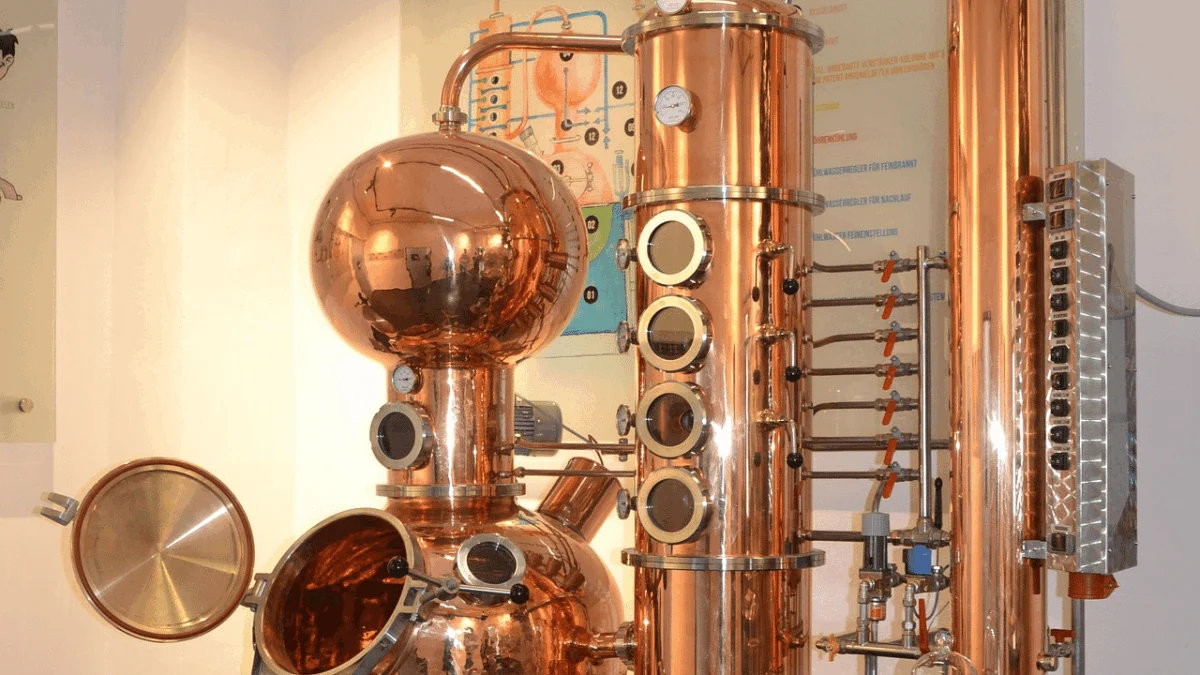
The profile of a premium gin is rarely the result of chance; rather, it is the culmination of a series of rigorous technical decisions made by a distiller after the initial selection of botanicals. While the ingredients—juniper, coriander, citrus peel, and various roots—provide the raw palette, the method of extraction, the timing of the distillation, and the precision of the "cuts" determine the final character of the spirit. In the modern spirits industry, where the global gin market was valued at approximately $15.3 billion in 2023 and is projected to reach $20 billion by 2030, these technical nuances serve as the primary differentiator between mass-market commodities and artisanal benchmarks.
To understand the complexity of this process, one must begin with the base: Neutral Grain Spirit (NGS). This high-proof ethanol, often distilled to 96% alcohol by volume (ABV) to ensure the removal of all previous flavors, acts as a blank canvas. From this starting point, the distiller must navigate a multi-stage journey of chemical extraction and sensory balancing that defines the final product.
The Mathematical Foundation of Botanical Ratios
The first critical decision in gin production involves the precise ratio of botanicals to spirit. While recipes are often guarded as trade secrets, the industry benchmark for a balanced gin typically ranges between 20 and 35 grams of botanicals per liter of spirit. Because international regulations—such as those set by the European Union (Regulation (EU) 2019/787) and the United States Alcohol and Tobacco Tax and Trade Bureau (TTB)—stipulate that gin must possess a "predominant flavor of juniper," this evergreen berry usually constitutes 60% to 70% of the total botanical weight.
The artistry emerges in the secondary and tertiary layers. Master distillers often utilize a relative scale centered on the juniper load. For instance, if a recipe calls for 20 grams of juniper, a common secondary botanical like coriander seed might be included at exactly half that weight (10 grams) to provide citrusy, spicy top notes. Earthy "fixative" botanicals, such as angelica root or orris root, which help bind the more volatile citrus oils to the spirit, are often utilized at one-tenth the weight of juniper. Highly potent spices, such as cassia, cinnamon, or grains of paradise, may be measured at just one-hundredth of the juniper quantity. Even at these infinitesimal levels, the chemical compounds—such as cinnamaldehyde or linalool—can significantly alter the mouthfeel and aromatic finish of the gin.
Extraction Methodology Maceration versus Vapor Infusion
Once the ratios are established, the distiller must choose the method of flavor extraction. This choice dictates the "weight" and intensity of the gin. The two primary methods are maceration and vapor infusion, each yielding a distinct sensory profile.
Maceration involves soaking the botanicals directly in the neutral spirit. This process, often likened to "steeping a tea," allows the ethanol to act as a solvent, breaking down the cell walls of the botanicals to extract essential oils and oleoresins. A prominent example of this is Beefeater Gin, which famously utilizes a 24-hour maceration period before distillation begins. This extended contact time results in a robust, "heavy" spirit with a rich mouthfeel, as the heat of the still further extracts deeper, more complex compounds from the submerged ingredients.
Conversely, vapor infusion offers a more delicate approach. In this method, the botanicals are placed in a "gin basket" located in the neck of the still. As the ethanol vapors rise during heating, they pass through the botanical bed, picking up the most volatile aromatic compounds without the "stewed" effect of direct boiling. This technique is the hallmark of Bombay Sapphire, resulting in a lighter, more floral, and brighter spirit. Some modern distillers utilize a hybrid approach, macerating hardy roots and seeds while vapor-infusing delicate florals and citrus peels to capture a full spectrum of flavors.
The Chronology of the Distillation Run
A distillation run is a linear progression through time, where different chemical compounds evaporate at different temperatures and intervals. The distiller’s primary task is to manage the "cuts"—the moments when they decide which part of the liquid flowing from the condenser is high enough quality to keep.
- The Foreshots and Heads: These are the first liquids to emerge. They are high in ABV but contain low-boiling-point compounds like methanol and acetaldehyde. While they carry intense aromas, they are often harsh, stinging the nose with notes resembling nail polish remover. In professional distilling, these are always discarded or recycled.
- The Hearts: This is the "sweet spot." As the still stabilizes, the ethanol carries the desired essential oils from the juniper and other botanicals. The hearts represent the cleanest, most balanced portion of the run.
- The Tails: Toward the end of the run, the ABV drops and heavier, more bitter compounds begin to emerge. These "tails" often smell of damp cardboard or heavy spice. While some distillers include a small portion of the early tails to add "base notes" and depth, the majority are cut to prevent the gin from becoming cloudy or unpleasantly bitter.
This process requires a combination of chemical monitoring (using hydrometers to check ABV) and sensory analysis. A master distiller will frequently taste the distillate as it leaves the still, looking for the precise second when the bright citrus of the hearts begins to fade into the earthy bitterness of the tails.
Production Philosophy Single-Shot versus Multi-Shot Distillation
The final technical fork in the road concerns the concentration of the distillate. In a "single-shot" process, the distiller adds the exact amount of botanicals needed for a single batch of gin. Once the distillation is complete, the only addition is pure water to bring the spirit down to bottling strength (typically between 40% and 47% ABV). This is often viewed as the "purist" method, favored by many craft distilleries for its integrity and simplicity.
In contrast, the "multi-shot" method involves distilling a highly concentrated "botanical essence" by using a much higher ratio of botanicals to spirit than required for a single batch. This concentrate is later diluted with additional neutral grain spirit and water. While some critics argue this method lacks the nuance of single-shot distillation, it is a highly efficient and widely accepted practice among major global brands. It allows for greater consistency across massive production volumes and reduces the energy footprint of the distillery by requiring fewer runs of the still.
Regulatory Standards and the London Dry Designation
The technical decisions mentioned above are often constrained by legal definitions. The most prestigious of these is "London Dry Gin." Contrary to popular belief, London Dry does not have to be made in London. Instead, the designation refers to a strict production process: all botanicals must be distilled together in the presence of the spirit, and no flavors or colorings can be added after distillation. Only a minute amount of sugar (0.1 grams per liter) is permitted.
Distillers who choose to distill botanicals separately and blend them afterward—a technique used by brands like Hendrick’s to maintain the integrity of delicate ingredients like cucumber and rose—cannot use the "London Dry" label. They must instead label their product as "Distilled Gin." This distinction highlights the industry’s move toward transparency and the importance of production methods in consumer perception.
Industry Implications and the Evolution of the Craft
The modern gin industry is currently witnessing a "flight to quality," where consumers are increasingly interested in the technical provenance of their spirits. According to industry reports from the Gin Guild, there has been a 30% increase in the registration of new distilleries globally over the last five years, driven by the "craft" movement. This has forced established players to emphasize their heritage and technical precision.
The implications of these production choices extend beyond flavor. They affect sustainability—vapor infusion can be more energy-efficient than long macerations—and economic viability. As the cost of raw materials like high-quality juniper (largely sourced from the Balkans and Italy) fluctuates due to climate change, the ability of a distiller to adjust their ratios and cuts without compromising the final flavor profile becomes a vital survival skill.
In conclusion, the production of gin is a sophisticated balancing act between chemistry and culinary art. From the initial mathematical calibration of the botanical bill to the high-stakes timing of the final cuts, every step is a deliberate move toward a specific sensory goal. As the market continues to evolve, the distillers who master these technical nuances will be the ones who define the next generation of this historic spirit. The "blank canvas" of neutral spirit may be the starting point, but the final masterpiece is a testament to the distiller’s technical command over the volatile essence of nature.
