

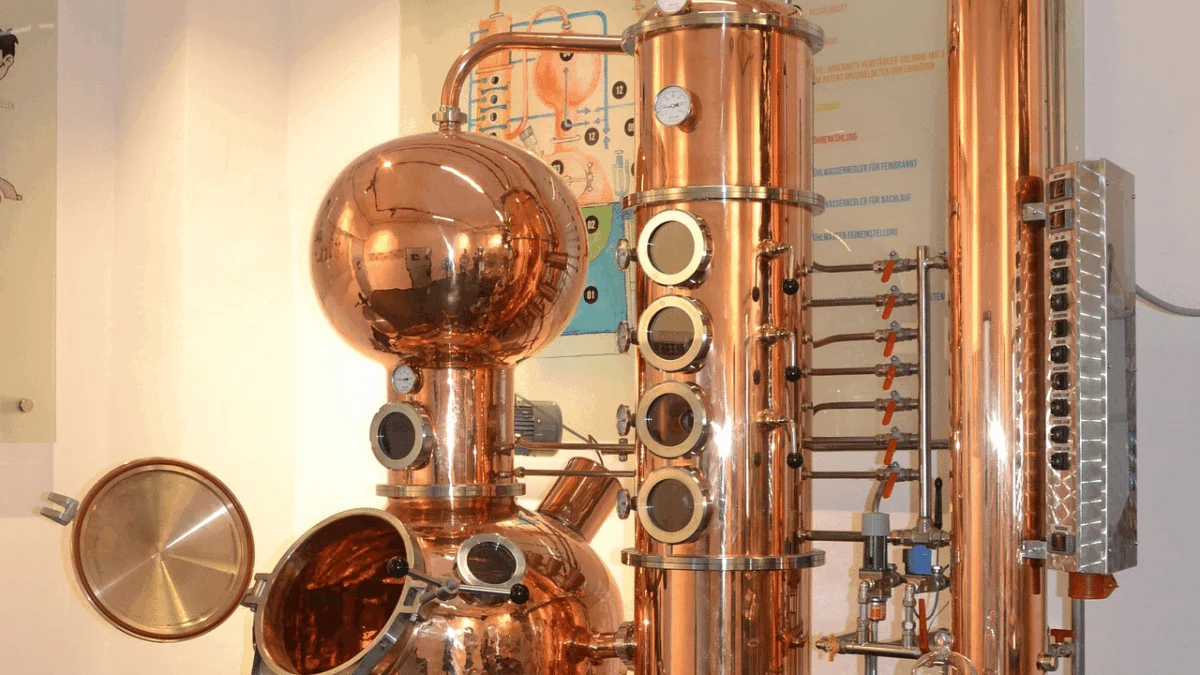
The flavor profile of a premium gin is rarely the result of botanical selection alone; rather, it is the culmination of a rigorous series of technical maneuvers and chemical decisions made by a master distiller once the raw ingredients have been sourced. While the public often focuses on the exotic nature of "hero" botanicals—ranging from Japanese yuzu to African baobab—the industry standard suggests that the same set of ingredients can produce vastly different spirits depending on the distillation methodology employed. From the precision of botanical ratios to the timing of "cuts" during the boiling process, the production of gin is an exercise in applied chemistry and sensory calibration.
The Foundation: Neutral Grain Spirit as a Blank Canvas
For the vast majority of commercial and craft gin production, the process begins with Neutral Grain Spirit (NGS). This is a highly rectified ethanol, typically distilled to 96% alcohol by volume (ABV), derived from grains such as wheat, rye, or corn. By starting with a clean, high-proof base that is effectively a high-grade vodka, distillers ensure that the final product is not "cluttered" by the flavors of the base mash.
This starting point allows the distiller to act as an artist with a blank canvas. However, the selection of the NGS itself carries implications. A wheat-based spirit may offer a softer, creamier mouthfeel, while a potato-based spirit might provide a heavier texture. Regardless of the base, the objective remains the same: to provide a stable, flavor-neutral medium that can carry the volatile aromatic compounds extracted from the botanicals.
The Mathematics of Flavor: Establishing Botanical Ratios
The primary differentiator between a balanced gin and an overwhelming one is the ratio of botanicals to the volume of spirit. Industry benchmarks for premium gin typically range between 20 and 35 grams of total botanical mass per liter of spirit. Because gin is legally defined in most jurisdictions—including the United States and the European Union—as a spirit where the flavor is "predominantly" derived from juniper berries (Juniperus communis), the recipe must be weighted accordingly.
In a standard London Dry or contemporary gin recipe, juniper often accounts for 60% of the total botanical volume. Distillers then build a secondary and tertiary layer of flavor using a "rule of tenths." For instance, if a distiller utilizes 20 grams of juniper, they may include 10 grams of coriander seed—a common "bridge" botanical that provides citrus and spicy notes. Tertiary ingredients, such as angelica root, cassia bark, or cinnamon, are often used at one-tenth the weight of the juniper (approximately 2 grams).
For highly potent or "loud" botanicals—such as cloves, lavender, or certain citrus peels—the quantity may drop to one-hundredth of the juniper weight. At this level, the distiller is operating in the realm of micro-adjustments, where even a single gram of deviation can alter the aromatic profile of a 1,000-liter batch.
Chronology of Extraction: Maceration Versus Vapor Infusion
Once the ratios are established, the distiller must decide how to introduce the botanical oils into the ethanol. This choice fundamentally dictates the texture and "brightness" of the gin.
- Maceration (The Steep): This traditional method involves soaking the botanicals directly in the spirit. Some distillers, such as those at Beefeater, employ a 24-hour maceration period where the botanicals are steeped in the pot still at room temperature before heat is applied. This "long soak" allows for a deep, robust extraction of heavier flavor molecules. Other distillers may add the botanicals immediately before the heat is turned on, resulting in a different profile.
- Vapor Infusion (The Basket): Popularized by brands like Bombay Sapphire, this method involves placing the botanicals in a "gin basket" suspended in the neck of the still. As the ethanol boils and turns into vapor, it passes through the botanicals, gently stripping away the volatile aromatic compounds. Because the botanicals never touch the liquid spirit, the resulting gin is often described as lighter, more floral, and more delicate.
- The Variable of Placement: The physical height of the basket in the still serves as a tool for flavor control. A basket placed higher in the still’s neck encounters cooler vapors, leading to a slower, more refined extraction. A lower placement subjects the botanicals to higher temperatures, which can volatilize heavier, more resinous compounds.
The Critical Moment: Navigating the "Cuts"
Distillation is a time-sensitive process governed by the boiling points of different chemical compounds. As the still is heated, the liquid transitions into vapor and then condenses back into a liquid, but it does not do so uniformly. A distiller must make "cuts" to separate the desirable "heart" of the run from the undesirable "heads" and "tails."
The process can be compared to cooking garlic. The initial aroma of garlic hitting hot oil is sharp and pungent; as it cooks, it becomes sweet and savory; if left too long, it becomes bitter and burnt. In distillation:
- The Heads (Foreshots): The first liquid to emerge from the condenser. This contains low-boiling-point compounds like methanol and acetaldehyde. These are sharp, often smelling of nail polish remover, and are discarded or recycled for safety and flavor reasons.
- The Heart: The "sweet spot" of the distillation. This is where the ethanol is at its purest and the botanical flavors are most balanced. The distiller aims to capture as much of this as possible.
- The Tails (Feints): As the alcohol concentration in the still drops, heavier compounds with higher boiling points begin to come over. These "tails" often carry "cooked" or vegetable-like flavors and oily textures. While some distillers include a small portion of the early tails to add "body" to the gin, most are discarded to prevent the final product from tasting muddy or bitter.
Technical Variations: Single-Shot vs. Multi-Shot Distillation
The scale and efficiency of a distillery are often determined by the choice between single-shot and multi-shot methods.
In the single-shot method, the distiller adds the exact amount of botanicals required for the volume of spirit in the still. Once the distillation is complete, the resulting high-proof gin is diluted with water to the desired bottling strength (typically between 40% and 47% ABV). This is often viewed as the "purist" approach, though it is energy-intensive and limits the output of a single still.
Conversely, the multi-shot method involves distilling a "gin concentrate." The distiller uses a significantly higher concentration of botanicals—sometimes two to four times the standard amount—relative to the spirit in the still. The resulting distillate is so intensely flavored that it must be blended with additional Neutral Grain Spirit and then diluted with water before bottling. This method allows a distillery to produce much larger volumes of gin from a smaller still. While some traditionalists argue it lacks the integration of the single-shot method, many of the world’s top-selling gins are produced using multi-shot techniques with no discernible loss in consumer-perceived quality.
Legal Standards and the London Dry Designation
The technical decisions made in the distillery are also influenced by international regulations. The most prestigious and restrictive category is "London Dry Gin." Contrary to popular belief, London Dry is not a geographical indication but a process designation.
To be labeled as London Dry, all botanical flavors must be introduced through distillation in the presence of natural botanicals. No artificial flavors or colors can be added after distillation, and only a minute amount of sugar (0.1 grams per liter) is permitted for rounding out the flavor. This forces the distiller to be exceptionally precise with their cuts and ratios, as there is no opportunity to "fix" the flavor profile once the spirit leaves the still.
Market Implications and Industry Evolution
The global gin market has undergone a "renaissance" over the last decade, with craft distilleries proliferating across North America, Europe, and Australia. According to data from various spirits industry analysts, the move toward "process-transparency" has become a selling point. Consumers are increasingly interested in whether a gin is vapor-infused or macerated, and whether it uses a single-shot process.
Industry experts suggest that this technical literacy among consumers is driving innovation. "Distillers are no longer just following a 200-year-old recipe," says a report from the Global Spirits Association. "They are experimenting with vacuum distillation to lower boiling points and preserve delicate botanicals, or using ‘split’ distillations where each botanical is distilled individually and then blended to create a hyper-precise profile."
The broader impact of these technical choices is reflected in the premiumization of the category. By emphasizing the complexity of the distillation process—the "art of the cut" and the "science of the steep"—distilleries can justify higher price points and compete in a crowded marketplace.
Conclusion: The Synthesis of Skill and Spirit
While the botanicals provide the raw material for gin, it is the distiller’s mastery of the physical and chemical variables of distillation that creates the final experience. The decision to macerate for 24 hours versus 12, the choice to place a gin basket six inches higher in the neck of a still, and the split-second timing of a cut from hearts to tails are what separate a generic spirit from a world-class gin. As the industry continues to evolve, the focus remains on this delicate balance: a blend of traditional craftsmanship and modern chemical precision that ensures gin remains one of the most versatile and complex spirits in the global portfolio.
