

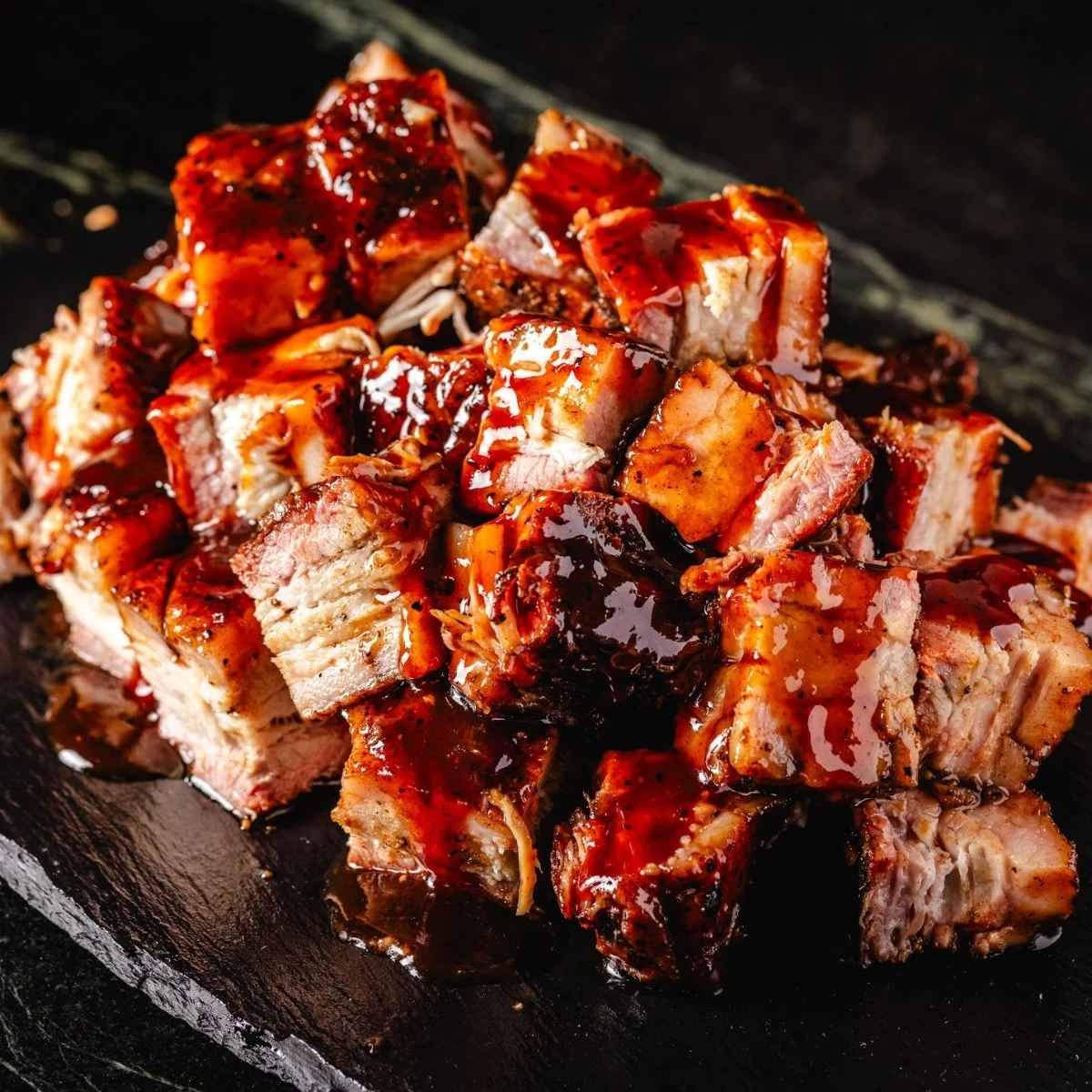
The Culinary Significance of Pork Belly in Modern Barbecue
Historically, pork belly was primarily utilized in Western cuisine for the production of bacon or salt pork. However, the influence of international cuisines and the "nose-to-tail" eating movement has repositioned the cut as a centerpiece of the American barbecue tradition. Pork belly is prized for its high fat-to-meat ratio, which, when rendered correctly, produces a rich, buttery texture that is often referred to in culinary circles as "meat candy."
The Maple Bourbon BBQ Pork Belly recipe leverages these intrinsic qualities by applying a dry rub to the exterior, which creates a "bark"—a flavorful, dark crust formed through the interaction of smoke, spices, and meat proteins. The addition of a maple bourbon glaze during the final stages of cooking introduces a layer of caramelization that complements the natural saltiness of the pork. This combination of textures—the crunch of the bark, the softness of the rendered fat, and the tackiness of the glaze—defines the dish’s appeal.
Chronology of the Smoking and Preparation Process
The production of Maple Bourbon BBQ Pork Belly follows a rigorous timeline that emphasizes patience and temperature control. Achieving the desired "juicy perfection" requires a commitment to a low-temperature environment, typically maintained at 225 degrees Fahrenheit.

Phase One: Preparation and Initial Seasoning
The process begins with the selection of a high-quality pork belly, which is often scored to allow the seasoning and heat to penetrate the thick layer of subcutaneous fat. A signature rib rub is applied generously to all sides. This rub typically contains a balance of salt, sugar, paprika, and aromatics, which serve as the foundation for the flavor profile.
Phase Two: The Smoke Cycle
The seasoned meat is placed in a smoker preheated to 225 degrees Fahrenheit. During this initial phase, which lasts several hours, the meat absorbs smoke particles—ideally from hardwoods such as hickory, oak, or fruitwoods like apple and cherry. The objective of this phase is to reach an internal temperature that signifies the beginning of the fat-rendering process.
Phase Three: Braising and Glazing
Once the pork belly reaches a specific internal threshold, it is often transitioned into a braising environment. This involves the application of the Maple Bourbon Glaze. The bourbon in the glaze provides a complex, oaky undertone and acidity that cuts through the richness of the fat, while the maple syrup offers a deep, floral sweetness that survives the high-heat environment of the smoker better than refined sugars.
Phase Four: The Final Set
The meat is finished at a higher internal temperature, often around 195 to 205 degrees Fahrenheit, to ensure the connective tissues have fully broken down. A final application of glaze is typically added in the last 15 to 30 minutes of cooking to "set" the sauce, creating a glossy, adherent coating.

Nutritional Data and Chemical Composition
From a nutritional standpoint, Maple Bourbon BBQ Pork Belly is a calorie-dense food item, reflecting its status as an indulgent treat rather than a dietary staple. A standard serving size is estimated to contain approximately 1,241 calories. The macronutrient breakdown reveals a significant emphasis on lipids, with 121 grams of total fat, of which 44 grams are saturated.
The protein content stands at 22 grams per serving, providing the structural base for the dish. Carbohydrates are relatively low at 16 grams, primarily derived from the sugars in the maple syrup and the BBQ glaze. The presence of 12 grams of sugar contributes to the Maillard reaction—a chemical reaction between amino acids and reducing sugars that gives browned food its distinctive flavor.
Data also indicates a cholesterol count of 163 mg and a sodium level of 260 mg per serving. While the sodium is relatively moderate for a barbecue dish, the high fat content necessitates portion control for those monitoring caloric intake or cardiovascular health.
The Role of Precision Instrumentation in Barbecue Success
A critical component of the Maple Bourbon BBQ Pork Belly preparation is the reliance on internal temperature rather than time-based cooking. Culinary experts emphasize that every cut of meat and every smoking unit performs differently based on ambient humidity, altitude, and fuel source.

The use of high-accuracy digital thermometers, such as the Thermapen ONE, has become a standard recommendation in the industry. These devices provide near-instantaneous readings, allowing the cook to monitor the "stall"—a period during smoking where the internal temperature plateaus as moisture evaporates from the surface of the meat. Navigating the stall is essential for ensuring the pork belly reaches the 200-degree mark without becoming desiccated.
Market Trends and the "Backyard Hero" Phenomenon
The rise in popularity of recipes like Maple Bourbon BBQ Pork Belly coincides with a broader trend in the outdoor cooking industry. According to market research, the global barbecue grill market has seen steady growth, driven by an increasing interest in "at-home" gourmet experiences. Consumers are moving away from simple grilling and toward complex smoking techniques that were once the exclusive domain of professional pitmasters.
Susie Bulloch, the founder of Hey Grill Hey, has noted that the accessibility of these recipes is a primary driver of engagement. By reducing a complex flavor profile to four essential ingredients, the barrier to entry for novice smokers is lowered. This democratization of barbecue knowledge has created a new class of "Backyard BBQ Heroes"—hobbyists who utilize social media platforms like Facebook and Instagram to share their culinary achievements and foster community engagement.
Official Responses and Culinary Analysis
Industry analysts suggest that the combination of bourbon and maple is not merely a trend but a classic pairing rooted in North American culinary history. Bourbon, a corn-based whiskey aged in charred oak barrels, shares many of the same flavor compounds as smoked meat, including vanillin and various tannins. Maple syrup, a product of the Acer saccharum tree, provides a natural sweetness that complements the smokiness of the pork.

In a statement regarding the recipe’s philosophy, the Hey Grill Hey team emphasized the "simple and delicious" nature of the cut. They argue that while pork belly may appear intimidating to the uninitiated, its resilience in the smoker makes it an ideal candidate for low-and-slow experimentation. The high fat content provides a "safety net" that prevents the meat from drying out as easily as leaner cuts like pork loin or brisket.
Broader Implications for the Food Industry
The success of the Maple Bourbon BBQ Pork Belly also highlights the growing importance of "signature" ingredients in the retail space. Many BBQ influencers now market their own lines of rubs and glazes, turning digital content into physical commodities. This vertical integration allows home cooks to replicate professional results with greater consistency.
Furthermore, the dish’s versatility as both a "game-day snack" and a "shareable appetizer" reflects a shift in how Americans consume barbecue. It is no longer strictly a sit-down, plate-based meal; instead, it has integrated into the "snacking" and "tapas-style" dining trends that prioritize variety and ease of consumption.
In conclusion, Maple Bourbon BBQ Pork Belly is a testament to the sophistication of modern outdoor cooking. By combining technical precision with a deep understanding of flavor chemistry, this dish has earned its place as a staple of the contemporary barbecue repertoire. Its reliance on quality ingredients, patient technique, and accurate temperature management ensures that it remains a favorite for both amateur enthusiasts and seasoned pitmasters alike. As the barbecue culture continues to expand, recipes that offer high-impact flavor with manageable complexity will likely remain at the forefront of the industry.
