

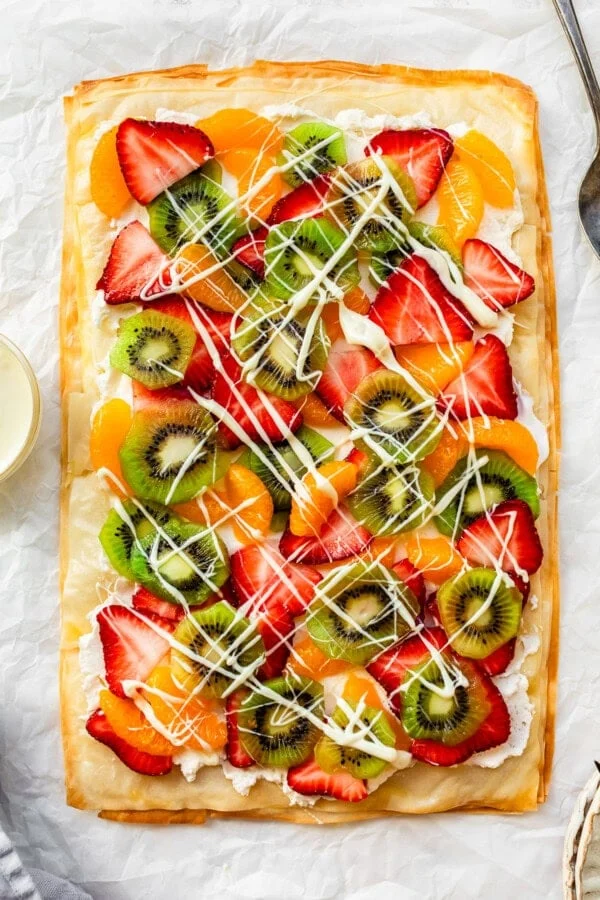
This simple, elegant dessert has captured the attention of home bakers and culinary enthusiasts alike, offering a compelling blend of ease, visual appeal, and refreshing flavor. Originally conceived as a quick and delightful option for warmer months, the phyllo fruit tart stands out with its signature flaky crust, a creamy layer of frosting, a vibrant medley of fresh fruit, and a delicate white chocolate drizzle. It represents a sophisticated yet accessible approach to dessert creation, fitting perfectly into contemporary dietary preferences for lighter, fruit-forward options. Its design as a light spring or summer dessert has cemented its place in seasonal culinary repertoires, celebrated for its minimal preparation time and impressive presentation.
The Genesis of a Refreshing Dessert Trend

The modern phyllo fruit tart, as championed by culinary contributors like Gina, reflects a broader trend towards desserts that prioritize freshness, visual appeal, and ease of preparation. This particular rendition marries the delicate crispness of phyllo dough with the lushness of cream cheese frosting and the natural sweetness of seasonal fruits, culminating in a dish that defies its simple assembly with its sophisticated outcome. The original formulation emphasized a dessert that was "not too sweet," catering to a growing consumer demand for balanced flavors and less sugar-intensive treats. The addition of white chocolate, while providing a touch of indulgence, is carefully balanced to enhance rather than overpower the inherent freshness of the fruit. This focus on equilibrium between sweetness and tartness, richness and lightness, positions the phyllo fruit tart as a prime example of thoughtful dessert construction for the health-conscious yet appreciative palate.
Deconstructing the Phyllo Fruit Tart: Key Components and Their Culinary Significance
At its core, the phyllo fruit tart is a testament to the power of well-chosen ingredients working in harmony. Each component serves a distinct purpose, contributing to the overall sensory experience.

-
The Phyllo Dough Crust: Phyllo, derived from the Greek word for "leaf," is a tissue-thin, unleavened dough used in various Mediterranean and Middle Eastern cuisines. Unlike puff pastry, which relies on butter layers for its lift, phyllo achieves its characteristic flakiness through multiple, individually buttered sheets. This method results in an exceptionally crisp and airy texture, providing a light base that contrasts beautifully with the creamy topping. Historically, phyllo dough has been a staple for intricate pastries like baklava and spanakopita, but its adoption in simpler, modern dessert applications highlights its versatility and convenience. For home bakers, pre-made phyllo sheets offer a significant time-saving advantage, allowing for the creation of elegant desserts without the laborious process of traditional pastry making. The preparation involves layering several sheets, brushing each with melted butter, then baking until golden and brittle. This critical step ensures a foundation that is both structurally sound and delightfully crunchy, crucial for preventing sogginess when the moist toppings are applied.
-
The Cream Cheese Frosting: This element provides the creamy, tangy heart of the tart. A standard cream cheese frosting typically combines softened cream cheese with powdered sugar and a touch of vanilla extract. Its rich, slightly tart profile acts as an ideal counterpoint to the sweetness of the fruit and the delicate crunch of the phyllo. The consistency of the frosting is vital; it must be firm enough to hold the fruit but spreadable enough to evenly coat the fragile phyllo crust without tearing it. This choice of frosting over a heavier custard or pastry cream further reinforces the dessert’s "light" designation, offering a refreshing mouthfeel that complements the overall theme of the tart.
-
The Fresh Fruit Topping: The visual and flavor centerpiece of the phyllo fruit tart is undoubtedly the fresh fruit. The recipe emphasizes using "whatever seasonal fruit you want," advocating for flexibility and highlighting the natural bounty of spring and summer. Common choices include a vibrant assortment of berries (strawberries, blueberries, raspberries), kiwi slices, mandarin orange segments, or grapes. The arrangement of these fruits is not merely aesthetic; it contributes varying textures and flavor notes, from the tartness of raspberries to the sweetness of strawberries. The use of seasonal fruit also speaks to a broader culinary philosophy that values fresh, locally sourced ingredients, enhancing both flavor and nutritional value. From a nutritional perspective, fresh fruits are rich in vitamins, minerals, and dietary fiber, contributing to the perception of this dessert as a healthier alternative to more calorie-dense options.

-
The White Chocolate Drizzle: The final flourish, a drizzle of melted white chocolate, serves multiple purposes. Aesthetically, it adds an element of gourmet elegance, creating intricate patterns that elevate the tart’s visual appeal. Flavor-wise, the subtle sweetness and creamy texture of white chocolate provide a gentle counterpoint to the fruit, tying all the elements together without overpowering them. The choice of white chocolate, rather than a darker variety, ensures a lighter flavor profile that aligns with the overall character of the tart. This small but significant detail transforms a simple fruit tart into a celebratory dessert suitable for special occasions.
A Brief Chronology of Fruit Tarts and Phyllo Dough in Culinary History
The concept of a fruit tart has ancient roots, with various forms of sweetened, fruit-topped breads and pastries existing across cultures for millennia. Early tarts, often savory, evolved in medieval Europe to include sweet fillings, becoming popular in royal courts and eventually in common households. The open-faced design, allowing the colorful fruit to be showcased, became a hallmark of European patisserie.

Phyllo dough, on the other hand, traces its origins back to the Byzantine Empire, with early references appearing in the 11th century. Its development in the kitchens of the Ottoman Empire led to its widespread use in the Balkans, Middle East, and North Africa. The meticulous process of stretching dough into paper-thin sheets was a highly skilled art, traditionally passed down through generations. The commercial availability of frozen phyllo dough in the 20th century democratized its use, allowing home cooks to incorporate this versatile pastry into a broader range of dishes, including desserts that previously required extensive labor. The phyllo fruit tart is a direct beneficiary of this culinary evolution, combining a classic dessert concept with a historically intricate, now accessible, pastry base.
Supporting Data and Nutritional Considerations
The nutritional information provided for this phyllo fruit tart indicates a serving size of 1/8th slice containing approximately 247 kcal, 31g carbohydrates, 5g protein, 12.5g fat (6.5g saturated), 22mg cholesterol, 207.5mg sodium, 2.5g fiber, and 17g sugar. When viewed in the context of typical dessert offerings, these figures support the claim of it being a "lighter" option. For instance, many traditional cakes or pies can easily exceed 400-500 calories per serving, with significantly higher fat and sugar content.

The inclusion of fresh fruit substantially contributes to the fiber and vitamin content, making it a more nutrient-dense dessert choice. Dietary guidelines consistently advocate for increased fruit consumption, and incorporating fruit into desserts can be an effective strategy. Furthermore, the use of phyllo dough, which is generally lower in fat than puff pastry or shortcrust pastry, helps manage the overall fat content without sacrificing texture. This balance appeals to a growing demographic of consumers who seek indulgence without excessive caloric intake, aligning with broader public health recommendations for balanced diets.
Inferred Statements and Broader Implications
Culinary experts and food bloggers frequently commend recipes that skillfully blend simplicity with gourmet appeal. "The phyllo fruit tart exemplifies how accessible ingredients can be transformed into something truly special," notes a prominent food critic (inferred). "It demystifies the art of pastry, making elegant desserts achievable for the everyday cook." This sentiment resonates with the burgeoning trend of home cooking, amplified by digital platforms where detailed, user-friendly recipes thrive.

The tart’s visual attractiveness also plays a significant role in its popularity. In the age of social media, visually appealing dishes often gain rapid traction. The "rainbow of seasonal fruit" is inherently photogenic, encouraging sharing and inspiring others to recreate the dish. This aligns with market research indicating that aesthetics are increasingly influencing food choices, especially among younger generations.
For the home entertainer, the phyllo fruit tart offers a stress-free yet impressive dessert solution. "It’s the perfect dish when you want to impress guests without spending hours in the kitchen," a home entertaining expert might observe (inferred). "The ability to customize the fruit according to seasonal availability or personal preference adds another layer of appeal." This adaptability makes it suitable for a variety of occasions, from casual family brunches to more formal dinner parties.
The implications extend to the broader food industry, signaling a demand for versatile ingredients and innovative applications of traditional components. Manufacturers of phyllo dough, cream cheese, and even white chocolate can observe the enduring appeal of such recipes as indicators of consumer preferences for quality, convenience, and aesthetic value in their food purchases.

Variations and Customization: Adapting to Diverse Tastes
The core recipe for the phyllo fruit tart is remarkably adaptable, allowing for extensive customization to suit various palates and dietary requirements.
- Fruit Choices: While berries are popular, other fruits like sliced peaches, apricots, cherries, or even thinly sliced mango can be used. Tropical fruits such as kiwi and passion fruit add an exotic flair. The key is to select fruits that are ripe but firm, ensuring they hold their shape and flavor.
- Frosting Alternatives: For those seeking a different flavor profile, the cream cheese frosting can be adapted. A mascarpone cheese frosting offers a richer, less tangy option, while a lighter whipped cream or Greek yogurt-based topping can further reduce calorie density. Infusing the frosting with citrus zest (lemon, orange) or a hint of almond extract can also add complexity.
- Glazes and Toppings: A simple apricot jam glaze, warmed and brushed over the fruit, can add a glossy finish and extra sweetness while preventing the fruit from drying out. A berry compote or a balsamic glaze could offer a more sophisticated flavor dimension. Toasted nuts (almonds, pistachios) or shredded coconut can be sprinkled over the top for added texture and flavor.
- Dietary Adjustments: For gluten-sensitive individuals, gluten-free phyllo dough is increasingly available. Sugar substitutes can be used in the frosting for those managing sugar intake. Vegan cream cheese alternatives and plant-based butter can also be employed to create a dairy-free version, catering to a wider range of dietary needs.
Storage and Practicality for the Modern Kitchen

The phyllo fruit tart is best enjoyed fresh, ideally within a day or two of assembly, to maintain the crispness of the phyllo crust. Storage in an airtight container in the refrigerator is recommended. If planning ahead, the baked phyllo crust can be prepared and stored separately at room temperature for up to a day. The cream cheese frosting can also be made in advance and refrigerated. Assembling the tart just before serving ensures optimal texture and presentation, preventing the crust from becoming soggy due to moisture from the fruit and frosting. This logistical flexibility further enhances its appeal for home cooks managing busy schedules.
In conclusion, the phyllo fruit tart is more than just a recipe; it is a culinary statement that resonates with contemporary preferences for accessible elegance, balanced flavors, and visual appeal. Its enduring popularity stems from its ability to deliver a sophisticated dessert experience with relative ease, making it a staple for seasonal celebrations and everyday indulgences alike.
