

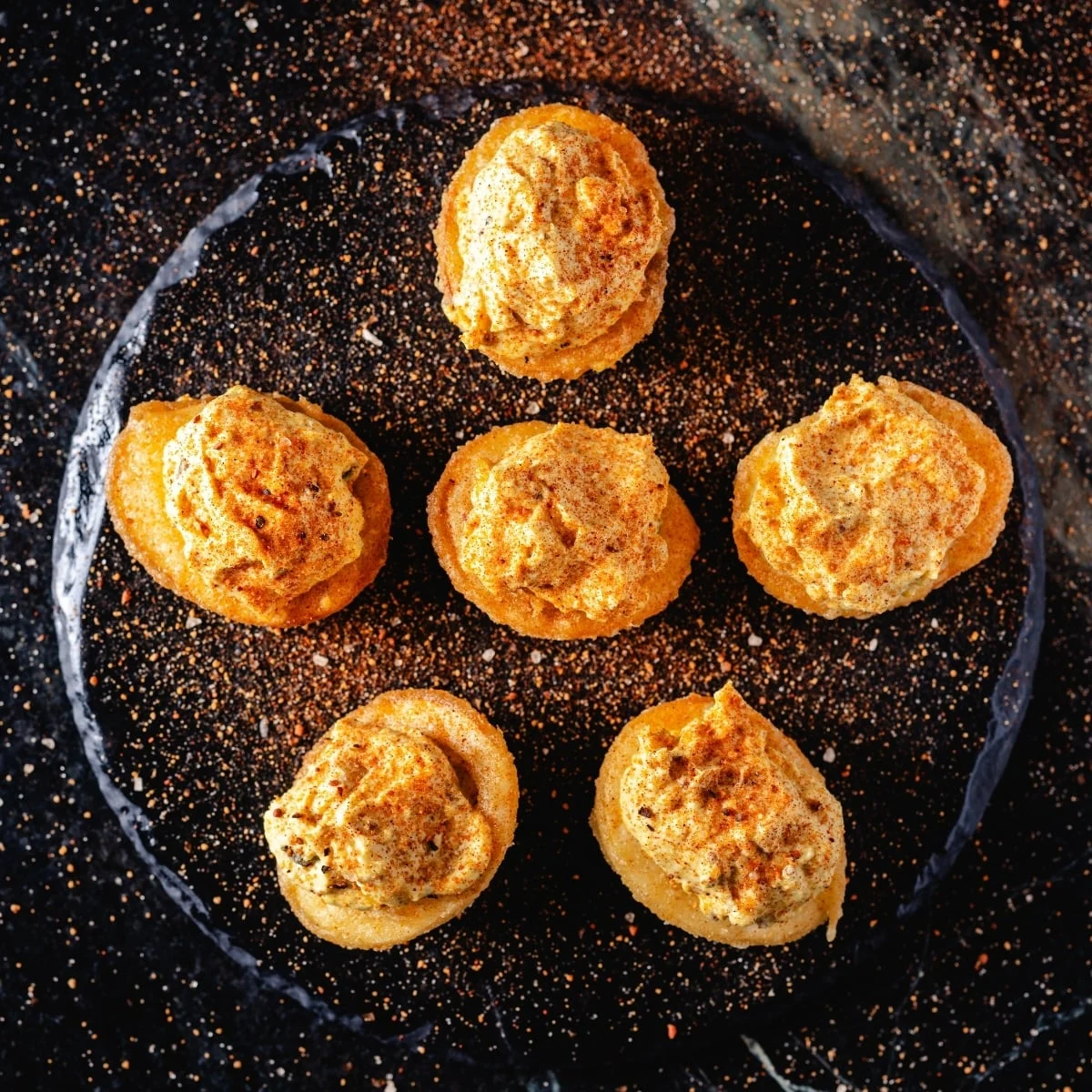
The Evolution of the Deviled Egg in American Culinary Culture
The deviled egg has been a staple of European and American gastronomy for centuries, with its origins tracing back to ancient Rome, where boiled eggs were seasoned with spicy sauces and served as a starter for wealthy diners. The term "deviled" was adopted in the 18th century to describe foods prepared with hot spices or condiments, a descriptor that perfectly suited the mustard and pepper-heavy yolk fillings that became popular in the United States by the mid-19th century.
Throughout the 20th century, the deviled egg became synonymous with the American picnic and church social. However, the recipe remained largely static for decades, typically consisting of mayonnaise, mustard, and paprika. The recent surge in the "low and slow" barbecue movement has prompted a re-evaluation of these classics. By introducing wood smoke into the protein and subsequently flash-frying the exterior, chefs are creating a textural contrast—crispy on the outside, creamy on the inside—that was previously absent from the dish’s profile.

The Technical Methodology: A Three-Phase Preparation
The preparation of Smoke-Fried Deviled Eggs involves a precise chronology that differentiates it from standard boiling and assembly. This process is divided into the smoking phase, the textural modification phase, and the flavor integration phase.
Phase One: Low-Temperature Smoking
The process begins with hard-boiled eggs that have been peeled and cooled. Unlike traditional recipes where the eggs move directly to slicing, these eggs are placed in a smoker. Technical data suggests that egg whites are highly porous and absorb smoke molecules rapidly. Pitmasters recommend a "low and slow" approach, typically maintaining temperatures between 150°F and 225°F for approximately 30 minutes. This duration is sufficient to impart a distinct smoky aroma and a light amber hue to the egg whites without rubberizing the texture of the protein.
Phase Two: Textural Modification through Frying
Once smoked, the eggs are halved, and the yolks are removed. The innovative "fried" element of this recipe involves coating the smoked egg whites in a specialized batter. The use of a "Crispy Chicken Wing Batter" is a strategic choice, as these batters are engineered to adhere to smooth surfaces and provide a high-crunch yield during a short submersion in hot oil. The egg whites are deep-fried until they achieve a golden-brown exterior, creating a warm, crunchy vessel for the cold filling.

Phase Three: Complex Flavor Integration
The final phase involves the creation of a "zippy" filling. Instead of the standard mustard-mayonnaise blend, this version utilizes a South Carolina-style mustard-based barbecue sauce—specifically the Zesty Gold BBQ Sauce—and a proprietary Sweet Rub. The inclusion of diced jalapeños and apple cider vinegar provides the necessary acidity to cut through the richness of the fried exterior and the fatty yolk base.
Supporting Data and Nutritional Analysis
From a nutritional and chemical standpoint, the smoke-fried deviled egg is a dense appetizer. According to nutritional approximations, a single serving (roughly one prepared egg half) contains approximately 131 calories. The macronutrient breakdown is characterized by 7 grams of fat, 5 grams of protein, and 11 grams of carbohydrates.
The sodium content, measured at 129 mg per serving, remains relatively moderate for a barbecue-style dish, though the use of dry rubs and pre-mixed batters contributes to the mineral profile. The presence of Vitamin A (228 IU) and Calcium (29 mg) highlights the inherent nutritional value of the egg base, even when subjected to multiple cooking processes.

| Nutrient | Amount per Serving |
|---|---|
| Calories | 131 kcal |
| Total Fat | 7 g |
| Cholesterol | 132 mg |
| Sodium | 129 mg |
| Protein | 5 g |
| Carbohydrates | 11 g |
The Influence of Susie Bulloch and the BBQ Industry
The rise of this specific recipe can be attributed to the influence of Susie Bulloch, a prominent figure in the barbecue industry. Bulloch, the founder of the "Hey Grill Hey" platform, has built a career on demystifying complex smoking techniques for the "backyard BBQ hero." Her background includes appearances on the Food Network and the achievement of multiple Guinness World Records related to outdoor cooking.
Industry analysts suggest that the popularity of Bulloch’s recipes reflects a broader trend in the $4.4 billion U.S. barbecue grill and supplies market. Consumers are increasingly seeking "experiential cooking" methods that utilize their equipment for more than just steaks and burgers. The "smoke-fried" technique is a prime example of this trend, requiring both a smoker and a frying setup, thereby encouraging the use of diverse outdoor cooking tools.
Chronology of the Smoke-Fried Movement
The timeline of this dish’s development follows the broader trajectory of barbecue’s integration into mainstream digital media:

- Early 2010s: The "Smoked Egg" begins appearing in niche BBQ forums as a way to utilize residual heat in a smoker after a long brisket or pork butt cook.
- 2018-2020: Barbecue influencers begin experimenting with "Deviled Eggs 2.0," adding bacon jam and jalapeños.
- 2022-2023: The "Fried Deviled Egg" gains viral traction on social media platforms like TikTok and Instagram, focusing primarily on the textural contrast of the fried white.
- 2024-2025: Professional pitmasters like Bulloch formalize the "Smoke-Fried" hybrid, combining the aromatic benefits of wood smoke with the textural benefits of deep-frying.
Official Responses and Culinary Reception
While traditionalists may argue that the deviled egg is best served in its simplest form, culinary critics have largely embraced the hybrid model. Food service professionals note that the dish addresses the primary complaint regarding deviled eggs: their lack of structural integrity and monotonous texture.
"The addition of a fried crust allows the egg to hold up better at room temperature during events," says one independent catering consultant. "When you smoke the egg first, you aren’t just adding flavor; you’re changing the chemical composition of the protein to be more receptive to the batter. It’s a sophisticated piece of food engineering hidden in a picnic snack."
Furthermore, the "Hey Grill Hey" community has responded with high engagement. User feedback suggests that the recipe’s versatility—specifically the ability to skip the smoking step for those without specialized equipment—makes it accessible while still providing an "aspirational" cooking goal for enthusiasts.

Broader Impact and Implications for Holiday Hosting
As the Easter holiday approaches, the Smoke-Fried Deviled Egg is positioned as a "show-stealer" in the appetizer category. This reflects a shift in holiday dining expectations. Modern hosts are increasingly moving away from "set it and forget it" dishes in favor of conversation starters that demonstrate technical skill.
The implications of this trend extend to the retail sector. Ingredients such as apple cider vinegar, high-quality mayonnaise, and specialized barbecue rubs see a seasonal uptick in sales during the spring. Moreover, the "DIY" nature of the recipe—encouraging cooks to snap photos and tag creators—feeds into the "Backyard BBQ Hero" persona that has become a powerful marketing tool for outdoor cooking brands.
In conclusion, the Smoke-Fried Deviled Egg is more than a seasonal recipe; it is a manifestation of the current state of American culinary fusion. By applying rigorous barbecue techniques to a humble, centuries-old appetizer, cooks are redefining the boundaries of the backyard picnic. Whether served at an Easter gathering or a summer social, this dish represents a calculated balance of smoke, spice, and texture that satisfies the modern palate’s demand for complexity. As the BBQ industry continues to evolve, the integration of smoking and frying is likely to become a standard rather than an outlier, with Susie Bulloch’s "Smoke-Fried" method serving as a blueprint for future innovations.
