

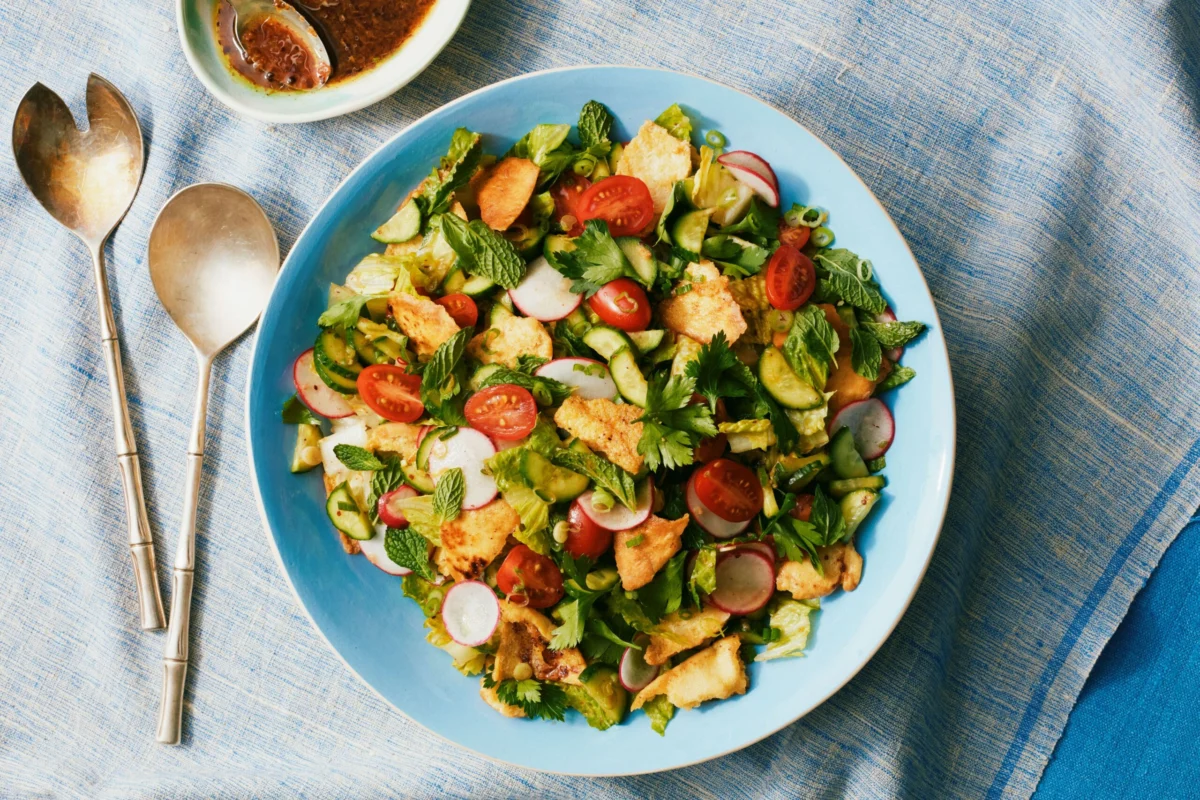
Fattoush, a vibrant and textural symphony of fresh herbs, crisp cucumbers, ripe tomatoes, and expertly toasted pita, stands as one of the most celebrated and iconic salads within the rich tapestry of Levantine cuisine. This particular rendition, a thoughtful adaptation by acclaimed chef Mario Jr. Haddad of the renowned Lebanese café Al Falamanki, masterfully weaves together distinct regional variations into a harmonious and cohesive whole. The deliberate inclusion of garlic, a staple reflecting traditional recipes from Lebanon’s verdant mountainous regions, introduces a pungent depth. Concurrently, pomegranate molasses, a widely favored addition in Syrian culinary practices, imparts a robust sweetness and profound depth, perfectly complementing the zingy, citrus-like notes of the sumac-infused dressing.
The ingenuity of Fattoush extends beyond its flavor profile to its resourceful nature, providing an excellent culinary solution for day-old pita bread. The process involves tearing the stale bread into irregular pieces, lightly drizzling them with olive oil, and baking them until they achieve a deep golden hue and a remarkable crispness. This meticulous preparation ensures the pita maintains its structural integrity and delightful crunch even after being tossed with the dressing, a critical textural component of the dish. Alternatively, for convenience, lightly crushed pita chips can serve as a suitable substitute. While Fattoush possesses a universal appeal and can be enjoyed throughout the year, its flavors truly ascend to their zenith during the summer months when tomatoes, the salad’s foundational vegetable, are at their peak sweetness and juiciness. Its versatility makes it an ideal accompaniment to a range of main courses, from succulent grilled chicken and perfectly seared steak to delicate grilled fish, or it can elegantly anchor a light, herbaceous dinner as a standalone culinary centerpiece.
The Genesis and Enduring Appeal of Fattoush
At its core, Fattoush is more than just a chopped vegetable salad; it is a testament to the Levantine culinary philosophy of resourcefulness and celebration of fresh produce. The name itself, derived from the Arabic word "fatteh," which translates to "crumbled" or "broken," directly references the dish’s defining characteristic: the incorporation of crunchy, broken pieces of toasted or fried pita bread. Historically, this practice was a clever and delicious method of utilizing leftover bread, preventing waste and transforming a mundane staple into a textural highlight. This tradition underscores a broader culinary heritage found across the Mediterranean and Middle East, where stale bread is often re-purposed in dishes like panzanella in Italy or various forms of bread pudding.
The history of Fattoush is intertwined with the agricultural cycles and communal eating traditions of the Levant. For centuries, communities in Lebanon, Syria, Jordan, and Palestine have relied on seasonal ingredients, crafting dishes that reflect the bounty of their lands. Fattoush emerged as a simple yet profound way to showcase the freshness of garden vegetables, elevated by the aromatic profile of local herbs and the distinct tang of sumac. Its presence on mezze tables—a selection of small dishes served as appetizers—is almost obligatory, symbolizing hospitality and the region’s rich gastronomic identity.
Dissecting the Essential Elements: Ingredients and Their Cultural Roots
The Cornerstone: Toasted Pita Bread
The pita bread, often overlooked in its day-old form, undergoes a crucial transformation in Fattoush. The act of tearing, oiling, and baking it until "deeply golden and crisp" is not merely a cooking step but a foundational technique that defines the salad’s unique texture. This crispness is paramount, as it contrasts beautifully with the juicy vegetables and the soft herbs. The advice to "take it further than you think" when baking highlights the importance of achieving a robust crunch that resists softening when dressed. In Levantine culture, pita bread is more than just a carb; it is a utensil, a vessel, and a symbol of sustenance, making its starring role in Fattoush particularly significant. The innovation of repurposing day-old bread also speaks to a sustainable approach to food, a practice deeply embedded in traditional cuisines worldwide.
The Verdant Heart: Fresh Herbs and Vegetables
The vibrancy of Fattoush largely stems from its generous use of fresh herbs and seasonal vegetables. A typical Fattoush features a lively mix of parsley and mint, often complemented by dill or cilantro, each contributing its unique aromatic signature. Parsley offers a clean, earthy note, while mint provides a refreshing, cooling counterpoint, essential in the warm climate of the Levant. These herbs are not merely garnishes but integral components that lend the salad its characteristic herbaceous freshness.
The vegetable base typically includes crisp cucumbers, which provide hydration and a subtle sweetness, and ripe tomatoes, whose juiciness and natural sugars are amplified during the summer. Beyond these staples, adaptability is key. Radishes are a popular addition, their peppery bite offering a delightful contrast, while thinly sliced red onions contribute a pungent sharpness. Bell peppers, in various colors, add sweetness and crunch, further enhancing the visual and textural diversity of the salad. This flexibility in vegetable selection allows Fattoush to evolve with the seasons, always utilizing the freshest available produce.
The Defining Dressing: Sumac and Pomegranate Molasses
The dressing is where Fattoush truly distinguishes itself, moving beyond a simple vinaigrette to a complex interplay of sweet, sour, and tangy notes.
-
Sumac: This reddish-purple spice, derived from the dried and ground berries of the sumac shrub, is the undisputed defining flavor of traditional Fattoush. Its distinct lemony, tangy, and slightly fruity profile is unparalleled. The recommendation to soak sumac in warm water before incorporating it into the dressing is a critical technique. This process, often practiced in Levantine kitchens, helps to extract the maximum flavor and color from the spice, ensuring a more potent and evenly distributed tang throughout the salad. Sumac’s culinary journey traces back thousands of years, having been used by ancient Romans as a souring agent before lemons became widely available.
-
Pomegranate Molasses: A thick, dark syrup made by reducing pomegranate juice, this ingredient adds an extra layer of sweet-tart complexity to the dressing. Its deep, robust sweetness and pronounced acidity elevate the dressing, providing balance and an intriguing depth. While particularly popular in Syrian Fattoush variations, its appeal has spread across the Levant. For those without access to pre-made pomegranate molasses, the article thoughtfully provides alternatives: simmering pomegranate juice until syrupy, or substituting with saba (grape must syrup) or aged balsamic vinegar. While not identical in flavor, these alternatives offer a similar sweet-sour balance, ensuring the integrity of the dressing’s profile.
-
Garlic and Olive Oil: The inclusion of fresh garlic, particularly favored in the mountainous regions of Lebanon, introduces a pungent, aromatic warmth that grounds the dressing. Coupled with high-quality extra virgin olive oil, a cornerstone of Mediterranean and Levantine diets, these ingredients form the rich, emulsified base of the dressing, binding the flavors and textures together.
Mario Jr. Haddad and Al Falamanki: A Culinary Legacy and Modern Adaptation
The adaptation of Fattoush by Mario Jr. Haddad, a prominent figure in Lebanese gastronomy and the culinary force behind Al Falamanki, represents a significant contribution to the dish’s evolution and global recognition. Al Falamanki, with its distinctive ambiance and commitment to authentic Lebanese flavors, has become a culinary institution, celebrated for its traditional dishes presented with refined execution. Haddad’s approach to Fattoush exemplifies a thoughtful balance between honoring time-honored recipes and embracing regional nuances.
By consciously blending the garlic-forward traditions of Lebanese mountain communities with the pomegranate molasses preference found in Syrian cuisine, Haddad crafts a version of Fattoush that is both deeply rooted in tradition and universally appealing. This synthesis is not merely a combination of ingredients but a narrative of shared culinary heritage across the Levant, demonstrating how food transcends borders and unites diverse communities through flavor. Haddad’s influence, and that of establishments like Al Falamanki, extends beyond mere restaurant service; they act as cultural ambassadors, preserving and promoting the rich culinary identity of Lebanon and the broader Levantine region to an international audience. Their commitment to quality and authenticity ensures that traditional dishes like Fattoush continue to thrive and evolve while retaining their essential character.
Broader Impact and Global Culinary Resonance
Fattoush’s journey from a humble, resourceful salad to a global culinary icon speaks volumes about its intrinsic appeal and the growing appreciation for Levantine cuisine worldwide. In an era where consumers increasingly seek out fresh, healthy, and plant-forward options, Fattoush perfectly aligns with contemporary dietary trends. Its vibrant colors, diverse textures, and complex yet refreshing flavors make it an attractive choice for health-conscious diners and food enthusiasts alike.
Food as Cultural Identity and Diplomacy: For the vast Levantine diaspora spread across the globe, dishes like Fattoush serve as powerful anchors of cultural identity and nostalgia. Preparing and sharing Fattoush is not just about eating; it is a ritual that connects individuals to their heritage, their family memories, and their homeland. Furthermore, its increasing presence on international menus contributes to culinary diplomacy, fostering a deeper understanding and appreciation of Levantine culture through its most delicious expressions.
Economic Implications: The popularity of Fattoush also carries economic implications. It supports local agriculture by driving demand for fresh produce, herbs, and high-quality olive oil. The restaurant industry, both within the Levant and internationally, benefits from the sustained interest in such iconic dishes, contributing to local economies through job creation and tourism.
Sustainability in Practice: The historical practice of using day-old pita bread in Fattoush is an inadvertent yet powerful example of sustainable culinary practices. In a world increasingly focused on reducing food waste, Fattoush stands as a testament to the wisdom of traditional cooking, where every ingredient is valued and repurposed.
Mastering Fattoush: Culinary Techniques for Perfection
Achieving the perfect Fattoush requires attention to detail, particularly concerning texture and freshness.
Pita Crispness is Non-Negotiable: The most crucial tip for Fattoush is ensuring the pita bread is baked until "deeply golden and crisp." This means allowing it to bake longer than one might intuitively think, pushing past a light toast to achieve a robust crunch that will hold up against the moisture of the dressing. Over-dressing the salad is a common pitfall; it’s recommended to toss with only about a third of the dressing initially, adding more as needed, and serving the remainder on the side. This strategy prevents the pita from becoming soggy too quickly, preserving its delightful crunch.
Preparation in Advance for Optimal Freshness: While the final assembly of Fattoush should always occur just before serving, especially with the pita, all individual components can be prepped up to a day in advance. Vegetables can be chopped, herbs washed and dried, and the dressing prepared and stored separately. This modular approach ensures efficiency without compromising the salad’s peak freshness and textural integrity.
Embracing Swaps and Additions: The beauty of Fattoush lies in its adaptability. While certain ingredients form its core, variations are welcomed. Radishes, with their peppery bite, are a classic addition, but thinly sliced red onion offers a similar pungent crunch. Other crunchy vegetables like bell peppers can be incorporated for added color and sweetness. For the herbs, while parsley and mint are quintessential, the exact combination can be tailored to preference; using just one, or adding dill or cilantro, allows for personal expression within the traditional framework.
In conclusion, Fattoush is far more than a simple salad; it is a culinary emblem of the Levant. Its ingenious use of day-old bread, its celebration of fresh, seasonal produce, and its distinctively tangy and sweet-sour dressing, defined by sumac and pomegranate molasses, weave a story of resourcefulness, flavor, and cultural pride. From the humble kitchens of the past to the acclaimed tables of Al Falamanki under Mario Jr. Haddad, Fattoush continues its journey, enchanting palates and sustaining a rich heritage, proving its enduring appeal as a cornerstone of global cuisine.
