

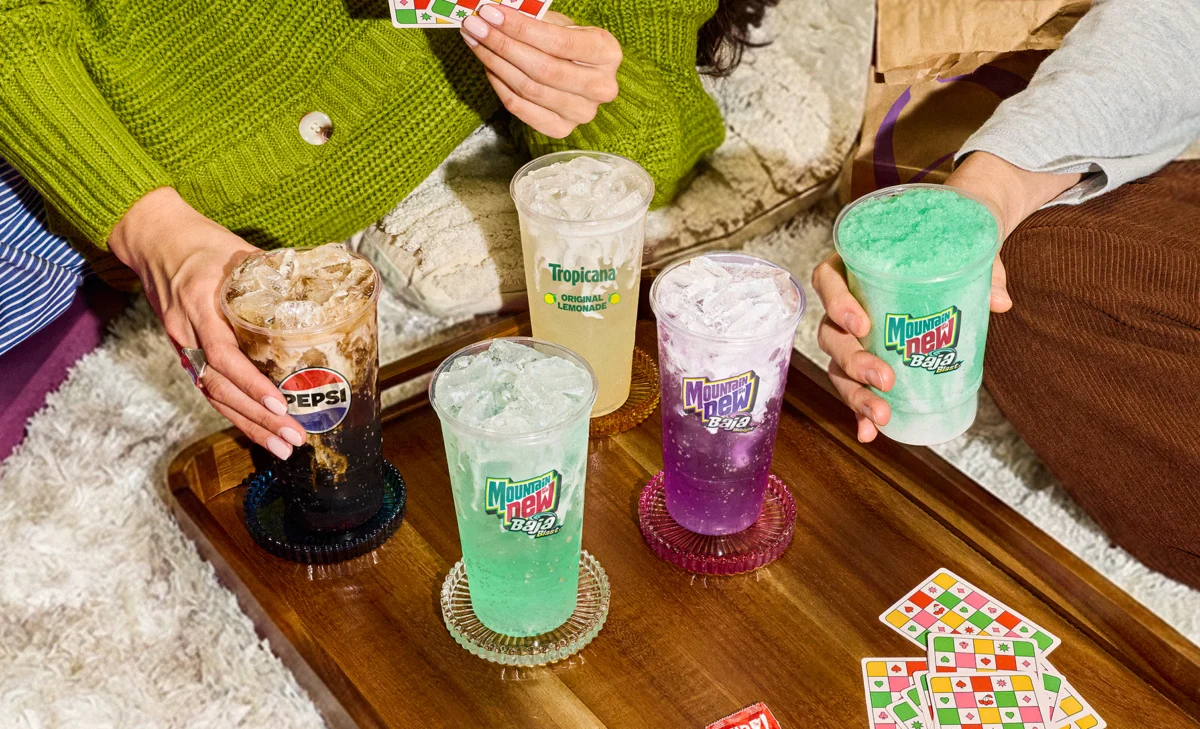
Taco Bell is significantly expanding its beverage portfolio by making its popular "Dirty Sips" line a permanent fixture on menus nationwide, a strategic move that began with the introduction of the Mountain Dew Baja Blast dirty soda in January 2025. This enhancement allows customers to customize their favorite sodas, freezes, and lemonades by adding a pump of vanilla cream for an additional 30 cents, effectively transforming standard drinks into indulgent "dirty sodas." This expansion is a key component of Taco Bell’s ambitious goal to achieve $5 billion in beverage sales by 2030, underscoring a broader shift in the quick-service restaurant industry towards higher-margin, customizable drink options.
The Rise of "Dirty Sodas" and Taco Bell’s Strategic Response
The "dirty soda" trend, which gained significant traction through social media platforms like TikTok, involves adding flavored syrups, cream, or other sweeteners to carbonated beverages. While originating as a do-it-yourself phenomenon, brands have increasingly recognized its commercial potential. Taco Bell’s early adoption of this trend, particularly with its iconic Baja Blast, provided a strong foundation for this permanent menu integration. The ability for customers to personalize their drinks with vanilla cream adds another layer of customization, catering to evolving consumer preferences for tailored experiences and unique flavor profiles.
The permanent inclusion of Dirty Sips signifies a long-term commitment by Taco Bell to leverage beverage innovation as a significant revenue driver. This strategy aligns with a growing trend in the fast-food industry where beverage sales, often boasting higher profit margins than food items, are becoming increasingly crucial for overall profitability. By offering a customizable and accessible "dirty soda" experience, Taco Bell is not only capitalizing on a popular trend but also aiming to differentiate itself in a competitive market.
Expanding the Beverage Landscape
Beyond the core Dirty Sips offering, Taco Bell is also introducing the Pink Passionfruit Refresca Freeze as a limited-time offering. This vibrant frozen beverage features a pink passionfruit base, complemented by pineapple flavor and chunks of freeze-dried strawberries. Available for $3.99 for a 16-ounce serving and $4.19 for a 20-ounce serving, it represents an effort to capture consumer interest with seasonal and visually appealing options.
Complementing these new additions, the Strawberry Passionfruit Agua Refresca is now a permanent menu item. Crafted with green tea and infused with freeze-dried strawberry pieces, this refreshing drink offers a lighter, fruit-forward alternative. The strategic expansion of the beverage menu, encompassing both indulgent and refreshing options, aims to appeal to a wider range of consumer tastes and occasions.
A Glimpse into Future Drink Innovations
Taco Bell has also hinted at further beverage innovations on the horizon. In a recent blog post, the company suggested that this is just the beginning of their exploration into creative drink offerings. This forward-looking approach indicates a sustained investment in research and development for new beverage concepts, potentially including more unique flavor combinations, healthier alternatives, or even functional beverages. The company’s commitment to achieving its ambitious $5 billion beverage sales target by 2030 suggests that beverage innovation will remain a central pillar of its growth strategy for the foreseeable future.
Diversifying the Menu: Food Innovations Take Center Stage
While beverages are a key focus, Taco Bell continues to innovate its food menu, demonstrating a dual-pronged approach to menu development. The company is currently testing two new food items in select markets, signaling a commitment to culinary exploration and catering to diverse consumer demands.
The Tacodilla: A Tex-Mex Fusion Test in Dallas
In Dallas, Taco Bell is piloting the Tacodilla, a unique item that blends elements of a quesadilla and a taco. Priced between $6.49 and $6.99, depending on the location, this creation features an oversized taco shell made from a grilled corn flour tortilla. The shell is then generously filled with a choice of steak or the popular Cantina Chicken, melted cheese, and a savory ranchero sauce. This innovative offering appears designed to appeal to consumers seeking a substantial and flavorful meal that bridges familiar Tex-Mex flavors with a novel format. The use of an oversized taco shell as a "wrapper" for a quesadilla-like filling presents an interesting textural and visual appeal, potentially drawing interest from adventurous eaters.
.jpg?width=1280&&quality=80&format=jpg&disable=upscale)
The Crispalupa: A Crunchy Revelation in Chicago
Meanwhile, in Chicago, Taco Bell is testing the Crispalupa. This item, priced at $4.49, boasts a distinctive crispy, cheesy fried shell. This unique shell encases slow-roasted chicken, crisp lettuce, fresh pico de gallo, creamy Jalapeño Ranch sauce, and shredded cheddar cheese. The Crispalupa appears to be an evolution of Taco Bell’s signature chalupa, emphasizing a heightened level of crispiness and a savory, cheesy exterior. The combination of textures and flavors – the crunch of the shell, the tenderness of the chicken, the freshness of the vegetables, and the tang of the ranch sauce – suggests a carefully crafted flavor profile designed to offer a satisfying and craveable experience.
These food tests are not isolated events but rather part of a broader strategy. Taco Bell recently announced a robust slate of new food innovations expected to launch throughout the current year, indicating a sustained effort to refresh and expand its core food offerings. The company’s approach to menu development appears to be a delicate balance between introducing entirely novel concepts and refining existing popular items to maintain customer engagement and attract new demographics.
Strategic Implications and Industry Context
The accelerated pace of menu innovation at Taco Bell, particularly in beverages, reflects broader shifts within the quick-service restaurant industry. As consumer tastes become more diverse and demands for customization and unique experiences grow, brands are under pressure to constantly evolve their offerings. The success of the "dirty soda" trend, largely driven by social media, highlights the influence of digital platforms on food and beverage trends and the importance of brands engaging with these cultural moments.
Taco Bell’s focus on beverages aligns with the industry’s recognition of their significant profit potential. High-margin drinks can substantially boost overall revenue and profitability, especially as food costs remain a concern. By making "Dirty Sips" permanent and continuing to experiment with new drink concepts, Taco Bell is strategically positioning itself to capitalize on this lucrative segment.
Furthermore, the company’s commitment to expanding its beverage sales to $5 billion by 2030 is a bold statement of intent. This ambitious target suggests a long-term vision that prioritizes beverage innovation as a core growth engine, potentially influencing how other QSR chains approach their own beverage strategies.
The simultaneous testing of new food items like the Tacodilla and Crispalupa indicates that Taco Bell is not neglecting its foundational food business. Instead, it appears to be pursuing a holistic menu strategy that aims to satisfy a wide spectrum of consumer desires, from refreshing and customizable drinks to innovative and craveable food options. The success of these tests could lead to nationwide rollouts, further diversifying Taco Bell’s menu and strengthening its competitive position.
The competitive landscape for quick-service restaurants is becoming increasingly dynamic, with brands needing to offer more than just convenience and value. Taco Bell’s strategic moves, encompassing both beverage and food innovation, demonstrate an understanding of these evolving consumer expectations. By embracing popular trends, offering personalization, and consistently introducing new and exciting products, Taco Bell is striving to remain a relevant and appealing choice for consumers in a rapidly changing market. The ongoing evaluation of these new items will provide crucial data for Taco Bell’s future menu decisions, informing further investments in product development and marketing strategies.
About the Author:
Alicia Kelso, Executive Editor of Nation’s Restaurant News, has been a dedicated observer of the restaurant industry since 2010. Her extensive coverage has spanned various platforms, including QSRweb.com, FastCasual.com, and PizzaMarketplace.com, before returning to the industry after a tenure in higher education. Kelso has also contributed to Restaurant Dive and served as a senior contributor for Forbes. Her work has reached a global audience, appearing in publications such as Forbes Asia, NPR, Bloomberg, The Seattle Times, Crain’s Chicago, Good Morning America, and Franchise Asia Magazine. A graduate of Bowling Green State University with a degree in journalism, Kelso is a passionate advocate for the restaurant sector, bringing a wealth of knowledge and insight to her reporting. She resides in Louisville, Kentucky, with her wife and son.
