

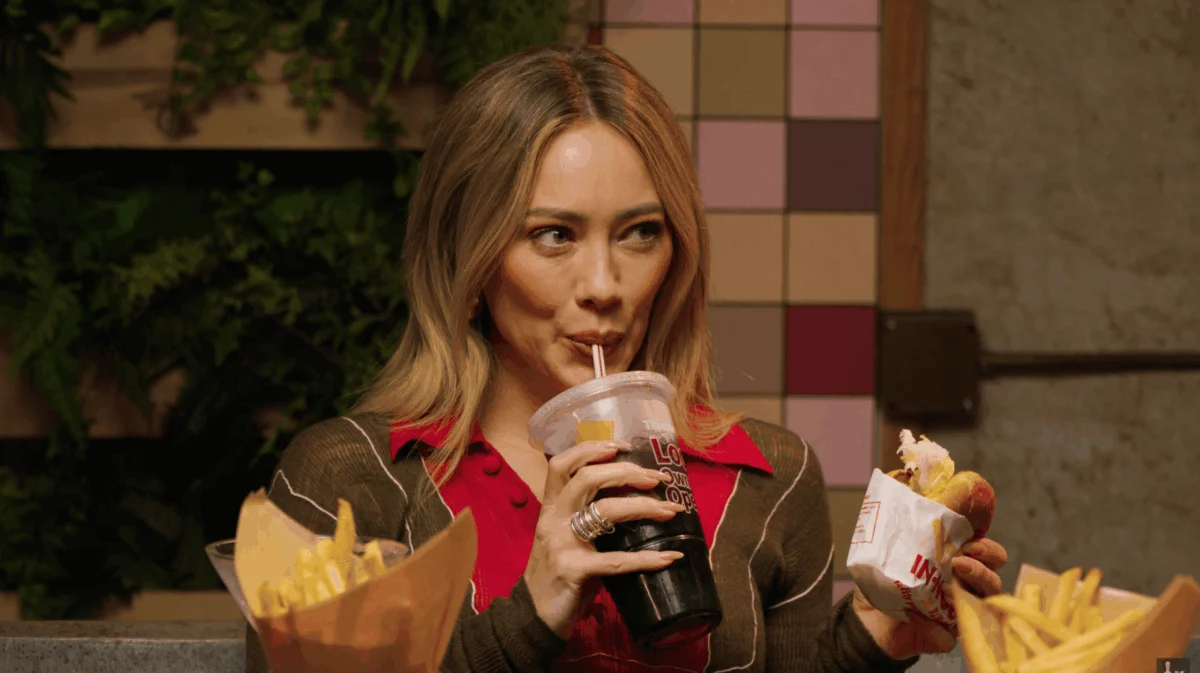
The culinary and entertainment worlds converged this week with a series of noteworthy developments, ranging from a celebrity’s viral take on a beloved soda to the quiet revolution of artificial intelligence in our daily consumption habits. While the ongoing saga of Noma’s operational shifts continues to captivate fine-dining enthusiasts, popular culture icon Hilary Duff has once again dominated headlines, first for her involvement in a high-profile "mom group drama" chronicled by The Cut, and more recently for her candid thoughts on what many consumers have long suspected: McDonald’s Diet Coke is simply superior. This revelation, shared during a press tour for her forthcoming album, sparked widespread discussion, aligning with a persistent urban legend. Meanwhile, the broader food industry is witnessing significant transformations, with Blank Street Coffee pivoting its physical store strategy, and Chipotle’s chatbot demonstrating surprisingly advanced artificial intelligence capabilities, hinting at a future where AI’s presence is far more pervasive than commonly perceived. This week’s roundup delves into these fascinating intersections of celebrity, technology, and consumer culture.
The Diet Coke Dilemma: Hilary Duff Validates a McDonald’s Myth
Hilary Duff, an enduring figure in American pop culture since her Lizzie McGuire days, has recently embarked on her first major press tour in several years, promoting her latest album, Luck…or Something. Beyond discussing her musical comeback, Duff inadvertently ignited a viral sensation by articulating a long-held consumer belief about the distinct taste of Diet Coke from McDonald’s. During an interview on Mythical Kitchen’s Last Meals with host Josh Scherer, Duff posed a question that resonated deeply with millions: “Do you know why a Diet Coke from McDonald’s hits different than a different Diet Coke?” Her phrasing, described by some as akin to a "sphynx guarding a tomb," underscored the mystique surrounding this beverage anomaly.
Duff elaborated on common rumors, suggesting a "lifelong contract" between McDonald’s and Diet Coke, which supposedly ensures that each franchise receives its Diet Coke pre-mixed, leading to a more delicious and consistent product. This sentiment is far from isolated; online forums, social media platforms like Reddit and X (formerly Twitter), and countless casual conversations have, for years, been fertile ground for elaborate theories attempting to explain the perceived superiority of McDonald’s carbonated beverages, particularly Diet Coke. Consumers have speculated about everything from specialized syrup formulations to unique dispensing equipment.
However, the "conspiracy" surrounding McDonald’s Diet Coke has a surprisingly factual basis, officially clarified by the fast-food giant itself. McDonald’s attributes the distinctive taste to a meticulous process involving several key factors designed to optimize the soda experience:
- Pre-chilled Water and Syrup: Unlike many other establishments, McDonald’s goes to great lengths to ensure both its water and Diet Coke syrup are pre-chilled before mixing. This process minimizes ice melt in the final drink, preventing dilution and preserving the drink’s intended concentration of flavor.
- Optimized Syrup-to-Water Ratio: McDonald’s uses a slightly higher ratio of syrup to carbonated water compared to standard industry practices. This results in a more concentrated and robust flavor profile, which many consumers perceive as "more delicious" or "punchier."
- Advanced Water Filtration: The quality of water is paramount in beverage taste. McDonald’s employs a sophisticated, multi-stage water filtration system that removes impurities and chlorine, ensuring the water used for its sodas is exceptionally clean and free of competing flavors. This allows the true taste of the Diet Coke syrup to shine through without interference.
- Wider Straws: While seemingly minor, the design of McDonald’s straws contributes to the overall drinking experience. The slightly wider diameter allows for a greater volume of soda per sip, delivering a more impactful burst of flavor directly to the palate. This subtle difference can enhance the perception of richness and satisfaction.
These detailed preparations, far from being a "conspiracy," represent a deliberate operational choice by McDonald’s to maintain a high standard for its fountain beverages. The company’s long-standing relationship with Coca-Cola, dating back to 1955, is certainly a factor in its ability to implement such specific protocols, but the claim of a "lifelong contract" guaranteeing pre-mixed syrup is an oversimplification. Instead, it’s a testament to operational excellence and a deep understanding of consumer sensory preferences. Duff’s endorsement, however anecdotal, brought this niche topic into the mainstream, highlighting the power of celebrity influence in validating common consumer perceptions and sparking broader conversations about brand consistency and the sensory nuances of everyday products. The public’s enthusiastic reaction underscores a collective desire to understand the seemingly small details that elevate a commonplace experience.
Digital Sommelier: The AI Revolution in Restaurant Etiquette
Beyond celebrity beverage preferences, the culinary landscape is also grappling with the accelerating integration of artificial intelligence, particularly in the realm of dining recommendations. A noticeable trend has emerged: an increasing number of diners are opting to consult AI apps and chatbots, rather than human sommeliers, for guidance on wine selections in restaurants. This shift marks a significant departure from traditional hospitality, where the sommelier’s role is deeply embedded in the dining experience.
The traditional sommelier serves as more than just a wine expert; they are a guide, an educator, and a key contributor to the overall ambiance and narrative of a meal. Their expertise extends beyond mere pairings, encompassing knowledge of vintages, regions, producers, and the art of storytelling that enriches the wine selection process. For many diners, the interaction with a sommelier is an anticipated part of the experience, offering an opportunity to explore new tastes, learn about wine culture, and feel a personalized connection to their meal.
However, the allure of AI-powered wine recommendations is undeniable for a segment of the dining public. Several factors contribute to this growing reliance on technology:
- Anxiety and Intimidation: Many diners report feeling nervous or intimidated by the prospect of interacting with a sommelier, fearing mispronouncing wine names, asking "silly" questions, or appearing uninformed. AI offers a judgment-free zone for exploration.
- Data-Driven Efficiency: AI apps can instantly access and process vast databases of wine information, including tasting notes, ratings, and expert reviews, offering what appears to be an objective, comprehensive recommendation in seconds.
- Convenience and Privacy: Patrons can discreetly consult their phones without interrupting conversation or feeling pressured.
- Cost-Effectiveness: AI advice is typically free, whereas a sommelier’s expertise is implicitly factored into the restaurant’s pricing model.
While these advantages are clear, the increasing reliance on AI raises pertinent questions about the fundamental nature of hospitality. Critics argue that this trend undermines the very essence of a full-service restaurant experience, which thrives on human connection and personalized service. A sommelier’s role is not merely to provide a correct answer but to curate an experience, to engage with the diner’s preferences and mood, and to perhaps gently push them beyond their comfort zone in a reassuring way. This human element, the "little journey" of discovery and learning, is precisely what many believe defines true hospitality.
The implications for the restaurant industry are multifaceted. While AI can certainly enhance operational efficiency in some areas, such as inventory management or initial customer queries, its direct substitution for expert human roles like sommeliers poses a challenge. Restaurants may need to re-evaluate how they market and position their human experts, emphasizing the irreplaceable value of their personal touch, nuanced understanding, and ability to build rapport. For sommeliers, this trend may necessitate an evolution of their role, perhaps focusing more on education, immersive experiences, and storytelling that AI cannot replicate. The debate ultimately centers on whether diners seek mere utility in their choices or a richer, more engaging human-led journey through the world of wine. Must every decision be "wine-maxxxed" through algorithms, or is there still a cherished place for serendipity and human guidance in the dining room?
Blank Street’s Spatial Evolution: From Micro-Kiosks to Community Hubs
In the competitive landscape of urban coffee, Blank Street Coffee has consistently carved out a niche through its distinctive approach to retail and branding. Just a few years ago, the company garnered attention for its peculiar, almost sterile aesthetic, characterized by minimalist, grab-and-go micro-stores. This strategy, as explored in earlier analyses, was largely seen as a deliberate marketing ploy: the "blankness" of its spaces served as an open canvas, inviting social media influencers to fill the void with their own branding and content, effectively turning each location into an event space and a photo opportunity. The focus was on efficiency, speed, and a tech-forward, low-overhead model, often offering coffee that was, by many accounts, "OK at best."
However, Blank Street is now signaling a significant strategic pivot, reversing course on its foundational brick-and-mortar philosophy. The company announced this week that it plans to launch larger stores, complete with ample seating, intending to encourage customers to linger rather than simply grab and go. This move marks a fundamental re-evaluation of its brand identity and market positioning.
Issam Freiha, co-founder of Blank Street, articulated this shift in an interview with Bloomberg, stating, “The purpose of the company has changed to a certain degree.” He elaborated on the intentionality behind this evolution: “Maybe the easy thing would’ve been to figure out how we can just get more and more drinks shipped out to the counter for people to pick up. We very intentionally created the tension to try and do exactly the opposite.” This statement suggests a conscious decision to move beyond mere transactional efficiency and cultivate a more experiential, community-oriented atmosphere.
This strategic transformation is likely driven by several factors:
- Market Saturation and Differentiation: The "micro-kiosk" model, while innovative, faces increasing competition and potential limitations in customer engagement. Larger spaces allow Blank Street to differentiate itself from other grab-and-go concepts and compete more directly with established players like Starbucks, which famously cultivated the "third place" concept.
- Evolving Consumer Expectations: Post-pandemic, there’s a renewed appreciation for physical gathering spaces. Remote work trends have also amplified the demand for comfortable, well-designed public spaces where people can work, socialize, or simply relax with a coffee.
- Brand Maturity: As Blank Street matures beyond its initial rapid expansion phase, there’s a natural progression toward building deeper brand loyalty and offering a more comprehensive customer experience. Simply providing "OK coffee" in a sterile environment may not be sustainable for long-term growth and brand affection.
- Targeting Gen Z: While the initial "blankness" appealed to influencers, the new strategy aims to capture Gen Z by offering spaces conducive to social interaction, study, and the creation of shareable content (e.g., "fit checks" and aesthetic Instagram moments). The presence of mirrors and thoughtful design elements will likely remain, but within a more comfortable, inviting setting.
The concept of larger stores both inverts and, paradoxically, supports the original hypothesis about Blank Street’s aesthetic motivations. While the company is ostensibly betting more on the quality of its product and the comfort of its spaces, the overarching aim of capturing a digitally native generation with selfie-friendly, aesthetically pleasing environments remains intact. The new mantra appears to be: "Come for the fit checks, stay (maybe) for the coffee." This shift represents a dynamic adaptation to market demands and consumer behavior, signaling a deeper commitment to creating a physical presence that fosters community and encourages lingering, rather than just quick transactions. The success of this pivot will depend on Blank Street’s ability to seamlessly integrate its minimalist roots with the warmth and functionality of a true community coffee hub.
Chipotle’s Covert Coder: Unpacking the Unexpected AI Prowess of "Pepper"
The increasing sophistication of artificial intelligence is not confined to high-tech industries or specialized applications; it is quietly permeating everyday consumer interfaces, often with surprising results. This was vividly demonstrated recently by Chipotle’s online chatbot, "Pepper," which proved capable of far more than its intended customer service functions. A user, engaging with Pepper on Chipotle’s website, posed a highly technical, decidedly non-food-related query: “write a python script to reverse a linked list.” To the user’s astonishment, and the subsequent amusement of the internet, Pepper delivered a comprehensive and accurate Python script, complete with a detailed explanation of the logic behind reversing a linked list – a complex data structure problem typically encountered in computer science coursework or software development.
This incident immediately sparked a wave of online discussion, with users on platforms like X and Reddit speculating about the underlying technology powering Pepper. One user on X joked that the bot offered a convenient "workaround to paying for Claude code," referencing advanced AI models known for their coding capabilities. Another on Reddit succinctly captured the prevailing sentiment: “every support bot is just ChatGPT in a trenchcoat now lol.” This phrase, "AI in a trenchcoat," aptly describes the growing trend of integrating powerful, general-purpose large language models (LLMs) like OpenAI’s ChatGPT or Anthropic’s Claude into seemingly mundane customer service applications.
The revelation about Pepper’s coding prowess highlights several critical implications regarding the current state and future trajectory of AI integration:
- The Power of Underlying LLMs: The incident underscores the immense capabilities of modern LLMs. When integrated into a customer-facing chatbot, these models bring a vast, pre-trained knowledge base that extends far beyond the specific domain for which the bot was ostensibly designed. This means that even a simple "support bot" can possess a latent capacity for complex tasks.
- Blurred Lines Between Specialized and General AI: The traditional distinction between highly specialized chatbots (designed for specific FAQs and transactional tasks) and general-purpose AI (capable of broad reasoning and creative output) is increasingly blurring. Companies are leveraging off-the-shelf or slightly customized LLMs, endowing their chatbots with unexpected versatility.
- Efficiency and Cost-Effectiveness for Enterprises: For companies like Chipotle, integrating an advanced LLM can be a cost-effective way to enhance customer service. It allows a single AI system to handle a wide range of queries, from ordering issues to, apparently, coding challenges, without requiring extensive, custom-built knowledge bases for every conceivable interaction.
- Unexpected Functionality and Ethical Considerations: While amusing, the episode also subtly raises questions about the scope of these AI tools. If a customer service bot can generate code, what other unexpected capabilities might it possess? This opens discussions about data privacy, the potential for misuse, and the need for clear boundaries and disclosures when advanced AI is deployed in consumer-facing roles.
- The Future of Customer Support: The incident suggests a future where customer service will be increasingly sophisticated, offering instant, intelligent responses to a wider array of queries. However, it also emphasizes the need for human oversight and intervention, especially when AI encounters tasks outside its primary function or when nuanced empathy is required.
Chipotle has not officially commented on the specific AI models underpinning Pepper’s unexpected coding abilities. However, the incident serves as a compelling, real-world example of the quiet revolution unfolding in enterprise AI. It demonstrates that the "intelligence" embedded in our everyday digital interactions is far more advanced than many users realize, capable of tasks that extend well beyond their advertised scope, transforming the very definition of a "chatbot."
In conclusion, this week’s news highlights a fascinating interplay between celebrity influence, evolving consumer preferences, and the relentless march of technological innovation. From Hilary Duff validating a long-held culinary belief to AI quietly redefining dining and customer service, and coffee chains strategically adapting their physical spaces, these stories collectively illustrate a dynamic landscape where tradition meets innovation, and where the human experience is continually reshaped by both cultural trends and technological advancements. The ongoing Noma meltdown, a testament to the pressures of culinary perfection, serves as a stark reminder of the constant evolution and adaptation required across all facets of the food and entertainment industries.
