

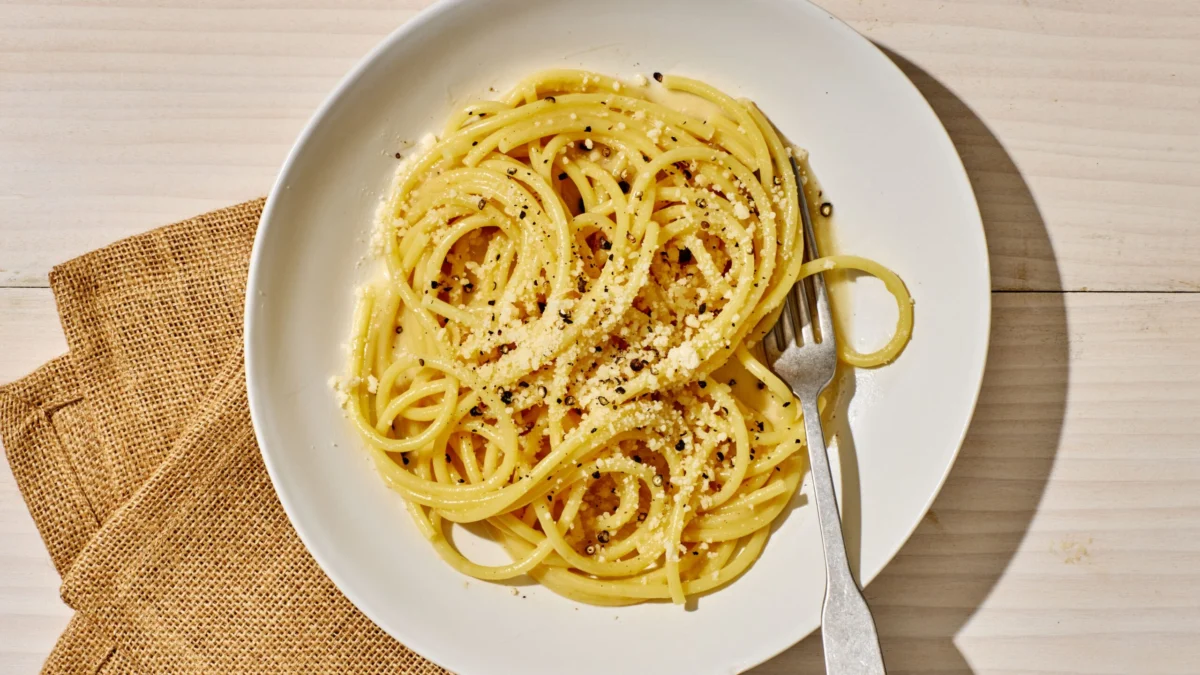
Alongside the rich, indulgent Carbonara and the vibrant, robust Amatriciana, Cacio e Pepe stands as one of Rome’s most essential and celebrated pasta dishes, embodying the profound beauty of culinary minimalism. Esteemed for its elegant simplicity, the classic rendition of this iconic dish traditionally comprises only three core ingredients: pasta, freshly ground black pepper, and Pecorino Romano cheese. However, modern culinary interpretations and refined techniques often introduce elements such as butter to facilitate sauce emulsification and enhance the "bloom" of the crushed pepper, thereby maximizing its aromatic depth. Additionally, the inclusion of a touch of Parmesan cheese is sometimes employed to temper the sharp, salty tang of Pecorino Romano with a warm, nutty richness, achieving a more balanced flavor profile. This exploration delves into the historical origins, culinary science, and nuanced preparation techniques that elevate Cacio e Pepe from a simple meal to a gastronomic masterpiece, reflecting its journey from humble beginnings to global acclaim.
Historical Roots and Cultural Significance
The origins of Cacio e Pepe are deeply embedded in the pastoral traditions of the Roman Campagna. Historically, it was a staple food for shepherds, known for its practicality and ability to provide sustained energy during long days tending flocks. The ingredients were readily available and non-perishable: dried pasta, hard Pecorino Romano cheese (made from sheep’s milk, which was abundant), and black peppercorns, which were easily transportable and provided warmth. This historical context underscores the dish’s fundamental identity as a dish of necessity and ingenuity, crafted from readily available resources. The very name, "Cacio e Pepe," translates simply to "cheese and pepper," a testament to its unadorned core.
Over centuries, Cacio e Pepe transcended its rustic origins to become a cornerstone of Roman cuisine, revered for its ability to transform basic ingredients into an intensely flavorful and satisfying experience. It represents a philosophy of cooking where the quality of each component is paramount, and the technique is designed to highlight, rather than mask, their inherent flavors. Its enduring presence in Roman trattorias and homes speaks to its deep cultural resonance and its status as a definitive expression of Roman culinary heritage.
The Anatomy of Simplicity: Core Ingredients and Their Nuances
The deceptively simple ingredient list of Cacio e Pepe belies the complexity of flavor and texture that can be achieved when each component is meticulously selected and prepared.
Pasta: The Canvas
Traditionally, Tonnarelli, an egg pasta with a square cross-section, is the preferred choice for Cacio e Pepe in Rome. Its rough texture and generous surface area are ideal for capturing the creamy sauce. However, other long pasta shapes such as spaghetti or bucatini also perform beautifully. The key lies in selecting a pasta with sufficient starch content and a surface that allows the sauce to cling effectively. The starch released during the cooking process is not merely a byproduct but a crucial ingredient in itself, forming the backbone of the sauce’s emulsification.
Pecorino Romano: The Salty Soul
Pecorino Romano is indispensable to Cacio e Pepe. This hard, salty, and tangy sheep’s milk cheese boasts a Protected Designation of Origin (DOP) status, ensuring its authenticity and quality, which is vital for the dish’s characteristic flavor. Produced in Lazio, Sardinia, and the Tuscan province of Grosseto, it has been a staple of Roman tables for millennia. Its sharp, pungent notes are the defining characteristic of Cacio e Pepe, providing both saltiness and a distinct umami depth. The quality of Pecorino Romano directly impacts the final taste profile, making it a non-negotiable component for an authentic experience.
Black Pepper: The Aromatic Heart
The role of black pepper in Cacio e Pepe extends far beyond mere seasoning; it is a co-star with the cheese. The instruction to use fresh, coarsely ground black peppercorns, or even to crush them in a mortar and pestle or a zip-top bag with a heavy pan, is critical. Pre-ground pepper lacks the volatile oils and complex aromatics that fresh grinding releases. Coarsely ground pepper provides textural interest and a bolder, more pronounced flavor. Toasting the pepper briefly in butter or olive oil before combining it with the pasta water and cheese is a technique often employed to "bloom" its flavors, intensifying its fragrance and heat, releasing piperine and other aromatic compounds that contribute to the dish’s signature pungency.
Pasta Water: The Liquid Gold
Often overlooked, the starchy water in which the pasta is cooked is perhaps the most crucial "ingredient" for achieving the perfectly silky, emulsified sauce. This water is rich in starches released from the pasta, which act as a natural emulsifier, binding the fat from the cheese and butter (if used) with the water to create a creamy, cohesive sauce. Reserving ample pasta water and adding it gradually to the cheese mixture is a technique that master chefs employ to control the consistency and ensure a smooth, luxurious texture, preventing the cheese from clumping.
Butter and Parmesan: Modern Refinements
While purists might debate their inclusion, butter and Parmesan represent thoughtful refinements that can enhance the dish’s texture and flavor balance. Butter, when added during the initial blooming of the pepper, aids significantly in the emulsification process, providing a stable fat base that helps create a smoother sauce. It also contributes a subtle richness that complements the sharp Pecorino. Parmesan, or its close relatives like Grana Padano, Piave, or Asiago, offers a warmer, nuttier, and slightly less aggressive flavor profile compared to Pecorino Romano. When combined with Pecorino, it can create a more rounded and nuanced cheese flavor, preventing the dish from becoming overwhelmingly salty or sharp for some palates. This blend allows for a broader appeal without sacrificing the dish’s fundamental character.
The Science of the Silky Sauce: Mastering Emulsification
Achieving the perfect Cacio e Pepe sauce is a delicate balance of science and technique, primarily revolving around the art of emulsification.
The Role of Starch and Fat
The starch from the pasta water, combined with the fat and proteins from the cheese (and butter, if used), creates a stable emulsion. When hot pasta is tossed with the grated cheese and starchy pasta water, the heat melts the cheese, and the starch acts as a bridge, preventing the fat and water from separating. The vigorous stirring or tossing is essential to mechanically combine these elements into a homogenous, creamy sauce.
The Importance of Grating Technique
The method of grating cheese is not trivial. Using the finest holes of a box grater is preferred over a Microplane. A box grater produces slightly thicker, more substantial shreds of cheese with greater surface area, which melt more evenly and contribute to a richer sauce texture. A Microplane, conversely, produces very fine, wispy shreds that are prone to clumping when introduced to hot liquid, making a smooth emulsion more challenging to achieve. The goal is to maximize the surface area for melting while minimizing the risk of clumping.
Temperature Control and Gradual Addition
Adding the grated cheese gradually and off the heat is a critical step. If the cheese is added to excessively hot pasta water or directly over high heat, the proteins in the cheese can seize and clump, leading to a grainy, rather than silky, sauce. Removing the pan from direct heat allows for a more controlled melting process, giving the chef time to incorporate the cheese slowly, alternating with splashes of reserved pasta water, while continuously stirring or tossing vigorously. This methodical approach ensures a smooth, uniform emulsion.
Mastering the Technique: A Step-by-Step Culinary Journey
The execution of Cacio e Pepe is a dance between precision and intuition, culminating in a dish best served immediately to preserve its optimal texture and temperature.
- Preparation is Key: Before cooking, grate the Pecorino Romano (and Parmesan, if using) on a box grater. Coarsely grind fresh black peppercorns. Set the table, as the dish demands immediate consumption.
- Pasta Perfection: Cook the chosen pasta in generously salted boiling water. Undercook it slightly from al dente, as it will continue to cook in the sauce. Critically, do not drain the pasta using a colander. Instead, lift it directly from the boiling water using tongs or a pasta spoon, transferring it directly to the pan where the sauce will be built. This method ensures that the precious starchy pasta water remains readily available for emulsification.
- Pepper Bloom: In a large, deep skillet or pan, toast the coarsely ground black pepper over medium heat until fragrant, typically for about 30 seconds to a minute. If using butter, add it at this stage and let it melt, allowing the pepper to bloom in the fat.
- Creating the Emulsion Base: Add a ladle or two of the reserved starchy pasta water to the pan with the toasted pepper. Bring it to a gentle simmer, scraping up any fond from the bottom of the pan.
- Combining and Emulsifying: Add the slightly undercooked pasta directly to the pan with the pepper and pasta water. Toss vigorously to coat the pasta. Remove the pan from the heat. Begin adding the grated cheeses gradually, alternating with small splashes of reserved pasta water. Continuously stir and toss the pasta with tongs, working quickly and energetically. The goal is to create a creamy, cohesive sauce that clings to every strand of pasta. If the sauce becomes too thick, add more pasta water, a tablespoon at a time, until the desired consistency is achieved. If it’s too thin, a bit more cheese can be added, ensuring it’s off the heat.
- Immediate Service: Serve Cacio e Pepe immediately upon completion. The sauce, being a delicate emulsion, can seize or separate if left to sit for too long. A final flourish of freshly ground black pepper or a sprinkle of extra Pecorino Romano can be added just before serving.
The Broader Culinary Landscape: Cacio e Pepe’s Global Influence
In recent decades, Cacio e Pepe has experienced a global resurgence, moving beyond the trattorias of Rome to become a fixture on menus in high-end restaurants and home kitchens worldwide. Its minimalist charm resonates with a contemporary appreciation for ingredient-focused cooking and the pursuit of authentic flavors. This rise in popularity has led to various adaptations and interpretations, some celebrating its purity, others experimenting with additional ingredients or techniques. The dish has become a benchmark for chefs, a test of their understanding of fundamental Italian culinary principles, and a symbol of how few ingredients, expertly handled, can yield extraordinary results. Its simplicity makes it approachable for home cooks, while its technical demands offer a challenge to even seasoned professionals. This global appreciation underscores its significance not just as a Roman dish, but as a universal testament to culinary elegance.
Expert Perspectives and Culinary Debates
Within the culinary community, Cacio e Pepe often sparks lively discussions, particularly regarding authenticity versus evolution. The introduction of butter and Parmesan, while practical for emulsification and flavor balance, is often debated by purists who adhere strictly to the traditional three-ingredient formula. Chefs and food historians weigh in on the "correct" way to prepare the dish, often emphasizing the critical role of ingredient quality and meticulous technique over any specific recipe deviation. There is a general consensus, however, that the dish’s essence lies in its balance of sharp cheese, pungent pepper, and perfectly cooked pasta, bound by a creamy, starchy emulsion. The debate itself highlights the deep respect and passion surrounding such a foundational dish, reflecting a continuous dialogue about culinary heritage and innovation.
Pairing and Presentation
For a complete dining experience, Cacio e Pepe pairs beautifully with simple accompaniments. A light, crisp green salad provides a refreshing counterpoint to the richness of the pasta. Garlic bread, with its robust flavors, is always a welcome addition for soaking up any lingering sauce. When considering wine pairings, a crisp, dry white wine with good acidity, such as a Vermentino or a Frascati from the Lazio region, can cut through the richness of the cheese. Alternatively, a light-bodied red wine with soft tannins, like a young Sangiovese, can also complement the peppery notes without overpowering the delicate balance of the dish.
In conclusion, Cacio e Pepe is more than just a pasta dish; it is a culinary icon that epitomizes the elegance of simplicity and the power of high-quality ingredients. Its journey from a shepherd’s meal to a global phenomenon reflects its timeless appeal and the universal appreciation for food that speaks volumes with minimal fuss. Mastering Cacio e Pepe is not just about following a recipe; it is about understanding the interplay of flavors, the science of emulsification, and the cultural narrative woven into every creamy, peppery bite.
