

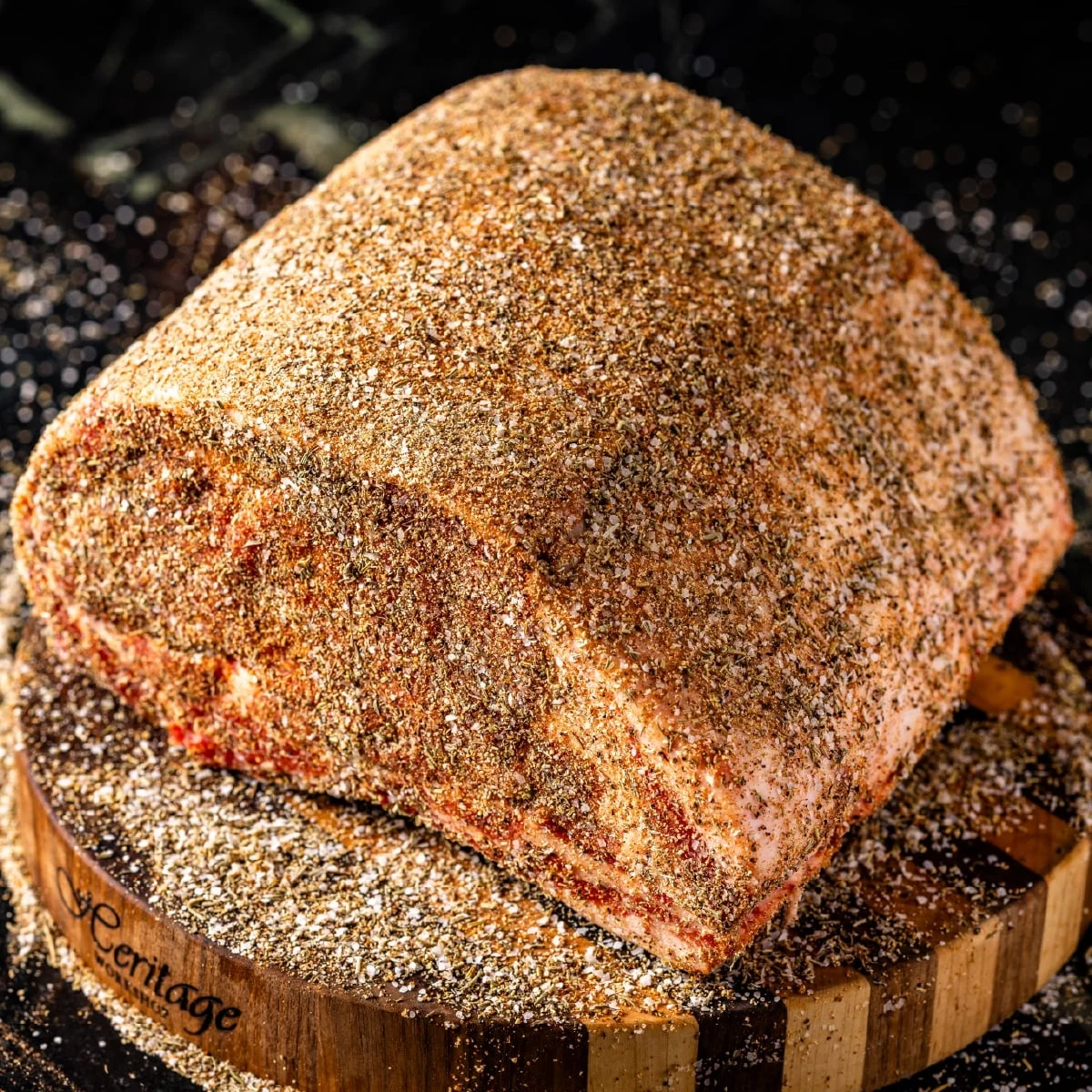
The preparation of a prime rib roast, historically referred to as the "standing rib roast," represents one of the most significant financial and culinary investments a home cook can undertake. Given the premium market price of USDA Prime and Choice beef cuts, the methodology of seasoning has shifted from a secondary consideration to a primary focus of culinary science. Susie Bulloch, the founder of the BBQ resource Hey Grill Hey, has addressed this demand by formalizing a proprietary Prime Rib Rub designed to accentuate the natural lipid profile of the beef while introducing a structured herbaceous layer. This development comes at a time when consumer interest in artisanal, home-mixed seasonings is at a record high, driven by a desire for "clean label" ingredients and the ability to control sodium and preservative intake.
Technical Specifications and Ingredient Composition
The Hey Grill Hey Prime Rib Rub is engineered around a seven-ingredient matrix, utilizing a salt-and-pepper foundation that serves as the primary flavor conductor. According to culinary standards, the coarse texture of the seasoning is vital for the development of the "crust" or bark during the roasting process. The specific components identified in this formulation include:

- Kosher Salt: Used for its large crystal size, which allows for even distribution and facilitates the process of osmosis, drawing moisture to the surface before reabsorbing the seasoned brine into the muscle fibers.
- Coarse Black Pepper: Provides a sharp, pungent heat that cuts through the richness of the ribeye’s fat cap.
- Garlic Powder: Introduces a savory, sulfuric depth that complements the Maillard reaction occurring on the meat’s surface.
- Onion Powder: Adds a subtle sweetness and umami base, bridging the gap between the sharp spices and the earthy herbs.
- Dried Rosemary: A traditional steakhouse staple, rosemary contains volatile oils that are released slowly under heat, providing a pine-like aroma.
- Dried Thyme: Offers a delicate, floral counterpoint to the heavier garlic and pepper notes.
- Smoked Paprika (or similar colorant): While often used for its mild pepper flavor, it primarily functions to enhance the visual appeal of the roast, providing a deep mahogany hue to the finished crust.
The ratio of these ingredients is balanced to ensure that the seasoning does not "steal the show," a common critique of commercial rubs that rely heavily on sugar or artificial smoke flavorings. Instead, this blend is designed to be savory and herbaceous, highlighting the intrinsic qualities of the beef.
Historical Chronology of the Prime Rib Tradition
To understand the necessity of a specialized rub, one must examine the chronology of the prime rib as a centerpiece of Western gastronomy.
- The British Influence (18th – 19th Century): The tradition of the "Sunday Roast" began in Industrial Revolution-era Britain. Large cuts of beef were roasted on a spit or in bread ovens. Seasoning was rudimentary, often limited to salt and the natural juices of the meat.
- The American Steakhouse Era (Mid-20th Century): As beef production scaled in the United States, the prime rib became a symbol of mid-century luxury. Iconic establishments began experimenting with "house rubs," often keeping their herb-to-salt ratios a closely guarded secret.
- The Backyard BBQ Movement (2010s – Present): With the advent of pellet grills and high-quality smokers, the techniques once reserved for professional chefs moved into the residential backyard. Figures like Susie Bulloch emerged during this period, democratizing high-level meat preparation through digital platforms. The release of the Prime Rib Rub is a continuation of this trend, moving away from pre-packaged, chemical-laden products toward transparent, home-mixed alternatives.
Data-Driven Analysis of Application and Performance
The efficacy of a dry rub is measured by its ability to interact with the meat’s surface over time. For an 8 to 10-pound prime rib, data suggests that a volume of 1/4 to 1/2 cup of rub is optimal. This translates to approximately one tablespoon per pound of meat, a ratio that ensures total surface coverage without over-salting the interior.

In a dry-aging or "dry-brining" scenario—where the rub is applied 12 to 24 hours before cooking—the salt in the rub undergoes a chemical reaction. It dissolves into a syrup-like consistency on the surface, eventually penetrating the meat. This not only seasons the roast deeply but also alters the protein structure, allowing the meat to retain more moisture during the high-heat roasting or low-heat smoking process.
Nutritional data for the rub indicates a high sodium content per serving (approximately 13,976mg for the entire batch), which is expected for a preservation-style seasoning. However, because the rub is applied to the exterior of a large roast, the actual sodium intake per serving of sliced meat remains within standard dietary parameters for celebratory meals. The inclusion of Vitamin A (3596IU) and Iron (6mg) is primarily attributed to the dried herbs and paprika.
Expert Perspectives and Philosophical Approach
Susie Bulloch, often referred to as the "BBQ Boss Lady," maintains a philosophy centered on simplicity and accessibility. Her approach to the Prime Rib Rub reflects a broader movement in the BBQ community that prioritizes "simple ingredients combined to make something delicious."

Industry analysts note that Bulloch’s success—which includes appearances on the Food Network and multiple Guinness World Records—is rooted in her ability to translate complex pitmaster techniques for the average consumer. "Prime rib means it’s likely a special occasion," Bulloch noted in her briefing on the recipe. "You want a rub to make your investment worth it and your memories great." This statement underscores the psychological aspect of holiday cooking, where the pressure to perform on a high-cost item like prime rib can be significant for home cooks.
Storage Logistics and Shelf Life Stability
A critical factor in the utility of homemade seasonings is their shelf-life stability. The Hey Grill Hey Prime Rib Rub is formulated with dried components, which significantly reduces the risk of microbial growth, provided the mixture is kept away from moisture.
- Optimal Storage: The rub should be housed in airtight glass containers. Glass is preferred over plastic as it does not absorb the volatile oils from the rosemary and thyme.
- Potency Timeline: While the rub is safe for consumption for several years, its "peak flavor" window is approximately 3 months. After this period, the essential oils in the dried herbs begin to dissipate, and the ground pepper loses its characteristic "bite."
- Environmental Factors: Storage in a "cool, dry place" is not merely a suggestion but a requirement for maintaining the flowability of the powders. Exposure to steam from a stovetop can cause the garlic and onion powders to "cake" or solidify, rendering the rub difficult to apply evenly.
Broader Implications for the Culinary Industry
The shift toward DIY seasoning blends like the Prime Rib Rub has broader implications for the retail spice industry. Major spice manufacturers have reported a decline in the growth of pre-mixed "grill seasonings" as consumers increasingly turn to online influencers for "from-scratch" recipes. This trend is driven by three primary factors:

- Economic Efficiency: Creating a rub at home from bulk-purchased spices is estimated to be 40-60% cheaper than purchasing small, branded tins of specialty rubs.
- Customization: Home cooks can adjust the heat levels (pepper) or aromatic levels (herbs) to suit specific dietary needs or flavor preferences.
- Transparency: By mixing their own rubs, consumers eliminate "anti-caking agents" like silicon dioxide and "natural flavors" that are often found in commercial products.
Furthermore, the integration of these recipes into digital ecosystems—such as the Hey Grill Hey App—demonstrates the changing landscape of how culinary information is consumed. The "Backyard BBQ Hero" is no longer someone who follows a box’s instructions but someone who understands the component parts of their flavor profile.
Final Summary of Methodology
The preparation of the Prime Rib Rub involves a two-step process: the precise measurement of the seven dry ingredients followed by a thorough mechanical blending to ensure a homogenous mixture. This ensures that every square inch of the prime rib receives an identical ratio of salt to herb. Whether the cook chooses to smoke the roast with a garlic butter binder or apply the rub directly as a dry crust, the foundational chemistry remains the same.
As the culinary world continues to evolve, the emphasis on foundational skills—such as the creation of the perfect rub—serves as a bridge between traditional holiday roasting and modern, data-informed cooking techniques. The Hey Grill Hey Prime Rib Rub stands as a testament to this balance, offering a reliable, high-performance solution for one of the most prestigious cuts in the butcher’s case.
