

The global spirits industry has witnessed a significant transformation over the past decade, characterized by a shift toward premiumization and the emergence of hyper-seasonal product categories. Among these, gin has established itself as the primary vehicle for botanical innovation. Unlike spirits such as scotch or cognac, which are strictly governed by aging requirements and specific grain compositions, gin serves as a versatile canvas for distillers. By legal definition, the spirit must be dominated by the flavor of juniper, but beyond that requirement, a distiller may incorporate any number of botanicals to create a specific sensory profile. This inherent flexibility has led to the rapid development of the "Christmas Gin" category, a niche that has evolved from simple winter-themed expressions into complex, narrative-driven spirits that encapsulate the culinary and cultural traditions of the holiday season.
The development of seasonal gins has followed a clear chronological trajectory. Approximately ten years ago, the craft gin movement began to gain international momentum, driven by a consumer desire for local provenance and unique flavor profiles. By five years ago, distillers began experimenting with "winter editions," which typically focused on warming spices like cinnamon, clove, and nutmeg. However, the market has recently shifted toward more literal interpretations of the holiday. Today, "Christmas Gins" are no longer just seasonal variants; they are highly sought-after limited releases that utilize avant-garde distillation techniques and unconventional ingredients—ranging from whole gingerbread houses to gold leaf and steamed puddings—to capture the essence of the festivities.
Botanical Innovation and the Confectionary Influence
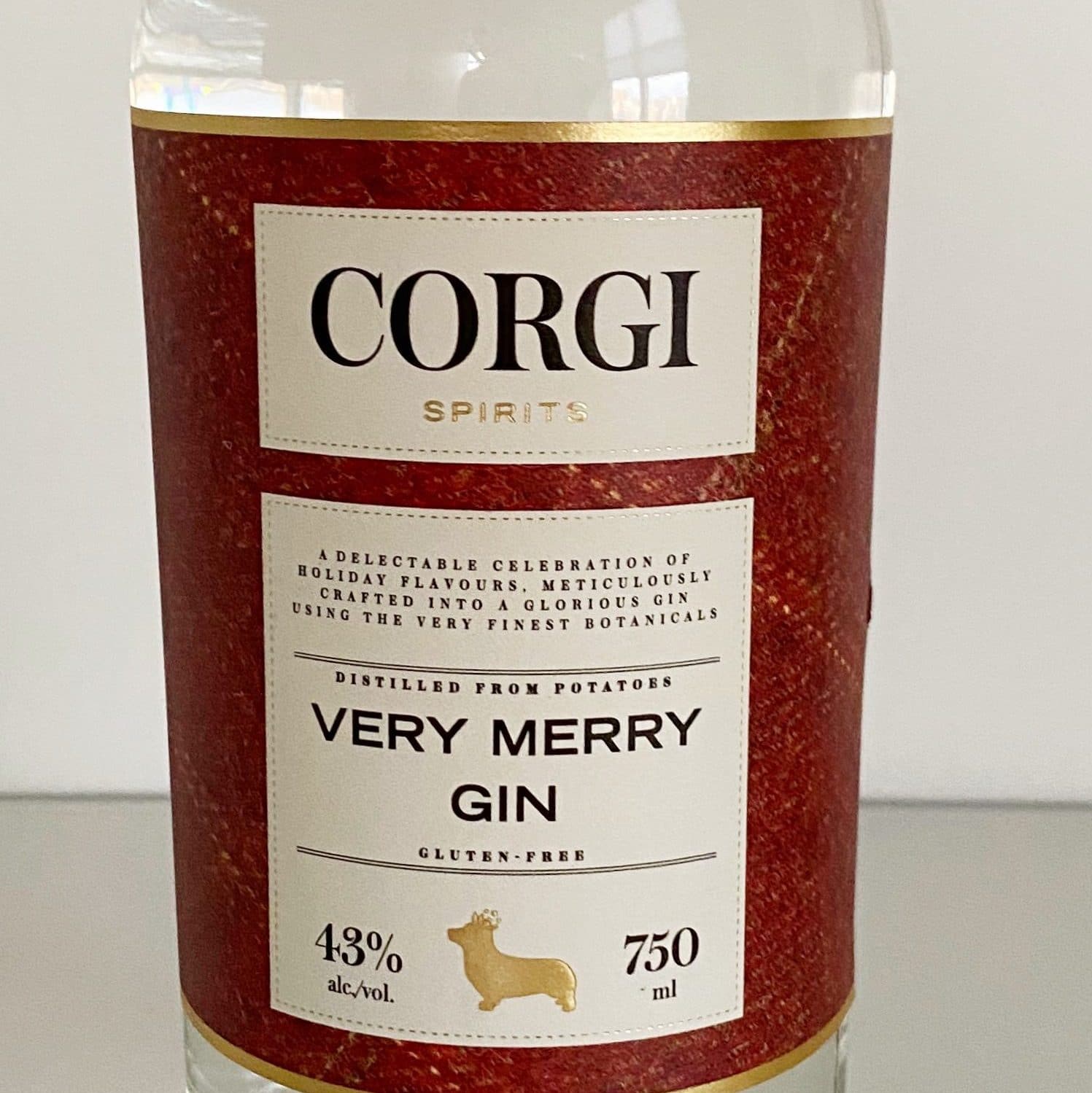
The trend toward dessert-inspired gins is perhaps best exemplified by Corgi Spirits’ Very Merry Gin. Based in Jersey City, Corgi Spirits has gained recognition for its ability to translate complex culinary concepts into distilled spirits. Their Very Merry Gin is explicitly modeled after the traditional British figgy pudding. The botanical bill includes figs, currants, and vanilla, which are distilled alongside a classic juniper base to create a profile that is both warming and spice-forward.
From a technical standpoint, the inclusion of dried fruits like figs and currants presents challenges in distillation, as the sugar content and essential oils must be carefully balanced to prevent the spirit from becoming overly syrupy or losing its characteristic gin "bite." Industry analysts note that these specialty gins are increasingly designed for specific mixology applications. For instance, while a standard London Dry is the benchmark for a Gin and Tonic, the Very Merry Gin is marketed for use in Hot Toddies or as a substitute for dark spirits in a Gin and Cola. This versatility allows craft distilleries to capture market share during the winter months when consumers typically pivot away from clear spirits toward aged whiskies and brandies.
Literalism in Distillation: That Boutique-y Gin Company
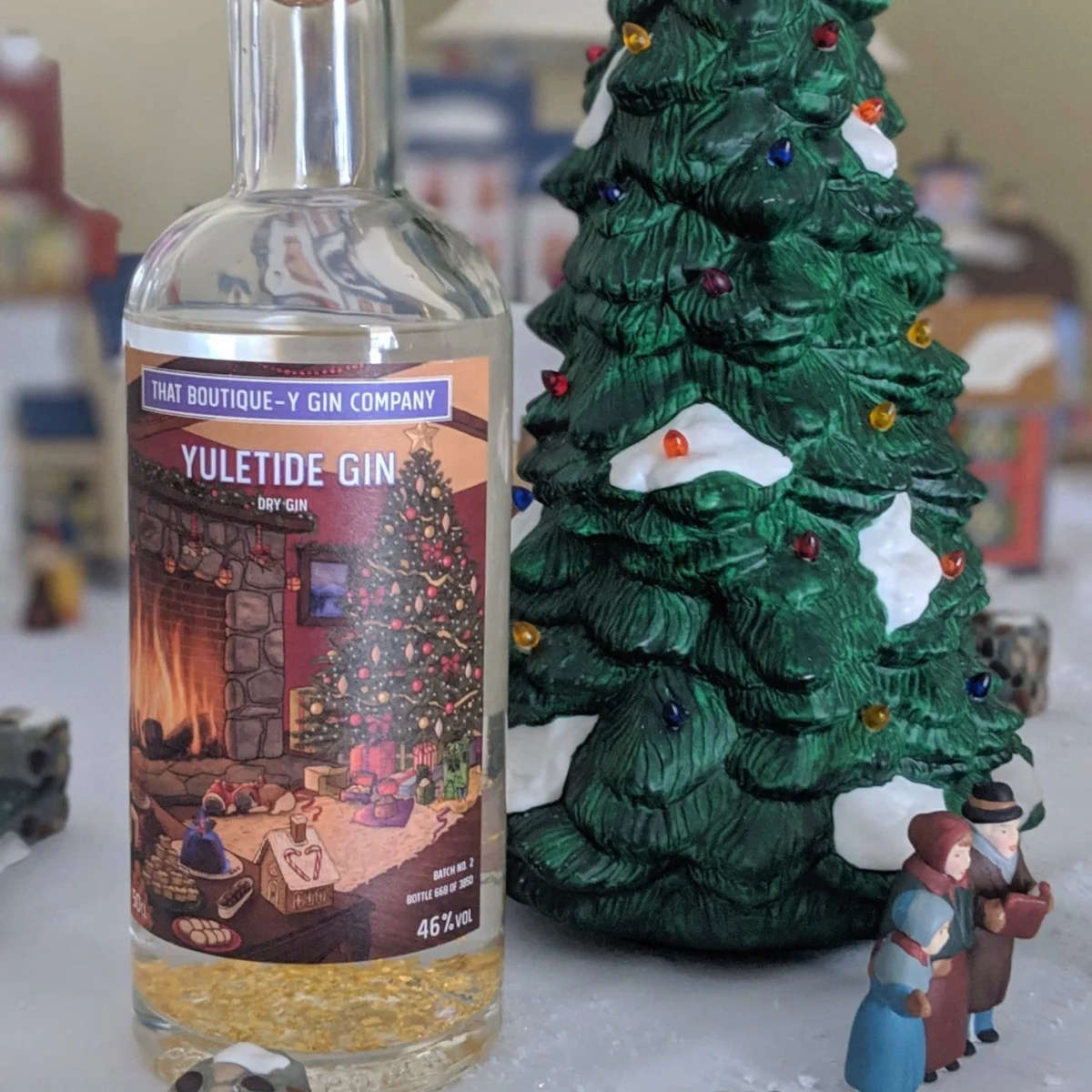
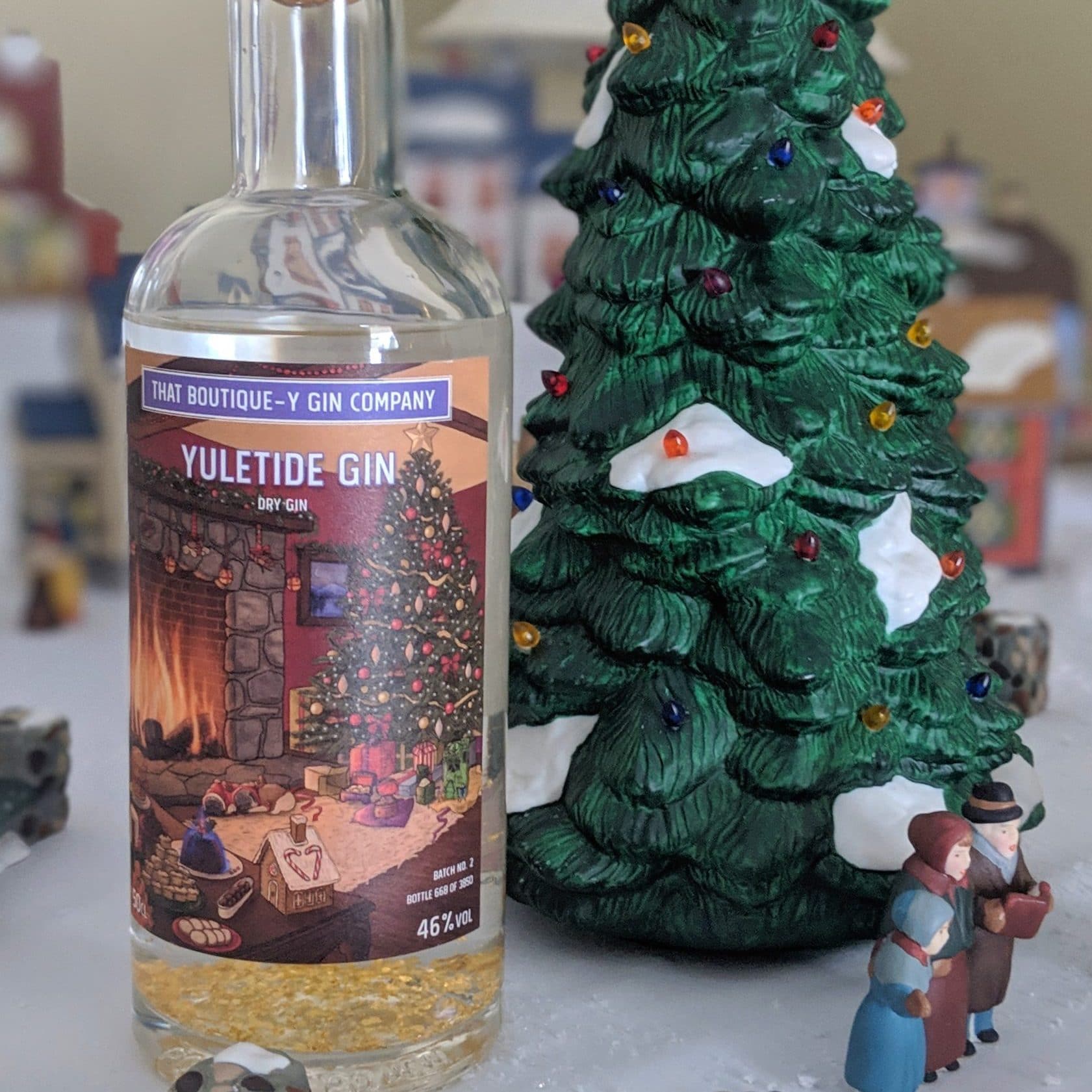
While some distillers aim for an evocative profile, others have embraced a more literal approach to holiday spirit production. That Boutique-y Gin Company, an independent bottler known for its creative and often eccentric releases, produces a "Yuletide Gin" that functions as a liquid representation of a Christmas market. The production process for this expression is remarkably intensive, involving the distillation of an entire gingerbread house.
Beyond the baked goods, the Yuletide Gin incorporates the traditional gifts of the Three Wise Men: frankincense and myrrh are used as botanicals, and edible gold leaf is added to the final liquid, creating a shimmering visual effect in the bottle. The use of resins like frankincense and myrrh adds a deep, incense-like woodiness to the gin, providing a sophisticated counterpoint to the sweeter notes of the gingerbread. This move toward literalism reflects a broader trend in the craft industry where the "story" behind the bottle is as important to the consumer as the liquid itself.
The Science of Seasonal Flavor: Sacred Spirits and Vacuum Distillation
In London, Sacred Spirits has taken a different approach by focusing on the traditional Christmas pudding. Distiller Ian Hart utilized a family recipe for Christmas pudding, steaming the puddings for eight hours before macerating them in a high-strength grain spirit along with juniper berries.
The defining characteristic of Sacred Spirits is their use of high-pressure vacuum distillation. Traditional pot stills operate at high temperatures, which can sometimes "cook" or alter the delicate flavors of botanicals. By distilling at a lower temperature under vacuum, Hart is able to preserve the fresh, bright notes of the pudding—citrus peel, rich fruit, and subtle spices—without the charred or bitter undertones that might result from traditional boiling. This scientific approach to holiday flavors highlights the increasing sophistication of the small-batch distillery sector, where technical precision is used to enhance traditional recipes.
Visual Branding and Peppermint Profiles: Eden Mill
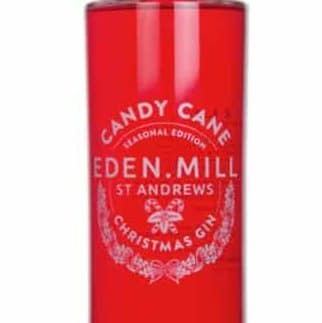
The visual appeal of a spirit is a critical factor in the gift-driven holiday market. St. Andrews-based Eden Mill has addressed this through their Candy Cane Gin. While the flavor profile is aggressively peppermint-forward, the most notable aspect of the product is its vibrant red hue. In an era where consumers are increasingly wary of artificial additives, Eden Mill achieves this color naturally through the maceration of bilberries and hibiscus flowers.
The Candy Cane Gin represents a shift toward "functional" seasonal spirits. While its peppermint profile makes it a natural companion for hot winter beverages, it also possesses a versatility that allows it to transition into summer cocktails, such as a peppermint-based Southside. This dual-season appeal is a strategic move for distilleries looking to extend the shelf life of their seasonal products beyond the month of December.
Hemispheric Divergence: Four Pillars Australian Christmas Gin
One of the most successful international examples of the category is the Australian Christmas Gin from Four Pillars. This release serves as a reminder of the global nature of the spirits market and the differing traditions between the Northern and Southern Hemispheres. In Australia, Christmas falls during the height of summer, yet the culinary traditions often remain rooted in the heavy, fruit-laden puddings of British heritage.
Four Pillars produces their Christmas Gin by distilling actual Christmas puddings. However, the element that sets this spirit apart is its maturation process. The gin is aged for twelve months in 100-year-old barrels that previously held Muscat wine. This aging process imparts a dried-fruit sweetness and a complexity similar to a light brandy or an Old Tom gin. The use of heritage barrels provides a sense of "prestige" and "history" that appeals to spirits collectors. The success of this release—which often sells out within weeks of its annual debut—demonstrates the power of combining traditional seasonal flavors with the artisanal prestige of barrel-aging.
The Expansion of the Category: Akvavit as a Seasonal Alternative
The trend of holiday-themed spirits is not limited to gin. Akvavit (or Aquavit), the traditional Scandinavian spirit, is also being reimagined through a Christmas lens. Knaplund’s Yuletide Akvavit illustrates how the savory, caraway-heavy profile of aquavit can be adapted to the holiday season.
Akvavit is legally required to be flavored with caraway or dill, but Knaplund’s version incorporates "holiday cookie" aromatics, including sweet anise, clove-pierced orange, and cinnamon. The result is a spirit that bridges the gap between a savory digestif and a dessert liqueur. As consumers become more adventurous in their drinking habits, the rise of "Christmas Akvavit" suggests that the botanical innovation seen in the gin category is beginning to spill over into other traditional spirit types.
Market Data and Economic Impact
The rise of Christmas gins is supported by strong market data. According to reports from the Wine and Spirit Trade Association (WSTA), seasonal sales account for a disproportionate percentage of annual gin revenue, with the "Golden Quarter" (October through December) seeing a surge in both volume and value. In the UK alone, gin sales during the Christmas period have frequently broken records, with consumers increasingly opting for "super-premium" bottles priced above the £35 ($45) mark.
For small distilleries, these seasonal releases are vital for cash flow and brand loyalty. Limited editions create a "fear of missing out" (FOMO) among enthusiasts, driving traffic to distillery websites and tasting rooms. Furthermore, these products often serve as a "gateway" for consumers; a customer who purchases a Christmas gin as a gift is more likely to return to the brand for its core London Dry expression later in the year.
Broader Implications and Future Trends
The success of the Christmas gin category has broader implications for the spirits industry. It has proven that there is a significant market for "narrative spirits"—liquids that tell a specific story or evoke a particular memory through their ingredient list. This has paved the way for other seasonal categories, such as "harvest gins" or "spring floral editions," creating a year-round cycle of limited-release products.
However, the saturation of the market also presents challenges. As more distilleries enter the Christmas gin space, the pressure to innovate becomes more intense. This may lead to even more extreme experimentation with botanicals and distillation techniques. For the consumer, this means an ever-expanding array of choices, but for the distiller, it requires a delicate balance between novelty and quality.
In conclusion, the evolution of Christmas gins from simple spice blends to complex, vacuum-distilled, barrel-aged spirits reflects the maturation of the craft distillery movement. By utilizing gin as a botanical canvas, distillers are able to capture the fleeting essence of the holiday season in a bottle, offering consumers a liquid connection to tradition, science, and culinary artistry. As the category continues to grow, it will likely remain a hallmark of the industry’s ability to blend heritage with modern innovation.
