

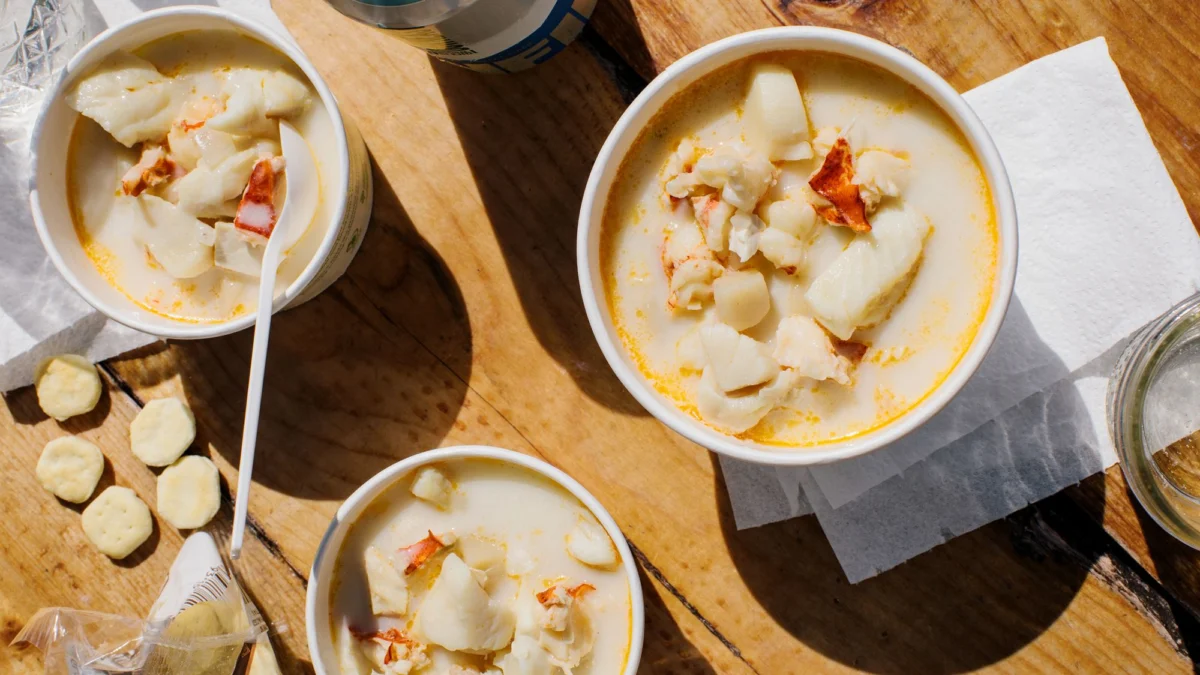
The renowned seafood chowder recipe, inspired by the culinary traditions of Larsen’s Fish Market on Martha’s Vineyard, stands as a testament to the virtues of flexibility, profound flavor, and streamlined simplicity in gastronomic creation. This celebrated dish, a staple of New England cuisine, derives its distinctive depth from the inherent briny richness of clam juice and a meticulously prepared seafood stock. Its widespread appeal and adaptability have cemented its status as a benchmark for authentic, comforting seafood preparation, extending its influence beyond the quaint fishing village of Menemsha.
The Anatomy of a Classic Chowder: Core Principles and Larsen’s Innovation
At its fundamental core, any authentic chowder adheres to a tripartite structure: potatoes, cream, and a substantive element—be it meat, various seafood, or chunky vegetables—that collectively impart the soup’s characteristic body and comforting texture. The natural starches present within the potatoes contribute significantly to the broth’s inherent thickening, a process known as starch gelatinization, which occurs as the potatoes cook and release their starches into the liquid, forming a viscous suspension.
However, many traditional chowder recipes augment this natural thickening with a roux, a foundational culinary mixture of cooked flour and butter. A roux serves to create an even more substantial and stable body, preventing separation and adding a desirable silky mouthfeel. The culinary team at Larsen’s Fish Market employs a particularly refined technique: they prepare the roux in a separate pan. This pre-cooked roux is then meticulously whisked into the main broth just prior to serving. This methodological distinction is crucial, offering several significant advantages. Firstly, it allows for precise control over the chowder’s final thickness, enabling adjustments based on desired consistency without compromising other ingredients. Secondly, and perhaps most critically, it ensures that delicate seafood components, such as fish fillets and shellfish, can be added last and cooked minimally, thereby preserving their tender texture and preventing the common pitfall of overcooking, which can render them rubbery. The outcome of this precise approach is a distinctively broth-forward seafood chowder that maintains a luxurious silkiness without ever becoming "gloppy" or overly dense.
Larsen’s Fish Market: A Martha’s Vineyard Institution
Larsen’s Fish Market is more than just a seafood purveyor; it is a cultural cornerstone of Menemsha, a picturesque and historic working fishing village located on the western tip of Martha’s Vineyard. Established generations ago by the Larsen family, the market has evolved from a simple dockside operation into a revered institution, synonymous with the freshest catches and an authentic island experience. Its unpretentious charm and unwavering commitment to quality have made it a pilgrimage site for locals and tourists alike, eager to experience the true essence of New England’s maritime heritage.
The market’s origins are deeply intertwined with the history of fishing on Martha’s Vineyard. While precise founding dates vary in anecdotal accounts, the Larsen family’s presence in Menemsha as fishermen and seafood purveyors dates back to the early 20th century. Over decades, the market grew, establishing direct relationships with local fishermen, ensuring that the seafood offered is often brought ashore just hours before being sold or prepared. This farm-to-table (or rather, ocean-to-table) philosophy is fundamental to Larsen’s ethos and directly informs the quality of its renowned chowder. The chowder, therefore, is not merely a dish but a liquid encapsulation of the island’s bounty, reflecting the daily catch and the seasonal rhythms of the Atlantic. Its recipe, likely refined over generations, embodies the practical wisdom of fishermen and cooks who understood the importance of maximizing flavor from readily available ingredients.
The Culinary Science of Depth and Texture: Beyond the Recipe
Understanding the scientific principles behind Larsen’s chowder illuminates its culinary brilliance. The selection of clam juice and seafood stock as the primary liquid base is not arbitrary; it is a deliberate choice to infuse the chowder with profound umami and a characteristic oceanic salinity. Clam juice, a natural byproduct of steaming clams, is rich in glutamates, amino acids that are key to the umami flavor profile, providing a savory depth that commercial vegetable or chicken broths cannot replicate. Seafood stock, similarly, extracts gelatin and flavor compounds from fish bones and shellfish shells, contributing to both the taste and mouthfeel of the final dish.
The role of starches, both from potatoes and the added roux, is central to the chowder’s signature texture. Potato starches, primarily amylose and amylopectin, absorb water and swell when heated, forming a viscous gel that thickens the broth naturally. The separate roux technique, however, introduces a more controlled and sophisticated thickening mechanism. A roux is formed when flour (primarily starch and protein) is cooked with fat (typically butter). This process, known as gelatinization, causes the starch granules to absorb the fat and liquid, swelling and eventually bursting, releasing their contents to thicken the liquid. Cooking the flour in fat before adding it to the liquid also serves to eliminate the raw flour taste, often referred to as a "pastry taste," which can be undesirable in savory dishes.
By preparing the roux separately, Larsen’s technique allows for precise temperature management. Whisking a pre-cooked roux into a simmering liquid prevents the formation of lumps, a common challenge when adding raw flour directly. Furthermore, this method helps to stabilize the emulsion of the fat and liquid, contributing to the chowder’s smooth, non-separated consistency. This meticulous approach ensures that the chowder achieves a velvety texture while remaining "broth-forward," meaning the liquid base is rich and flavorful without being excessively heavy or pasty. This stands in contrast to some chowders that can become overly thick and gloppy dueasing the amount of starch added directly to the main pot, which can sometimes lead to an uneven texture.
The stability of dairy products, particularly cream, is another critical scientific consideration in chowder preparation. Cream, composed of fat globules dispersed in water along with proteins, can "split" or curdle if subjected to rapid, high heat after the addition of acidic or salty ingredients, or if boiled vigorously for an extended period. This splitting occurs when the proteins coagulate and the fat separates, resulting in an unappetizing, curdled appearance and texture. Larsen’s emphasis on a gentle simmer after the roux is incorporated, rather than a rapid boil, is a direct application of this scientific understanding. This gentle heating allows the flour in the roux to fully cook and thicken the broth without causing the dairy components to break down, thereby preserving the chowder’s desired smooth, creamy consistency.
Adapting for Inclusivity: Addressing Dietary Needs and Sustainability
The inherent flexibility of this chowder recipe extends beyond mere ingredient preference; it makes the dish remarkably adaptable for individuals with dietary restrictions, particularly shellfish allergies, a growing concern in contemporary culinary landscapes. For guests with shellfish allergies, the recipe offers straightforward modifications. The clam juice, a primary source of flavor, can be seamlessly replaced with homemade fish stock, which provides a similar oceanic essence without the allergenic shellfish proteins. Alternatively, a mild vegetable stock can be substituted, offering a comforting base while maintaining the chowder’s body.
Furthermore, the "something" component of the chowder can be re-envisioned. If guests can tolerate cephalopods, squid or cuttlefish can be incorporated, offering a unique texture and flavor profile. However, for complete avoidance of shellfish, increasing the quantity and variety of white fish is recommended. Utilizing a diverse selection of white fish—such as cod, halibut, monkfish, sea bass, and swordfish—not only compensates for the absence of shellfish but also introduces a spectrum of textures and subtle flavor nuances, enriching the overall experience. This adaptability underscores a broader trend in modern cooking towards inclusive recipes that cater to varied dietary requirements without sacrificing flavor or complexity.
The flexibility inherent in Larsen’s chowder also carries significant implications for sustainable seafood practices. By advocating for the use of "something" rather than rigidly specifying ingredients, the recipe implicitly encourages cooks to utilize what is fresh, seasonal, and locally available. This approach can help reduce pressure on overfished species and supports local fishing communities by promoting the consumption of diverse, often underutilized, seafood. Culinary experts widely agree that such adaptable recipes are crucial for both culinary innovation and practical home cooking, allowing for creativity while maintaining the integrity of a classic dish, and concurrently fostering more responsible consumption patterns.
Mastering the Chowder Pot: Essential Techniques and Common Pitfalls
Achieving a perfect seafood chowder, particularly one that maintains a silky broth and tender seafood, relies on mastering a few critical techniques.
-
Avoiding Overcooked Seafood: This is paramount. Fish and shellfish, with their delicate protein structures, cook very quickly. Overexposure to heat causes proteins to denature excessively, squeezing out moisture and resulting in a rubbery, dry texture. The Larsen’s method—adding seafood last and stirring gently—is designed precisely for this. They only require a few minutes to heat through and become opaque. For best results, consider removing the chowder from direct heat just as the seafood is added, allowing residual heat to gently cook it to perfection.
-
Controlling Sodium Levels: Clam juice and many commercially prepared stocks can be surprisingly high in sodium. Therefore, judiciousness with any added salt is crucial. The recommended approach is to taste the broth after the roux has been fully incorporated and the flavors have melded, then adjust the seasoning as needed. This prevents an overly salty chowder, which can be difficult to correct.
-
Preventing Broth Splitting: As previously discussed, dairy products are sensitive to high heat. After the roux mixture has been added to the broth, it is essential to avoid a rapid, rolling boil. While a brief simmer is necessary to cook off the raw flour taste and allow the thickening to occur, a hard boil can cause the dairy components to break down, leading to a "split" broth with a curdled appearance. A gentle, consistent simmer is the key to maintaining a smooth, emulsified, and inviting texture.
Broader Culinary and Economic Implications
The enduring popularity and adaptable nature of Larsen’s Fish Market’s chowder recipe resonate within broader culinary and economic contexts. From a culinary perspective, it champions a "broth-forward" style, moving away from overly dense, flour-heavy chowders that dominated some mid-20th-century American cooking. This emphasis on a lighter, yet richly flavored, broth aligns with contemporary preferences for dishes that highlight the natural essence of their ingredients. It also underscores the importance of foundational techniques like roux preparation and gentle cooking, which are cornerstones of classic culinary education.
Economically, institutions like Larsen’s Fish Market play a vital role in supporting local economies and preserving regional foodways. By sourcing locally and showcasing traditional dishes, they contribute to the livelihoods of fishermen and farmers and attract culinary tourism. The market itself serves as a cultural ambassador for Martha’s Vineyard, offering visitors a taste of authentic island life and cuisine. The chowder, in particular, becomes a narrative device, telling a story of the sea, the island, and generations of culinary tradition.
In conclusion, the seafood chowder recipe inspired by Larsen’s Fish Market is far more than a simple set of instructions; it is a masterclass in culinary wisdom, blending flexibility, flavor, and scientific precision. Its focus on delicate technique, thoughtful ingredient selection, and adaptability positions it not merely as an iconic dish from Martha’s Vineyard but as a timeless example of how traditional recipes can remain relevant, delicious, and inclusive in an ever-evolving culinary landscape.
