

The regulatory landscape governing the production of gin has undergone significant refinement in recent years, specifically through the implementation of European Union Regulation 2019/787 and its subsequent amendments under 2021/1465. These legal frameworks, which remain the foundation for spirits law in the EU and were largely adopted into United Kingdom law following its departure from the union, serve to clarify the technical requirements for one of the world’s most misunderstood spirits: London Dry Gin. Despite common consumer misconceptions, "London Dry" is not a geographical indication or a specific flavor profile; rather, it is a strict process designation that mandates how a spirit is distilled, purified, and finished. While the 2019 legislation introduced minor adjustments to clarify terms for the distilling industry and consumers, the core tenets of the designation remain focused on quality control and chemical purity rather than sensory outcomes.
Historical Context: From the Gin Craze to the Column Still
The rigorous standards associated with London Dry Gin today are a direct response to the volatile and often dangerous history of gin production in the 18th and 19th centuries. During the infamous "Gin Craze" in London, spirits were frequently distilled from low-quality grains or waste products, resulting in harsh, impure liquids. To mask the unpleasant flavors of poorly distilled alcohol, producers often added heavy amounts of sugar, turpentine, or sulphuric acid. This led to the rise of "Old Tom" gin, a sweeter style that dominated the market before modern distillation technology existed.
The transition toward the "Dry" style was made possible by the invention of the continuous column still, patented by Aeneas Coffey in the 1830s. Unlike the traditional pot still, which produces a spirit with more congeners and a lower alcohol concentration, the column still allows distillers to reach a purity of 96% alcohol by volume (ABV). This technological leap enabled the creation of a "neutral" base spirit, free from the off-flavors of the base grain. Consequently, distillers no longer needed to add sugar to hide impurities, leading to the birth of the "London Dry" style—a spirit defined by its cleanliness and lack of post-distillation additives.
The Technical Hierarchy of Gin Production
Under current EU and UK legislation, gin is categorized into three distinct tiers: Gin, Distilled Gin, and London Gin. Understanding these distinctions is essential for identifying the quality and methodology behind a specific bottle.
The Standard Gin Category
At its most basic level, gin is defined as a juniper-flavored spirit of agricultural origin with a minimum bottling strength of 37.5% ABV. The legislation requires that the taste be "predominantly that of juniper." However, this category allows for the addition of flavorings and colorings after distillation, providing significant flexibility for mass-market producers.
The Distilled Gin Designation
Distilled Gin represents a higher level of production rigor. According to Section 21.a of Regulation 2019/787, the base spirit must be distilled to an initial strength of at least 96% ABV. This neutral spirit is then redistilled in the presence of Juniperus communis L. and other natural botanicals. Notably, this category allows for the addition of further flavoring substances or neutral alcohol after the second distillation. Modern industry giants such as Hendrick’s and Martin Miller’s fall into this category because they incorporate essences—such as cucumber and rose in the case of Hendrick’s—after the distillation process is complete.
The London Gin Standard
The "London Gin" designation—often labeled as London Dry Gin—is the most restrictive. It inherits all the requirements of Distilled Gin but adds several prohibitive layers:
- No Post-Distillation Flavoring: All flavors must be imparted exclusively through the distillation of the neutral spirit in the presence of natural plant materials.
- Strict Distillate Strength: The resulting distillate must come off the still at no less than 70% ABV.
- Purity Standards: The spirit must meet strict methanol limits, ensuring a higher level of chemical purity than standard distilled spirits.
- No Coloration: London Dry Gin must be clear; it cannot be colored, which excludes modern "pink gins" or butterfly pea flower-infused spirits from using the title.
The Methanol Threshold and Chemical Safety
A critical, though often overlooked, aspect of the London Gin designation is its emphasis on methanol control. Methanol, or "wood alcohol," is a natural byproduct of fermentation that is toxic to humans. While modern distillation techniques naturally remove methanol during the "heads" cut of a run, the London Gin regulations codify a guarantee of safety.
The law specifies that the spirit must contain no more than five grams of methanol per hectoliter of 100% alcohol. In the 18th century, unscrupulous distillers would leave methanol in the product to increase volume, leading to blindness or death among consumers. By adhering to the London Gin standard, producers provide a chemical guarantee of a high-purity product. While most modern craft distillers meet these standards regardless of their labeling, the London Dry designation remains the industry’s primary "seal of approval" for chemical excellence.
The Geographic Paradox and the Failure of GI Status
One of the most persistent myths is that London Dry Gin must be produced in London. In reality, the term refers to the method, not the location. A London Dry Gin can be produced in Tokyo, New York, or Edinburgh, provided it follows the technical requirements.
There have been historical attempts to restrict the name. As recently as 2015, some industry factions explored seeking Geographical Indication (GI) status for London Dry Gin, similar to Champagne or Scotch Whisky. However, these efforts were largely abandoned. GI status requires a "technical file" that details specific, shared processes among all producers in a region. Given the vast diversity in botanical recipes and distillation setups among global producers, achieving a consensus on a single technical file was deemed impossible. Furthermore, granting GI status to London would have stripped hundreds of international distilleries of the right to use the term "London Dry," potentially causing a massive disruption in the global spirits market.
The Botanical Definition: Plants, Fungi, and Animals
The wording of Regulation 2019/787 contains a specific clause that has sparked debate among craft distillers: flavors must be derived from "natural plant materials." This phrasing creates a legal hurdle for experimental gins. For instance, spirits distilled with mushrooms—which are fungi, not plants—technically fall outside the London Dry definition.
Similarly, the "Pechuga" style of gin, which involves suspending raw meat (such as poultry or ham) in the still to infuse the vapor, is legally excluded from the London Dry category. Portobello Road’s Director’s Cut Pechuga-style gin, while highly regarded, cannot bear the London designation because its flavor is derived from animal products. However, the base spirit itself remains flexible; it must be of "agricultural origin," which allows for the use of fermented whey or milk as a starting point, provided it is distilled to the 96% ABV purity standard.
The "Dry" Designation and the Role of Sugar
The term "Dry" in the context of gin refers specifically to the absence of sugar. According to the 2019 regulations, a gin may be designated as "Dry" if it contains no more than 0.1 grams of sweetening products per liter of the final product.
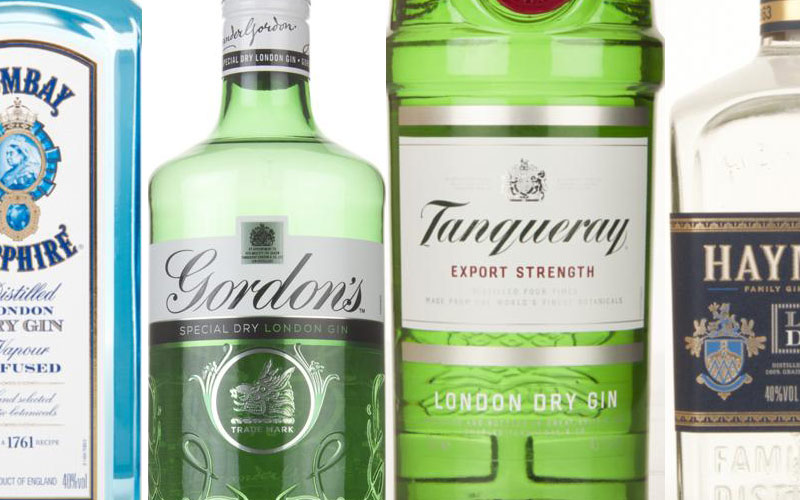
Interestingly, the law does not mandate a zero-sugar policy. This small allowance for sweetening is primarily intended for technical reasons rather than flavor. Many major brands, such as Gordon’s, utilize "sugar dyes" or tracer molecules to protect against counterfeiting. These tracers allow the company to verify the authenticity of a liquid in the field. Without the 0.1g/L allowance, these anti-fraud measures would render the world’s most famous gins legally "sweetened," stripping them of their "Dry" status.
International Discrepancies: The US TTB Standard
While the EU and UK maintain a rigorous three-tier system, the United States takes a more inclusive approach. The Alcohol and Tobacco Tax and Trade Bureau (TTB) defines gin simply as a spirit with a main characteristic flavor derived from juniper berries.
Unlike the EU, the TTB does not strictly distinguish between "Distilled Gin" and "London Gin" in its primary definitions, nor does it mandate the same 96% ABV purity for the base spirit in all cases. In the U.S., gin can be produced through the mixing of neutral spirits with juniper extracts or aromatics, a process often referred to as "cold compounding." This leads to a broader, more varied market but lacks the process-driven prestige associated with the European London Dry designation.
Future Implications and Technological Oversight
As the gin market continues to expand, the lack of a numerical definition for "predominant juniper flavor" remains a point of contention. The current law is subjective, relying on human tasters to determine if a gin is sufficiently "juniper-forward."
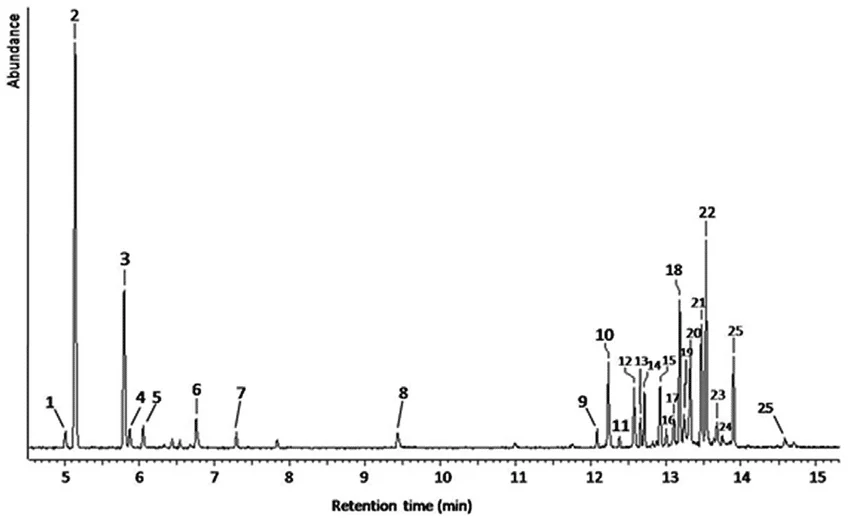
Some industry leaders, such as the Laverstoke Mill distillery (home to Bombay Sapphire), have integrated Gas Chromatography (GC) into their quality control. GC allows distillers to analyze the volatile compounds in a spirit, identifying peaks for alpha-pinene and limonene to ensure consistency. While this technology is currently used for internal quality control, some analysts suggest that the future of gin regulation may involve "chromatogram requirements." If regulators move toward a numerical standard for juniper content, it would transform the "predominant flavor" rule from a subjective opinion into a scientific certainty.
Until such measures are adopted, London Dry Gin remains a symbol of process over profile. It stands as a testament to 19th-century engineering, guaranteeing a spirit that is chemically pure, unsweetened, and flavored exclusively through the transformative power of the still. Whether contemporary or classic in its botanical choice, the London Dry label remains the industry’s most significant benchmark for distillation integrity.
