

The culinary landscape is continually evolving, with innovations frequently emerging from both professional kitchens and home baking communities. A recent development from the Bon Appétit Bake Club promises to redefine the approach to cake baking, particularly for home enthusiasts. Senior Test Kitchen editors Jesse Szewczyk and Shilpa Uskokovic have unveiled a novel, equipment-free adaptation of the "reverse-creaming" method, a technique long lauded for producing exceptionally tender cakes. This new approach, featured in their latest recipe for Chocolate Guinness Cake, bypasses the need for stand or hand mixers, making high-quality cake production more accessible than ever before.
The Foundational Principles of Cake Batter Preparation
Traditionally, cake recipes instruct bakers to first cream together softened butter and sugar until light and fluffy, then incorporate eggs, followed by the alternating addition of dry and wet ingredients. This standard creaming method introduces air into the batter, contributing to a cake’s lift and texture. While effective, it often carries the risk of overmixing, which can lead to excessive gluten development. Gluten, a protein network formed when flour is hydrated and agitated, is essential for structure in bread but can result in a tough, chewy crumb in cakes if overdeveloped. The delicate balance required has historically presented a hurdle for many home bakers striving for bakery-quality results.
Understanding Reverse-Creaming: A Paradigm Shift in Texture
The reverse-creaming method offers a scientific solution to the challenge of gluten overdevelopment. Popularized by acclaimed pastry chef and cookbook author Rose Levy Beranbaum, a notable guest on the Bon Appétit Bake Club podcast, this technique inverts the traditional mixing order. Instead of starting with butter and sugar, the dry ingredients (flour, sugar, leavening agents, salt) are first combined. Cold butter is then gradually incorporated into this dry mixture, often using a paddle attachment on a stand mixer, until the mixture resembles wet sand.
The science behind reverse-creaming is elegant and effective. By coating the flour particles with fat from the butter before the liquid ingredients are added, the formation of gluten is significantly inhibited. The fat acts as a protective barrier, preventing the gluten-forming proteins in the flour from fully hydrating and linking together. This results in a cake with a remarkably fine, even, and tender crumb—a characteristic often described as "velvety" or "plush." The initial mechanical mixing of butter into dry ingredients also ensures a more even distribution of fat throughout the batter, contributing to uniform moisture and tenderness.
A Brief Chronology of Cake Mixing Evolution
The evolution of cake mixing methods reflects a continuous quest for improved texture and simplified processes. Early cakes, often denser and bread-like, relied on rudimentary mixing. The advent of refined flour and leavening agents like baking soda and baking powder in the 19th century paved the way for lighter cakes. The traditional creaming method gained prominence with the increasing availability of mechanical mixers in the early 20th century, allowing for more efficient aeration of butter and sugar.
Rose Levy Beranbaum’s groundbreaking work, particularly through her seminal 1988 cookbook The Cake Bible, significantly advanced the understanding and application of reverse-creaming. Her meticulous approach to baking science demystified complex techniques, making them accessible to a broader audience. Beranbaum’s advocacy for reverse-creaming solidified its reputation among serious bakers as a superior method for achieving exceptional cake texture, albeit one often perceived as requiring specialized equipment.
Bon Appétit’s Innovation: Reverse-Creaming Without a Mixer
The latest contribution from the Bon Appétit Bake Club, spearheaded by Szewczyk and Uskokovic, takes the reverse-creaming concept a significant step further by eliminating the need for any electrical mixing equipment. Their new technique, exemplified in the Chocolate Guinness Cake recipe, instructs bakers to manually rub cold cubes of butter into the dry ingredients using their fingertips. This hands-on approach draws a clear parallel to the traditional method of making pie dough or biscuit dough, where cold fat is worked into flour to create a flaky texture.
However, a crucial distinction exists: while pie dough aims for pea-sized butter pieces to create steam pockets for flakiness, the Bon Appétit reverse-creaming method requires continuous rubbing until the butter "virtually disappears," thoroughly encasing the flour particles in fat. This manual process achieves the same fundamental goal as a stand mixer’s paddle attachment: distributing fat evenly to inhibit gluten formation, but with the added benefits of simplicity and reduced cleanup.

Jesse Szewczyk commented on the technique, stating, "We recognized the incredible benefits of reverse-creaming for texture, but also the barrier that specialized equipment could present. Our goal with this new method was to democratize that superior crumb, proving that truly tender cakes are within reach for everyone, regardless of their kitchen setup." Shilpa Uskokovic added, "It’s a tactile process that connects the baker more intimately with their ingredients. The transformation from dry flour and cold butter to a wet sand consistency is quite satisfying, and the results speak for themselves."
Implications for Home Bakers and Culinary Education
The introduction of a no-mixer reverse-creaming technique has several significant implications for the home baking community and potentially for broader culinary education:
- Increased Accessibility: By removing the requirement for expensive stand mixers or even hand mixers, this method opens the door for aspiring bakers with limited budgets or small kitchen spaces to achieve professional-level results. It lowers the entry barrier to advanced baking techniques.
- Simplified Cleanup: Eliminating electrical equipment directly translates to fewer dishes and less effort, a significant draw for busy home cooks.
- Enhanced Understanding of Ingredients: The hands-on nature of rubbing butter into flour can foster a deeper understanding of ingredient interactions. Bakers can physically feel the texture change as the flour becomes coated in fat, reinforcing the scientific principles at play.
- Reduced Overmixing Risk: A remarkable aspect of this technique, as highlighted by Szewczyk, is the reduced risk of overmixing. Because gluten formation is already inhibited by the fat-coated flour, bakers are encouraged to mix the wet ingredients "with reckless abandon" once added. This counterintuitive advice simplifies a common point of anxiety for many bakers. "We want bakers to feel confident, not constantly worried about overworking the batter," Szewczyk explained. "The initial fat coating provides a robust defense against toughness, allowing for more vigorous mixing to ensure a homogeneous batter without compromising tenderness."
- Validation of Manual Techniques: In an era dominated by kitchen gadgets, this method underscores the enduring value and efficacy of manual techniques, reminiscent of traditional baking practices.
The Science of Gluten Inhibition and Fat Distribution
To further elaborate on the scientific underpinnings, when flour and water combine, two proteins, glutenin and gliadin, link together to form gluten. Mechanical agitation, such as mixing, strengthens this network. In traditional creaming, flour is added directly to a hydrated mixture, allowing rapid gluten development. In reverse-creaming, however, the butter fat creates a hydrophobic (water-repelling) layer around the individual flour particles. This physical barrier prevents the gluten-forming proteins from fully absorbing water and interacting with each other, thus minimizing the formation of strong gluten strands. The result is a short, tender gluten network, which translates to a soft, melt-in-your-mouth texture.
Moreover, the process of rubbing cold butter into the dry ingredients ensures a very fine and even distribution of fat throughout the flour mixture. This uniform distribution is crucial, as it means every flour particle has an equal opportunity to be coated, maximizing the gluten-inhibiting effect and leading to a consistently tender crumb throughout the entire cake. The cold temperature of the butter is also important; it prevents the butter from melting too quickly during the rubbing process, allowing for proper coating without creating a greasy mixture.
The Chocolate Guinness Cake: A Showcase for the Technique
The Bon Appétit Bake Club chose a Chocolate Guinness Cake as the inaugural recipe to showcase this innovative no-mixer reverse-creaming method. This particular cake, known for its rich, malty depth provided by the stout, benefits immensely from an exceptionally tender crumb that contrasts beautifully with its robust flavor. The recipe promises a "snackable loaf" that achieves bakery-level quality without requiring specialized equipment. The choice of a familiar, comforting cake type like a chocolate loaf also makes the introduction of a new technique feel less daunting for home bakers.
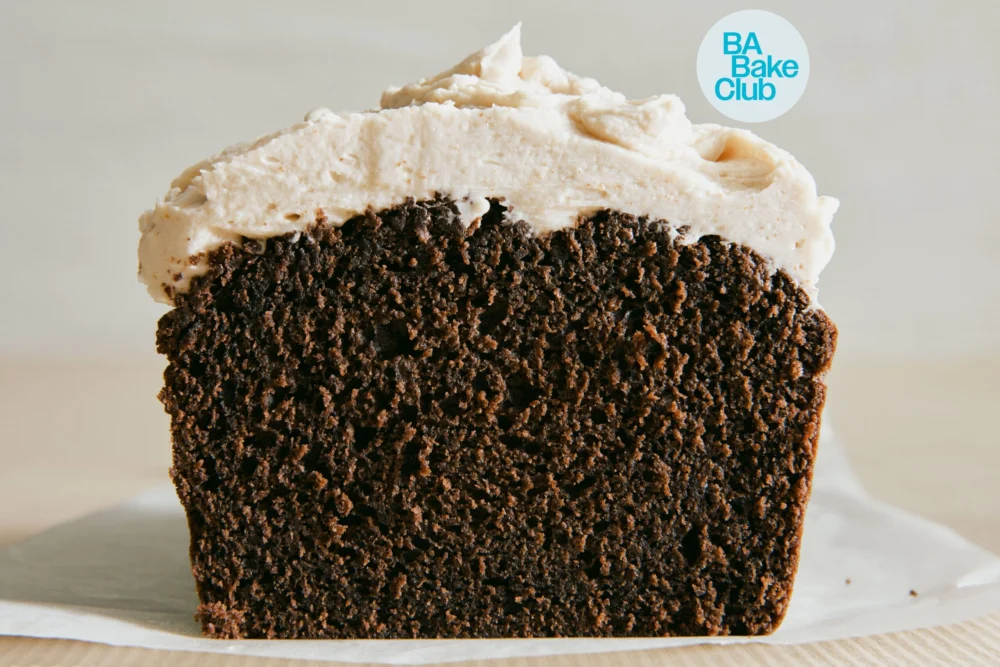
The accompanying image of the sliced Chocolate Guinness Cake, revealing its moist, uniform interior, serves as compelling visual evidence of the technique’s success. The recipe’s detailed instructions guide bakers through the manual butter-rubbing process, ensuring they can replicate the desired tender crumb in their own kitchens.
Community Engagement and Broader Impact
The Bon Appétit Bake Club actively fosters a community of "curious bakers" through its monthly recipe releases, deep dives into baking science, and an interactive Substack chat group. This platform serves as a vital feedback loop, allowing editors like Szewczyk and Uskokovic to directly engage with their audience, answer questions, and observe the real-world application of their techniques. The Substack chat is specifically highlighted as a forum for bakers to share their experiences with the new reverse-creaming method, providing valuable insights into its adoption and effectiveness.
This interactive approach not only builds a loyal community but also contributes to the democratization of baking knowledge. By providing accessible methods and explaining the ‘why’ behind them, the Bake Club empowers home bakers to elevate their skills and confidence. The ripple effect of such innovations can extend beyond individual kitchens, influencing future recipe development and potentially inspiring other culinary publications to explore similar equipment-light adaptations of advanced techniques.
The introduction of a no-mixer reverse-creaming method by Bon Appétit Bake Club represents a significant step forward in making sophisticated baking techniques accessible to a wider audience. By combining scientific understanding with practical, equipment-free execution, Jesse Szewczyk and Shilpa Uskokovic have offered home bakers a powerful tool for consistently achieving superior cake texture. This innovation not only simplifies the baking process but also deepens the appreciation for the fundamental interactions between ingredients, reinforcing the joy and satisfaction found in the craft of baking. As the baking community continues to embrace this method, it may well set a new standard for home cake production, proving that exceptional results do not always require exceptional equipment.
