

The contemporary landscape of food and entertainment is undergoing a seismic shift, characterized by increasingly unconventional marketing tactics, the evolving role of digital influencers, burgeoning public health debates, and innovative approaches to urban food security. This dynamic environment reflects a confluence of digital virality, brand competition, and societal concerns, pushing traditional boundaries in unexpected directions. From A24’s audacious cinematic promotions venturing into real-world activations to a McDonald’s CEO’s controversial burger tasting sparking a fast-food "burger war," and from TikTok’s most influential food critic transitioning into a restaurant investor to a political figure challenging beloved regional beverage habits, the intersection of commerce, culture, and consumer experience is more complex and performative than ever before. Simultaneously, cities grapple with fundamental issues of affordability and access, exploring novel solutions like municipally supported grocery stores to address food deserts and economic disparities.
The Evolving Landscape of Brand Marketing: From Billboards to Viral Stunts
In an era saturated with digital content and fleeting attention spans, traditional advertising methodologies are increasingly giving way to highly experimental and often provocative marketing campaigns designed to cut through the noise. The days of simple billboards and television spots promoting new films or products seem almost quaint when juxtaposed with today’s elaborate, often bewildering, strategies. This transformation reflects a deeper understanding—or perhaps a desperate chase—of virality, spectacle, and consumer engagement in a fragmented media ecosystem.
Leading this charge are entities like the independent film studio A24, renowned for its distinctive cinematic output and equally unique promotional strategies. For the release of its latest film, a high-profile "Zendaya vehicle" centered on a dramatic love triangle set against the backdrop of professional tennis, A24 bypassed conventional advertising channels to open pop-up wedding chapels. This immersive, experiential marketing stunt, designed to intertwine the film’s themes of love, competition, and public spectacle with real-world consumer interaction, garnered significant media attention and social media buzz. It leverages the studio’s reputation for artistic daring, transforming a simple film promotion into a cultural event, blurring the lines between art, commerce, and performance art. The strategic decision to offer themed "weddings" or commitment ceremonies, however symbolic, for a movie release underscores a broader trend: brands seeking to create memorable, shareable experiences rather than merely disseminating information.
Parallel to A24’s audacious gambit, other brands are pushing similar boundaries. The music industry, for instance, saw pop artist Charli XCX promote her album "Brat" with limited-edition credit cards, an unusual collectible that resonated with her dedicated fanbase and generated significant online discussion. These cards, functioning as both fan merchandise and a commentary on consumer culture, exemplify how brands are tapping into niche communities and leveraging exclusivity to build intense engagement. Similarly, the protein bar company David made headlines for reportedly sending vibrators to select individuals as part of a marketing push. While the specific intent behind this unconventional gifting strategy remains debated—was it a tongue-in-cheek nod to self-care, a deliberate attempt at outrage marketing, or simply a bizarre stunt?—it undeniably achieved its primary goal: generating widespread discussion and ensuring the brand’s name circulated across social media platforms and news outlets. These examples collectively highlight a marketing philosophy that prioritizes surprise, shock, and shareability over traditional metrics, often embracing elements of "dystopian advertising" where spectacle and entertainment are deeply enmeshed with commercial objectives.
McDonald’s CEO Viral Moment: Authenticity, Backlash, and the "Big Arch" Debate
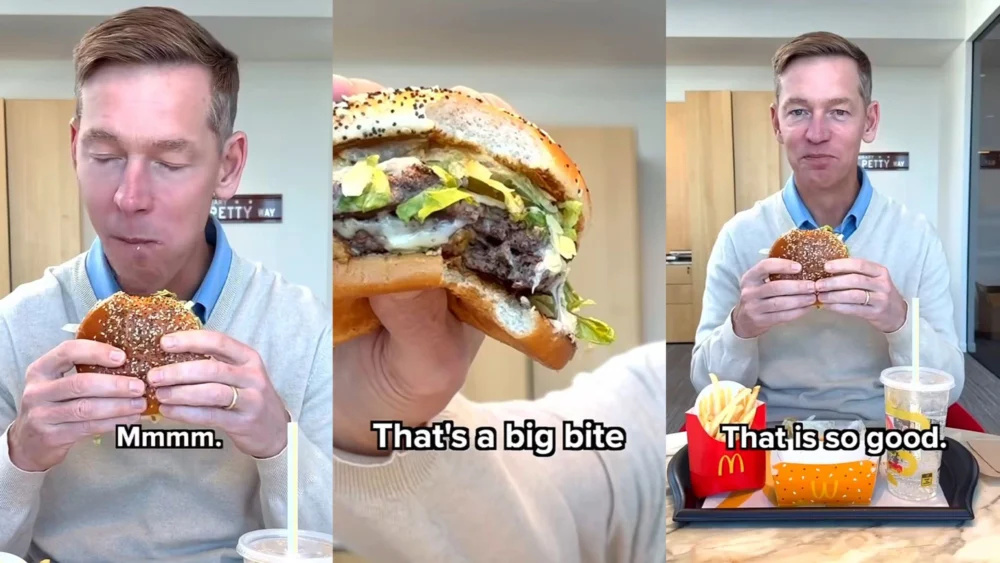
This backdrop of increasingly bizarre and calculated marketing stunts sets the stage for a recent incident involving McDonald’s CEO Chris Kempczinski, whose social media appearance to promote a new burger ignited a fierce debate about corporate authenticity and the efficacy of viral marketing. The event unfolded as Kempczinski posted a video introducing McDonald’s newest menu item, dubbed the "Big Arch." The burger, featuring a bun adorned with both sesame and poppy seeds, was presented by the CEO himself in a manner that many viewers found jarringly robotic and insincere.
Chronology of a Viral Mishap:
- CEO’s Debut: Chris Kempczinski releases a video on social media promoting the "Big Arch" burger. His delivery is perceived as stiff, and his minuscule, almost hesitant bite of the burger, which he repeatedly referred to as a "product," immediately draws public scrutiny.
- Immediate Backlash: Social media users quickly reacted, with numerous comments and memes surfacing online. Critics questioned Kempczinski’s apparent reluctance to genuinely enjoy the company’s own product, interpreting his demeanor as a lack of authenticity or even a subtle disdain. The video rapidly became a subject of widespread ridicule, fueling speculation that the CEO had "potentially never eaten a burger in his life."
- Competitors Seize Opportunity: Rival fast-food chains wasted no time in capitalizing on the viral moment. Burger King’s CEO, Josh Kobza, posted a video of himself taking a demonstrably hearty, enthusiastic bite of a Burger King Whopper, a clear dig at Kempczinski’s restrained approach. Wendy’s and A&W’s CEOs also joined the fray, showcasing their own respective burgers with similar gusto, effectively initiating a public "burger war" that played out across social media. This swift competitive response underscored the real-time nature of digital brand engagement and the opportunistic tactics employed by companies to gain an edge.
Analysis and Implications:
The incident quickly devolved into a public relations crisis for McDonald’s, but it also sparked a fascinating discussion about whether the perceived gaffe was, in fact, an intentional "viral marketing psyop." Some commentators suggested that the awkwardness was too pronounced to be accidental, positing that the entire event was a calculated move to generate outrage, drive discussion, and ultimately, draw attention to the new "Big Arch" burger. Regardless of intent, the outcome was undeniable: the video, the backlash, and the competitor responses ensured that "Big Arch" and McDonald’s were trending topics, receiving immense, albeit often negative, media exposure.
This episode highlights several critical implications for corporate communication and marketing in the digital age. Firstly, it underscores the intense scrutiny placed on corporate leaders in public-facing roles. Authenticity, or the perceived lack thereof, can be instantly amplified and dissected by a global audience. Secondly, it demonstrates the double-edged sword of viral marketing: while it can generate massive reach, the sentiment can be uncontrollable and potentially detrimental to brand image if not managed expertly. Finally, the "burger war" initiated by competitors illustrates the aggressive and often humorous nature of brand rivalry on social media, where quick, witty responses can turn a competitor’s misstep into an opportunity for self-promotion. Whether a genuine misstep or a cunning strategy, Kempczinski’s burger bite became a case study in modern corporate communication, illustrating how easily a "product" can transform into a cultural phenomenon.
Keith Lee’s Next Chapter: From TikTok Critic to Restaurant Investor
Keith Lee, the highly influential TikTok personality, has captivated over 17 million followers with his distinctive approach to food reviews. Known for his front-facing videos that spotlight local, often unassuming, culinary gems, Lee possesses an unparalleled ability to impact the fortunes of restaurants, a phenomenon widely dubbed the "Keith Lee Effect." A single positive review from Lee can transform a struggling mom-and-pop eatery into a bustling destination, demonstrating the immense power of authentic, grassroots digital influence. Now, Lee is embarking on a significant new venture, transitioning from critic to investor, a move that has sparked considerable discussion within the food industry and among his loyal fanbase.
The Investment and Its Context:
Lee’s latest endeavor sees him investing in the Brooklyn Dumpling Shop, a chain with a growing footprint across the United States and Canada. This decision marks a notable departure from his established pattern of championing independent, locally-owned establishments, as Brooklyn Dumpling Shop is a multi-location franchise operation. His investment signals a new phase in his career, broadening his engagement with the food industry beyond mere critique.
Addressing the Conflict of Interest:
The move naturally raised questions about potential conflicts of interest, given Lee’s commitment to delivering honest reviews. In an interview, Lee directly addressed these concerns, stating unequivocally, "I will always give my honest opinion." When pressed on whether this extended to potentially negative reviews for Brooklyn Dumpling Shop, he affirmed, "Absolutely. Without hesitation." This stance is crucial for maintaining the credibility that underpins his vast influence. His brand is built on trust and perceived impartiality, and any perceived compromise could jeopardize his unique position in the digital food landscape.
The Surprising Choice and Public Perception:
What makes Lee’s investment particularly intriguing is the public perception surrounding Brooklyn Dumpling Shop. Despite Lee’s generally positive assessment of their offerings in his own reviews, online forums, particularly Reddit, contain numerous posts from consumers decrying the chain’s food quality and pricing. Comments range from "horrible, overpriced" to accounts of closures in various locations, indicating a mixed, often negative, consumer experience prior to Lee’s involvement. This dissonance between popular opinion and Lee’s personal assessment, coupled with his investment, presents a complex narrative.
Lee, however, remains unfazed by these discrepancies. "Everybody’s taste buds are different," he remarked, emphasizing the subjective nature of culinary enjoyment. "You can’t discredit somebody’s opinion because their opinion is different than yours." This philosophy, while promoting open-mindedness, also underscores the challenge of aligning personal taste, public sentiment, and commercial interests.
Broader Implications for Influencer Entrepreneurship:
Keith Lee’s foray into restaurant investment is more than just a personal career pivot; it represents a significant development in the broader ecosystem of digital influencing. It showcases the natural evolution of successful content creators leveraging their platforms and credibility to become entrepreneurial forces within the industries they review. This model allows influencers to move beyond endorsement deals and directly participate in the businesses they help shape.
However, it also raises important questions about transparency, ethical boundaries, and the long-term impact on the "authentic" review model. For Lee, the challenge will be to consistently demonstrate that his entrepreneurial ventures do not compromise the integrity of his reviews, ensuring that the "Keith Lee Effect" continues to be driven by genuine culinary assessment rather than financial interest. His ability to navigate this delicate balance will likely set a precedent for future influencer-entrepreneurs in the food and lifestyle sectors, shaping how trust is built and maintained in the increasingly commercialized world of digital content creation.
RFK Jr. Takes Aim at Dunkin’: Public Health, Regional Identity, and the Sugar Wars
Robert F. Kennedy Jr., in his capacity as Health and Human Services Secretary, has made public health and dietary reform a central pillar of his agenda. His proposals include an "inverted food pyramid" that prioritizes meat proteins, challenging conventional dietary guidelines. Recently, his focus has sharply turned to the issue of excessive sugar consumption, particularly targeting popular fast-food beverage chains like Dunkin’ and Starbucks. This directive has ignited a firestorm of protest, especially in New England, where Dunkin’ holds an almost sacred status.
RFK Jr.’s Public Health Challenge:
At a recent rally in Austin, Kennedy directly addressed the issue of sugary drinks, stating, "We’re going to ask Dunkin’ Donuts and Starbucks… Show us the safety data that show that it’s okay for a teenage girl to drink an iced coffee with 115 grams of sugar in it." This pointed challenge highlights a significant public health concern: the alarmingly high sugar content in many popular beverages, which often far exceeds recommended daily intake guidelines. For context, the American Heart Association recommends no more than 25 grams of added sugar per day for most women and 36 grams for most men. A single drink containing 115 grams of sugar represents a staggering four to five times that recommendation. Kennedy’s stance is rooted in a broader public health narrative that links high sugar consumption to rising rates of obesity, type 2 diabetes, and other chronic health issues.
The New England Backlash: "Come and Take It"
Kennedy’s remarks, particularly those directed at Dunkin’, were met with immediate and fierce resistance from New Englanders. For residents of states like Massachusetts, Dunkin’ is far more than a coffee chain; it is a cultural institution, deeply woven into the fabric of daily life and regional identity. Its iced coffee, in particular, is an iconic staple, cherished by millions.
The reaction was swift and passionate:
- Political Defiance: Massachusetts Governor Maura Healey quickly posted a defiant image featuring a Dunkin’ cup alongside the words "Come and Take It," echoing the historic Gadsden flag slogan. This strong political statement underscored the depth of regional pride and the perceived threat to a beloved local tradition.
- Social Media Outcry: On platforms like X (formerly Twitter), users threatened a "Boston Tea Party-style revolt" should any governmental action be taken against their Dunkin’ coffees. These reactions, while often hyperbolic, reflect a genuine sense of affront and a readiness to defend a cultural touchstone against perceived governmental overreach. The sentiment transcends mere preference, becoming a matter of identity and autonomy.
- Cultural Significance: The intensity of the response stems from Dunkin’s unique position in New England. It’s a daily ritual, a social connector, and a symbol of local resilience and identity. Any perceived attack on Dunkin’ is thus interpreted as an attack on the region itself.
Broader Implications:
This conflict encapsulates a larger tension between public health advocacy and individual consumer choice, complicated by regional cultural attachments. On one hand, public health officials raise valid concerns about the pervasive issue of excessive sugar intake and its long-term health consequences, advocating for greater transparency and potentially regulatory measures. On the other hand, consumers and local communities view such interventions as infringements on personal liberty and attacks on cherished cultural symbols.
The "Dunkin’ vs. RFK Jr." saga highlights the political sensitivity of dietary interventions, especially when they target popular, ingrained habits. It demonstrates how seemingly straightforward public health messages can become entangled in complex issues of identity, tradition, and political rhetoric, setting the stage for ongoing debates about the role of government in shaping dietary choices and the balance between public welfare and individual freedom.
Reimagining Urban Food Access: Atlanta’s Model for City-Owned Groceries and NYC’s Aspirations
The challenge of food insecurity and lack of access to affordable, nutritious food—often termed "food deserts"—remains a pressing issue in many urban centers across the United States. In response, municipal leaders are exploring innovative solutions to ensure equitable food access for their residents. New York City Council Member Zohran Mamdani has championed the concept of city-owned grocery stores as a core component of his affordability agenda, drawing inspiration from existing models, particularly one successfully implemented in Atlanta.
The Atlanta Model: A Public-Private Partnership for Food Security
Atlanta has taken a proactive step in addressing food insecurity by providing city funding to subsidize a privately owned municipal grocery store. This innovative hybrid model, which opened its doors last summer, aims to provide essential ingredients like eggs, bread, and fresh produce at significantly lower prices than conventional supermarkets.
Key Features of the Atlanta Model:
- City Subsidies: The municipality provides financial support, enabling the store to absorb operational costs and offer products at reduced rates, making nutritious food more accessible to low-income residents.
- Private Operation: While city-funded, the day-to-day operations are managed by a private entity, potentially bringing efficiencies and retail expertise.
- Focus on Essentials: The store prioritizes stocking staple ingredients and healthy options, directly targeting the nutritional gaps often found in food deserts.
- Community Impact: Since its opening, the store has served as a vital resource for local residents, particularly those in underserved neighborhoods, providing an accessible and affordable alternative for their grocery needs. Reports, including those from writer Bryce Covert, indicate that the store has been largely successful in its mission, demonstrating the viability of such public-private collaborations.
Zohran Mamdani’s Vision for New York City:
Inspired by Atlanta’s success, New York City Council Member Zohran Mamdani has made the promise of city-owned grocery stores a cornerstone of his political platform. His vision is part of a broader agenda to make New York City more affordable for its diverse population, which also includes proposals for services like free public buses.
Challenges and Potential Benefits for NYC:
- Addressing Food Deserts: New York City, despite its economic prowess, has numerous neighborhoods classified as food deserts, where residents lack convenient access to fresh, affordable food. City-owned grocery stores could directly address this by strategically locating in these underserved areas.
- Economic Relief: By offering groceries at low prices, these stores could provide significant economic relief to struggling families, helping to reduce household expenses and combat the rising cost of living in the city.
- Logistical Hurdles: Implementing such a model in a city as dense and complex as New York would involve substantial logistical and financial challenges, including securing suitable real estate, establishing supply chains, and navigating potential opposition from existing private grocery businesses.
- Sustainability: Ensuring the long-term financial sustainability of city-owned or subsidized stores would be paramount, requiring careful planning and ongoing public investment.
Broader Implications for Urban Policy:
The efforts in Atlanta and Mamdani’s proposals for New York City signify a growing recognition among urban policymakers that access to basic necessities, including food, is a fundamental municipal responsibility. These initiatives move beyond traditional welfare programs, advocating for systemic changes in urban food systems. They represent a progressive approach to combating poverty and inequality, viewing food access not just as a charity issue but as a critical component of urban infrastructure and public service. The success and expansion of such models could fundamentally reshape how cities address food insecurity, promoting greater equity and resilience in urban food landscapes across the nation.
The diverse array of events unfolding across the food and entertainment sectors underscores a period of profound transformation. From the audacious marketing stunts designed to dominate digital conversations to the ethical tightrope walk of influential food critics turning investors, and from the politically charged debates over public health and cultural identity to pioneering urban solutions for food access, these narratives collectively paint a picture of an industry in constant flux. The overarching theme is one of adaptation: brands, individuals, and governments alike are grappling with how to connect, inform, and serve in an increasingly digital, polarized, and complex world. The ongoing evolution promises further innovation, contention, and a continuous redefinition of the boundaries between commerce, culture, and community.
