

The legal landscape governing the production and labeling of gin has undergone significant refinement in recent years, particularly within the European Union and the United Kingdom. As of 2024, the primary regulatory framework remains rooted in the European Union’s Regulation 2019/787, which was further amended under Regulation 2021/1465 to provide greater clarity for both consumers and the distilling industry. For the United Kingdom, the legislative environment is defined by the version of the act in effect at the time of its departure from the EU, creating a parallel yet largely consistent set of standards. Despite these legislative updates, the core definition of "London Dry Gin" remains misunderstood by many consumers; it is a designation of process and quality rather than one of geography or specific flavor profile.
Historically, the term "London Dry Gin" emerged as a quality control measure during a period when the spirits industry was fraught with adulteration. Today, it continues to function as a strict process designation. While modern regulators have attempted to clarify the sensory characteristics of gin, these efforts remain largely subjective. The law requires that the "predominant flavor" be that of juniper, yet the lack of quantifiable metrics for flavor means that enforcement is often symbolic rather than forensic.
The Technical Foundations of Distillation Purity
The contemporary standards for gin base spirits find their origins in the 18th and 19th centuries, a period colloquially known as the "Gin Craze" in London. During this era, spirits were frequently distilled from low-quality grains and waste products, resulting in harsh, often toxic liquors. To make these spirits palatable, distillers resorted to heavy sweetening or the addition of hazardous substances like turpentine and sulfuric acid.
The technological turning point occurred with the invention of the continuous column still, most notably the Aeneas Coffey still patented in 1830. Unlike traditional pot stills, which produce a flavorful but lower-proof spirit (often around 50% alcohol by volume), column stills allow for the production of highly rectified spirit reaching up to 96% alcohol by volume (ABV). This 96% threshold is the physical limit of distillation and results in a "neutral" spirit, stripped of the impurities and heavy flavors associated with the base fermented mash.
Under Regulation 2019/787, Section 21.a, any spirit labeled as "Distilled Gin" must begin with a base spirit of agricultural origin. This includes grains, sugar beets, potatoes, or even dairy byproducts like whey. Crucially, this base must be distilled to an initial strength of at least 96% ABV. This requirement ensures that the starting point for London Dry Gin is a blank canvas of extreme purity, free from the "heads" and "tails" (volatile impurities) that plagued historical spirits.
The Distinction Between Distilled and London Gin
The legal hierarchy of gin classification is specific. All London Gins are "Distilled Gins," but not all Distilled Gins qualify as London Gins. A Distilled Gin is created by redistilling the 96% neutral spirit in the presence of Juniperus communis L. and other natural botanicals.
The regulation allows for the addition of flavoring substances or preparations after the final distillation in a standard "Distilled Gin." This is why popular brands such as Hendrick’s or Martin Miller’s are classified as Distilled Gins rather than London Dry Gins. Hendrick’s adds essence of cucumber and Bulgarian rose after the distillation process, while Martin Miller’s utilizes a post-distillation blending process. Additionally, the "concentrate" method—where a highly potent botanical spirit is distilled and later diluted with more neutral spirit—is permitted under the "Distilled Gin" umbrella.
The "London Gin" designation, however, imposes a more rigorous set of constraints. According to the 2019/787 standards, all flavoring must be imparted exclusively through the distillation of the neutral spirit in the presence of all natural plant materials used. No flavorings, essences, or additives can be introduced after the still has finished its run. The only permitted additions after distillation are water (to reach bottling strength) and a negligible amount of sweetening.
Methanol Limits and Consumer Safety
A critical, though often overlooked, aspect of the London Gin specification is the regulation of methanol. Methanol, or "wood alcohol," is a natural byproduct of fermentation that is toxic to humans. Because methanol has a lower boiling point (64.7°C) than ethanol (78.2°C), it is the first substance to emerge during distillation.
The London Gin designation requires that the spirit contain no more than five grams of methanol per hectoliter of 100% alcohol. While modern distillation technology makes meeting this standard relatively simple for professional distillers, the inclusion of this limit in the law serves as a historical guarantee of safety. It ensures that the spirit has been properly "cut" to remove the dangerous "heads" of the distillation run. In the modern market, even gins without the London Dry designation generally meet these safety standards, yet the London Dry label remains the industry’s gold standard for chemical purity.
The "Dry" Requirement and the Role of Sugar
The term "Dry" in the context of gin specifically refers to the absence of sugar. Under current EU and UK law, a gin may be designated as "Dry" only if it contains no more than 0.1 grams of sweetening products per liter of the final product, expressed as invert sugar.
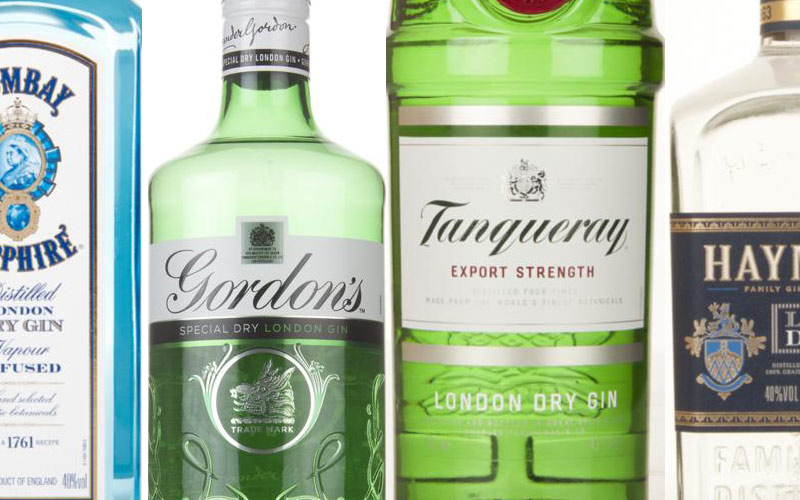
This minute allowance for sugar often confuses observers. If a gin is meant to be unsweetened, why allow any sugar at all? The answer lies in industrial anti-counterfeiting measures. Many major spirits producers, such as Gordon’s, utilize "sugar dyes" or tracer molecules. these are invisible markers that allow company representatives to verify the authenticity of a bottle in the field using specialized equipment. By allowing a threshold of 0.1g/L, the law permits these essential security measures without compromising the spirit’s "dry" sensory profile.
Botanical Restrictions and the "Predominant Juniper" Problem
Perhaps the most contentious area of gin regulation involves the definition of flavor. Regulation 20.c states that the taste of gin must be "predominantly that of juniper." This clause is inherited by both Distilled Gin and London Gin. However, the law provides no scientific metric for what constitutes "predominant."
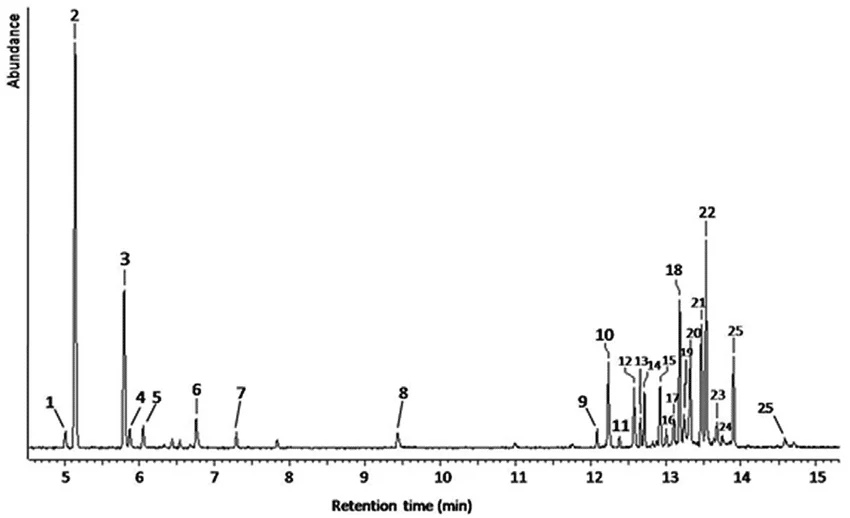
In recent years, some high-end distilleries, such as Bombay Sapphire’s Laverstoke Mill, have turned to Gas Chromatography-Mass Spectrometry (GC-MS) to maintain consistency. By analyzing the volatile compounds in a gin—such as alpha-pinene from juniper or limonene from citrus—distillers can create a chemical "fingerprint" of their product. Despite the availability of this technology, regulatory bodies have yet to adopt numerical standards for juniper content, leaving the definition of gin largely to the subjective interpretation of tasters.
Furthermore, the London Gin designation specifies that flavors must come from "natural plant materials." This phrasing creates a legal barrier for innovative spirits. For instance, a gin distilled with mushrooms (fungi) or meat (such as "Pechuga" style gins that use poultry in the vapor path) technically fails to meet the "London Gin" criteria because fungi and animals are not plants. While these products may still be sold as "spirits," they are excluded from the prestigious London Dry category.
Global Variations: The US TTB Approach
While the EU and UK maintain strict process-oriented definitions, the United States takes a more inclusive approach. The Alcohol and Tobacco Tax and Trade Bureau (TTB) defines gin as a spirit with a main characteristic flavor derived from juniper berries, produced either by distillation or by the mixing of spirits with juniper oils or extracts.
The U.S. regulations do not strictly codify the "London" prefix in the same way, nor do they enforce the same rigid "distillation only" flavoring rules for the general category. This discrepancy can lead to confusion in international trade, as a product labeled simply as "Gin" in the U.S. might not meet the legal requirements to be called "Gin" in London or Paris.
Chronology of Modern Gin Legislation
- 2008: EU Regulation 110/2008 establishes the first major modern framework for spirit drinks, defining Distilled Gin and London Gin.
- 2014-2015: Industry groups lobby for Geographical Indication (GI) status for London Dry Gin. The effort is eventually stalled due to the onerous technical requirements that would have forced many established brands to change their processes.
- 2019: Regulation (EU) 2019/787 is adopted, replacing the 2008 rules. It maintains the core process requirements while updating definitions for the modern market.
- 2020: The United Kingdom officially leaves the EU. Under the European Union (Withdrawal) Act 2018, the UK retains the 2019/787 standards as "retained EU law."
- 2021: Regulation (EU) 2021/1465 amends the 2019 act to provide further technical clarity on agricultural origins and sweetening limits.
- 2022-Present: The rise of "Contemporary" or "New Western" gins continues to challenge the "predominant juniper" rule, leading to ongoing debates within the Gin Guild and other trade bodies about the need for stricter flavor metrics.
Industry Impact and Future Implications
The persistence of the London Dry Gin designation as a process-only standard has allowed the category to remain incredibly diverse. Because it does not mandate a specific geographic origin, a "London Dry Gin" can be produced in Tokyo, New York, or Edinburgh, provided the distiller adheres to the strict 96% base spirit and distillation-only flavoring rules.
However, the lack of a clear flavor definition remains a point of vulnerability for the category. As "pink gins" and fruit-flavored spirits proliferate, industry experts warn that the consumer’s understanding of what "gin" is supposed to taste like may become diluted. Organizations like the Wine and Spirit Trade Association (WSTA) and the Gin Guild continue to advocate for consumer education, emphasizing that the "London Dry" label is a hallmark of quality and traditional craftsmanship.
In conclusion, London Dry Gin stands as a unique example of a legal designation that prioritizes the how over the where. It represents a commitment to chemical purity, traditional distillation methods, and a lack of post-distillation manipulation. As the global spirits market continues to expand, these regulations provide a necessary anchor, ensuring that even as flavors evolve, the fundamental integrity of the spirit remains protected by law. The future of the designation will likely depend on whether regulators eventually move toward quantifiable chemical standards for juniper, or if the current "subjective but symbolic" status quo will continue to suffice for a rapidly diversifying industry.
