

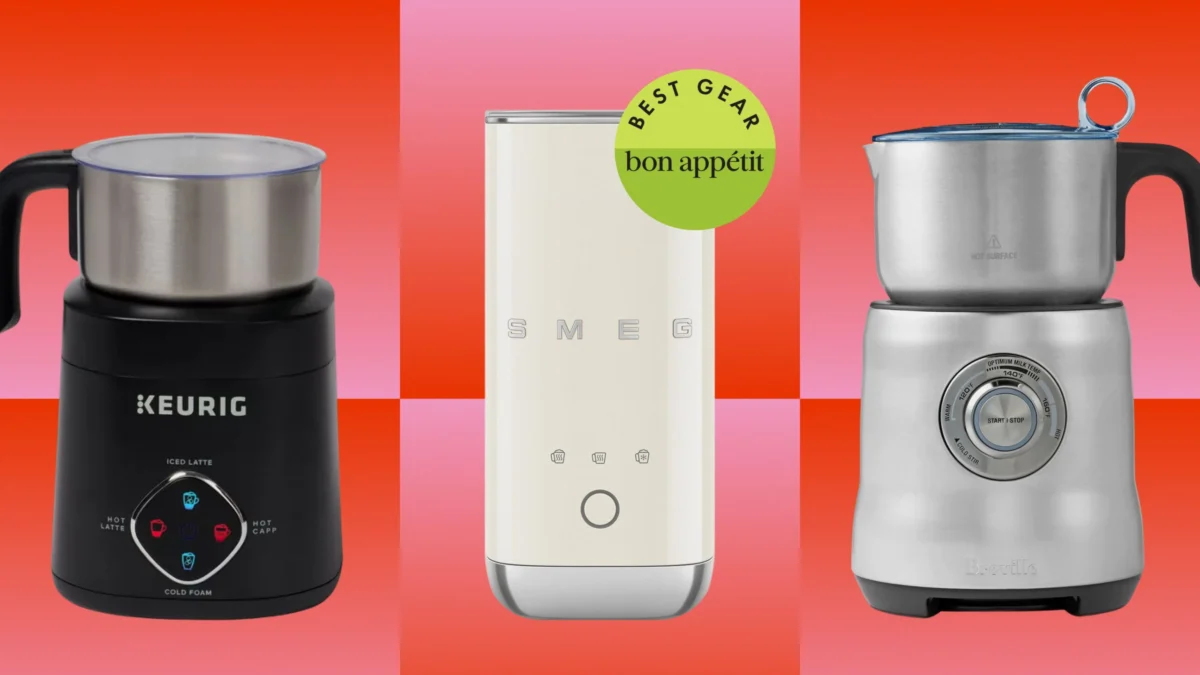
The landscape of home coffee consumption has undergone a significant transformation, with a growing number of enthusiasts seeking to replicate the café experience in their own kitchens. Central to this trend is the milk frother, a device once considered a luxury gadget but now increasingly viewed as an essential component for crafting lattes, cappuccinos, and other specialty beverages. A recent comprehensive evaluation involving 22 leading models on the market, coupled with expert insights from professional baristas, has identified the electric milk frothers that consistently deliver superior, velvety microfoam across various milk types and budgets. This extensive review aims to provide consumers with an objective and factual analysis to guide their purchasing decisions, moving beyond rudimentary foam to truly luxurious, stable results.

The Evolution of Home Barista Culture and Frothing Technology
The past decade has witnessed a substantial surge in home coffee preparation. Data from the National Coffee Association indicates that while overall coffee consumption remains high, there’s a discernible shift towards at-home brewing, often driven by economic factors and a desire for customization. This pivot has fueled demand for advanced coffee equipment, including espresso machines, specialized grinders, and, crucially, milk frothers. Early iterations of home frothing technology were often basic, relying on manual whisking or simple heating elements that produced airy, unstable bubbles. However, advancements in engineering and material science have led to sophisticated automatic frothers capable of emulating the precise microfoam previously exclusive to commercial steam wands. This technological progression has democratized access to café-quality beverages, allowing everyday coffee drinkers to elevate their morning routine. The market for coffee preparation appliances, including frothers, is projected to continue its upward trajectory, reflecting consumers’ ongoing investment in their daily coffee rituals.

Rigorous Evaluation: Our Testing Methodology
To provide a definitive guide, a rigorous testing protocol was implemented. Twenty-two of the most prominent electric milk frothers, encompassing both free-standing carafe-style units and handheld wands, were subjected to extensive trials. Each frother was tested with two distinct milk types: traditional whole dairy milk and Oatly oat milk, a popular plant-based alternative known for its unique frothing characteristics. For every model, the production of hot foam, cold foam, and plain heated milk was assessed. Additional settings, such as options for dense versus airy foam and temperature adjustments, were also thoroughly explored.

Key performance indicators included foam texture (from light and airy to dense and velvety microfoam), stability (how long the foam held its structure before collapsing), and how each frother impacted the milk’s natural sweetness and flavor profile. Beyond performance, practical considerations such as design aesthetics, unit weight, countertop footprint, and ease of cleaning were meticulously evaluated. To ensure a professional benchmark, the testing process incorporated invaluable feedback from seasoned baristas and coffee educators. Erika Arostegui, a barista at Love You a Latte in Greenwich, Connecticut, and Megan Biolsi, Manager of Coffee Education and Training at Sightglass Coffee, provided critical insights into the nuances that distinguish good foam from exceptional foam, particularly emphasizing temperature control and microfoam quality.
Top Performers: A Deep Dive into Excellence

Following extensive testing and expert consultation, several models distinguished themselves across various categories, offering a blend of performance, design, and value.
Best Overall: Breville Milk Café
The Breville Milk Café emerged as the undisputed leader, lauded by both testers and professional baristas. Priced at approximately $200, this unit is often described as the "Ferrari of milk frothers" due to its precision and robust performance. Erika Arostegui of Love You a Latte underscores its capabilities: "A good frother shouldn’t just make bubbles—it should create silky, velvety microfoam that elevates a latte or cappuccino. Temperature control is also key because if the milk gets too hot, you lose that natural sweetness. For a splurge, we love the Breville Milk Café. It’s precise, powerful, and really gives you café-quality foam with the ability to fine-tune temperature and texture."

The Breville Milk Café’s aesthetic appeal is undeniable, featuring a sleek, modern design with a stainless-steel base and carafe that enhances any kitchen counter. Its exceptional versatility in handling diverse milk types is a major selling point. With whole milk, it consistently produced rich, elastic, and glossy foam, capable of maintaining its structure atop cold brew like a dense marshmallow. This process also adeptly extracts the milk’s inherent sweetness, transforming a simple cappuccino into a dessert-like experience. Crucially, it mastered oat milk, a notoriously challenging alternative for many frothers. Utilizing Oatly, the Breville consistently delivered smooth, stable, and dense foam, free from splitting or a watery consistency, making it pourable for intricate latte art. This dual-milk proficiency, attributed to its precise temperature control, positions it as an invaluable asset for households navigating both dairy and plant-based preferences. The primary drawbacks are its premium price point and substantial countertop footprint, which may be a significant consideration for those with limited space or a more casual approach to coffee.
Runner-up: Keurig K-Froth Hot and Cold Frother
The Keurig K-Froth Hot and Cold Frother, typically retailing around $100 but often available for $70, proved to be a surprisingly robust and reliable performer. It offers a premium aesthetic and café-quality results at a more accessible price, drawing comparisons to a budget-friendly Breville. Its operation is notably user-friendly, featuring four intuitive presets: Hot Latte, Hot Capp, Cold Foam, and Iced Latte. These settings consistently yielded smooth, bouncy foam with both dairy and plant-based milks. The unit boasts a sturdy, commercial-grade build, designed to withstand daily use. A unique feature is its inclusion of three separate carafes, each with its own lid and whisk, making it highly practical for busy offices or multi-person households. Cleanup is facilitated by dishwasher-safe components. While the three-carafe system is advantageous for group settings, it can feel redundant for individual users, potentially occupying additional storage space.

Best for Latte Art: Subminimal NanoFoamer PRO
For the discerning home barista focused on latte art, the Subminimal NanoFoamer PRO, priced around $159, stands out. This high-tech automatic frother is celebrated by both enthusiasts and professionals for its advanced microfoam technology and sophisticated design. Megan Biolsi of Sightglass Coffee highlights its precision: "A good milk frother provides consistency while also allowing adaptability in foam content to suit a variety of drink styles. The NanoFoamer PRO, which is an automatic frother, helps create consistency and offers five foam settings, allowing flexibility."
The NanoFoamer PRO’s innovative design incorporates three magnetic flow controllers (paddles) that allow users to customize aeration for dairy, plant-based, or a balanced foam. Users select one of six programs, ranging from drizzle-ready microfoam to thick, stable toppings. In approximately 1-2 minutes, it produces milk foam precisely tailored to the chosen milk and drink style. Its ability to create exceptionally stable microfoam with challenging milks like oat milk is particularly impressive. The inclusion of an access code for an online latte art class further solidifies its appeal to those committed to perfecting their coffee craft. However, its technologically advanced nature might be overwhelming for casual users, and its smaller carafe capacity, coupled with its premium price, are notable considerations.

Best for Alternative Milks: Maestri House DualFro Ultra Milk Frother
Addressing a common challenge for many frothers, the Maestri House DualFro Ultra, typically $130 (often on sale for $100), excels in frothing plant-based milks. This model consistently outperformed others in whipping oat milk into rich, stable foam, whether for hot lattes or cold iced coffees. Its hot foam was thick and pillowy, ideal for cappuccinos, while the microfoam setting delivered the smooth, silky texture required for latte art. A thoughtful addition is the included flow diverter, a three-pronged plastic cap over the whisk, which aids in controlled pouring for intricate designs by separating puffy foam from microfoam. With a generous 2-cup capacity, it is well-suited for preparing multiple servings. Its eight presets, including specific settings for hot chocolate, plant-based milks, and latte-art microfoam, underscore its versatility. While its size can consume considerable counter space and its numerous presets might initially intimidate, its performance with alternative milks makes it a compelling choice for a diverse user base.
Best Budget Milk Frother: Instant Pot Instant MagicFroth 9-in-1 Frother
The Instant Pot Instant MagicFroth 9-in-1 Frother, priced at approximately $65 (frequently on sale for $50), surprised testers with its powerful performance relative to its cost. Diverging from rigid presets, this frother offers customizable temperature and froth levels, providing users with greater control. It effectively frothed both dairy and oat milk evenly, whether on warm or cooler settings. Its large carafe can warm up to 17 ounces of liquid, making it suitable for larger hot beverages, though frothing capacity is limited to 8.5 ounces to prevent overflow. Despite its generous capacity, the appliance maintains a compact footprint, making it easy to store. The primary drawback lies in its flexibility; users who prefer a single-button operation for specific drink types might find the customization slightly more involved.

Best for Small Spaces: Smeg Mini Milk Frother
The Smeg Mini Milk Frother, priced at $170, offers a blend of charming retro aesthetics and reliable performance in a compact form factor. Its signature Smeg design, available in a palette of pastels, doubles as attractive counter decor. This unit produced consistent hot and cold foam at the push of a button through three simple preset modes: hot milk, hot foam, and cold foam. It performed admirably with both dairy and alternative milks, yielding thick, lush foam for whole milk and surprisingly stable, creamy results for oat milk. Cleaning is straightforward due to a magnetic, removable whisk and a nonstick interior. While its foam is more pillowy than silky, limiting intricate latte art, and its small capacity necessitates multiple rounds for more than one drink, its design and compact size justify the splurge for design-conscious individuals with limited counter space.
Best Handheld Milk Frother: Maestri House LunaFro Max
For users seeking a cost-effective and space-saving alternative to carafe-style frothers, the Maestri House LunaFro Max, retailing around $34 (often $28), proved to be the top handheld option. This lightweight, USB-C rechargeable gadget delivers significant results, with a full charge lasting up to three months. Its rotary dial for speed control offers precise texture customization, a notable advantage over single-speed wands. Beyond milk frothing, it effectively blends matcha, protein powders, and hot chocolate. The detachable frothing head and included stand contribute to easy cleaning and organized storage. It provides premium features without the premium price tag, making it an excellent versatile and portable choice for individual servings.

Best Portable Frother: Subminimal NanoFoamer Go
The Subminimal NanoFoamer Go, priced at $37, is designed for ultimate portability and convenience. Housed in a travel-friendly case, it includes the rechargeable frother and three interchangeable whisk heads for various mixing, foaming, and whisking needs. Its compact size allows it to fit into small bags, making it ideal for travel, road trips, or office use. While it may not produce large, stiff clouds of cappuccino foam, it excels at creating silky microfoam and mixing protein shakes. Its unique design and functionality make it a thoughtful gift for the mobile coffee enthusiast.
Key Considerations for Consumers

When selecting a milk frother, several critical factors should influence the decision-making process:
- Temperature Control: As emphasized by professional baristas, precise temperature control is paramount. Milk heated beyond approximately 150°F can scald, losing its natural sweetness and developing a flat or burnt taste. Frothers offering adjustable temperature settings (with 140°F often cited as the sweet spot) provide superior results.
- Capacity and Volume: Consider the typical serving size. Milk expands significantly during frothing, so the carafe’s capacity and marked fill lines must be observed to prevent overflow and ensure optimal foam development. Models with larger capacities are suitable for households with multiple coffee drinkers.
- Customization and Presets: The choice between simple, pre-set functions and multiple adjustable modes depends on user preference. Simple machines offer quick, consistent results, while highly customizable models appeal to those who enjoy experimenting with foam density, temperature, and milk types for various beverages.
- Maintenance and Durability: Easy cleaning, particularly dishwasher-safe components and nonstick interiors, significantly enhances the user experience. The quality of materials and overall build contributes to the device’s longevity.
- Aesthetics and Footprint: For many, kitchen appliances are also design elements. Consider how the frother will look on the countertop and whether its size aligns with available kitchen space.
Beyond the Top Picks: Other Noteworthy Contenders

Several other frothers tested offered commendable performance, though they didn’t quite reach the top-tier rankings for specific categories:
- Lavazza MilkEasy Milk Frother ($68-$73): This compact and affordable machine proved surprisingly speedy, ideal for quick frothing. Its simplicity, however, meant limited settings and some struggle with oat milk, making it a solid, no-frills option for dairy milk users.
- Terra Kaffe Aero Milk Frother ($100-$150): Sporting an elegant design, this frother delivered smooth, stable foam for both dairy and plant-based milks across its four intuitive modes. Its dedicated matcha mode is a unique bonus. While highly capable, its functionality was slightly less extensive than the Breville at a comparable price point.
- Dreo Baristamaker ($90): A compact and user-friendly frother, the Dreo Baristamaker offered impressive customization for its price, allowing adjustments for foam type, temperature, speed, and milk type. It produced creamy, stable froth, albeit leaning more towards airy foam than silky microfoam suitable for latte art.
- Philips Baristina Frother ($100): This sleek and compact frother offered straightforward operation with a single button for hot or cold foam. While functional and stylish, it lacked control over foam texture, primarily producing stiff microfoam, and its simplicity limited versatility.
- AdHoc Rapido Milk & Sauce Frother ($35): A powerful and speedy handheld option, the AdHoc Rapido came with a sturdy battery compartment and a convenient stand. Its single-speed operation and requirement for continuous button pressing were minor drawbacks.
Models Falling Short: Insights into Performance Gaps

Not all frothers met the high standards required for café-quality results. Several models exhibited shortcomings that impacted their overall recommendation:
- Secura Automatic Electric Milk Frother: Its singular function and lack of temperature or foam style control limited its versatility, especially with alternative milks, where it produced thin, unstable foam.
- Capresso Froth PRO: This wand frother felt flimsy and delivered a bubbly, rather than silky, foam quality. Its single-speed motor offered insufficient control for varied frothing needs.
- Nespresso Aeroccino 4: Despite its elegant design, this pitcher struggled with foam stability, particularly with oat milk, where the foam collapsed rapidly after preparation. Its high price point did not align with its inconsistent performance.
- Miroco Milk Frother: While aesthetically pleasing and capable of decent hot foam, its cold foam performance was notably subpar, yielding airy and loose textures rather than the desired thick, spoonable consistency. This inconsistency made its premium price difficult to justify.
- Zyliss Milk Frother: This budget-friendly wand felt flimsy and demonstrated slow, inefficient frothing capabilities, even with whole milk. Its performance was significantly below expectations, even for its low cost.
Expert Insights: Dispelling Frothing Myths

Understanding the fundamental principles of milk frothing is crucial for achieving optimal results.
- Handheld vs. Automatic Machines: Megan Biolsi explains the trade-offs: "Handheld frothers allow slightly less control, but still offer some variation. Automatic machines are great for consistency but typically offer limited adjustment ability outside of the preset settings." Professional baristas predominantly rely on steam wands for complete control over milk temperature, aeration, and texture, but for home users, automatic frothers provide consistency and ease, while handheld wands offer portability and quick, individual use.
- The Impact of Milk Type: The fat and protein content of milk significantly influences foam quality. Whole dairy milk, with its higher fat content, is generally the easiest to froth, producing rich, stable foam. Plant-based milks such as oat, almond, and soy often contain added oils to compensate for lower natural fat levels, aiming to mimic dairy milk’s frothing characteristics. While achieving excellent foam with alternative milks is possible, it often requires specific frother settings or specialized "barista blend" plant milks.
- Matching Foam to Drink: The ideal foam varies by beverage. Lattes, for instance, benefit from liquid microfoam poured over espresso, creating a smooth, integrated texture. Cappuccinos, conversely, traditionally feature 4-6 ounces of milk steamed or frothed to create dense, distinct puffs of foam atop espresso. The "best" type of foam is ultimately a matter of personal preference and the specific drink being prepared.
The Future of Home Coffee: Implications for the Market

The sophisticated capabilities of modern milk frothers represent a significant step forward in home coffee preparation. As consumers continue to prioritize convenience, cost-effectiveness, and quality in their daily rituals, the demand for appliances that bridge the gap between home and café will only intensify. Innovations in frothing technology, particularly those addressing the nuances of plant-based milks and offering precise control, are setting new benchmarks. This trend is likely to drive further advancements, potentially including smart frothers with app-controlled settings, greater energy efficiency, and an increased focus on sustainable materials, ultimately enriching the home barista experience for a broader audience.
