

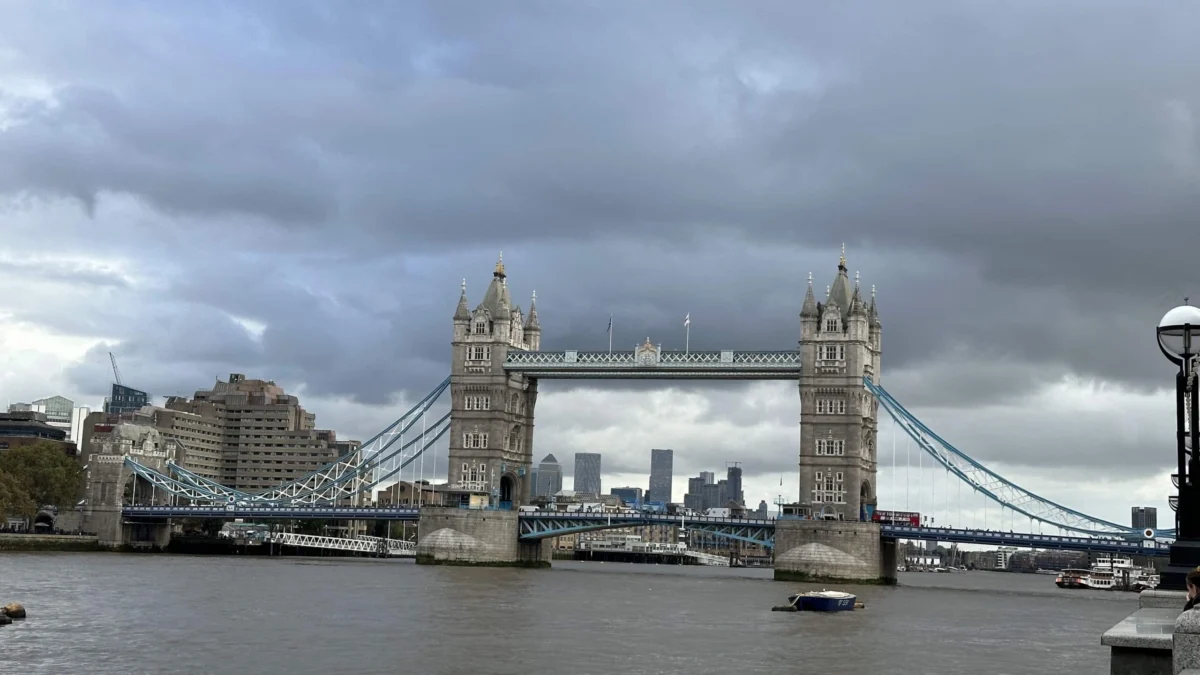
The global spirits industry is built upon a foundation of geographical indications and heritage-based branding, leading many consumers to believe that a bottle labeled London Dry Gin must, by definition, originate from the capital of the United Kingdom. However, in the world of viticulture and distillation, London Dry Gin represents a rare anomaly: it is a designation of production methodology rather than a protected geographical indication. Unlike Champagne, which must hail from the eponymous region in France, or Scotch Whisky, which is legally bound to Scottish soil, London Dry Gin can be produced in any corner of the globe, from the Pacific Northwest of the United States to the distillation hubs of South Africa and Australia.
This distinction is rooted in a complex history of industrial innovation, public health crises, and the evolution of international trade law. To understand why a spirit named after a specific city has become a global standard for quality, one must examine the transition from the unregulated "Gin Craze" of the 18th century to the refined, chemically pure distillation processes of the modern era.
The Technological Catalyst: Aeneas Coffey and the Pursuit of Purity
The genesis of what we now recognize as London Dry Gin was not a marketing campaign, but a technological revolution. In 1830, an Irish inventor and former excise officer named Aeneas Coffey patented the "Coffey Still," also known as the continuous or column still. Before this invention, distillers relied on traditional pot stills, which were inefficient and produced a spirit with a high level of impurities and a heavy, often unpleasant, oily flavor profile.
To mask these imperfections, 18th-century distillers frequently added heavy amounts of sugar, honey, or even more dangerous additives. This led to the popularity of "Old Tom" gin, a sweeter style that dominated the market during the early 1800s. The Coffey Still changed the industry’s trajectory by allowing for the production of a much higher-proof, neutral spirit (up to 96% alcohol by volume). This spirit was so clean and refined that it did not require sweetening to be palatable.
Distillers in London, then the epicenter of global trade and spirits production, were among the first to adopt this technology. By redistilling this pure neutral spirit with a precise blend of botanicals—predominantly juniper—they created a "dry" gin. Because this style became synonymous with the high-quality output of London’s major distilleries, the term "London Dry" emerged as a hallmark of excellence, distinguishing it from the lower-quality, sweetened, or "bathtub" gins of the past.
The Dark Era of Gin Production and the Need for Standards
The transition toward a formal "London Dry" designation was also a response to the hazardous state of spirits production in the 18th and early 19th centuries. Historical records, such as the 1801 advertisement for the book Every Man His Own Brewer and Distiller, reveal that "London Gin" was already a recognized term, but its definition was dangerously fluid.
During this era, many manuals provided recipes for emulating the taste of high-quality London spirits using illicit and toxic substances. It was not uncommon for unscrupulous producers to add turpentine oil, sulfuric acid, or lime to neutral spirits to mimic the sharp, piney aroma of juniper. Turpentine, a volatile fluid distilled from pine resin, is highly toxic and can cause severe kidney damage or death if ingested.
The "London Dry" label served as a vital signal to the consumer. It promised a spirit that had been produced through a specific, clean distillation process rather than one that had been "rectified" or flavored after the fact with potentially lethal chemicals. By the late 19th century, as global trade expanded, "London Dry" began appearing in international print media as a brand-neutral indicator of quality. Evidence of this can be found in Australian newspapers as early as 1897 and United States publications by 1903, where it was marketed to a growing middle class seeking reliable, imported luxury goods.
Defining the London Dry Process: A Legal Perspective
Today, the term London Dry Gin is strictly codified in international law, most notably within the European Union (Regulation (EC) No 110/2008) and similar frameworks in the United Kingdom and the United States. To bear the name, a gin must adhere to several rigorous criteria that focus entirely on how the spirit is made, not where.

The primary requirements for a London Dry Gin include:
- Base Spirit Quality: The ethyl alcohol used must be of agricultural origin and distilled to a minimum strength of 96% ABV.
- Botanical Infusion: All flavors must be imparted through the redistillation of the neutral spirit in the presence of natural botanicals.
- Post-Distillation Restrictions: No flavorings (natural or artificial) can be added after the distillation process. Only water may be added to reach the desired bottling strength, and a minute amount of sweetener (no more than 0.1 grams of sugar per liter) is permitted.
- No Colorants: The resulting spirit must be transparent and colorless.
This "one-shot" or "multi-shot" distillation requirement is what separates London Dry from "Distilled Gin." In the latter category, producers are permitted to add flavorings or essences after distillation, a practice strictly forbidden for London Dry. This makes London Dry one of the most difficult spirits to produce consistently, as the master distiller cannot "fix" the flavor profile once the liquid leaves the still.
The Globalization of Production: From the Thames to the World
Because the designation is process-oriented, some of the world’s most famous "London" gins are no longer produced within the M25 motorway, or even in England. This shift highlights the decoupling of the brand from its geography in favor of industrial efficiency and heritage scaling.
A prominent example is Tanqueray. Founded by Charles Tanqueray in Bloomsbury, London, in 1830, the brand is one of the most recognizable London Dry Gins in existence. However, production was eventually moved to the massive Cameronbridge Distillery in Fife, Scotland. Despite its Scottish origin, it remains a London Dry Gin because it adheres to the traditional distillation method established in the 19th century.
Other global examples illustrate the category’s versatility:

- No. 3 Gin: Developed by the historic London merchant Berry Bros. & Rudd, this spirit is actually distilled in the Netherlands, the ancestral home of gin’s predecessor, Genever.
- Astraea Meadow Gin: Produced in the United States, this craft spirit utilizes the London Dry method to showcase American botanicals while maintaining the structural integrity of the classic style.
- Belgravia Gin: Though named after an affluent London district, this brand is a staple of the South African spirits market, produced locally to meet regional demand.
- Australian Distilling Co.: This producer utilizes the London Dry process to create gins that are quintessentially Australian in flavor but traditional in technique.
Industry Impact and Market Analysis
The decision not to protect "London Dry" as a Geographical Indication (GI) has had significant implications for the global spirits market. While the city of London does have a protected GI for "London Gin," it is rarely used because the "London Dry" process designation carries more weight with consumers and offers producers more flexibility.
Market data suggests that the London Dry category remains the dominant force in the global gin market, which was valued at approximately $15.3 billion in 2023 and is projected to grow significantly by 2030. The "London Dry" label acts as a shorthand for "premium," allowing craft distillers in emerging markets to compete on a level playing field with established British giants.
However, some industry purists argue that the lack of geographical protection dilutes the heritage of the spirit. In response, a "London gin renaissance" has occurred over the last two decades. Distilleries like Sipsmith, which opened in 2009, fought a legal battle to bring copper pot distillery back to the city center for the first time in nearly 200 years. This has created a sub-sector of "London Dry Gins actually made in London," appealing to a modern consumer base that values both process and provenance.
Implications for the Future of Spirits Labeling
The story of London Dry Gin serves as a case study in how a regional name can evolve into a global technical standard. As the "gin-aissance" continues to spread, the industry faces a tension between traditional definitions and modern innovation.
The rise of "Contemporary" or "New Western" style gins—which often de-emphasize juniper in favor of citrus or floral notes—has challenged the dominance of the London Dry category. Yet, for many distillers, the London Dry method remains the "gold standard" of the craft. It represents a commitment to transparency and technical skill, as the distiller cannot hide behind additives or post-distillation adjustments.

For the consumer, the takeaway is clear: "London Dry" is a promise of how a gin will behave in a glass—crisp, juniper-forward, and free of artificial sweetness—regardless of whether the distillery overlooks the River Thames or the rugged coast of Australia. In an era of increasingly complex food and beverage labeling, the London Dry designation remains a rare example of a 19th-century quality control measure that successfully transitioned into a 21st-century global benchmark.
