


An easy, rustic, one-pan dish with eggs poached in a rich, savory, garlicky tomato sauce. Best served with all the crusty bread for dunking! This evocative description introduces "Eggs in Purgatory," a deceptively simple yet profoundly satisfying Italian dish that has captured the attention of home cooks and culinary enthusiasts alike. Far from being a mere recipe, it represents a culinary tradition steeped in history and flavor, offering a comforting and accessible entry point into the world of Italian cooking.
The dish, known in its native Italy as uova in purgatorio, draws its intriguing name from a symbolic interpretation. The vibrant, simmering tomato sauce is said to represent the flames of purgatory, a theological concept of purification, while the delicate eggs nestled within symbolize the souls undergoing this transformative process. This poetic framing adds a layer of cultural depth to a meal that is otherwise celebrated for its straightforward preparation and hearty appeal.

Origins and Distinctions: Eggs in Purgatory vs. Shakshuka
While "Eggs in Purgatory" might conjure images of a fiery ordeal, its actual execution is one of comforting warmth and robust flavor. The foundation of the dish is a rich, savory tomato sauce, often generously infused with garlic, which provides a luscious bed for eggs to poach in. The final presentation is typically adorned with fresh herbs and sometimes cheese, creating a visually appealing and aromatically enticing dish. The crucial element that elevates "Eggs in Purgatory" and makes it a staple for a quick, satisfying meal is its perfect pairing with crusty bread, essential for sopping up every last drop of the flavorful sauce.
It is important to distinguish "Eggs in Purgatory" from its close culinary cousin, Shakshuka. While both dishes feature eggs poached in a tomato-based sauce, their origins and flavor profiles differ significantly. Shakshuka, with its roots in North African cuisine, typically incorporates a more complex spice blend, often featuring cumin and paprika, and frequently includes diced bell peppers as a key ingredient. This creates a distinctively spiced and often heartier stew. "Eggs in Purgatory," on the other hand, leans into the pure, unadulterated flavors of tomato and garlic, offering a more straightforward yet equally delicious experience. This distinction highlights the diverse culinary landscape of the Mediterranean and Middle East, showcasing how similar core ingredients can be transformed through regional spices and traditions.
The Allure of Simplicity: Why "Eggs in Purgatory" Endures
The enduring appeal of "Eggs in Purgatory" lies in its remarkable simplicity and versatility, making it an ideal dish for various occasions and skill levels. Its one-pan preparation is a significant draw, minimizing cleanup and maximizing efficiency in the kitchen. This characteristic is particularly valued in today’s fast-paced world, where time is often a precious commodity.

The dish’s inherent adaptability further contributes to its popularity. While the classic rendition is a triumph of simple ingredients, "Eggs in Purgatory" serves as an excellent canvas for culinary creativity. The base sauce can be enhanced with a myriad of additions, transforming it into a truly personalized creation.
Variations and Mix-Ins: A Culinary Playground
The flexibility of "Eggs in Purgatory" allows for a wide array of creative interpretations and additions, catering to diverse palates and dietary preferences.

- Meats: For those seeking a heartier meal, crumbled Italian sausage (available in sweet or spicy varieties), diced pancetta, or crispy bacon can be added to the sauce base, infusing it with smoky and savory notes.
- Briny Accents: The addition of olives (black or green) or capers can introduce a delightful briny counterpoint to the richness of the tomato sauce.
- Legumes for Substance: Cannellini beans or chickpeas can be incorporated to add texture, protein, and a satisfying heartiness, making the dish even more substantial.
- Vegetable Medley: A selection of vegetables can elevate the dish both in terms of nutrition and flavor. Diced bell peppers, zucchini, mushrooms, or eggplant can be sautéed with the aromatics before the tomatoes are added, contributing sweetness and depth.
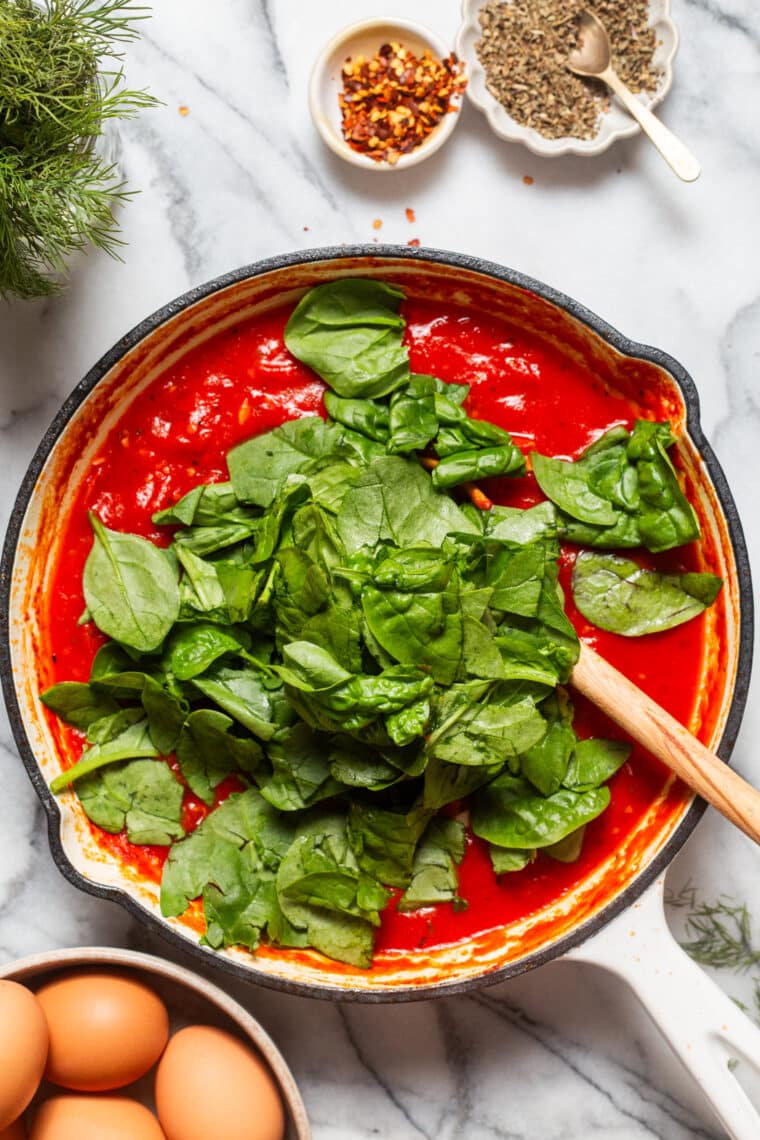
- Leafy Greens: For a boost of vitamins and a touch of freshness, a variety of leafy greens can be wilted into the simmering sauce. Spinach, kale, collard greens, Swiss chard, or even peppery arugula are excellent choices.
- Herbal Infusions: The finishing touch of fresh herbs is crucial for brightening the dish. Basil, parsley, thyme, rosemary, dill, or chives can be chopped and sprinkled over the top just before serving, adding aromatic complexity and visual appeal.
These variations underscore the dish’s chameleon-like quality, allowing it to transition from a simple breakfast or brunch staple to a robust and flavorful dinner.
A Pro-Tip for Effortless Enjoyment: The Make-Ahead Advantage
For those who appreciate culinary efficiency, a key recommendation for preparing "Eggs in Purgatory" is to make the sauce ahead of time. This strategy significantly streamlines the cooking process, especially on busy weeknights. The robust tomato sauce can be prepared up to three days in advance and stored in an airtight container in the refrigerator. When ready to serve, the sauce can be gently brought back to a simmer before the spinach and eggs are introduced. This not only saves time but also allows the flavors of the sauce to meld and deepen further.
Storage and Leftovers: Preserving the Flavor
The question of storing leftovers is a common one for any well-loved dish. "Eggs in Purgatory" can be refrigerated in an airtight container for 3-4 days. For optimal quality, it is recommended to store the poached eggs and the tomato sauce separately. This prevents the eggs from becoming overcooked or rubbery in the sauce and ensures that both components retain their intended texture and flavor. Reheating can be done gently on the stovetop or in a microwave, with the spinach and eggs added back to the warmed sauce.
Culinary Context and Broader Implications
The popularity of "Eggs in Purgatory" can be seen as part of a broader trend towards appreciating simple, flavorful, and globally inspired cuisine. As consumers increasingly seek out authentic and comforting dishes, recipes that offer both ease of preparation and depth of flavor, like "Eggs in Purgatory," gain significant traction. The dish’s accessibility, both in terms of ingredients and technique, democratizes gourmet-style eating, making it attainable for a wide audience.
Furthermore, the emphasis on fresh ingredients and the potential for customization align with growing consumer interest in healthy and adaptable eating habits. The ability to incorporate various vegetables and lean proteins allows individuals to tailor the dish to their specific nutritional needs and taste preferences. This inherent flexibility makes "Eggs in Purgatory" not just a meal, but a culinary experience that can be enjoyed and adapted for years to come.
In conclusion, "Eggs in Purgatory" is more than just a recipe; it is a testament to the power of simple ingredients, thoughtful preparation, and rich cultural heritage. Its journey from Italian kitchens to global dining tables speaks volumes about its universal appeal and its ability to offer a comforting, flavorful, and deeply satisfying culinary embrace. The dish’s name, evoking a sense of transformation, aptly reflects the way a few humble ingredients can be elevated into something truly divine.
