

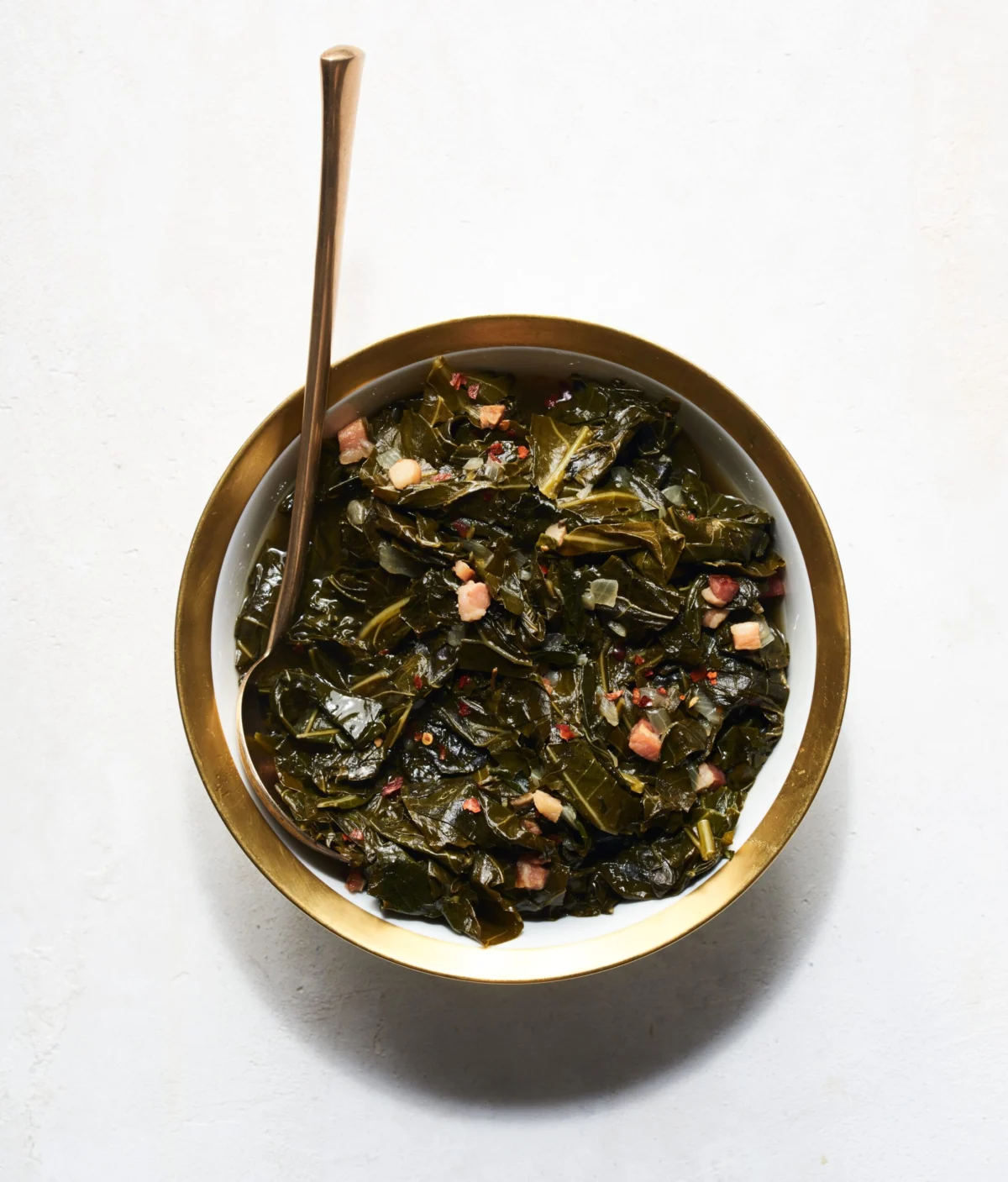
Collard greens have deep roots in Southern cooking, serving not merely as a dish but as a cultural touchstone. They are a fixture on New Year’s Day, when the tradition dictates that consuming greens is believed to usher in prosperity for the year ahead, symbolizing folded money. This deeply ingrained custom is upheld by culinary professionals and home cooks alike, with Chef Julia Sullivan of Nashville’s esteemed Henrietta Red restaurant consistently featuring them alongside black-eyed peas every January 1. "It’s something my mom has always done, and I think my grandparents, too," Chef Sullivan notes, underscoring the intergenerational transmission of this significant culinary ritual. "It’s a superstitious thing." This adherence to tradition highlights the profound connection between food, family heritage, and regional identity in the American South.
Historical Trajectory: Tracing the Roots of a Southern Staple
The journey of collard greens into the heart of Southern cuisine is a rich tapestry woven through centuries of history, migration, and cultural adaptation. While the exact origin of collard greens (a loose-leafed variety of Brassica oleracea, related to kale and cabbage) is debated, their widespread cultivation dates back thousands of years to ancient Greece and Rome. They arrived in the Americas with European settlers, but their prominence in Southern cooking is largely attributed to African culinary traditions brought by enslaved peoples.
During the era of slavery, collard greens, along with other leafy greens, were readily available and relatively easy to cultivate, making them a vital and nutritious component of the diet for enslaved communities. Often grown in small garden plots or foraged, these greens were prepared with ingenuity, incorporating smoked meats and slow-cooking techniques to tenderize them and infuse them with flavor. This period was crucial in establishing the foundational cooking methods that define Southern collard greens today, emphasizing long simmers with pork products like ham hocks, fatback, or bacon to create a rich, savory "pot liquor"—the flavorful broth left after cooking—which is often considered as prized as the greens themselves.
Post-emancipation, collard greens continued to be a staple, particularly within African American communities, solidifying their place in what would come to be known as "Soul Food." Their affordability, nutritional value, and the comforting, communal aspect of their preparation ensured their enduring presence on tables across the South. The New Year’s Day tradition of eating greens for prosperity emerged from this historical context, intertwining economic aspirations with culinary practice, particularly significant in communities that historically faced economic hardship.
The Culinary Craft of Chef Julia Sullivan: A Tangy Twist on Tradition
Chef Julia Sullivan’s approach to collard greens at Henrietta Red respects this deep heritage while introducing subtle refinements. Her recipe achieves a savory, subtly smoky flavor profile derived from a foundational blend of bacon, onion, garlic, and red pepper flakes. These aromatics and fats render down, creating a robust base before the collards are introduced. The greens then undergo a crucial simmering period, often just under an hour, until they achieve a silky-tender texture—a hallmark of well-prepared collards.
What distinguishes Chef Sullivan’s rendition is the sweet-tart finish imparted by apple cider vinegar and a judicious touch of sugar. This combination provides a bright counterpoint to the inherent earthiness of the greens and the richness of the bacon. The recipe intentionally leans tangy, a characteristic that modern palates often appreciate for its ability to cut through fattiness and add complexity. For those who prefer a less acidic profile, Sullivan advises a flexible approach, suggesting an initial addition of 2 tablespoons of vinegar rather than the full ¼ cup, allowing for personal taste adjustments. This adaptability reflects a contemporary culinary philosophy that values both tradition and individual preference.
Key Preparation and Culinary Adaptations
Understanding the nuances of preparing collard greens is essential to unlocking their full potential. The process begins with meticulous cleaning and preparation:
- Cleaning and Prepping: The tough center ribs and stems are removed, as they can remain fibrous even after extended cooking. The leaves are then stacked, rolled, and sliced crosswise into approximately 1-inch thick strips. A crucial step involves submerging the prepped greens in a large bowl or sink filled with water. Swishing the leaves dislodges grit, which is then allowed to settle at the bottom. The greens are carefully lifted out, avoiding pouring, to ensure the grit remains behind. Excess liquid is shaken off; a slight dampness is beneficial as it aids in steaming and wilting the greens in the initial stages of cooking.
- The Role of Vinegar: Vinegar serves a multi-faceted purpose in collard green preparation. It brilliantly balances the greens’ earthy, often slightly bitter flavor, preventing them from tasting flat. Furthermore, its acidity effectively cuts through the richness of the bacon and the cooking broth, elevating the overall taste experience. Adding vinegar near the end of the cooking process is strategic, as it preserves its bright, sharp flavor. While Chef Sullivan’s recipe champions ¼ cup of apple cider vinegar, the flexibility to adjust this amount—starting with half and adding more to taste—empowers home cooks to customize the dish to their preference.
- Dietary Adaptations: Modern culinary practices often necessitate adaptations for various dietary needs. Chef Sullivan’s recipe is notably versatile. While bacon provides a signature smoky depth, it is entirely optional. For those avoiding pork, beef or turkey bacon can be substituted. For vegetarian or vegan diners, the transition is straightforward: omit the bacon, replace chicken broth with water or vegetable broth, and consider incorporating a spoonful of miso paste. Miso, with its rich umami profile, can effectively mimic the savory depth typically provided by cured meats, ensuring a flavorful plant-based rendition.
- Alternative Greens: The foundational technique of slow-cooked greens with savory elements and an acidic finish can be applied to various sturdy cooking greens. Mustard greens and turnip greens are equally cherished in Southern cuisine; either will yield a batch of greens with a slightly sharper, more peppery flavor. Kale, a cruciferous cousin, also serves as an excellent alternative, offering a robust texture and earthy taste. For more delicate greens like Swiss chard, cooking times must be significantly reduced to prevent them from becoming overly soft or mushy, highlighting the importance of understanding the textural properties of different leafy vegetables.
Broader Impact and Cultural Implications
The enduring popularity of collard greens, particularly in the context of New Year’s Day traditions, extends beyond mere culinary preference; it reflects a deeper cultural preservation. In an era of rapid globalization and evolving dietary trends, the continued embrace of dishes like collard greens serves as a powerful anchor to regional identity and historical memory. The act of preparing and sharing these greens becomes a generational dialogue, connecting the past with the present and reinforcing communal bonds.
From an economic perspective, the demand for collard greens supports local agriculture in the Southern United States. While not a primary cash crop on a national scale, their consistent presence in markets and grocery stores ensures a steady, albeit regional, agricultural interest. Data from agricultural surveys often highlight the regional concentration of collard green cultivation, predominantly across the Southeast, indicating their embeddedness within local food systems.
Nutritionally, collard greens are a powerhouse. They are an excellent source of vitamins K, A, and C, and a good source of dietary fiber, calcium, and iron. Their high antioxidant content contributes to various health benefits, including bone health, vision, and immune support. This nutritional density, combined with their historical accessibility, underscores their importance as a resilient food source.
Moreover, the adaptation of collard green recipes, such as Chef Sullivan’s, demonstrates the dynamism of Southern cuisine. It showcases how traditional dishes can be reinterpreted to appeal to contemporary tastes while retaining their fundamental essence. This culinary evolution ensures that while the "superstitious thing" of eating greens for prosperity remains, the dish itself continues to be relevant and celebrated in a diverse and ever-changing food landscape.
In conclusion, collard greens are far more than a simple vegetable dish. They are a symbol of resilience, a vessel of cultural heritage, and a delicious testament to the power of tradition. From their historical journey through the South to their place on modern New Year’s tables, they continue to nourish both body and spirit, promising prosperity and a taste of history with every tender, tangy bite.
