

A new report, "The Coffee Barometer: Germany in Focus," has been released, directly challenging major coffee roasters and retailers in Germany, one of the world’s most significant coffee markets. Published by Ethos Agriculture and Solidaridad, the comprehensive study calls for a fundamental shift in purchasing practices and a proactive embrace of leadership within the coffee sector. The report highlights the persistent issues of farmer poverty and environmental degradation that continue to plague the industry, urging Germany’s key players to leverage their considerable influence to foster meaningful and lasting change.
The "Germany in Focus" edition of the Coffee Barometer meticulously examined the operations of six leading German coffee roasters and five prominent retail groups. Its findings reveal a concerning lack of transparency regarding the commercial terms underpinning sustainability commitments. Many companies, while publicly professing a dedication to ethical and sustainable sourcing, fall short in providing concrete details about how these commitments translate into tangible benefits for coffee producers at the farm level. This opacity makes it difficult for stakeholders, including consumers and producers themselves, to assess the true impact of these initiatives.
Key Recommendations for a Sustainable Future
At the core of the Coffee Barometer’s recommendations is a strong push for multiyear contracts. These agreements would provide producers with the much-needed financial stability and predictability to invest in sustainable farming practices. Crucially, the report advocates for these contracts to be directly linked to the actual costs of sustainable production and to living income reference prices. This approach ensures that farmers receive a fair return on their labor and investments, enabling them to achieve a decent standard of living.
Furthermore, the report stresses the imperative for greater purchasing transparency. This includes making public the volumes of coffee purchased, the origins of this coffee, and the premiums paid for certified or sustainably produced beans. Such transparency would not only build trust but also allow for better accountability and the identification of areas where improvements are most needed.
A significant point of contention raised by the Coffee Barometer is the practice of passing compliance costs onto producers. The report strongly recommends that buyers, particularly large roasters and retailers, absorb these costs themselves. This is seen as a critical step in alleviating the financial burden on farmers, who are often operating on thin margins and are least equipped to bear the expenses associated with meeting stringent sustainability standards. By internalizing these costs, German companies can demonstrate a genuine commitment to shared responsibility and a more equitable distribution of value throughout the supply chain.
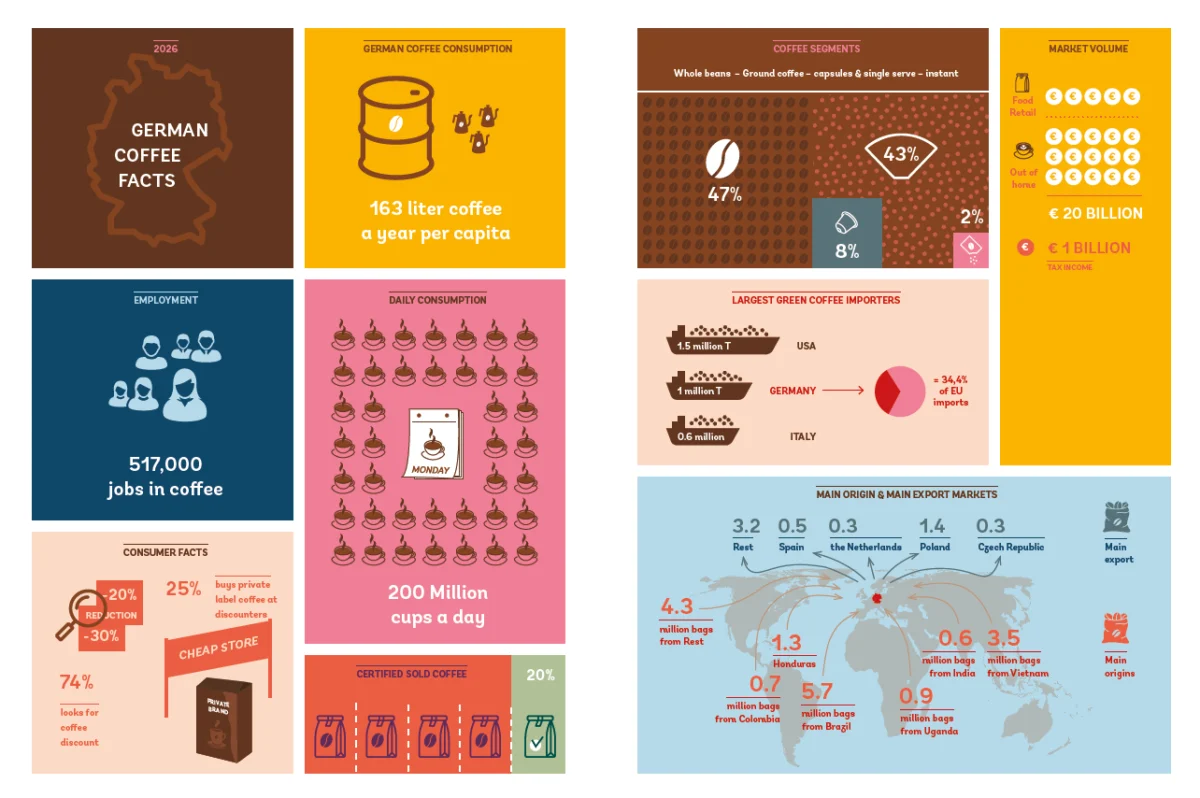
The report’s findings are particularly relevant given Germany’s position as a major coffee consumer and processor. With an annual per capita coffee consumption that consistently ranks among the highest globally, German businesses wield substantial power in shaping global coffee trade dynamics. The Coffee Barometer argues that this influence should be wielded not just for commercial gain but as a catalyst for positive social and environmental transformation within the coffee-producing countries. The implications of these recommendations extend beyond mere compliance; they represent a call to action for industry leaders to redefine their role from transactional buyers to proactive partners in fostering a resilient and equitable coffee sector.
Ethiopian Women Chronicle Climate Adaptation in "Buna Love"
In a powerful testament to the resilience and ingenuity of coffee-growing communities, dozens of women coffee farmers in Ethiopia’s Sidama region have documented their experiences with climate change through a captivating photography and storytelling collection titled "Buna Love." This initiative, highlighted by the development nonprofit TechnoServe, provides an intimate and firsthand account of the challenges and adaptations faced by women who are at the forefront of coffee production.
The collection showcases the farmers’ deep connection to their land, their families, and their unwavering dedication to their coffee cultivation. Through their lenses, these women capture the realities of shifting weather patterns, unpredictable rainfall, and the impact of these changes on their livelihoods. The project serves not only as a record of their struggles but also as a powerful advocacy tool, giving voice to those whose perspectives are often overlooked in broader discussions about climate change and agricultural sustainability.
"Buna Love" offers a crucial human dimension to the abstract discussions surrounding climate adaptation. It illustrates the practical, on-the-ground strategies that these women are employing to build resilience, from diversifying crops to adopting water-efficient farming techniques. By documenting their journeys, the project aims to foster greater understanding and empathy, encouraging support for climate-resilient agricultural practices and empowering women farmers to become agents of change within their communities. The collection is a vital reminder that sustainable coffee production is intrinsically linked to the well-being and empowerment of the women who cultivate it.
Honduran and Colombian Producers Earn Top Honors at Ernesto Illy Coffee Awards
The 11th Ernesto Illy International Coffee Award, held in Rome, Italy, celebrated outstanding coffee quality and the dedication of producers within the Illycaffè supply network. Denis Rolando Cortez Monge of Finca Piedra Parada in Honduras was awarded the prestigious "Best of the Best" title, recognizing the exceptional quality and characteristics of his coffee. This accolade underscores the high standards maintained by producers in Honduras and their significant contribution to the global specialty coffee market.
Simultaneously, Daniel Anaya Anaya, representing Cooperativa de Caficultores del Cauca in Colombia, received the "Coffee Lovers’ Choice" award. This award, determined through blind tastings by a panel of coffee enthusiasts, highlights the appeal and desirability of Colombian coffee among discerning consumers. The recognition of both a "Best of the Best" and a "Coffee Lovers’ Choice" award signifies the dual commitment of the Ernesto Illy International Coffee Award to both technical excellence and broad consumer appeal.
Launched in 2016, the annual competition has evolved into a significant platform for acknowledging and rewarding coffee producers. This year’s event saw finalists from 27 producers across nine countries, demonstrating the global reach and inclusive nature of the award. The continued success of these awards reinforces the importance of recognizing and incentivizing high-quality coffee production, which in turn supports the economic viability of farming communities and encourages best practices in cultivation and processing. The consistent presence of producers from diverse regions like Honduras and Colombia at the forefront of these awards speaks volumes about the ongoing efforts to elevate coffee quality worldwide.
ILO and Fondazione Ernesto Illy Forge Partnership for Coffee Worker Safety in Brazil
In a significant step towards enhancing occupational safety and health within the coffee sector, the International Labour Organization (ILO) and Fondazione Ernesto Illy have announced a collaborative partnership focused on Brazilian coffee farms. This initiative, supported by the ILO’s Vision Zero Fund, aims to implement practical and low-cost improvements to ensure a safer working environment for coffee farm laborers.
The partnership will focus on training local leaders within coffee-growing communities. These trained individuals will then be equipped to identify potential risks on their farms and implement effective safety measures. The emphasis on "low-cost improvements" is particularly noteworthy, as it acknowledges the financial constraints often faced by smaller farms and seeks to provide accessible solutions. This approach ensures that safety enhancements are not perceived as an insurmountable burden but as achievable goals for all participants.
While specific financial commitments were not disclosed, the joint announcement signals a strong intent to address critical issues of worker well-being. Brazil, as the world’s largest coffee producer, presents a vast landscape where such interventions can have a profound impact. The collaboration between a leading international labor organization and a foundation deeply embedded in the coffee industry offers a robust framework for driving systemic change. By focusing on knowledge transfer and risk mitigation, this partnership has the potential to significantly reduce workplace accidents and improve the overall quality of life for coffee farm workers.
Starbucks Explores Potential Sale of Japan Business
According to a Bloomberg report citing sources familiar with the matter, Starbucks has reportedly engaged financial advisory firms Citigroup and Morgan Stanley to explore a potential sale of its operations in Japan. This development has generated considerable interest within the global coffee retail landscape, given Japan’s status as a significant and discerning market for coffee consumption.
In response to inquiries, a Starbucks spokesperson acknowledged that the company "continually assesses its business structure." While this statement remains general, the engagement of major investment banks suggests a serious consideration of divesting the Japanese arm of its business. The spokesperson also emphasized that Starbucks views Japan as a "strong business," indicating that any potential sale would likely be part of a strategic realignment rather than a reflection of poor performance.
The Japanese market has long been a key territory for Starbucks’ international expansion, with the company having established a strong brand presence and a significant number of stores across the country. The decision to potentially sell this business could signal a strategic shift in Starbucks’ global portfolio, possibly allowing the company to reallocate resources to other growth markets or focus on core operational areas. The outcome of these explorations will be closely watched by industry analysts and competitors alike.
New DNA Tool Poised to Accelerate Arabica Coffee Breeding
A significant advancement in coffee science has been announced with the development of a novel DNA testing tool designed to expedite the breeding of Arabica coffee varieties. This innovative tool, developed by the nonprofit World Coffee Research in collaboration with international partners, promises to revolutionize the process of identifying and cultivating promising coffee seedlings.
The primary objective of this DNA tool is to enable breeders to identify desirable traits in Arabica seedlings at a much earlier stage of development. This early identification is crucial for reducing the time and resources traditionally invested in conventional breeding programs, which can often take years to yield results. By pinpointing the genetic markers associated with traits like disease resistance, yield potential, and flavor quality, breeders can make more informed decisions and accelerate the selection process.
The implications of this breakthrough are far-reaching. Faster breeding cycles mean that researchers can more rapidly develop new coffee varieties that are better suited to evolving environmental conditions, including those exacerbated by climate change. It also holds the potential to lower the overall cost of coffee breeding, making it more accessible to a wider range of research institutions and breeding programs globally. The findings have been detailed in a new study published in the journal Frontiers in Plant Science, providing the scientific community with a comprehensive overview of the tool’s methodology and its potential applications. This development represents a crucial step forward in ensuring the long-term sustainability and diversity of Arabica coffee.
Lefty Brewer: A Fusion of Immersion and Pour-Over Brewing
In the realm of coffee brewing innovation, boutique design firm Chuck Mack Design has unveiled "Lefty," a novel brewing device that ingeniously combines immersion and filtered pour-over techniques within a striking stainless steel spiral structure. This unique design aims to offer coffee enthusiasts a new dimension of control and flavor extraction in their home brewing rituals.
The Lefty brewer features flared cups that cradle the coffee grounds during the immersion phase, allowing for a controlled steeping process. Subsequently, it transitions into a filtered pour-over method, enabling a clean and nuanced extraction. This dual-action approach seeks to harness the benefits of both brewing styles, potentially yielding a richer and more complex cup profile.
The development of Lefty is the culmination of two years of dedicated work, including significant technical assistance from engineer Frank Santilli of Ace Wire Spring & Form Co. This collaboration ensured the precision engineering and manufacturing of the device. Notably, Lefty is manufactured in the United States, highlighting a commitment to domestic production. While pricing details were not included in the initial announcement, the innovative design and dual-brew functionality position Lefty as a compelling new option for the discerning coffee brewer.
Austrian Post Introduces Scented Stamps Made from Used Coffee Grounds
In a creative and environmentally conscious initiative, Austria’s postal service has issued a unique postage stamp that incorporates used coffee grounds, offering a sensory experience that goes beyond the visual. The coffee bean-shaped stamp is infused with the natural aroma of coffee, providing a delightful olfactory element for collectors and users alike.
Released on October 1st and recently highlighted by the USPS, the €6.70 stamp utilizes a material referred to as "coffee leather." This innovative composite is created by combining dried coffee grounds with a natural fleece and a binding agent. The result is a sustainable and aromatic paper that showcases the potential for upcycling coffee waste into valuable and novel products.
This initiative by Austrian Post is a testament to the growing trend of incorporating sustainable materials and unique sensory experiences into everyday products. It not only offers a conversation-starting piece of mail but also raises awareness about the potential for repurposing materials that would otherwise be discarded. The coffee-scented stamp is a charming example of how creativity and sustainability can intersect, offering a novel way to connect with both postal services and the beloved beverage itself.
Coffee Notes Elevate Fragrance Trends in 2026 Perfume Launches
The rich and complex aroma of coffee is increasingly finding its way into the world of high-end perfumery, signaling a growing trend in the fragrance industry for 2026. According to a report by Cosmetics Business, coffee notes are becoming more prominent in new perfume launches, reflecting a broader cultural embrace of coffee as a key element of modern consumer identity.
Experts attribute this rise in coffee-infused fragrances to the beverage’s expanding role in consumer lifestyles. Coffee has transcended its status as a mere drink to become a cultural touchstone, associated with social gatherings, productivity, and personal indulgence. This heightened association is translating into a desire for consumers to incorporate these familiar and comforting scents into their personal fragrance choices.
The trend signifies a growing appreciation for the multifaceted aroma of coffee, which can range from dark and roasted to sweet and creamy. Perfumers are leveraging these nuances to create sophisticated and evocative scents that appeal to a wide range of preferences. As coffee culture continues to permeate various aspects of daily life, its aromatic presence in the fragrance market is likely to expand further, offering consumers new and exciting ways to express themselves through scent.
Bentley’s Coffee Supports Local Animal Shelter with Grand Opening Fundraiser
Bentley’s Coffee, a Salem-founded coffee company, has demonstrated its commitment to community support by raising approximately $13,000 for the BrightSide Animal Center through the grand opening of its new drive-through location in Redmond, Oregon. The company dedicated 100% of its opening-day proceeds to the local animal shelter, underscoring a strong philanthropic ethos.
The successful fundraiser, reported by KTVZ, highlights the positive impact that local businesses can have on their communities. By choosing to direct all revenue from their inaugural day to a vital local cause, Bentley’s Coffee not only celebrated its expansion but also made a significant contribution to the welfare of animals in need. This initiative serves as an inspiring example of corporate social responsibility and the power of community-driven support. The substantial amount raised is expected to provide considerable assistance to BrightSide Animal Center in its ongoing efforts to care for and rehome animals.
