

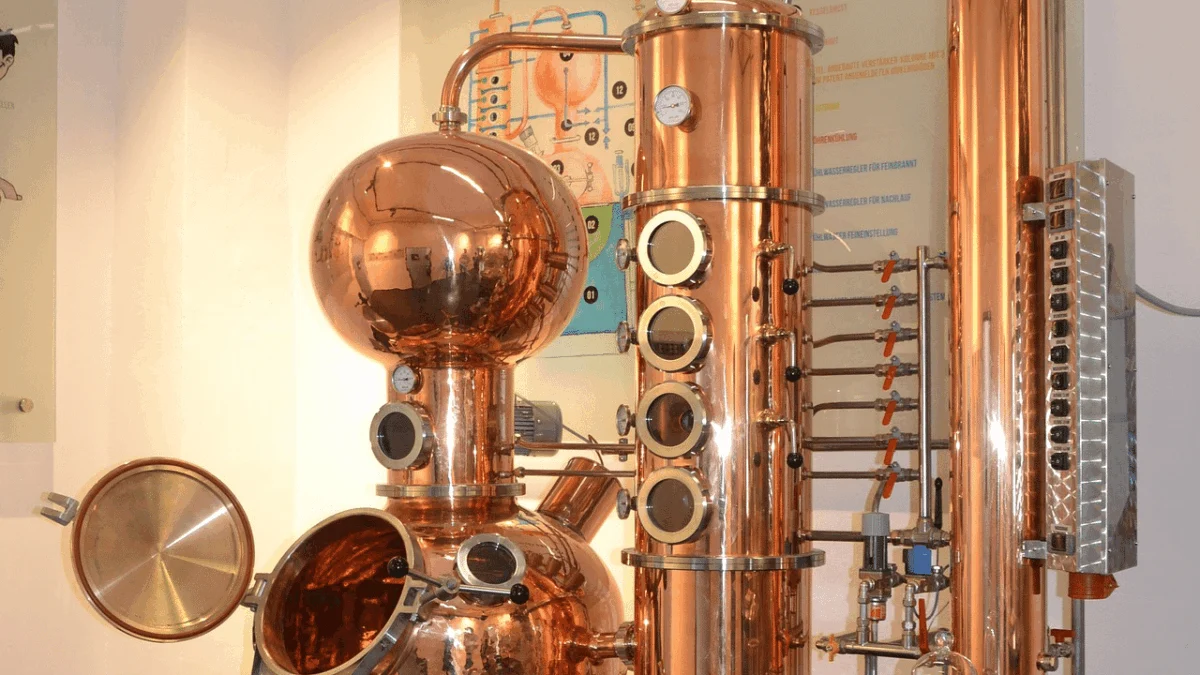
The production of gin is frequently perceived by the public as a simple matter of selecting a unique blend of botanicals, yet for the master distiller, the botanical recipe is merely the first chapter in a complex technical narrative. While the selection of juniper, coriander, and citrus peels provides the foundational DNA of the spirit, the ultimate flavor profile is the result of a series of high-stakes decisions made during the distillation process. These variables—ranging from the ratio of botanicals to the physical placement of ingredients within the still—can result in vastly different outcomes even when using identical raw materials. By manipulating temperature, pressure, and timing, distillers transform a neutral canvas of ethanol into a sophisticated sensory experience, blending traditional craftsmanship with modern chemical engineering.
The Foundation of Neutral Grain Spirit and Botanical Ratios
Most modern gin production begins with Neutral Grain Spirit (NGS), a highly rectified ethanol typically distilled to at least 96% alcohol by volume (ABV). This spirit serves as a "blank canvas," stripped of the heavy congeners and esters associated with whiskey or brandy. The quality of this base is paramount; while it is intended to be neutral, the source material—whether wheat, barley, corn, or grapes—can subtly influence the mouthfeel and sweetness of the final product.
Once the base spirit is selected, the distiller must determine the botanical load. An industry benchmark for high-quality gin typically falls between 20 and 35 grams of botanicals per liter of spirit. However, this is not a uniform mixture. Because international regulations, including those of the European Union and the United States Alcohol and Tobacco Tax and Trade Bureau (TTB), mandate that gin must possess a "predominant flavor of juniper," this pine-forward berry usually accounts for at least 60% of the total botanical volume.
The remaining 40% represents the distiller’s creative signature. Technical precision in these ratios is vital. For instance, coriander seeds are often used at approximately half the weight of the juniper to provide citrus and spicy top notes. Secondary botanicals, such as angelica root (which acts as a fixative to bind other aromas) or cassia bark, may be used at one-tenth the weight of juniper. Highly potent ingredients, such as dried ginger or certain floral elements, might be measured at just one-hundredth of the juniper’s weight. Even a fractional deviation in these measurements can fundamentally alter the spirit’s organoleptic profile, shifting it from a balanced London Dry to an overly medicinal or floral product.
A Chronology of Gin Evolution and Production Standards
To understand the modern technical landscape of gin, one must view it through the lens of its historical development. The transition from 16th-century Dutch Genever to modern London Dry gin represents a significant shift in both technology and taste.
- 16th Century: Genever is developed in the Netherlands as a medicinal tonic. It uses a malt wine base, resulting in a heavier, grain-forward spirit.
- 1830s: The invention of the Coffey still (column still) allows for the production of highly pure Neutral Grain Spirit. This technological leap makes the "cleaner" London Dry style possible.
- 1880s-1920s: The "Golden Age" of cocktails establishes gin as the premier mixing spirit, leading to the refinement of botanical ratios.
- 2009: The "Sipsmith Petition" in the United Kingdom successfully challenges antiquated laws that prevented small-scale distillation in London, sparking the global craft gin revolution.
- Present Day: The industry is characterized by "New Western" styles, which de-emphasize juniper in favor of local or exotic botanicals, forcing a re-evaluation of traditional distillation techniques.
Extraction Methods: Maceration versus Vapor Infusion
A critical technical fork in the road for any distiller is the method of flavor extraction. There are two primary schools of thought: maceration and vapor infusion.
Maceration involves steeping the botanicals directly in the spirit. This is akin to making tea; the ethanol acts as a solvent, breaking down the organic matter and absorbing essential oils. Some distillers, such as those at Beefeater, employ a 24-hour "steep" before the heat is applied to the still. This prolonged contact allows for the extraction of heavier, earthier notes. If the botanicals remain in the pot during distillation, the heat can further "cook" the ingredients, leading to a robust and "big" flavor profile often associated with traditional gins.
In contrast, vapor infusion involves suspending the botanicals in a basket within the neck of the still. As the ethanol boils and turns into vapor, it passes through the botanical bed, gently picking up volatile aromatic compounds without "stewing" the ingredients. This method, famously utilized by Bombay Sapphire, tends to produce a lighter, more ethereal spirit with distinct floral and citrus notes.
The physical placement of the botanical basket is also a matter of engineering. A basket placed high in the still’s neck will encounter cooler vapors, resulting in a more delicate extraction. A basket placed lower, closer to the heat source, will be subjected to higher temperatures and faster-moving vapor, leading to a more intense extraction of heavier volatiles.
The Science of the "Cut": Heads, Hearts, and Tails
Distillation is a function of time and temperature, and the most critical phase for flavor control is the "cut." As the still runs, the chemical composition of the distillate changes. Distillers divide the run into three sections:
- The Heads (Foreshots): These are the first compounds to come off the still. They are high in ABV and contain volatile chemicals like acetaldehyde and methanol. While they carry intense floral aromas, they are often harsh and can be toxic if consumed in high quantities.
- The Heart: This is the "sweet spot." It contains the most desirable ethanol and the cleanest botanical flavors. The distiller’s skill lies in knowing exactly when to start and stop collecting the heart.
- The Tails (Feints): As the distillation nears its end, the ABV drops and heavier, often bitter or "funky" compounds emerge. While some distillers include a small portion of the early tails to add complexity and "rootiness" to the gin, most are discarded or recycled.
Master distillers often use a culinary analogy to describe this: capturing the aroma of garlic as it sautés. The first few seconds provide a fresh, sharp scent; the middle provides a rich, savory aroma; and the end, if left too long, provides a burnt, acrid smell. The "cut" is the decision of which portion of that aromatic timeline to bottle.
Supporting Data: The Economics and Chemistry of Gin
The global gin market has seen a meteoric rise, with valuation estimates exceeding $15 billion as of 2023. This growth is driven by the "premiumization" trend, where consumers prioritize technical quality and botanical transparency.
From a chemical perspective, the success of a gin is often measured by the concentration of specific terpenes. Juniper is rich in alpha-pinene, which provides the characteristic pine scent. Coriander contributes linalool, which adds a floral, citrusy dimension. The interaction between these chemicals is what creates the "complexity" of gin. Research indicates that the solubility of these compounds varies based on the ABV of the spirit in the still; for example, citrus oils are more soluble at higher alcohol concentrations, which is why some distillers adjust the proof of their maceration liquid to target specific flavor notes.
Industry Perspectives and Regulatory Impacts
Trade organizations like the Wine and Spirit Trade Association (WSTA) and the Gin Guild emphasize the importance of production standards in maintaining gin’s reputation. A major point of discussion within the industry is the distinction between "London Dry" and "Distilled Gin."
In a London Dry gin, all botanicals must be distilled together in the presence of the spirit, and no flavors or colors can be added after distillation. This is considered the "gold standard" of technical difficulty, as the distiller has no opportunity to "fix" the flavor once the still has finished its run. "Distilled Gin," however, allows for the addition of flavors post-distillation, offering more flexibility but often viewed by purists as a less rigorous method.
Master distillers, such as those interviewed for industry journals like Gin Magazine, often highlight the "multi-shot" versus "single-shot" debate. A single-shot gin is distilled at the bottle-ready botanical concentration and simply diluted with water. A multi-shot gin is distilled as a botanical concentrate and then "stretched" by adding more NGS and water. While multi-shot distillation is more energy-efficient and allows for higher volume production, many boutique producers argue that the single-shot method preserves a more integrated and nuanced flavor profile.
Broader Implications and the Future of the Craft
The technical evolution of gin distillation has broader implications for the spirits industry at large. As climate change affects the harvest of juniper berries in regions like the Balkans and Tuscany, distillers are being forced to apply their technical knowledge to find sustainable alternatives or to adjust their distillation curves to account for variations in botanical oil content.
Furthermore, the rise of vacuum distillation (distilling at lower temperatures under reduced pressure) is opening new frontiers. This technique allows distillers to extract flavors from fresh botanicals—like cucumber or fresh herbs—that would normally wilt or taste "cooked" in a traditional heated pot still.
In conclusion, the flavor of a gin is far more than a list of ingredients on a label. It is a symphony of variables: the purity of the grain spirit, the mathematical precision of the botanical ratios, the physics of vapor extraction, and the sensory intuition of the distiller’s cuts. As the industry continues to innovate, the intersection of chemistry and artistry will remain the defining characteristic of this historic spirit. For the consumer, understanding these technical nuances transforms a simple gin and tonic into a masterclass in liquid engineering.
