

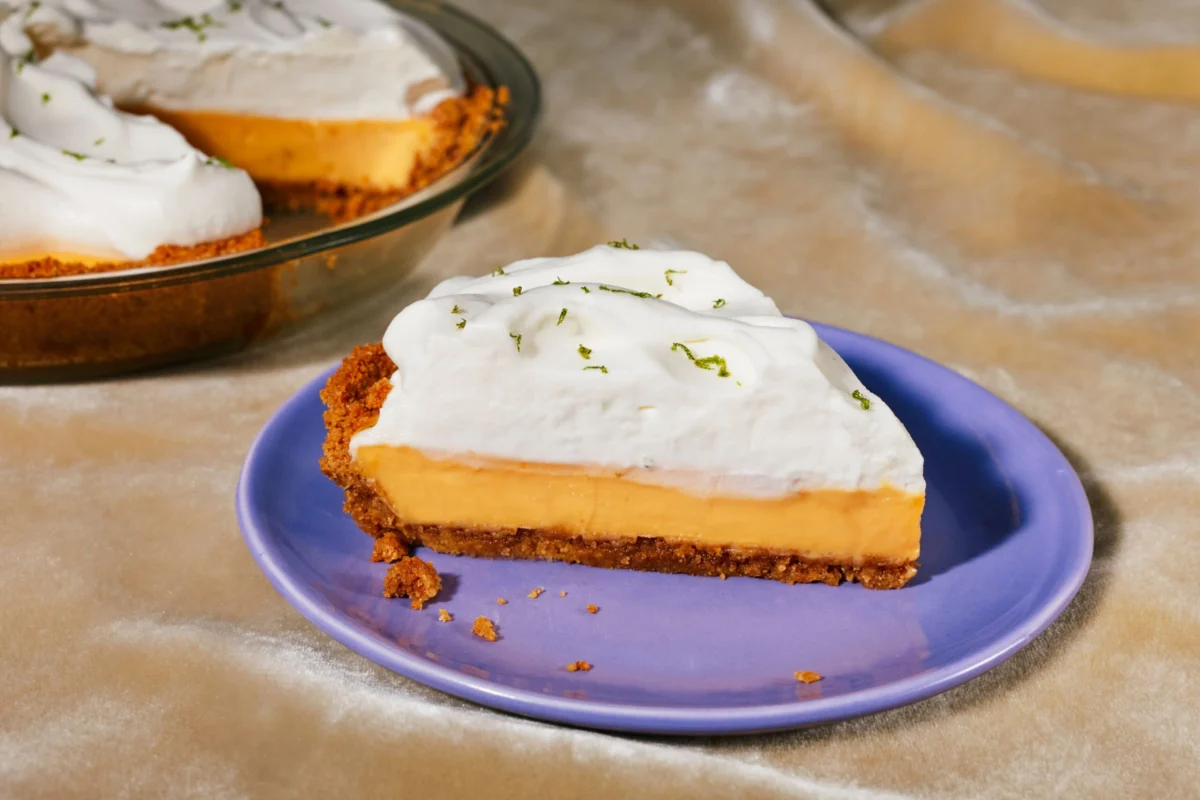
The pursuit of the perfect Key Lime Pie is a culinary journey marked by a delicate balance of contrasting elements: the piquant zest of lime, the silken richness of its custard, the ethereal sweetness of whipped cream, and the grounding crunch of a graham cracker crust. This iconic American dessert, particularly revered in the Southern United States, stands as a testament to simple ingredients elevated through precise technique. While its allure is undeniable, the path to a flawless pie is often fraught with common pitfalls, notably the elusive quest for a crust that is both sturdy and easily sliceable. Recent culinary insights, however, have illuminated refined methods that address these challenges, transforming the home baking experience from a delicate balancing act into a confident execution.
The Foundation: Engineering a Resilient Graham Cracker Crust
A frequent lament among Key Lime Pie enthusiasts is the fragility of the graham cracker crust. Traditional recipes, often relying solely on crumbs, butter, and sugar, yield a base that can be frustratingly crumbly, making the presentation of the first slice a formidable task. This structural weakness not only detracts from the aesthetic appeal but also compromises the overall eating experience, as the crust often disintegrates under the pressure of a fork. The modern solution, gaining increasing traction among professional bakers and home cooks alike, involves a seemingly minor yet profoundly impactful addition: an egg yolk.
The inclusion of an egg yolk serves as a powerful binding agent, transforming the loose aggregate of graham cracker crumbs, melted butter, and sugar into a cohesive, more pliable dough. Scientifically, the egg yolk acts as an emulsifier, containing lecithin which helps to blend the fat (butter) with the dry ingredients (crumbs and sugar), creating a more stable matrix. Furthermore, the proteins in the egg yolk coagulate upon baking, setting the crust into a remarkably sturdy yet tender form. This protein denaturation creates a structural scaffold that resists crumbling and allows for clean, precise slices. The result is a robust base that maintains its integrity from the first slice to the last, eliminating the common struggle of extracting an intact wedge from the pie dish. This innovation not only enhances the pie’s presentation but also contributes to a more satisfying textural contrast against the creamy filling.
Pre-baking the crust, a step often highlighted for its importance, further solidifies this foundation. This initial bake serves multiple critical functions: it crisps the graham cracker base, preventing it from becoming soggy once the wet filling is added, and crucially, it fully cooks the egg yolk, ensuring its binding properties are activated and locked in before the custard is poured. This preventative measure is a cornerstone of achieving a crust that remains crisp and structurally sound throughout the pie’s lifespan, even after refrigeration.
The Core Ingredient: Navigating the Nuances of Lime
At the heart of any Key Lime Pie is, naturally, the lime. The authentic Key lime (Citrus aurantifolia) is famed for its distinctive aromatic profile: a more floral bouquet, a brighter acidity, and a subtle, unique bitterness that sets it apart from its more common cousin, the Persian lime. Historically, Key limes have been cultivated extensively in the Florida Keys, lending the pie its regional identity and much of its legendary status. Their small size and numerous seeds, however, make them considerably more labor-intensive to juice, often requiring a larger quantity to yield the necessary volume.
In contemporary culinary practice, the availability of Key limes can be inconsistent, varying seasonally and geographically. While specialty markets and online vendors such as Etsy and Wee! offer access to fresh Key limes, the more readily available Persian lime (Citrus latifolia) has emerged as a widely accepted and excellent substitute. Persian limes, larger and seedless, are significantly easier to juice, making them a practical choice for most home bakers. While using Persian limes may result in a pie that lacks some of the nuanced floral notes and subtle bitterness characteristic of true Key limes, the resultant dessert will nonetheless be bright, tart, and deeply satisfying. Culinary experts consistently emphasize the paramount importance of using fresh lime juice, regardless of the variety, advocating strongly against bottled alternatives which often contain preservatives and lack the vibrant, complex flavor profile of freshly squeezed fruit. The market dynamics of limes reflect this, with global production dominated by countries like Mexico, Brazil, and India for Persian limes, while Key lime cultivation remains more niche, often tied to specific regions like Florida, further impacting their widespread availability.
Achieving Custard Perfection: The Science of Set and Silky Texture
The custard filling is the soul of Key Lime Pie, requiring a precise understanding of heat and chilling to achieve its signature silky texture. The pie’s readiness during baking is a critical point, often misunderstood. An ideal Key Lime Pie is baked until its edges are visibly set, yet its center retains a slight, cohesive wobble when the pie plate is gently shaken. This delicate balance indicates that the egg proteins have sufficiently coagulated to create a stable structure, but have not been overcooked. Overbaking is a common pitfall, leading to a dense, rubbery, or curdled texture, effectively sacrificing the desired silkiness. Conversely, underbaking or insufficient chilling will result in a runny, unstable filling.
The science behind this involves the denaturation of egg proteins, primarily from egg yolks and condensed milk (which also contains milk proteins that coagulate). As the pie bakes, the heat causes these proteins to unwind and then re-bond, forming a gel-like matrix that traps the liquid. This process continues as the pie cools. The subsequent chilling period, ideally overnight or for a minimum of six hours in the refrigerator, is not merely for cooling; it is a crucial stage where the custard fully sets and firms up. This extended refrigeration allows the protein network to strengthen and stabilize, ensuring a perfectly sliceable and sumptuously smooth filling. This meticulous attention to baking and chilling times is what differentiates a good Key Lime Pie from an exceptional one, delivering a consistently delightful sensory experience.
The Finishing Flourish: Whipped Cream and Zest
No Key Lime Pie is truly complete without its crowning glory: a generous dollop of velvety whipped cream and a sprinkle of bright lime zest. The whipped cream provides a crucial textural and flavor counterpoint, its light sweetness and airy texture balancing the intense tartness of the lime custard. Culinary professionals almost universally advocate for freshly made whipped cream, emphasizing that its superior texture and fresh dairy flavor far surpass the convenience of aerosol cans or pre-made toppings. The process of whipping heavy cream incorporates air, creating a stable foam that adds richness without heaviness.
The final flourish of lime zest is more than just a garnish; it reactivates the aromatic experience. The oils in the zest release a concentrated burst of fresh lime fragrance and a subtle layer of flavor that enhances the pie’s overall brightness, making for an inviting visual and olfactory presentation. This simple addition elevates the pie from a mere dessert to a multi-sensory culinary delight.
Broader Context: A Dessert with Deep Roots and Wide Appeal
The Key Lime Pie’s origins are deeply intertwined with the history and natural bounty of the Florida Keys. While its exact genesis is debated, popular lore attributes its creation to sponge fishermen in the late 19th or early 20th century. These early versions likely used canned condensed milk due to the lack of refrigeration, reacting with the acidic Key lime juice to thicken the custard without requiring baking. The pie evolved over time, with the graham cracker crust becoming a standard feature, and baking becoming common practice to further set the custard. In 2006, the Key Lime Pie was officially designated the state pie of Florida, cementing its status as a cultural icon and a significant draw for tourism.
This dessert represents more than just a recipe; it embodies a rich culinary heritage and a testament to the ingenious use of local ingredients. Its popularity has transcended its regional origins, becoming a staple in American bakeries and homes nationwide. The consistent demand for Key Lime Pie has subtle economic implications, influencing the market for limes, condensed milk, and graham crackers, providing a steady demand for these agricultural and manufactured goods. Beyond its economic footprint, the pie serves as a culinary ambassador, evoking images of tropical warmth and leisurely indulgence. Its enduring appeal lies in its simplicity, its vibrant flavor, and its capacity to transport diners to sun-drenched shores with every bite. The modern adaptations, such as the egg yolk in the crust, represent a continuous evolution in culinary technique aimed at refining an already beloved classic, ensuring its place in the pantheon of great American desserts for generations to come.
Practicality and Longevity: Freezing for Future Enjoyment
For those who wish to extend the enjoyment of Key Lime Pie beyond immediate consumption, or to prepare it in advance for special occasions, the pie demonstrates remarkable freezer-friendliness. A fully baked and chilled Key Lime Pie, without the whipped cream topping, can be frozen for up to one month without significant degradation in quality. This convenience factor is a considerable advantage for meal planning, catering, or simply having a delicious dessert on hand.
When ready to serve, the frozen pie can be thawed overnight in the refrigerator, allowing its texture to return to its optimal state. Alternatively, some enthusiasts enjoy serving Key Lime Pie directly from the freezer, offering a refreshing, ice-cream-like experience, particularly appealing in warmer climates. This adaptability underscores the pie’s versatility and its enduring appeal in various contexts, from a meticulously prepared gourmet dessert to a convenient, ready-to-enjoy treat. The ability to freeze the pie without compromising its structural integrity or flavor profile further solidifies its status as a culinary triumph, offering both immediate gratification and future delight.
