

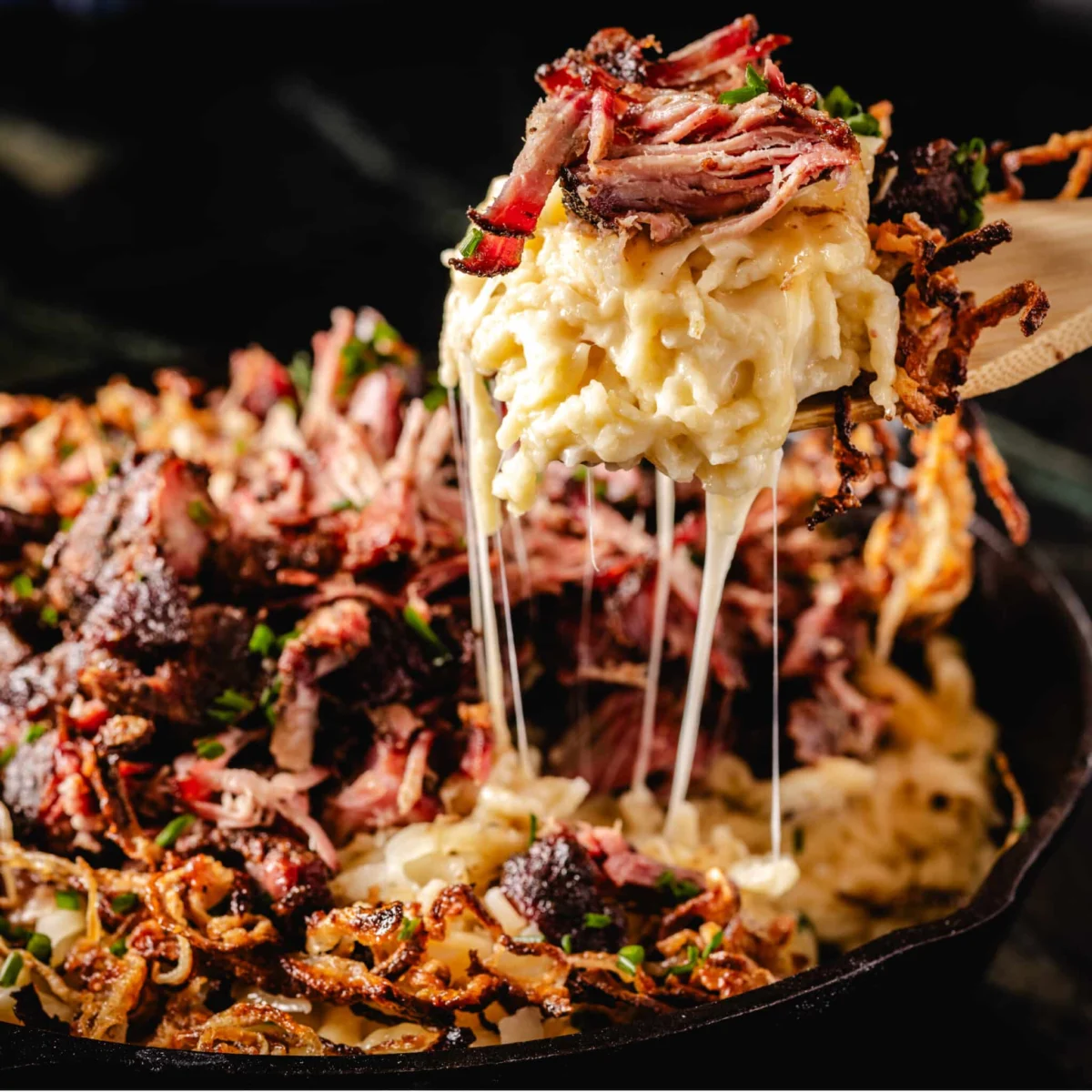
The intersection of traditional European comfort food and contemporary American pitmaster techniques has yielded a notable culinary development with the introduction of Smoked Pulled Pork Käsespätzle. This dish, which gained national prominence following its appearance on the Food Network series Pitmasters, represents a sophisticated evolution of the classic German egg noodle dish. By integrating slow-smoked pork shoulder—specifically prepared using country-style ribs for efficiency—with the rustic, cheese-laden textures of Swabian spätzle, culinary experts have created a high-protein, fusion-style entree that bridges the gap between Old World heritage and New World barbecue culture. Developed by Susie Bulloch of Hey Grill Hey in collaboration with Christie Vanover of Girls Can Grill, the recipe emphasizes the technical synergy between the Maillard reaction in fried onions and the phenolic compounds introduced during the hardwood smoking process.
The Historical and Regional Origins of Käsespätzle
To understand the significance of this fusion, one must examine the origins of the base dish. Käsespätzle is a staple of Swabian, Bavarian, and Austrian cuisines, traditionally rooted in the Alpine regions of Central Europe. The term "spätzle" translates roughly to "little sparrows," referring to the irregular shapes formed when the dough is hand-scraped or pressed into boiling water. Unlike Italian pasta, which relies on durum wheat and a lower hydration level for an al dente texture, spätzle dough is a high-moisture mixture of flour, eggs, and salt, resulting in a soft, dumpling-like consistency.

Historically, Käsespätzle was a peasant dish designed to provide high caloric density through accessible ingredients. The traditional preparation involves layering the freshly boiled noodles with shredded Alpine cheeses—most commonly Emmentaler or Bergkäse—and garnishing the assembly with caramelized onions. The integration of smoked meats, while not entirely foreign to German cuisine (which frequently utilizes Speck or smoked ham), has rarely been executed with the specific intensity of American-style pulled pork until recent competitive barbecue trends prompted such experimentation.
Chronology of Development and Media Debut
The development of Smoked Pulled Pork Käsespätzle followed a distinct timeline of cross-cultural collaboration. In December 2023, Bulloch partnered with Sophie Sadler of Dirndl Kitchen to refine the foundational spätzle technique, emphasizing the "stretch" and rustic profile of the noodles. This technical groundwork was subsequently scaled for high-stakes competition.
During the filming of Food Network’s Pitmasters, Bulloch and Vanover were tasked with executing a full German feast utilizing a whole hog. While the competition version utilized pork cheek—a highly marbled, artisanal cut—the recipe was later adapted for backyard consumers using country-style ribs. This adaptation allowed for a significant reduction in preparation time without sacrificing the textural integrity of the meat. The televised success of the dish triggered a surge in consumer interest, reflecting a broader trend in the culinary industry where traditional comfort foods are being re-engineered with "low and slow" barbecue elements.

Technical Analysis of Ingredients and Preparation
The Smoked Pulled Pork Käsespätzle is divided into three primary technical components: the egg noodles, the fried onion garnish, and the smoked protein. Each requires specific thermodynamic management to achieve the desired flavor profile.
The Spätzle Dough and Noodle Synthesis
The spätzle component relies on a simple ratio of all-purpose flour, large eggs, and whole milk. The inclusion of nutmeg provides a traditional aromatic bridge to the cheese. From a technical standpoint, the dough must reach a "slow-drip" consistency. When processed through a spätzle maker—a perforated metal device—the dough undergoes rapid gelatinization upon contact with boiling water. The noodles are buoyant when cooked, typically requiring only 2 to 3 minutes of submersion. A critical step in the "fusion" version involves sautéing the boiled noodles in unsalted butter before the addition of cheese, which introduces a nutty, browned-butter note that complements the smoke of the pork.
The Protein: Smoked Country-Style Ribs
A significant innovation in this recipe is the use of country-style pork ribs as a surrogate for a traditional whole pork butt (shoulder). Despite the nomenclature, country-style ribs are harvested from the blade end of the loin or the shoulder. They contain a high concentration of intramuscular fat and connective tissue, making them ideal for pulling.

- Smoking Parameters: The pork is seasoned with a balanced sweet-and-savory rub and smoked at 225°F (107°C) using fruitwood or hickory.
- The Stall and Braising: After reaching an internal temperature of 165°F, the meat is braised in a mixture of apple juice and apple cider vinegar. This acidic environment accelerates the breakdown of collagen into gelatin.
- Final Yield: The pork is pulled at an internal temperature of 203°F, resulting in a tender, smoky component that serves as the dish’s primary protein source.
The Cheese Blend and Allium Preparation
The recipe departs from strict German tradition by utilizing a 50/50 blend of Emmentaler and smoked gouda. The Emmentaler provides the classic "Swiss" melt and mild acidity, while the smoked gouda reinforces the barbecue theme. The fried onions are prepared via a shallow-fry method in a cast-iron skillet, utilizing the high thermal mass of the iron to ensure even caramelization and a crisp exterior, providing a necessary textural contrast to the soft noodles.
Supporting Data and Nutritional Overview
The integration of smoked pork into a traditionally carbohydrate-heavy dish significantly alters its nutritional profile, shifting it toward a more balanced, albeit indulgent, meal. According to standardized nutritional calculations for the Smoked Pulled Pork Käsespätzle, a single serving (based on an 8-serving yield) contains:
- Calories: 439 kcal
- Protein: 26g (derived largely from the smoked pork and egg-based noodles)
- Total Fat: 28g (with 13g of saturated fat)
- Carbohydrates: 21g
- Sodium: 2053mg
The high sodium content is characteristic of competitive barbecue and traditional Alpine cooking, both of which rely on salt for flavor enhancement and preservation. The 26 grams of protein per serving represent a substantial increase over traditional Käsespätzle, which typically relies on cheese as its sole protein source.

Industry Implications and the "Global BBQ" Movement
The emergence of dishes like Smoked Pulled Pork Käsespätzle is indicative of a larger shift within the $7 billion global barbecue and grill market. As consumer palates become increasingly globalized, there is a rising demand for "Global BBQ"—a movement that applies traditional American smoking techniques to international recipes.
Market analysts note that fusion dishes provide a "low-risk, high-reward" entry point for consumers looking to explore international cuisines through the familiar lens of barbecue. Furthermore, the use of time-saving cuts like country-style ribs reflects a trend toward "weekday barbecue," where the 12-to-16-hour commitment of a traditional brisket or pork shoulder is condensed into a 6-hour window suitable for modern domestic schedules.
Official Responses and Culinary Impact
Culinary professionals have noted that the success of this dish on Pitmasters highlights the versatility of pork as a medium for cultural storytelling. Christie Vanover, a veteran of the competitive BBQ circuit, emphasized that the use of a "whole hog" approach in the original competition was intended to demonstrate the diverse applications of the animal in German gastronomy.

Susie Bulloch’s subsequent release of the backyard-friendly version has been met with significant engagement from the "Hey Grill Hey" community, which comprises millions of outdoor cooking enthusiasts. The dish has been praised by home cooks for its ability to repurpose leftover pulled pork, a common challenge in American households following weekend smoke sessions. By providing a structured framework for German-American fusion, Bulloch has effectively expanded the repertoire of the modern backyard pitmaster.
Conclusion and Future Outlook
Smoked Pulled Pork Käsespätzle stands as a testament to the evolving nature of regional cuisines. By honoring the structural integrity of the German spätzle while introducing the bold, aromatic profile of American smoked pork, the dish satisfies both traditionalists and innovators. As the "low and slow" movement continues to permeate international culinary boundaries, it is expected that more fusion dishes will emerge, further blurring the lines between the smokehouse and the global kitchen. For now, this recipe serves as a definitive example of how technical skill and cultural appreciation can transform a simple comfort food into a complex, multi-layered culinary experience.
