

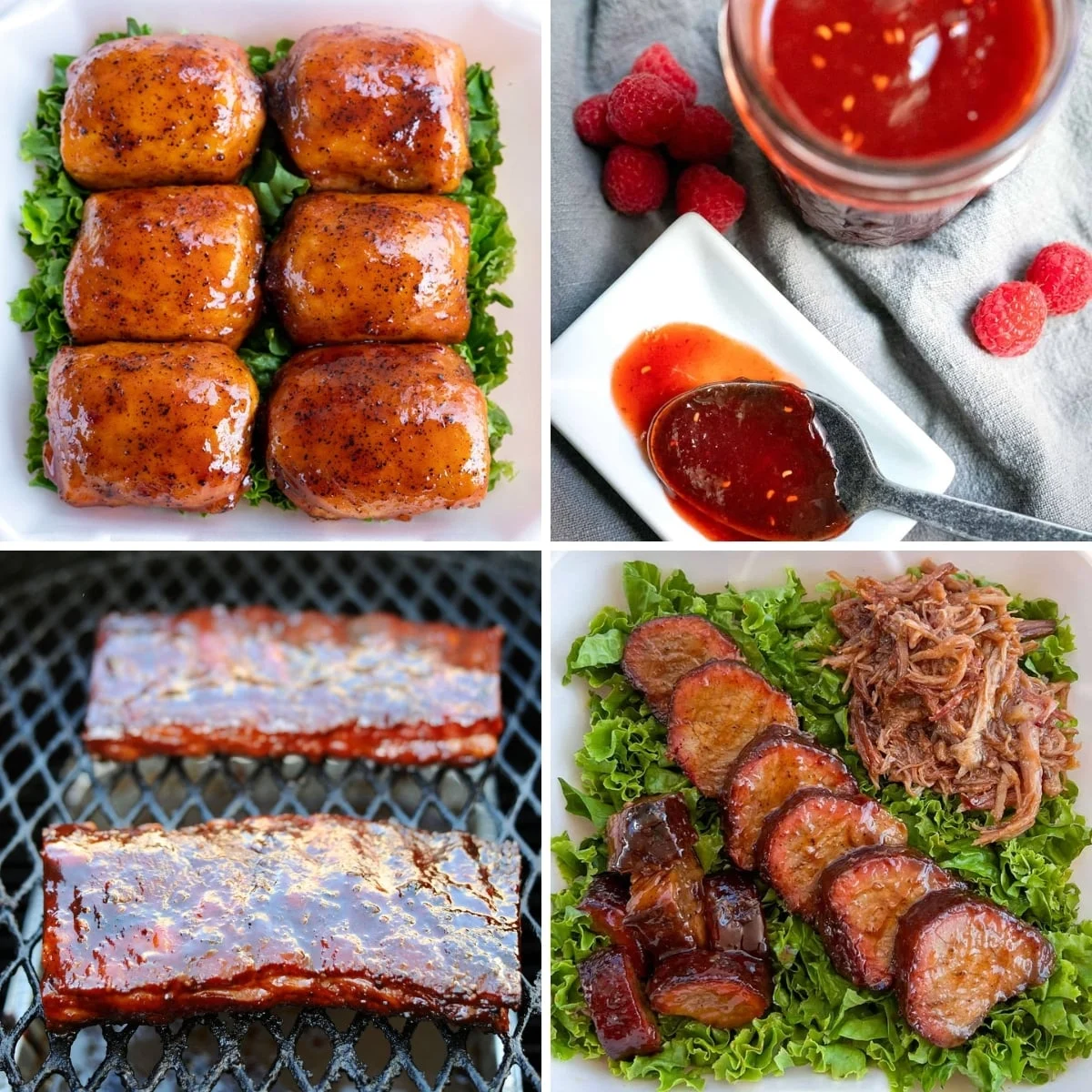
The fifth episode of the current season of Food Network’s Pitmasters signaled a significant departure from previous installments, shifting focus from thematic challenges toward the fundamental pillars of American barbecue. In a competition featuring Susie Bulloch of Hey Grill Hey and Christie Vanover of Girls Can Grill, the contestants were tasked with mastering the "Core Four" proteins: chicken, pork ribs, pork shoulder, and beef brisket. This episode served as a high-stakes examination of technical proficiency, as teams navigated a rolling turn-in schedule, fluctuating weather conditions, and the rigorous standards of a panel of industry experts.
The Evolution of the Pitmasters Competition Format
Since its inception, Pitmasters has frequently utilized "Flash Burns" and "Big Burns"—segmented challenges often centered around specific themes, exotic meats, or unconventional ingredients. However, Episode 5 stripped away these variables to focus on the traditional competitive circuit standards. The "Core Four" represents the universal benchmark used by the Kansas City Barbeque Society (KCBS) and other major sanctioning bodies.
The format for this episode required teams to deliver all four proteins on a staggered timeline. This rolling schedule increased the complexity of fire management, as pitmasters had to balance the varying heat requirements and cook times of different muscle groups simultaneously. Each of the four rounds carried a $1,000 cash prize for the top performer, with an additional $3,000 incentive for the team achieving the highest cumulative score across the entire challenge.

Judging Criteria: The Three T’s of Professional Barbecue
The judging panel, which included renowned pitmaster Big Moe Cason and live-fire expert Jess Pryles, emphasized a strict adherence to the "Three T’s": Time, Temperature, and Texture. In the absence of a creative theme or "gimmick," the evaluation focused purely on the execution of the meat.
- Time: Adherence to the strict turn-in windows.
- Temperature: Ensuring the internal thermal transition of fats and collagens was complete.
- Texture: Achieving the "competition-style" bite—where meat pulls cleanly from the bone or maintains structural integrity when sliced without being tough or over-rendered.
To meet these requirements within the truncated filming schedule, the team of Bulloch and Vanover opted for a "hot and fast" cooking strategy. Unlike the traditional "low and slow" method, which typically utilizes temperatures between 225°F and 250°F, the hot and fast approach involves cooking at 300°F or higher. This method requires precise monitoring to ensure the exterior does not burn before the interior reaches the target temperature.
Round One: Chicken Execution and Meteorological Obstacles
The first protein scheduled for turn-in was chicken. Bulloch and Vanover selected a smoked raspberry chipotle profile, aiming to balance fruit-based sweetness with a mild heat. Breaking from the common practice of smoking a whole bird, the team chose to dismantle the chicken into specific parts—thighs, wings, and legs—to allow for greater control over the individual cook times of white and dark meats.
A significant complication arose approximately 27 minutes prior to the chicken deadline when a sudden hailstorm impacted the outdoor cooking arena. In competitive barbecue, sudden precipitation can cause drastic drops in pit temperatures and affect the texture of resting meats. Vanover, drawing on her professional background as a former park ranger at Lake Mead, led the team through the adverse conditions to maintain the integrity of their fire.

During the evaluation, the judges noted the successful rendering of the chicken skin, a notoriously difficult task in a smoker. Judge Big Moe Cason specifically commended the texture of the skin. While the team did not secure the $1,000 round prize, their performance established them as technical contenders in the field.
Round Two: Innovation in Rib Flavor Profiles
The second round focused on pork ribs, arguably the most scrutinized protein in the "Core Four." Bulloch and Vanover continued their hot and fast methodology, utilizing a sweet yuzu-based glaze. Yuzu, a Japanese citrus fruit known for its aromatic acidity, was employed to cut through the heavy fats associated with pork ribs.
The technical feedback from Jess Pryles highlighted that the ribs achieved a "competition-style bite," indicating that the meat pulled away from the bone with slight resistance rather than falling off, which is often a sign of overcooking in a professional setting. However, the flavor profile met with mixed reviews from the panel; while some appreciated the citrus notes, others argued for a more pronounced acidic presence. This round further illustrated the subjective nature of flavor balance even within a technically perfect cook.
Round Three: The Technical Precision of the Money Muscle
The third turn-in involved the pork shoulder, specifically focusing on the "money muscle." In competitive barbecue terminology, the money muscle is the multifidus dorsi, a highly marbled, tender section located at the end of the pork butt (shoulder) opposite the blade bone. When cooked correctly and sliced into medallions, it is often the highest-scoring portion of the entry.

Bulloch and Vanover prepared their pork shoulder with a modified Whiskey Peach BBQ Sauce, emphasizing a regional flavor profile. The judges confirmed that the thermal execution of the meat was flawless, with the medallions showing optimal marbling and tenderness. However, a critical oversight in seasoning became the focal point of the critique. The judges concluded that the pork lacked sufficient salt, a fundamental flavor enhancer that bridges the gap between the smoke and the sauce. This seasoning deficit ultimately cost the team the round win, underscoring the razor-thin margins for error in televised BBQ competitions.
Supporting Data: The Economic and Technical Stakes of Competitive BBQ
The "Core Four" challenge is not merely a test of skill but an exercise in resource management. According to industry data, a professional competition team can spend upwards of $1,000 to $2,000 on meat, charcoal, and travel for a single weekend event. On a platform like Pitmasters, the stakes are amplified by national exposure and the immediate liquidity of the $1,000-per-round prizes.
| Protein | Target Internal Temp (Approx.) | Key Technical Challenge |
|---|---|---|
| Chicken | 165°F (Breasts) / 175°F (Thighs) | Rendering skin without drying meat |
| Pork Ribs | 195°F – 203°F | Achieving the "clean pull" texture |
| Pork Shoulder | 200°F – 205°F | Breaking down connective tissue in the money muscle |
| Beef Brisket | 203°F – 210°F | Managing the "stall" and fat rendering |
The use of proprietary equipment also played a role in the episode’s narrative. Bulloch and Vanover utilized specialized Pitmaster Gloves, designed for high-heat dexterity. This highlights the growing market for specialized barbecue gear, an industry that has seen significant growth alongside the rise of food-centric television programming.
Analysis of Broader Implications and Competitive Trends
The transition of Pitmasters toward a "Core Four" focus in Episode 5 reflects a broader trend in the culinary world: a return to foundational techniques. While "extreme" cooking and fusion concepts dominated the mid-2010s, current trends favor the mastery of traditional methods.

The episode also showcased the evolving role of women in the competitive barbecue circuit. Historically a male-dominated field, the collaboration between Bulloch and Vanover—two of the most prominent figures in the digital barbecue space—demonstrates the shift in industry demographics. Their reliance on data-driven techniques (thermal monitoring and specific anatomical butchery) rather than "intuition-based" cooking marks a modernization of the craft.
Conclusion and Anticipation for the Brisket Finale
Episode 5 concluded on a cliffhanger, leaving the results of the final protein—beef brisket—and the overall $3,000 winner unannounced. Brisket is widely considered the most difficult of the "Core Four" to master due to its size, the presence of two distinct muscles (the point and the flat), and the long duration required for the "stall"—the period where evaporative cooling slows the rise of internal temperature.
The final results will determine not only the financial winners of the episode but also which teams advance to the subsequent stages of the tournament. For Bulloch and Vanover, the brisket round represents an opportunity to recover from the seasoning issues of the pork round and capitalize on their technical consistency. As the competition nears its conclusion, the "Core Four" challenge has successfully re-established the baseline for what constitutes a true pitmaster in the modern era of professional barbecue.
