

The fourth episode of the high-stakes Food Network series Pitmasters marked a significant shift in the competition’s structural format, transitioning from a collective field struggle to a series of high-pressure, head-to-head matchups. Following their victory in the "Big Burn" during the third episode, competitors Susie Bulloch of Hey Grill Hey and Christie Vanover of Girls Can Grill were granted a significant strategic advantage: the authority to determine the specific animal assignments and opponent pairings for the remaining six teams. This tactical maneuver set the stage for a grueling ten-hour "nose-to-tail" challenge that tested the technical proficiency, creativity, and endurance of the nation’s top barbecue experts.
The episode focused on three primary proteins—goat, lamb, and pig—distributed across three distinct brackets. Bulloch and Vanover strategically opted to compete in the pig bracket, facing off against the team of Matt and Max. This decision was rooted in their deep familiarity with pork-based recipes and a desire to maximize their chances of progressing to the next stage of the competition. The logistical complexity of the episode was further heightened by the introduction of a "Flash Burn" challenge, which was inextricably linked to the primary "Big Burn" task, requiring teams to manage multiple timelines and culinary objectives simultaneously.
Structural Evolution of the Pitmasters Competition
The Pitmasters series has historically served as a benchmark for excellence in the American barbecue circuit, but the current season has introduced layers of complexity designed to mirror the rigors of professional restaurant kitchens and high-level catering. In the first three episodes, the field of competitors was whittled down through general performance metrics. However, Episode 4 introduced the head-to-head mechanic, which forced pitmasters to account for the specific strengths and weaknesses of a single opponent rather than the field at large.

The elimination criteria also shifted toward a cumulative scoring system. While winning a head-to-head matchup guaranteed safety for the week, the ultimate departure was determined by a "running total" of Big Burn scores across the season. This format ensures that consistent excellence is rewarded while providing a safety net for teams that might stumble in a single round, provided their historical performance remains superior to their peers.
Technical Execution of the Big Burn: Nose-to-Tail Pork
The central challenge of the episode, the "Big Burn," required teams to utilize a whole animal to produce two main courses and two side dishes within a ten-hour window. The judges, including culinary heavyweights Andrew Zimmern, Moe Cason, and Ernest Servantes, emphasized the "nose-to-tail" philosophy. This culinary approach demands that nearly every part of the animal be utilized, with the goal of showcasing the protein’s versatility and minimizing waste.
Bulloch and Vanover elected to present a German-inspired menu, a choice that allowed them to draw upon Bulloch’s family heritage and Vanover’s technical expertise in traditional European butchery and braising. Their strategy focused on transforming diverse cuts—from the lean loin to the collagen-rich shanks—into a cohesive, themed dining experience.

Main Course Development: Sauerbraten and Jägerschnitzel
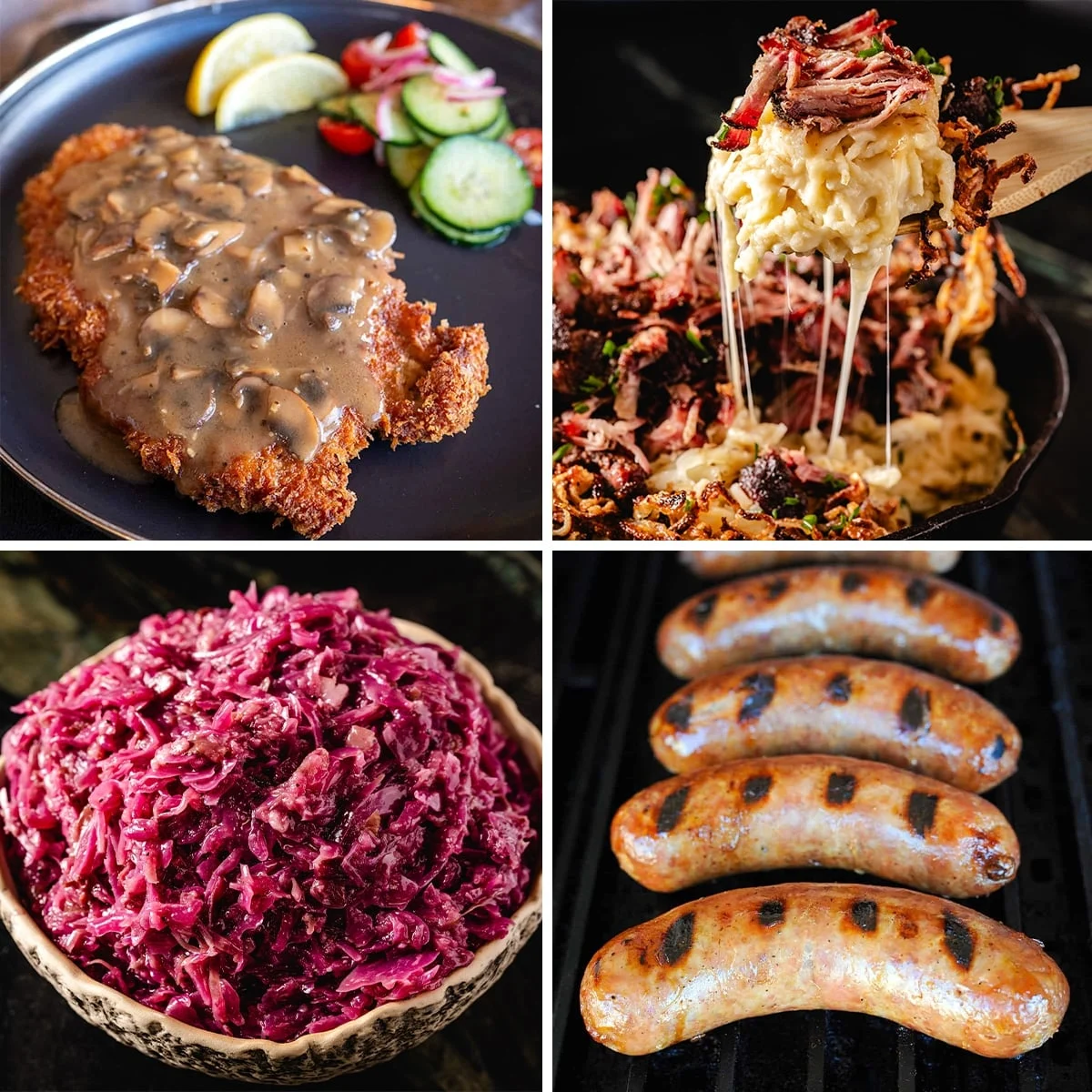
The team’s first main course featured a smoked Sauerbraten, traditionally a German pot roast. In a competition setting where time is at a premium, the team adapted the traditional multi-day marination process into a concentrated ten-hour braise. Utilizing the pork shoulder and shanks, the meat was seasoned with a heavy beef rub and subjected to a low-and-slow fire-roasting process. The resulting dish offered a sweet and sour profile, a departure from the traditional savory-heavy barbecue profiles often seen in the competition.
The second main course was a Pork Loin Jägerschnitzel. Christie Vanover executed this dish by breading and pan-frying pork loin cutlets to achieve a golden, crispy exterior. A critical element of this dish was the scratch-made mushroom gravy. In a display of culinary resourcefulness that impressed the judging panel, Vanover constructed a pork stock base using rib bones harvested from the whole pig. This adherence to the nose-to-tail requirement demonstrated a high level of technical forethought, as it utilized skeletal remains that many competitors might have discarded.
Side Dish Innovation: Rotkohl and Käsespätzle
To complement the heavy proteins, the team produced two sides that integrated additional parts of the pig. The first, Rotkohl (braised red cabbage), utilized the fatty pork belly. The belly was smoked and finely chopped, providing a salty, fatty counterpoint to the acidity of the cabbage.

The second side dish, Käsespätzle, represented one of the most difficult technical feats of the episode. Spätzle, a traditional German egg noodle, requires precise dough consistency and manual extrusion. Bulloch opted to prepare these noodles entirely from scratch over an open flame, a process fraught with temperature control challenges. The dish was finished with a generous layer of cheese and topped with smoked pig cheeks, a delicacy often overlooked in standard barbecue but highly prized in nose-to-tail cooking for its rich marbling and tender texture.
The Flash Burn: High-Pressure Sausage Production
While the Big Burn was underway, teams were interrupted by the "Flash Burn" challenge. This task required the production of a fully cased, seasoned, and cooked sausage link within a strict 60-minute timeframe. Judge Moe Cason explicitly forbade the use of patties, emphasizing that the teams would be judged on the quality of the grind, the balance of the seasoning, and the structural integrity of the casing.
Bulloch and Vanover produced a beer-braised pork bratwurst, served with caramelized onions, cabbage, and pickled mustard seeds. The inclusion of pickled mustard seeds was a nod to judge Michael Symon’s preferred flavor profiles, aiming to provide a "pop" of acidity to cut through the richness of the pork fat. Successfully casing and cooking a sausage in under an hour is considered a high-difficulty task in the culinary world, as it leaves zero margin for error in the fat-to-lean ratio or the thermal processing of the meat.

Analysis of the Judging and Competitive Landscape
The judging panel’s feedback highlighted the increasing expectations of the competition. Andrew Zimmern, known for his global culinary expertise and advocacy for unconventional proteins, looked specifically for the "essence of the animal" in every dish. The judges noted that the German-inspired menu provided a rare level of cohesion, treating the four dishes as a unified meal rather than a collection of disparate barbecue samples.
Ernest Servantes, observing the cooking process, noted the aromatic complexity of the team’s braising liquids, which combined traditional wood smoke with the vinegary, spiced scents of German cuisine. The head-to-head format created a visible tension on the set, as teams were forced to monitor their opponents’ progress in real-time. In the pig bracket, Matt and Max offered a formidable challenge, focusing on more traditional American barbecue techniques, setting up a clash between classical European methods and modern domestic smoking styles.
Broader Implications for the Barbecue Industry
The appearance of Susie Bulloch and Christie Vanover in the latter stages of Pitmasters underscores a significant demographic shift in the professional barbecue landscape. Historically dominated by male competitors, the industry has seen a surge in female-led brands and competition teams. Bulloch’s "Hey Grill Hey" and Vanover’s "Girls Can Grill" represent two of the most influential digital platforms in the outdoor cooking space, and their success on a national television stage provides a data point for the growing commercial viability of female pitmasters.

Furthermore, the show’s emphasis on whole-animal cooking reflects a broader trend in the culinary arts toward sustainability and "zero-waste" butchery. As meat prices continue to fluctuate due to supply chain pressures, the ability to utilize secondary and tertiary cuts—such as the cheeks, shanks, and bones—is becoming a necessary skill for both professional chefs and home enthusiasts.
Conclusion and Seasonal Outlook
As Episode 4 concluded, the results of the head-to-head matchups determined the safety of the winning teams, while the cumulative seasonal scores weighed heavily on those in the bottom tier. While the specific outcome of the Bulloch/Vanover versus Matt/Max matchup remains a point of high interest for viewers, the episode succeeded in elevating the technical discourse of the show. By moving beyond standard ribs and brisket, Pitmasters is challenging its participants to operate as full-spectrum chefs.
The competition continues to air on Food Network, with streaming availability on HBO Max and Discovery+. As the field narrows, the remaining pitmasters will likely face even more restrictive challenges designed to test their ability to adapt to limited resources and accelerated timelines. The success of the German-inspired menu in Episode 4 suggests that thematic consistency and technical butchery will be key factors in determining the eventual season champion.
