

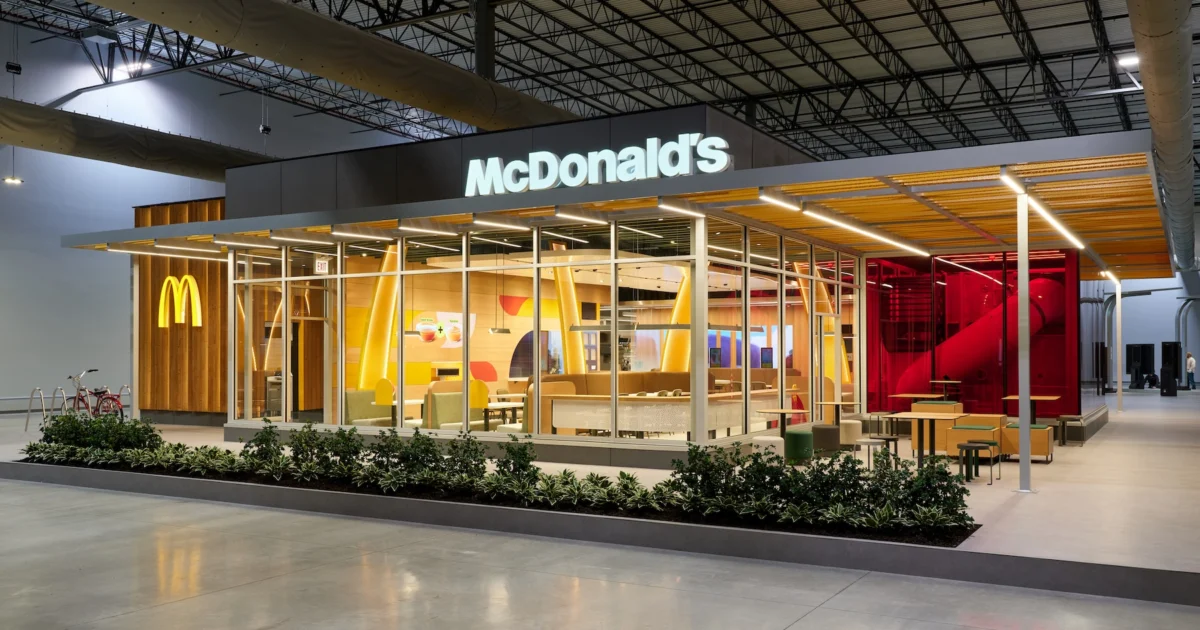
McDonald’s is initiating a sweeping, decade-long transformation with an unprecedented $8.5 billion investment aimed at modernizing its global restaurant footprint. This ambitious initiative, dubbed "McDonald’s Next," is designed to significantly enhance the customer experience, boost operational efficiency, and solidify the fast-food giant’s market position in an increasingly competitive landscape. The comprehensive plan encompasses substantial upgrades to restaurant infrastructure, a renewed focus on food quality, a significant investment in employee training, and a strategic shift in marketing and operational approaches.
The initiative kicks off with "Make It Golden," a global training program set to commence early next month, targeting over two million employees worldwide. This program is a cornerstone of the "People Next" pillar of the "McDonald’s Next" strategy, aiming to instill a deeper understanding of taste, quality, and exceptional hospitality. Tiffanie Boyd, McDonald’s global chief people officer, described it as "the largest upskilling effort in the company’s history, to essentially educate the entire system." The sheer scale of this undertaking, as Boyd noted, "is not easy to train more than 2 million people."
This extensive training initiative is not merely about improving service; it’s intrinsically linked to operational and financial performance. McDonald’s has observed a direct correlation between high employee engagement and retention and improved business outcomes. Data presented by Boyd indicates that restaurants achieving top-tier employee engagement and retention scores witness a 10% increase in guest counts, 15% more cash in revenue, 15% greater sales, and a substantial 20% increase in cash flow. This underscores the company’s belief that investing in its workforce is a direct investment in its bottom line and its aspiration to be the customer’s "first choice" and a "growth driver." To facilitate this focus on people, McDonald’s is also streamlining operations, reducing complexity to allow restaurant teams more time for coaching and support. In the short term, some inspections will be eased to prioritize quality and hospitality.
The "McDonald’s Next" strategy is multifaceted, addressing key areas crucial for future growth and customer loyalty. Beyond the people-centric initiatives, the plan prominently features "Consumer Next," "Menu Next," and "Restaurant Next." These pillars represent a holistic approach to revitalizing the brand and ensuring its continued relevance and profitability.
Consumer Next: Rekindling Brand Loyalty and Driving Engagement
Under the "Consumer Next" banner, McDonald’s is pivoting its marketing strategy to foster deeper, more consistent engagement with its customer base. The company plans to shift away from a heavy reliance on temporary promotional tactics, such as limited-time offers (LTOs) and "borrowed IP" (intellectual property from popular culture), towards a more sustainable and data-driven approach. Morgan Flatley, Chief Marketing Officer, articulated the goal: "Consumer Next is really about turning our current customer relationships into more visits and creating this demand engine with our customers to be their first choice more often."
A key element of this strategy is the amplified use of influencer marketing and leveraging the brand’s existing fan base. McDonald’s recognizes its significant advantage in its loyal customer following, with nearly nine out of ten Americans visiting its restaurants annually. Flatley stated, "We have an unfair competitive advantage in our customers who are rabid fans of the brand, the food, and our restaurants. We’re going to be spending a lot of time working on how we better activate those fans." This involves encouraging user-generated content and authentic testimonials across social media platforms.
Furthermore, McDonald’s intends to maximize the potential of its robust loyalty program, which boasts 220 million active users globally. The company aims to leverage the wealth of data generated by these customers to personalize marketing efforts, making them more relevant and impactful. This shift towards personalized marketing is a departure from the company’s previous approach, which CEO Chris Kempczinski acknowledged on a recent earnings call, suggesting that the sheer volume of marketing efforts had become overwhelming for restaurant teams. The new strategy promises a "simplified calendar," implying a more curated and impactful approach to promotions. While not eliminating partnerships, the company plans to be more selective, reducing an "over-reliance on borrowed IP" and treating such collaborations as strategic, infrequent events rather than a constant presence.
Menu Next: Elevating Core Offerings and Expanding Reach
The "Menu Next" strategy is centered on enhancing the quality and appeal of McDonald’s core product categories, with a particular focus on chicken and beverages, while maintaining its dominance in beef. The company projects an ambitious goal of capturing an additional 1.5 percentage points of market share in both chicken and beverages by 2030.
To achieve this, significant improvements in product quality are paramount. McDonald’s has established dedicated category teams for beef, chicken, and beverages, recognizing the need to compete effectively against specialized brands in these areas. For its chicken offerings, the company is investing in improved preparation methods, including shorter cooking times and enhancements to its oil filtration processes. The successful test of hand-breaded chicken is being expanded to more locations across the U.S. and Ireland, signaling a commitment to premiumizing its chicken portfolio.
The beverage segment is also a key focus, with the company already experiencing stronger-than-anticipated sales from its expanded beverage lineup. A greater emphasis will be placed on the quality of its coffee offerings, aiming to elevate the entire beverage experience.
McDonald’s believes that by focusing on intrinsic product quality and effectively communicating these improvements, it can drive sales more sustainably than through the frequent deployment of LTOs. Jill McDonald, Global Chief Customer Experience Officer, cited an example from Australia, where a focus on innovation and operational standards for the Quarter Pounder with Cheese resulted in a five-fold sales uplift compared to promotional campaigns. This illustrates the company’s strategic shift towards building long-term value through superior product offerings.
Restaurant Next: A Tech-Forward Future for Operational Excellence
The "Restaurant Next" pillar is the technological backbone of the "McDonald’s Next" strategy, aiming to create more efficient and responsive restaurant environments. A key component is the continued deployment and enhancement of Arch IQ, McDonald’s AI-based operating system designed to automate and streamline in-restaurant tasks.
Arch IQ is already implemented in thousands of restaurants, and its capabilities are being expanded. Digitizing the supply chain is a priority, providing managers with greater visibility into inventory levels and reducing the time spent on manual stock counts. Executives estimate that these improvements could lead to a 10% to 15% reduction in waste.
Furthermore, the technology is being integrated to monitor and predict equipment maintenance needs. Managers will receive proactive alerts regarding issues such as uncleaned equipment or malfunctioning machinery, allowing for timely repairs and minimizing downtime. As McDonald noted, "So our manager will know if the shake cleaning cycle hasn’t operated overnight. So they would know when they come in the morning, and an engineer would have already been called to come out and fix the machine."
A significant advancement in "Restaurant Next" is the expansion of voice-activated drive-thru AI. Currently being tested in 10 U.S. locations and piloted in Australia, this technology is slated for wider rollout this year. McDonald’s anticipates that this AI could save approximately 50 labor hours per week per restaurant, with the freed-up resources potentially contributing to profitability or allowing staff to focus on enhanced customer service.
The overarching financial implication of these technological and operational investments is substantial. McDonald’s projects that efficiency and cash flow improvements alone can generate an additional $100,000 in cash flow per restaurant annually. This is expected to provide operators with a return on investment within four years.
Financial Commitment and Franchisee Involvement
The $8.5 billion investment over the next decade represents a significant capital commitment from McDonald’s. This includes $5 billion allocated through 2030, funded through a combination of rent relief and direct capital spending. This financial support is crucial as the company also calls upon its franchisees to invest in their own restaurant remodels and modernization initiatives, aligning with their standard 10-year cycle.
The strategy acknowledges the essential role of franchisees in executing this vision. The company’s commitment to providing incentives and financial support aims to ensure widespread adoption of the modernization efforts. The ultimate goal is to create a more appealing and efficient dining experience that encourages customers to visit more frequently, thereby driving sustained growth for both the corporation and its franchise partners.
Broader Implications and Industry Context
The "McDonald’s Next" strategy arrives at a pivotal moment for the fast-food industry. Consumers are increasingly demanding higher quality food, seamless digital experiences, and efficient service. Competitors are also investing heavily in technology and menu innovation. McDonald’s ambitious plan reflects a proactive response to these evolving market dynamics.
By focusing on both the tangible aspects of the restaurant experience (food quality, store ambiance) and the intangible (employee hospitality, marketing engagement), McDonald’s is positioning itself for long-term success. The emphasis on operational efficiency, driven by technology and streamlined processes, is critical for managing costs and improving profitability in a sector known for its thin margins.
The success of "McDonald’s Next" will hinge on the effective execution of its multifaceted plan and the collaborative efforts of its corporate leadership and its vast network of franchisees. The substantial investment signals a strong confidence in the brand’s ability to adapt and thrive in the years to come, aiming to redefine the fast-food experience for a new generation of consumers. The comprehensive nature of this strategy suggests that McDonald’s is not just aiming for incremental improvements but a fundamental transformation of its operations and customer engagement.
