

The fourth episode of Food Network’s high-stakes competition series, Pitmasters, introduced a significant shift in format, transitioning from a general field competition to a series of high-pressure head-to-head matchups. This structural change forced the remaining six teams to demonstrate not only their technical proficiency over fire but also their strategic acumen. Following their victory in the previous episode’s "Big Burn" challenge, Susie Bulloch of Hey Grill Hey and Christie Vanover of Girls Can Grill were granted the power to determine the pairings and the protein assignments for the entire field. The episode focused on the "nose-to-tail" culinary philosophy, requiring contestants to utilize as much of a whole animal as possible within a strict timeframe.
Strategic Matchups and the Whole Animal Mandate
The strategic advantage held by Bulloch and Vanover allowed them to dictate the animal assignments across three distinct categories: goat, lamb, and pig. Seeking to maximize their chances of advancement, the duo opted for the pig bracket, matching themselves against competitors Matt and Max. This selection was based on the versatility of the porcine protein and the team’s extensive experience with diverse pork preparations.

The primary challenge, titled the "Big Burn," provided teams with a 10-hour window to process a whole animal into two main courses and two side dishes. Unlike traditional barbecue competitions that focus on specific cuts like brisket or ribs, this challenge emphasized the "nose-to-tail" approach. This culinary movement, championed by lead judge Andrew Zimmern, advocates for the ethical and sustainable use of the entire animal, including offal, extremities, and bones. Zimmern and fellow judges Ernest Servantes and Moe Cason stipulated that the essence of the animal must be present in every component of the final spread, testing the pitmasters’ ability to integrate fat, bone-in cuts, and lean muscle into a cohesive menu.
Chronology of the Big Burn: Executing a German-Inspired Menu
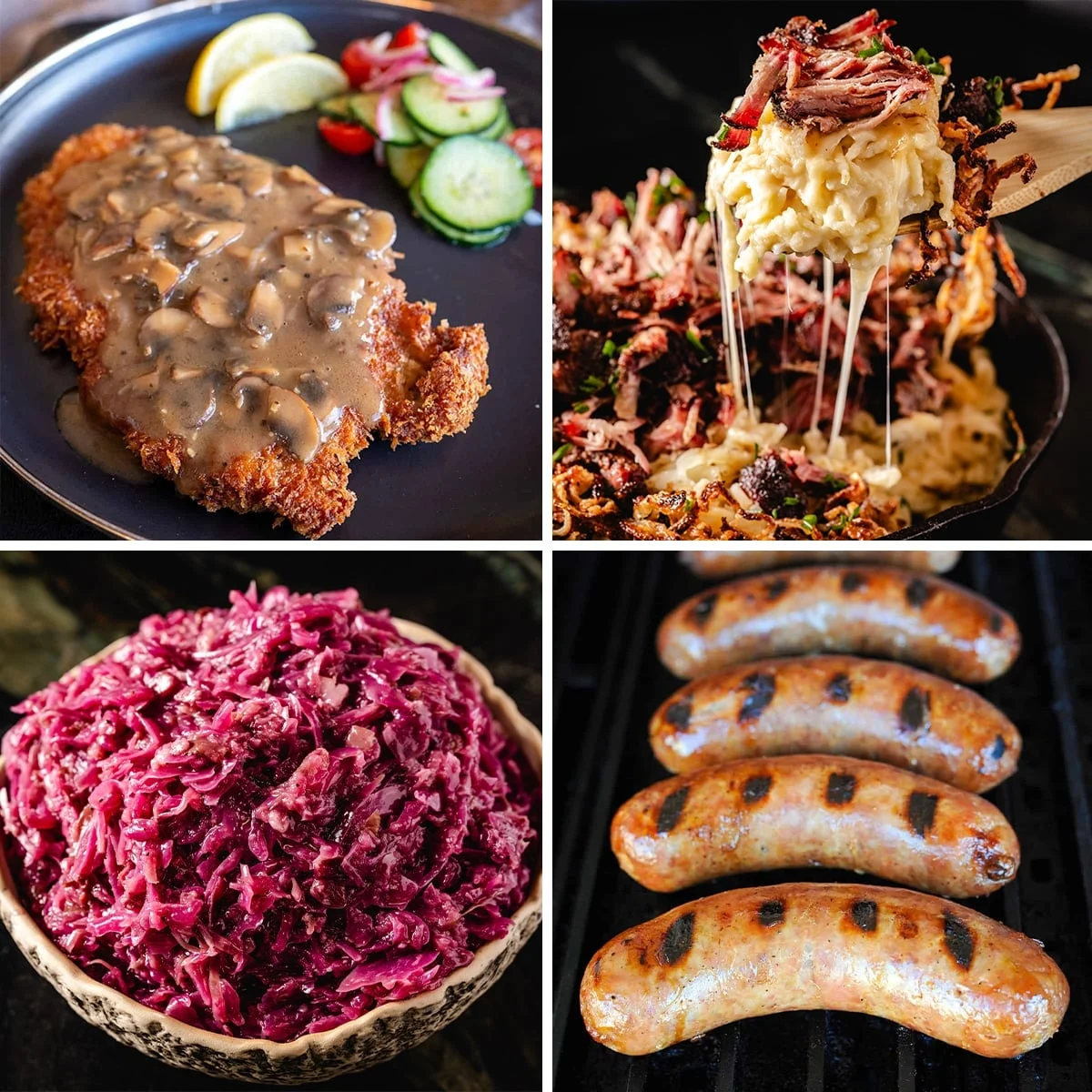
In response to the whole-animal requirement, Bulloch and Vanover developed a menu rooted in German culinary traditions. This decision leveraged Bulloch’s family heritage and both pitmasters’ extensive recipe archives. The German theme allowed for a variety of cooking techniques, including braising, pan-frying, and smoking, which are essential when dealing with the varied textures of a whole pig.
Primary Course: Smoked Sauerbraten and Jägerschnitzel
The team utilized the pork shoulder and shanks to create a Smoked Sauerbraten. Traditionally a beef-based dish requiring several days of marination in a sweet and sour brine, the pitmasters adapted the recipe for the 10-hour competition window. By utilizing a rich, tangy braise and low-and-slow heat, they aimed to break down the connective tissue of the shoulder and shanks while infusing the meat with the characteristic acidity of the dish.

For the second main course, Vanover prepared a Jägerschnitzel using the pork loin. The loin, a lean cut, was breaded and pan-fried to achieve a golden-brown crust. To satisfy the "nose-to-tail" requirement, Vanover performed a complex extraction, simmering the pig’s rib bones to create a concentrated pork stock. This stock served as the foundation for a robust mushroom gravy, ensuring that the animal’s flavor profile was deeply integrated into the dish.
Side Dish Development: Rotkohl and Käsespätzle
The side dishes were required to be as animal-centric as the mains. The team prepared Rotkohl, a traditional German braised red cabbage. To incorporate the pig, Bulloch smoked the pork belly, dicing it into the cabbage to provide a fatty, smoky counterpoint to the vinegar-heavy braise.
The second side dish, Käsespätzle, presented the most significant technical hurdle of the day. Spätzle, a German egg noodle, requires a precise dough consistency and a boiling water bath—a difficult feat to manage over an open fire. The pitmasters prepared the noodles from scratch and topped the cheesy dish with smoked pig cheeks. The use of the cheeks, a highly prized but often overlooked cut, aligned perfectly with the judges’ expectations for utilizing the entire carcass.

The Flash Burn: Precision Sausage Making
Midway through the day, the competition was interrupted by the "Flash Burn," a secondary challenge designed to test speed and technical precision. The teams were given exactly one hour to produce a fully cased, seasoned, and cooked sausage link using the remaining parts of their assigned animal.
Judge Moe Cason emphasized that no shortcuts would be tolerated; the sausages had to be ground, seasoned, stuffed into casings, and cooked to an internal temperature that ensured both safety and juice retention. Bulloch and Vanover produced a beer-braised pork bratwurst, garnished with caramelized onions, cabbage, and pickled mustard seeds. The inclusion of pickled mustard seeds was a strategic nod to the flavor profiles often favored by high-level culinary judges, providing a pop of acidity to cut through the richness of the fresh pork. The winner of the Flash Burn was awarded a $2,000 cash prize, adding a financial incentive to the already high-pressure environment.
Judging Criteria and Technical Analysis
The judging panel for Pitmasters Episode 4 brought together three distinct perspectives on fire-based cooking:

- Andrew Zimmern: Known for his global expertise in "bizarre foods" and traditional butchery, Zimmern focused on the intellectual and technical application of the nose-to-tail philosophy.
- Ernest Servantes: A highly decorated Texas pitmaster, Servantes evaluated the teams on their fire management and the quality of the smoke profile.
- Moe Cason: A specialist in traditional American barbecue, Cason’s focus remained on the fundamental textures and seasoning of the meat.
The "nose-to-tail" mandate is increasingly common in modern culinary competitions, reflecting a broader industry shift toward sustainability. According to data from the National Restaurant Association, "zero-waste cooking" and "unusual meat cuts" have consistently ranked among the top culinary trends over the last five years. By requiring pitmasters to move beyond the "money muscle" and ribs, the show challenges the stereotypical image of barbecue as a limited culinary art form.
Broader Implications for the Barbecue Industry
The performance of Bulloch and Vanover on a national stage like Food Network underscores the evolving demographic of the barbecue industry. Historically a male-dominated field, the "live fire" cooking sector has seen a surge in female leadership. Both Bulloch (Hey Grill Hey) and Vanover (Girls Can Grill) represent a new generation of "barbecue influencers" who leverage digital platforms to reach millions of backyard cooks.
The economic impact of such television appearances is substantial. For the contestants, the exposure often leads to increased sales of proprietary rubs, sauces, and digital cookbooks. For the network, the "Pitmasters" series taps into a multi-billion dollar outdoor cooking industry. According to the Hearth, Patio & Barbecue Association (HPBA), over 70% of American adults own a grill or smoker, and the market for barbecue accessories and specialty meats continues to grow annually.

Results and Season Standings
The head-to-head format created a safety net for the winners of each individual bracket. Under the rules of Episode 4, the winner of the pig, goat, and lamb matchups were automatically granted entry into the next round. However, the elimination process remained tied to the cumulative scoring system used throughout the season. The team with the lowest overall "Big Burn" score across the four episodes was slated for elimination, regardless of their performance in the individual head-to-head.
This scoring system rewards consistency over time rather than just a single day’s performance. It prevents a high-performing team from being sent home due to one minor error, while also ensuring that teams cannot coast through the middle of the pack. Bulloch and Vanover expressed satisfaction with their German-inspired spread, noting that the cohesive nature of the meal—rather than four disconnected dishes—was their primary goal.
As the series moves toward its conclusion, the technical requirements continue to escalate. The transition from traditional smoking to whole-animal butchery and open-fire noodle production indicates that the eventual winner will need to be a versatile chef as much as a traditional pitmaster. The episode concluded with a reminder that the competition is as much about mental endurance as it is about culinary skill, as the teams prepared for the final stretch of the season.
