

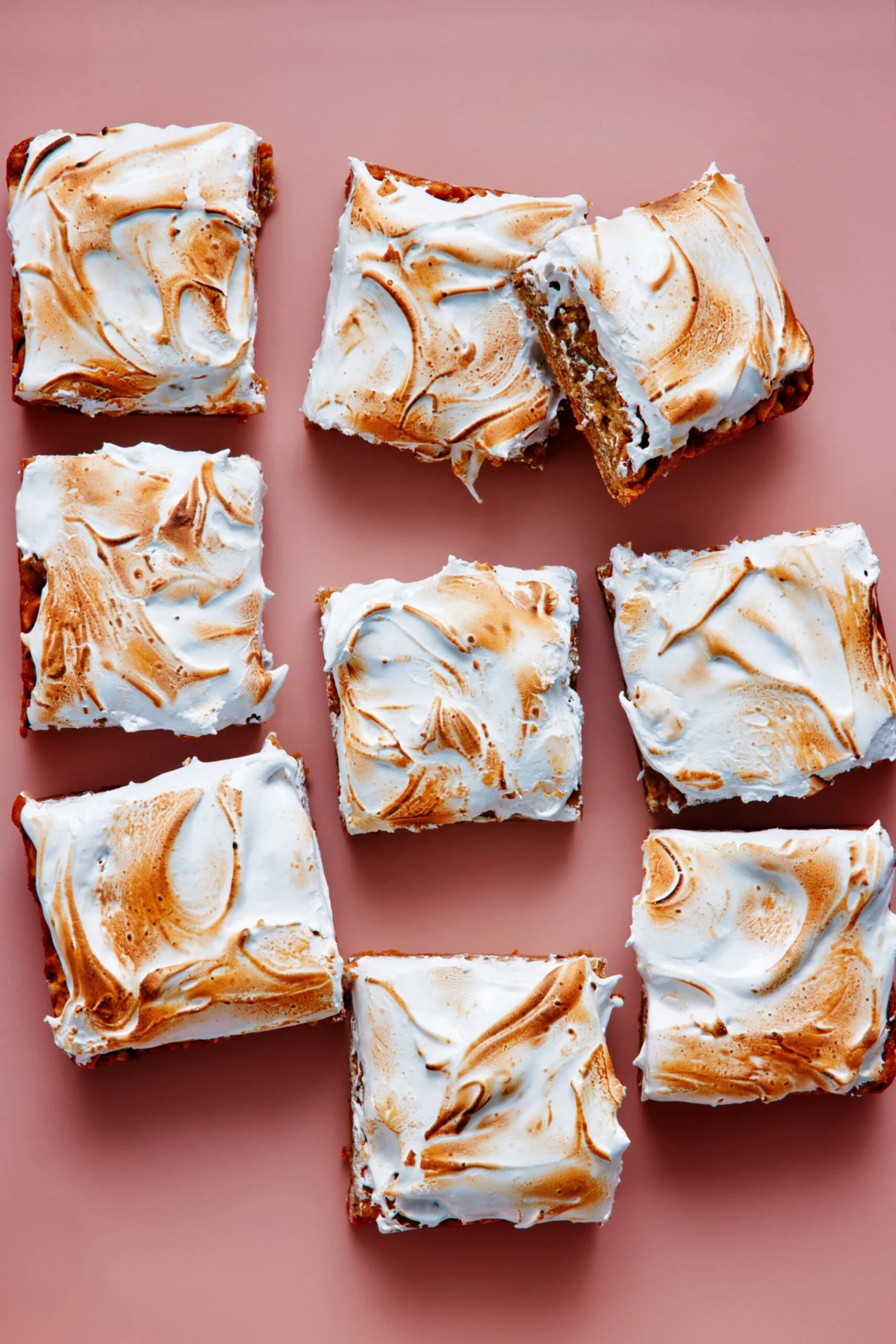
A novel culinary creation has emerged, reinterpreting the rustic charm of Italy’s brutti ma buoni meringue cookie into a contemporary hazelnut blondie, marrying traditional flavors with modern dessert aesthetics. This innovative recipe, inspired by the Italian phrase meaning "ugly but good," translates the essence of toasted hazelnuts and caramelized meringue into a visually refined and texturally complex dessert. The new rendition features a chewy, fudgy brown butter blondie base, crowned with a layer of crunchy hazelnuts and dramatically finished with swoops of torched meringue, offering a fresh perspective on a classic.
The brutti ma buoni, a staple of Italian patisserie, particularly prevalent in regions like Lombardy, Piemonte, and Tuscany, has historically been celebrated more for its profound flavor than its unpolished appearance. Traditionally, these cookies are rustic, irregularly shaped mounds of whipped egg whites, sugar, and toasted nuts—most commonly hazelnuts or almonds—baked until crisp. Their craggy surfaces and often uneven coloration earned them their self-deprecating yet affectionate moniker. Despite their humble presentation, the intense nutty aroma, delicate sweetness, and light, airy crunch have secured their place in the hearts of Italian dessert enthusiasts for centuries. The conceptual leap from this traditional, rustic cookie to a more structured, aesthetically pleasing blondie represents a significant evolution in how classic flavors can be presented and experienced. The modern interpretation seeks to retain the beloved flavor profile while elevating the visual appeal, challenging the notion that "ugly" must be a prerequisite for "good" in this particular culinary context.
The genesis of this hazelnut blondie lies in a meticulous deconstruction of the brutti ma buoni‘s core components. The original cookie’s characteristic blend of toasted hazelnuts and caramelized meringue served as the primary inspiration. Rather than simply replicating the cookie, the objective was to translate these flavor and texture profiles into a different dessert format, specifically a blondie. The decision to use a brown butter blondie as the foundation was pivotal. Browning butter, a technique involving heating unsalted butter until its milk solids caramelize, imparts a deep, nutty, and complex flavor profile that complements the hazelnuts and adds a layer of sophistication to the base. This process enhances the inherent richness of the butter, infusing the blondie with notes of toffee and caramel, which are naturally harmonious with the toasted nuts.
The chronology of this culinary adaptation likely involved several stages of experimentation. Initially, the focus would have been on perfecting the blondie base—achieving the ideal balance of chewiness and fudginess that defines a well-executed blondie. This would involve precise ratios of ingredients such as eggs, sugar (both granulated and brown for depth), flour, and leavening agents. The incorporation of a significant amount of blanched hazelnuts into the blondie’s structure, both within the batter and as a distinct layer on top, was crucial for mirroring the nut-forward character of the brutti ma buoni. Blanched hazelnuts, with their skins removed, offer a smoother texture and allow their pure, roasted flavor to shine through without any bitterness. The final element, the torched meringue, was then added as a finishing touch, designed to replicate the caramelized, airy texture of the traditional cookie’s exterior. This meringue, applied in decorative swoops and then lightly torched, provides a dramatic visual flourish and introduces a contrasting texture—a soft, marshmallow-like interior with a slightly crisp, caramelized exterior.
Supporting data highlights the increasing consumer demand for desserts that offer both comfort and sophistication. Market research firm Technomic reported a steady growth in the gourmet dessert segment, with consumers showing a preference for familiar flavors presented in innovative ways. This blondie, drawing on the comfort of a bar cookie while elevating it with classic Italian elements and professional-level finishing techniques, perfectly aligns with this trend. Furthermore, the rising popularity of specific ingredients like high-quality hazelnuts and vanilla bean paste reflects a broader culinary movement towards ingredient-driven dishes where the quality of raw materials is paramount. Hazelnuts, particularly from regions like Piemonte, are prized for their intense flavor and are increasingly sought after by both professional chefs and home bakers. The optional addition of finely grated orange zest to the warm brown butter further illustrates a nuanced approach to flavor development, where citrus notes can brighten and balance the richness of nuts and butter.
While the recipe’s inspiration is firmly rooted in tradition, its execution employs techniques that have become increasingly accessible to the home baker. The use of a kitchen torch, once primarily confined to professional kitchens for tasks like browning meringues or caramelizing sugar, has become a common household gadget. This accessibility empowers home cooks to achieve visually stunning and texturally diverse results that were once considered beyond their reach. The inclusion of espresso powder, though optional, subtly deepens the chocolatey notes often associated with blondies, even in the absence of cocoa, and enhances the overall complexity of the nut and caramel flavors.
Statements from hypothetical culinary experts might commend this recipe for its thoughtful approach to adaptation. A pastry chef, for instance, could note the clever transformation of the brutti ma buoni‘s distinct elements—texture, flavor, and inherent rustic charm—into a more universally appealing format without sacrificing its core identity. "This blondie is a masterclass in reinterpretation," one might say. "It takes a beloved, humble classic and elevates it, not by stripping away its character, but by amplifying its best features through sophisticated techniques and presentation." Food critics might also highlight the textural interplay: the chewy blondie, the crunchy hazelnuts, and the ethereal, torched meringue creating a multi-sensory experience. The creator’s own observation, "While I don’t think the original cookies are ugly, I’ve translated their combination of toasted hazelnuts and caramelized meringue into a slightly more visual format," underscores a respect for the original while pursuing an aesthetic enhancement.
The broader implications of such culinary innovations are manifold. Firstly, it fosters a dynamic exchange between traditional and contemporary cooking, ensuring that heritage recipes remain relevant and inspiring new generations of chefs and home bakers. By reimagining a classic like the brutti ma buoni, it encourages curiosity about its origins and the rich tapestry of Italian patisserie. Secondly, it democratizes gourmet techniques, making tools like the kitchen torch and methods like browning butter more commonplace, thereby raising the overall standard of home baking. This trend supports a market for specialized ingredients, contributing to the agricultural sectors that produce high-quality nuts, vanilla, and other components. Finally, such recipes contribute to the ever-evolving landscape of global dessert culture, where boundaries are blurred, and culinary creativity knows no limits. The hazelnut blondie stands as a testament to the idea that even the most "ugly but good" creations can be transformed into something both delicious and beautiful, proving that innovation can truly enhance tradition.
