

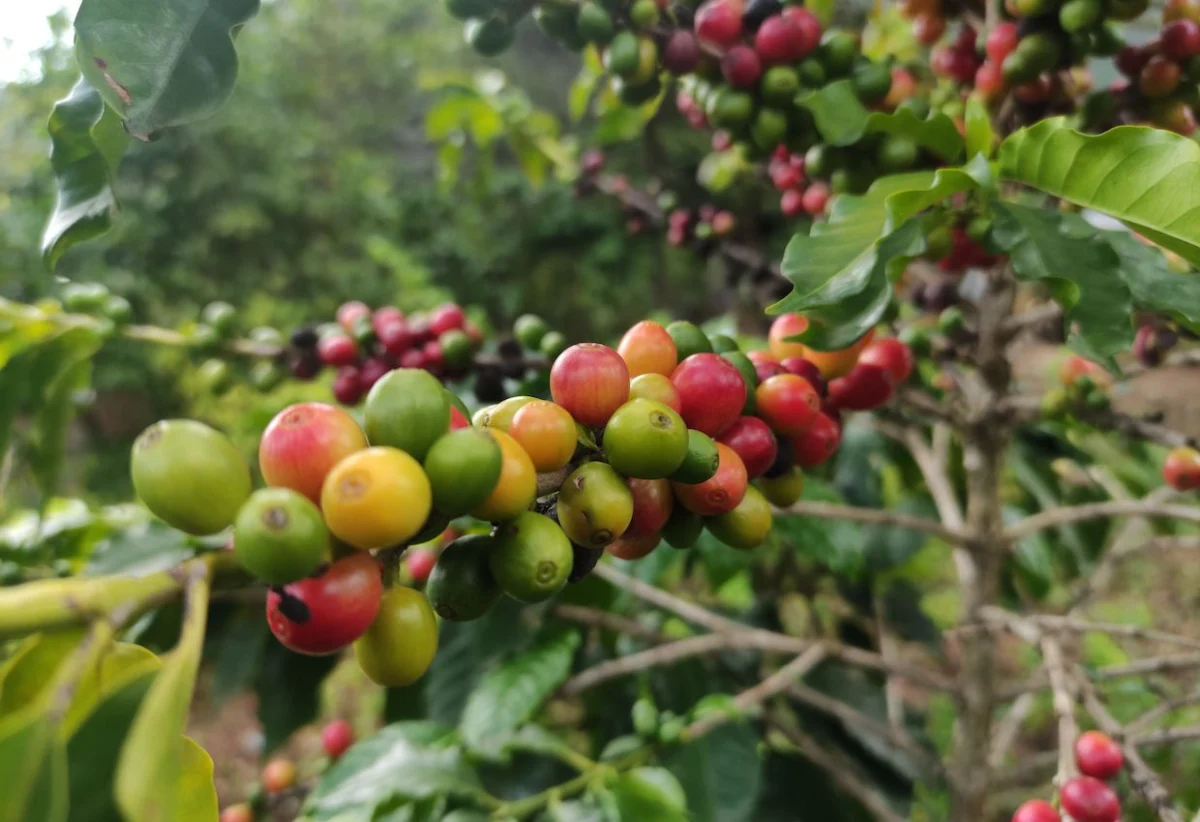
A groundbreaking literature review led by researchers at the Royal Botanic Gardens, Kew, is casting doubt on the widely held belief that robusta coffee offers a sustainable solution for coffee production in the face of escalating climate change. The comprehensive analysis, published in the journal Sustainable Development, argues that the prevailing narrative of robusta’s inherent climate resilience is, in fact, misguided. This research has significant implications for the global coffee industry, which is increasingly reliant on robusta as arabica cultivation faces unprecedented threats.
The study, co-authored by Aaron Davis of Royal Botanic Gardens, Kew, Akshay Dashrath of SICC Labs in India, and Kew researcher Justin Moat, meticulously examines over a century of scientific literature. It critically assesses the environmental conditions under which robusta coffee has historically thrived and questions the sustainability of its current large-scale cultivation practices, particularly in major producing regions like Vietnam, Brazil, and India.
Challenging the Conventional Wisdom: The Realities of Robusta Cultivation
For years, the coffee sector has looked to Coffea canephora, commonly known as robusta, as a more adaptable and robust alternative to the finicky arabica species. As climate change intensifies, leading to unpredictable weather patterns, increased temperatures, and a shrinking suitable land area for arabica, robusta has been presented as a more resilient crop capable of maintaining global coffee supply. However, the new review suggests this perception is not fully supported by scientific evidence when considering the actual demands of robusta cultivation on a commercial scale.
The researchers contend that many of the world’s dominant robusta-producing regions lack the natural climate conditions conducive to rain-fed robusta cultivation. This deficiency necessitates substantial reliance on artificial irrigation systems. For example, in northern Espírito Santo, Brazil’s foremost robusta-growing state, an estimated 90% of the crop is irrigated. Similarly, the Central Highlands of Vietnam, a powerhouse of global robusta production, face increasing water scarcity, prompting extensive irrigation efforts.
This heavy dependence on irrigation, coupled with widespread practices of low tree-shade cover and extensive use of synthetic fertilizers, is flagged by the study as being fundamentally at odds with broader environmental goals. The authors assert that these methods run counter to aspirations for ecosystem and biodiversity stewardship and directly conflict with the global push towards a low-carbon economy. The energy-intensive nature of irrigation pumping and the production of synthetic fertilizers contribute significantly to the carbon footprint of robusta coffee, undermining claims of its environmental superiority.
Unearthing the Natural Habitat of Wild Robusta
To further substantiate their claims, the Kew-led research team conducted a novel analysis of water availability around wild robusta populations in Africa, the species’ native continent. Their findings reveal that wild robusta species naturally evolved in warmer parts of tropical Africa where soil moisture is consistently available throughout much of the year. This moisture is not solely reliant on rainfall; it is often supplemented by proximity to rivers, wetlands, groundwater, or naturally high water tables.
The analysis indicates that wild robusta populations are more commonly found in landscapes that provide this consistent, supplemental water source, suggesting that rainfall alone may be insufficient for optimal growth and yield in many environments. The study posits that current climate-suitability models, which often focus primarily on temperature and rainfall, may be misinterpreting the resilience of robusta. These models might be inadvertently classifying irrigated farms or naturally moist locations as evidence that robusta can thrive under drier conditions, thus perpetuating the myth of its universal climate adaptability.
"We contest that this proposition is not supported by scientific evidence," the authors stated, directly challenging the notion that current robusta cultivation offers a straightforward pathway to sustaining global coffee production amidst climate change. This assertion carries significant weight, given the species’ increasing prominence in the global coffee trade.
Global Production Dynamics and Mounting Pressures
The implications of this research are far-reaching. Robusta currently accounts for approximately 43% of the global coffee trade. Brazil and Vietnam, two of the world’s largest coffee exporters, collectively supply about 65% of the world’s robusta beans. The environmental and resource pressures associated with maintaining this level of production are becoming increasingly apparent.
In Vietnam’s Central Highlands, the environmental consequences of the robusta boom have already been a subject of recent reporting, highlighting issues such as deforestation, soil degradation, and water depletion due to intensive farming practices. The extensive irrigation required in regions like Brazil’s Espírito Santo also raises concerns about water resource management and the long-term sustainability of these agricultural systems.
The researchers are not advocating for the abandonment of robusta cultivation. Instead, they propose a strategic recalibration of where and how robusta is grown. Their recommendations include expanding cultivation in geographical areas that more closely align with the species’ natural water and temperature requirements. Furthermore, they emphasize the critical need for advancements in cultivation practices and the development of climate-resilient coffee varieties through targeted breeding programs.
Beyond Robusta: Exploring Alternative Coffee Futures
This research aligns with the broader work of Aaron Davis and his colleagues at Kew, who have been actively exploring coffee species beyond the dominant arabica and robusta. The global coffee sector faces existential threats not only from climate change but also from a severe lack of genetic diversity within the commonly cultivated species. Many wild coffee species, including arabica, are now at risk of extinction, according to previous studies.
In recent years, Kew researchers have made significant contributions to understanding coffee diversity. A study published the previous year established Coffea liberica and Coffea excelsa as genetically distinct species, a finding with considerable implications for their potential commercial cultivation. Earlier this year, a research team led by Davis proposed the name Coffea × libex for hybrids between these two species, signaling a potential avenue for developing novel coffee varieties better suited to changing environmental conditions.
The authors of the new robusta review underscore that a much more detailed and nuanced mapping of climate suitability is essential. This granular climate data will be crucial in identifying regions where rain-fed robusta can be expanded sustainably, reducing the reliance on resource-intensive irrigation and promoting more environmentally sound agricultural practices.
The research was made possible through funding from the Calleva Foundation and the Amar-Franses Foster-Jenkins Trust in the UK. The authors have declared no conflicts of interest in relation to their findings. The scientific community and industry stakeholders will be closely watching how these findings influence future coffee production strategies and sustainability initiatives. The urgent need for data-driven approaches to coffee cultivation, particularly in the face of a rapidly changing climate, has never been more apparent. The future of coffee, it seems, may lie not just in adapting existing species, but in a deeper understanding of their natural heritage and a willingness to explore new frontiers in coffee cultivation.
