

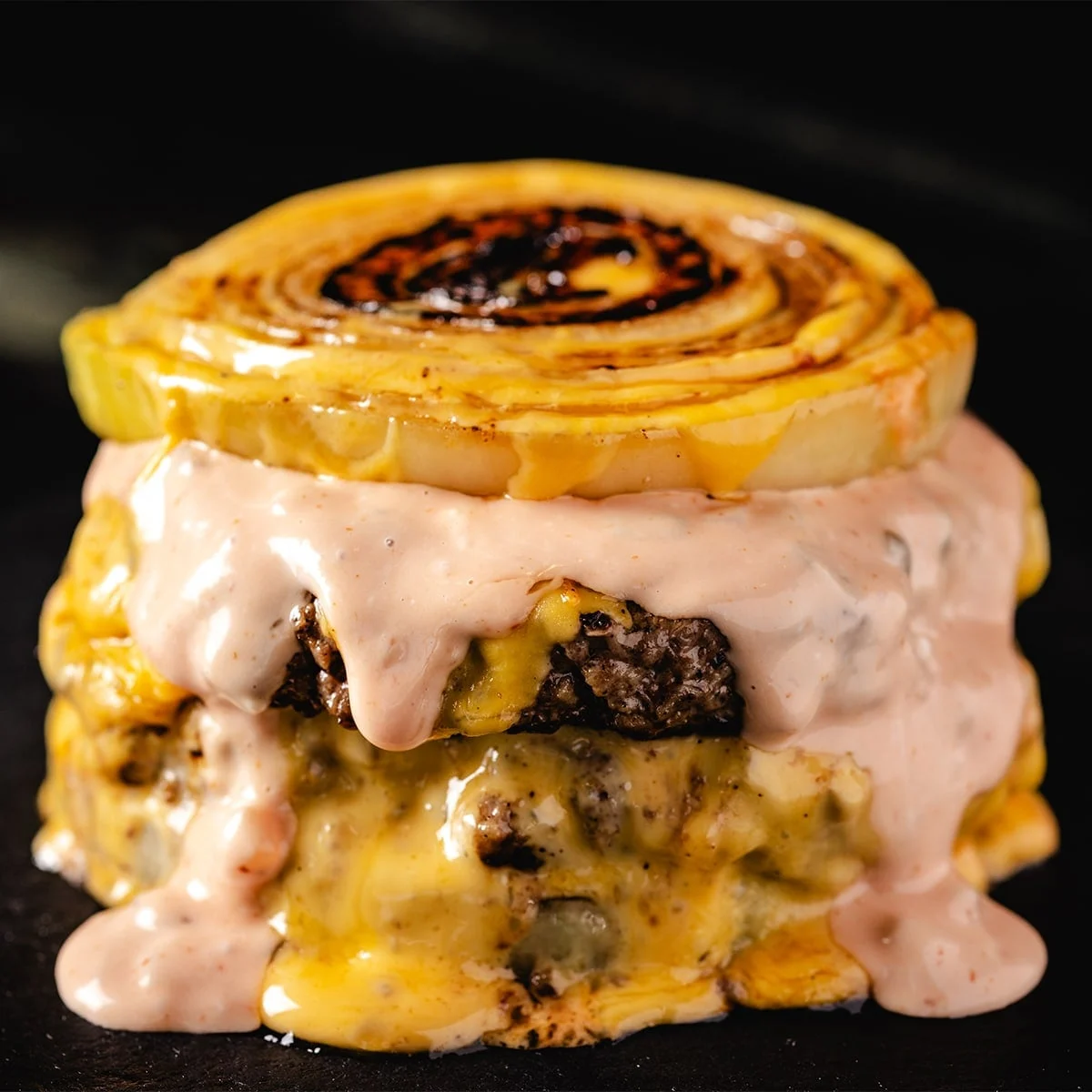
The modern landscape of American fast food and home outdoor cooking has recently converged upon a specific phenomenon known as the Flying Dutchman burger, a minimalist creation that has transitioned from a niche secret menu item to a viral social media sensation. Originally popularized by the California-based chain In-N-Out Burger, the Flying Dutchman traditionally consists of two beef patties and two slices of American cheese, served without a bun or traditional vegetable toppings. However, a contemporary iteration has emerged within the backyard grilling community, replacing the bread component with thick, caramelized onion rounds. This adaptation represents a broader shift in consumer preferences toward high-protein, low-carbohydrate dietary patterns and the democratization of "secret" commercial recipes through digital platforms.
The Historical Context of the Secret Menu and the Flying Dutchman
To understand the current popularity of the Flying Dutchman, one must examine the history of In-N-Out Burger, founded in 1948 by Harry and Esther Snyder in Baldwin Park, California. The chain is credited with introducing the first drive-thru window with a two-way speaker system, but its most enduring legacy is the "Secret Menu." While the official menu remains remarkably simple—offering only burgers, fries, and shakes—the secret menu allows for extensive customization, such as "Animal Style" burgers or the "4×4."

The Flying Dutchman was reportedly named after Guy Snyder, the son of the founders, who had a penchant for the simple combination of meat and cheese. For decades, the item remained a staple for those seeking a gluten-free or high-protein meal. However, the 2023-2024 period saw a significant evolution of the concept. Influencers on platforms such as TikTok and Instagram began requesting their Flying Dutchmans "wrapped in whole grilled onions." This modification transformed a simple stack of meat into a cohesive, hand-held sandwich substitute, sparking a nationwide trend that has now migrated from the drive-thru to the backyard griddle.
Technical Composition and the Science of the Onion Bun
The transition of the Flying Dutchman to the home kitchen requires a specific technical approach to replicate the texture and flavor profile of the commercial version. The "onion-wrapped" variant relies on the structural integrity of large yellow onions. Culinary experts note that the onions must be sliced into thick, uniform rounds to withstand the high heat of a griddle without disintegrating.
The flavor profile is driven by the Maillard reaction, a chemical reaction between amino acids and reducing sugars that gives browned food its distinctive flavor. When beef patties are "smashed" onto a hot surface, the increased surface area allows for maximum browning. Simultaneously, the onion rounds undergo caramelization, where the natural sugars break down into hundreds of new aromatic compounds. This dual process creates a savory-sweet contrast that eliminates the need for a traditional yeast-based bun.

The standard home-cooked Flying Dutchman utilizes 80/20 ground beef—meaning 80% lean meat and 20% fat—which is the industry standard for maintaining juiciness during the high-heat searing process. The assembly involves placing two slices of processed American cheese between two seared patties, which are then sandwiched between two heavily grilled onion slices.
The Role of Signature Spreads in Brand Replication
A critical component of the Flying Dutchman’s appeal is the accompanying sauce, often referred to as "spread." In the commercial sector, these sauces are closely guarded trade secrets, but food scientists and home enthusiasts have successfully reverse-engineered the components. The replication of the In-N-Out style spread typically involves a base of mayonnaise, ketchup, and sweet pickle relish, balanced with white vinegar and granulated sugar.
This emulsion serves a functional purpose beyond flavor; it provides the necessary moisture and acidity to cut through the richness of the high-fat beef and processed cheese. Data from consumer behavior studies suggests that the "signature sauce" is often the primary driver of brand loyalty in the fast-food industry. By recreating this spread at home, outdoor cooking enthusiasts are able to achieve a level of "brand mimicry" that was previously unavailable to the average consumer.

Statistical Analysis of Dietary Trends and Market Impact
The resurgence of the Flying Dutchman aligns with significant shifts in American dietary habits. According to market research data from the last five years, there has been a 12% increase in consumers identifying as "low-carb" or "keto-friendly." The Flying Dutchman, which contains approximately 1,829 calories per serving in its most indulgent form but remains low in glycemic impact, appeals directly to this demographic.
Furthermore, the outdoor cooking industry has seen a surge in the sales of flat-top griddles. Unlike traditional grated grills, griddles allow for the "smash" technique required for this style of burger. Industry reports from 2023 indicate that the residential griddle market has grown by nearly 20% annually, driven by the desire to recreate restaurant-quality "diner-style" food at home. The Flying Dutchman has become a benchmark recipe for new griddle owners, testing the heat distribution and searing capabilities of their equipment.
The Chronology of a Viral Food Trend
The timeline of the Flying Dutchman’s recent viral status can be traced through several key phases:

- Phase I: The Underground Era (1960s-2010s): The item remains a "secret" known primarily to West Coast locals and keto enthusiasts.
- Phase II: The Social Media Spark (Late 2023): Food influencers began posting videos of the "onion-wrapped" version, highlighting the visual appeal of melting cheese and charred onions.
- Phase III: The Supply Chain Ripple (Early 2024): Reports emerged of In-N-Out locations experiencing temporary shortages of large onions due to the overwhelming volume of Flying Dutchman orders.
- Phase IV: Residential Adaptation (Present): Home cooks, seeking to avoid long drive-thru lines and customize the quality of their ingredients (such as using organic beef or artisanal cheeses), transitioned the recipe to the backyard.
Official Responses and Industry Implications
While In-N-Out Burger rarely comments on specific menu trends, the company’s commitment to fresh, never-frozen ingredients has been the foundation upon which these trends are built. Industry analysts suggest that the "Flying Dutchman" phenomenon is a testament to the power of "modular menu design," where a limited number of ingredients can be rearranged to create entirely new products without increasing operational complexity.
Competitors in the fast-food space have taken note. Several regional chains have begun experimenting with "bunless" or "protein-style" offerings to capture the market share currently dominated by the In-N-Out secret menu. However, the Flying Dutchman remains unique due to its lack of any green vegetables (like lettuce wraps), focusing instead on a pure trifecta of beef, cheese, and onion.
Broader Impact on Home Entertaining and Culinary Education
The democratization of the Flying Dutchman recipe has broader implications for culinary education. It teaches home cooks the importance of temperature control and timing. For instance, ground beef must reach an internal temperature of 160°F (71°C) to ensure food safety according to USDA guidelines. Because smash patties are exceptionally thin, they often reach this temperature within 5 to 6 minutes of total cook time, requiring the cook to be precise with cheese application and assembly.

Moreover, the trend has encouraged a more sophisticated understanding of ingredient sourcing. Home cooks are increasingly opting for high-quality beef rubs and specific varieties of onions (such as Vidalia or Walla Walla) to enhance the natural sweetness of the "bun" component. This move toward "elevated fast food" at home reflects a post-pandemic shift where consumers are more willing to invest time and resources into high-quality domestic dining experiences.
Conclusion: The Future of the Bunless Burger
The Flying Dutchman Burger represents more than just a fleeting internet trend; it is a manifestation of the evolving relationship between commercial food culture and home culinary practices. As consumers continue to prioritize protein-heavy diets and seek out "hacks" that offer both novelty and flavor, the onion-wrapped burger is likely to remain a staple of the American griddle.
By removing the bread, the Flying Dutchman forces the quality of the beef and the technique of the cook to the forefront. As this recipe continues to be refined by backyard "BBQ Heroes" and shared across digital networks, it serves as a case study in how a 75-year-old fast-food chain can continue to influence modern gastronomy through the simple, effective combination of heat, meat, and onions. The implications for the food industry are clear: simplicity, when executed with high-quality ingredients and proper technique, remains the ultimate sophistication in a crowded marketplace.
