

This post may contain affiliate links. Please read our disclosure policy.
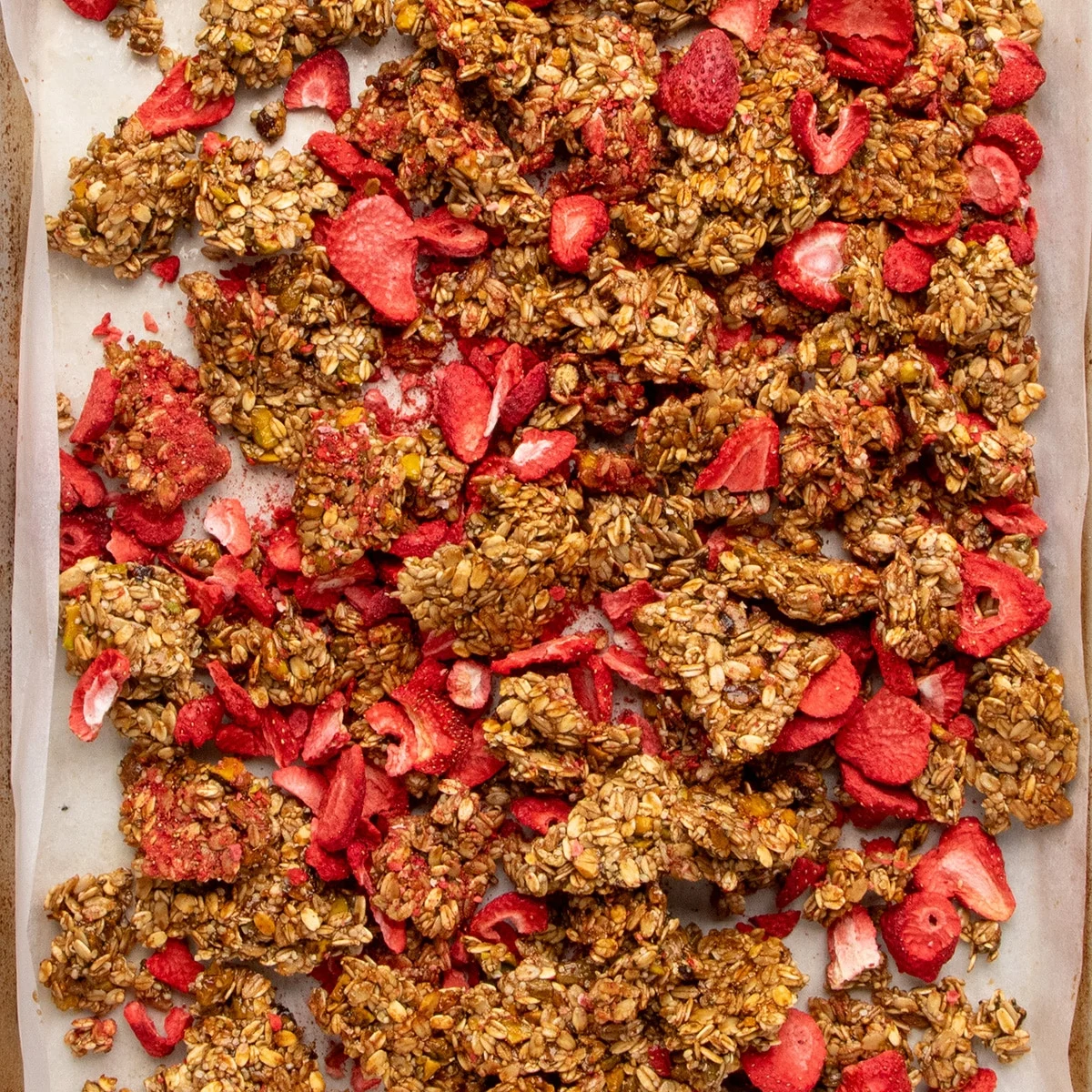
The culinary landscape is constantly evolving, and sometimes, innovations emerge from unexpected corners. In the realm of homemade granola, a recent development promises to redefine expectations for flavor and texture. A new strawberry granola recipe has surfaced, distinguished by its intensely real strawberry essence, a satisfyingly crisp and chunky texture, and a thoughtful combination of wholesome ingredients including pistachios, oats, and seeds. This isn’t just another granola; it’s a meticulously crafted experience designed to deliver a robust berry flavor that permeates every bite.
The innovation behind this strawberry granola lies in its dual-pronged approach to flavor infusion. Unlike many recipes that rely solely on freeze-dried fruit for a fleeting hint of berry, this creation first coats the oats in a concentrated strawberry syrup before baking. This process ensures that the foundational elements of the granola are imbued with authentic strawberry flavor and aroma. Following the initial bake and subsequent cooling, freeze-dried strawberries are introduced, adding another layer of vibrant berry intensity and a delightful crispness that complements the baked clusters. This technique addresses a common challenge in granola making: balancing moisture from fruit with the pursuit of a crisp texture.
The Science Behind the Crunch: Why This Recipe Excels
At its core, the success of this strawberry granola recipe can be attributed to a sophisticated understanding of ingredient interaction and moisture management. Traditional granola recipes often struggle to incorporate fresh fruit without sacrificing crispness. This recipe tackles this challenge head-on by first reducing fresh strawberries into a concentrated syrup. This reduction process not only intensifies the strawberry flavor but also significantly decreases the moisture content before it’s introduced to the oats and other dry ingredients.
"The key is in the concentration," explains a food scientist specializing in baked goods. "When you cook down a fruit puree, you’re essentially evaporating water. This leaves behind a more potent flavor profile. By doing this before coating the oats, you’re embedding the strawberry essence at a molecular level, rather than just having it sit on the surface."
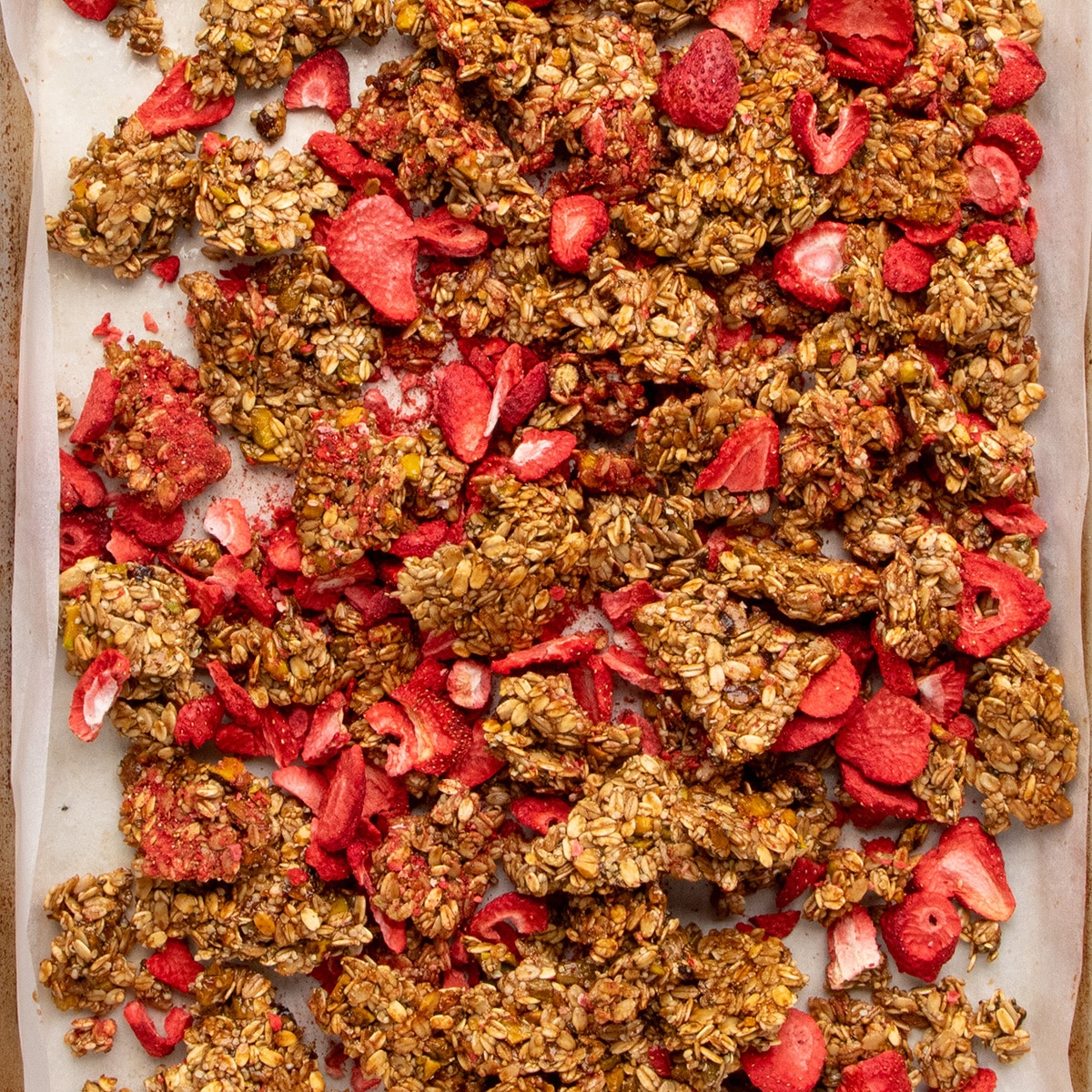
The recipe further refines this process by initially baking the coated oats at a moderate temperature (325°F). This initial baking phase allows the oats to toast and begin to crisp. Crucially, after this initial bake, the granola is stirred and then subjected to a prolonged, low-temperature baking period (175°F for approximately an hour). This secondary, low-and-slow bake acts as a dehydrator, meticulously removing any residual moisture. This is a critical step for achieving the coveted crunchy texture that defines premium granola and ensures its longevity.
The final addition of freeze-dried strawberries is a strategic masterstroke. Added only after the granola has cooled completely, these strawberries retain their vibrant color and crisp texture. Their fragmented nature, often including a fine "dust," allows them to adhere to the granola clusters, distributing bursts of intense strawberry flavor and visual appeal throughout the finished product. This post-baking addition prevents the freeze-dried fruit from becoming soggy or losing its characteristic crunch, a common pitfall when added too early in the baking process.
Recipe Unveiled: The Symphony of Ingredients
The creation of this exceptional strawberry granola involves a carefully selected array of ingredients, each playing a vital role in achieving its signature taste and texture.
- Rolled Oats: The foundation of the granola, providing a hearty base and absorbing the flavorful strawberry syrup. Sourcing certified gluten-free oats is paramount for individuals with celiac disease or gluten sensitivity.
- Pistachios: These vibrant green nuts contribute a delightful crunch, a subtle sweetness, and a visually appealing contrast to the strawberry hues. Their unique flavor profile complements the berry notes exceptionally well.
- Hemp Seeds: Offering a delicate, tender texture and a mild, nutty flavor, hemp seeds add another dimension to the granola’s mouthfeel. They are a good source of protein and healthy fats.
- Salt: A crucial flavor enhancer, salt balances the sweetness and brings out the nuanced flavors of the other ingredients.
- Freeze-Dried Strawberries: These provide an intense, concentrated burst of fresh strawberry flavor and a satisfying crispness that remains even after cooling.
- Coconut Sugar: A natural sweetener that contributes a subtle caramel note and helps in achieving a desirable crunchy texture. Its lower glycemic index compared to refined sugar makes it a popular choice for health-conscious consumers.
- Honey and Maple Syrup: These liquid sweeteners not only add sweetness but also contribute to the granola’s binding and crisping properties. The combination offers a complex sweetness profile.
- Coconut Oil: A solid fat at room temperature, coconut oil helps to bind the ingredients and contributes to the granola’s overall crispness and golden hue during baking.
- Strawberry Puree: The heart of the flavor infusion, made from whole strawberries, this is the primary source of authentic strawberry taste.
- Vinegar: A small amount of vinegar, likely apple cider or white vinegar, is believed to help enhance the brightness of the strawberry flavor and potentially contribute to crisping.
- Vanilla Extract: A classic flavor enhancer, vanilla adds depth and warmth to the overall taste profile.
The Crafting Process: A Step-by-Step Guide to Perfect Granola
The creation of this strawberry granola is a methodical process, designed to maximize flavor and achieve unparalleled crispness.
Phase 1: Crafting the Strawberry Essence
The journey begins with the preparation of a vibrant strawberry puree. Frozen strawberries are gently cooked with a touch of water to prevent scorching, a pinch of salt for flavor balance, and a sweetener, often maple syrup, to enhance the natural fruit sugars. This mixture is cooked until the strawberries are exceptionally soft, ensuring they break down easily.
For optimal results, the cooked strawberries are then pureed. This can be achieved directly in the pot using an immersion blender, a method that minimizes cleanup and prevents the risk associated with blending hot liquids in a standard blender. If a standard blender is used, it is imperative to allow the mixture to cool significantly to avoid potential pressure buildup and lid ejection. Some recipes may suggest straining the puree through a fine-mesh sieve to remove seeds, particularly if using berries with larger seeds like blackberries, though for strawberries, this step is often optional depending on personal preference.

Phase 2: Building the Granola Base
Simultaneously, the dry components of the granola are brought together. Rolled oats, chopped pistachios, hemp seeds, and salt are thoroughly mixed in a large bowl. This uniform distribution ensures that each ingredient is evenly coated in the subsequent wet mixture, guaranteeing consistent flavor and texture throughout the batch.
Phase 3: Concentrating the Strawberry Syrup
The prepared strawberry puree undergoes a crucial transformation into a concentrated syrup. A portion of the puree is combined with liquid sweeteners (honey, maple syrup), coconut sugar, a dash of vinegar, and coconut oil in a saucepan. This mixture is then simmered over medium heat. The goal is to reduce the liquid content by approximately one-quarter, a process that thickens the mixture into a jam-like consistency. As the moisture evaporates, the flavors intensify, and the syrup takes on a deeper color. This concentration is vital for embedding flavor without introducing excessive moisture, which can compromise the granola’s crispness.
Phase 4: Uniting Flavor and Texture
The hot, concentrated strawberry syrup is then poured directly into the bowl containing the dry ingredients. There is no need to wait for the syrup to cool, as the mixture is destined for the oven. Thorough mixing is essential at this stage. Every oat, nut, and seed must be intimately coated by the glossy, ruby-red syrup. This ensures that the strawberry flavor is not merely superficial but deeply integrated into the very fabric of the granola.
Phase 5: The Art of Baking for Crispness
The coated granola mixture is spread evenly onto a parchment-lined baking sheet. A thin, uniform layer with no jagged edges is crucial for even heat exposure and consistent baking. The granola is initially baked at 325°F for 10 minutes. Following this, the pan is removed from the oven, and the granola is stirred to redistribute the ingredients. It is then returned to the oven for another 10 minutes. This stirring process is critical for ensuring that all parts of the granola receive adequate heat, preventing the edges from becoming over-baked while the center remains undercooked.
Phase 6: The Dehydration Stage
While the granola will already be fragrant and lightly golden at this point, the pursuit of ultimate crispness necessitates a further, more extended baking period. The oven temperature is reduced significantly to 175°F, and the granola is left to bake for approximately one hour. This low-and-slow method effectively acts as a dehydrator, drawing out the last vestiges of moisture. This is particularly important in humid environments, where excess moisture can lead to a sticky, less desirable texture.
Phase 7: The Patience of Cooling
Once baking is complete, the granola must be allowed to cool completely and undisturbed at room temperature. This gradual cooling process is as important as the baking itself. As the granola cools, it continues to crisp and set. Avoiding any exposure to humidity during this phase is paramount; even a slight increase in ambient moisture can revert the granola’s texture from crisp to chewy.

Phase 8: The Final Flourish
The introduction of freeze-dried strawberries marks the final step in the granola’s creation. These are added only after the granola has reached room temperature and is entirely cool. Any residual heat from the baking process could degrade the vibrant color of the freeze-dried strawberries or reintroduce moisture, compromising their crispness. The smaller pieces and any "dust" from the freeze-dried strawberries are valuable, as they adhere to the clusters, adding concentrated flavor and a beautiful pink hue to the finished product.
Expert Insights for Granola Perfection
Culinary experts and seasoned bakers offer valuable advice to elevate homemade granola from good to exceptional.
Maximizing Crispness Through Extended Baking
The most frequently cited tip for achieving superior crispness involves the extended low-temperature bake. "Don’t underestimate the power of the ‘dehydrator’ phase," advises a pastry chef. "That hour at 175°F makes all the difference between a granola that stays crisp for days and one that becomes soft by the next morning. It’s an investment in texture that truly pays off." This extended bake is particularly crucial for recipes incorporating fruit purees, which inherently introduce more moisture.
Harnessing the Power of Strawberry Dust
The seemingly insignificant "dust" from freeze-dried strawberries is a treasure trove of flavor. Bakers recommend ensuring that this fine powder is incorporated into the final mix. It acts as a natural coating, distributing intense strawberry notes and a delightful pink blush across the granola clusters. This fine particulate matter contributes significantly to the overall visual appeal and taste experience.
Mastering the Immersion Blender Technique
When pureeing hot ingredients, safety is paramount. Food safety experts consistently advocate for the use of an immersion blender when dealing with hot liquids directly in a pot. This avoids the dangerous pressure buildup that can occur in a sealed, traditional blender, preventing potential accidents. If a traditional blender is the only option, allowing the mixture to cool thoroughly before blending is a non-negotiable safety precaution.
Adaptability and Substitutions: Tailoring to Dietary Needs
This strawberry granola recipe is remarkably adaptable, offering flexibility for various dietary needs and flavor preferences, provided gluten-free ingredients are sourced.

Oat Alternatives for Gluten-Free Diets
For individuals unable to consume oats, several effective substitutes exist. Rolled or flattened buckwheat and millet are excellent alternatives, offering a similar texture and nutty flavor. Flattened or beaten rice can also be used, though it may yield a slightly different crunch. Comprehensive guidance on gluten-free oat substitutes can be found in specialized culinary resources.
Nut and Seed Versatility
The recipe’s nut and seed components are highly customizable. Pistachios can be readily replaced with walnuts, almonds, pecans, cashews, or hazelnuts, each imparting its unique flavor and texture. For nut-free variations, larger seeds such as pumpkin seeds or jumbo sunflower seeds can be used as a direct weight replacement. Increasing the proportion of rolled oats is also an option, though it may alter the flavor complexity and textural diversity. Hemp seeds, contributing a tender element, can be substituted with sunflower seeds for a similar mouthfeel. Chopped pumpkin seeds offer a nuttier, crunchier alternative.
Sweetener Adjustments
In instances where honey is not suitable, Lyle’s Golden Syrup offers a comparable sticky texture and flavor profile. Alternatively, an increased amount of coconut sugar can be used to maintain sweetness and aid in crisping.
Fat Substitutions
The use of coconut oil is recommended for its solid state at cool room temperatures, which aids in binding and crisping. Suitable replacements include solid vegetable shortening, with brands like Spectrum and Crisco being commonly cited as effective alternatives.
Berry Variations
The strawberry flavor can be successfully substituted with other berries. Blueberries or blackberries can be used in both the puree and as freeze-dried additions. However, when using blackberries in the puree, it is essential to strain out the seeds due to their size and potential to detract from the granola’s texture.
Storage and Longevity: Preserving the Crispness
Proper storage is key to maintaining the delightful crunch of this strawberry granola.

Room Temperature Storage
For optimal preservation of texture, the granola should be stored at room temperature in a sealed glass container. Glass is non-porous and does not absorb moisture from the environment, unlike plastic. This method of storage, thanks to the preservative qualities of sugars, allows the granola to remain crisp for approximately two weeks.
Extended Freezing and Revitalization
For longer-term storage, the granola can be frozen in an airtight, freezer-safe container for up to three months. It is important to note that freezing may impact the crispness of the granola and the texture of the freeze-dried strawberries. To restore crispness, the granola can be spread in a single layer and baked at approximately 175°F for 30 to 45 minutes. This revitalization process effectively re-dehydrates the granola, bringing back its desirable crunch.
This meticulously crafted strawberry granola represents a significant advancement in homemade breakfast options, offering a harmonious blend of authentic flavor, satisfying texture, and wholesome ingredients. Its innovative preparation method addresses common challenges in granola making, resulting in a product that is not only delicious but also remarkably stable and adaptable to various dietary needs.
