

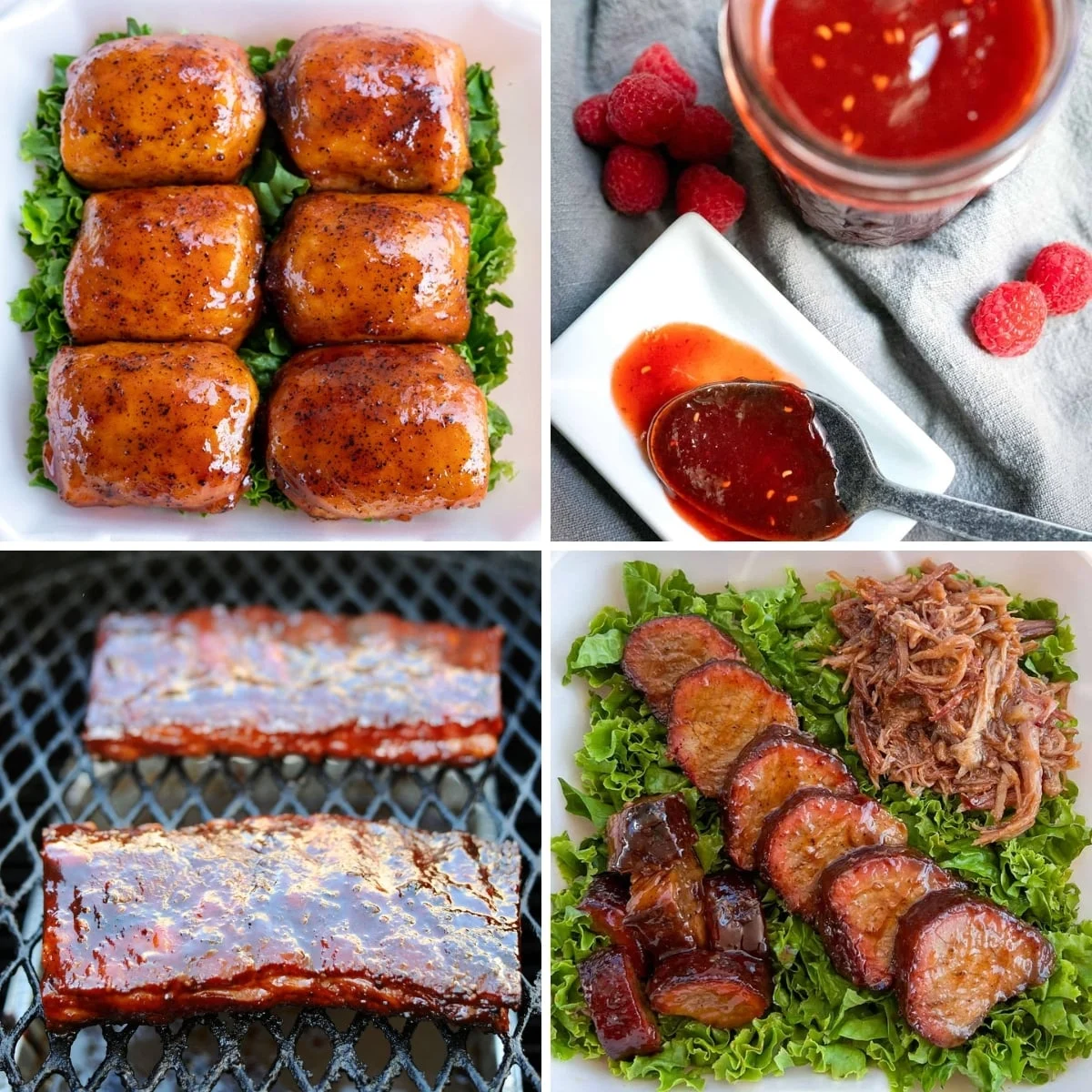
The fifth episode of the current season of Food Network’s Pitmasters marked a significant departure from the series’ established format, pivoting from conceptual and themed challenges to a rigorous examination of traditional barbecue foundations. Known as the Core Four challenge, the episode required contestants to prepare the four pillars of competitive barbecue—chicken, pork ribs, pork shoulder, and beef brisket—under a rolling deadline schedule. This shift in structure placed a premium on technical precision, heat management, and temporal efficiency, moving away from the "Big Burn" and "Flash Burn" formats seen in previous installments. For veterans Susie Bulloch of Hey Grill Hey and Christie Vanover of Girls Can Grill, the episode represented a test of endurance and fundamental skill, complicated further by a sudden localized hailstorm that threatened the thermal stability of their cooking equipment.
The Structural Shift to the Core Four Format
In professional barbecue circuits, such as those sanctioned by the Kansas City Barbeque Society (KCBS), the "Core Four" represents the standard by which all pitmasters are measured. While previous episodes of this season focused on whole-animal cooks, no-meat challenges, and scratch-made sausages, Episode 5 stripped away these variables. The judges—Moe Cason, Jess Pryles, and Andrew—emphasized the "Three Ts": Time, Temperature, and Texture.

The financial stakes were also restructured for this episode. Rather than a winner-take-all prize at the conclusion of a single long-form cook, each of the four rounds offered a $1,000 incentive for the top-scoring team. An additional $3,000 bonus was designated for the team with the highest cumulative score across all four proteins, totaling a potential $7,000 purse for the episode. This incremental reward system forced teams to maintain high-level performance across a grueling eight-to-ten-hour window, as a single failure in one round could jeopardize the overall standing.
Round One: Technical Precision in Poultry
The first protein to be turned in was chicken, a category often considered the most difficult to master due to the disparity in cooking times between white and dark meat and the challenge of achieving "bite-through" skin. Bulloch and Vanover opted for a Smoked Raspberry Chipotle Chicken. To mitigate the risks associated with uneven cooking, the team chose to break down whole birds into component parts—thighs, wings, and legs—rather than smoking the carcass whole. This allowed for greater control over the internal temperature of each cut.
The culinary strategy involved a sweet and smoky profile with a mild heat finish. A notable technical choice was the exclusion of the breast meat from the final presentation, focusing instead on the more forgiving, higher-fat-content dark meat. To add a textural contrast, the team prepared crispy chicken skin as a separate garnish. This decision addressed a common criticism in barbecue competitions regarding rubbery or unrendered fat beneath the skin.

During the resting phase for the chicken, the competition was interrupted by a significant hailstorm. For outdoor cooking operations, precipitation and dropping ambient temperatures can cause rapid fluctuations in smoker internal heat, leading to "stalls" or uneven bark formation. Vanover, drawing on her experience as a former park ranger at Lake Mead, reportedly maintained operational continuity despite the environmental stressors. The judges’ feedback for this round was positive, specifically highlighting the rendered texture of the skin, though the team did not secure the $1,000 round win.
Round Two: The Innovation of the Yuzu Glaze
The second round focused on pork ribs, a category where the balance between "fall-off-the-bone" tenderness and structural integrity is paramount. Bulloch and Vanover utilized a "hot and fast" methodology, a technique that has gained popularity in recent years as an alternative to the traditional "low and slow" six-hour cook. By increasing the smoker temperature, pitmasters can significantly reduce the cooking time to under four hours while still rendering the intramuscular fat.
The team’s flavor profile centered on a sweet yuzu sauce. Yuzu, a Japanese citrus fruit, provides a high-acidity profile that cuts through the heavy fat of the pork rib. While judge Jess Pryles praised the texture as a "perfect competition-style bite," the reception of the flavor profile was divided. Judge Andrew suggested the citrus notes were insufficient, highlighting the subjective nature of flavor balancing in high-stakes judging. Despite the technical success of the cook, the team again fell short of the top spot for the round.

Round Three: The Anatomy of the Money Muscle
The third round involved the pork shoulder, specifically the "Boston Butt." In a competitive context, the focus is often on the "money muscle"—the longissimus dorsi located at the end of the shoulder. This muscle is highly marbled and, when sliced into medallions, provides the most tender and visually appealing portion of the hog.
Bulloch and Vanover presented their pork with a Whiskey Peach BBQ Sauce, a signature profile of the Hey Grill Hey brand. The technical execution of the meat was deemed nearly flawless by the judging panel, with the moisture levels and tenderness meeting the highest standards. However, the entry suffered from a seasoning deficit. The judges noted a lack of salinity, which is critical for enhancing the natural flavors of the smoked pork.
This oversight proved costly, as the team lost the round due to the seasoning imbalance. The reaction from the contestants underscored the high-pressure environment; Bulloch later noted that the intensity of the competition and the marginal nature of the loss were particularly frustrating given the successful texture of the meat.

The Brisket Cliffhanger and Cumulative Scoring
The episode concluded before the results of the fourth and final round—beef brisket—were announced. Brisket is widely regarded as the most challenging of the Core Four due to its size, the presence of two distinct muscles (the point and the flat) with different fat contents, and the long duration required to break down tough connective tissues without drying out the lean meat.
The final results, including the winner of the $3,000 cumulative bonus and the determination of which teams move forward in the tournament, remain pending for the next broadcast. However, the data from the first three rounds suggests a highly competitive field where technical errors in seasoning or slight deviations in flavor preference are the deciding factors between victory and elimination.
Chronology of the Competition: Episode 5
- 08:00 AM: Challenge announcement and transition to the "Core Four" rolling deadline format.
- 11:00 AM: Round 1 (Chicken) deadline. Bulloch/Vanover turn in Raspberry Chipotle Chicken.
- 11:15 AM: Weather Event. A localized hailstorm impacts the cooking site, forcing teams to adjust damper settings and fuel loads to maintain heat.
- 12:30 PM: Round 1 Results. Judges praise the rendered skin; Bulloch/Vanover place in the top tier but do not win the round.
- 01:00 PM: Round 2 (Pork Ribs) deadline. Bulloch/Vanover turn in Hot and Fast Yuzu Ribs.
- 03:00 PM: Round 3 (Pork Shoulder) deadline. Presentation of "Money Muscle" medallions with Whiskey Peach sauce.
- 04:30 PM: Round 3 Results. Feedback identifies a lack of salt; the team loses the round.
- 06:00 PM: Round 4 (Brisket) turn-in and episode conclusion (Results pending).
Impact and Broader Implications for the Barbecue Industry
The appearance of specific professional-grade equipment in this episode, such as the Pitmaster Gloves developed by Bulloch and her husband Todd, reflects the growing intersection between competitive barbecue and the consumer retail market. As these shows gain viewership on platforms like HBO Max and Discovery+, the techniques showcased—such as the "hot and fast" method and the use of global citrus profiles like yuzu—frequently transition into backyard cooking trends.

Furthermore, the emphasis on the "Core Four" reinforces the professionalization of the hobby. By focusing on the foundational proteins, Pitmasters serves as an educational tool for viewers, illustrating the importance of internal temperature over mere cooking time. The hailstorm incident also provided a practical demonstration of "pit management" under duress, a critical skill for any serious outdoor cook.
The episode’s focus on technical perfection over "gimmick" cooking highlights a maturation of the barbecue reality TV genre. While early seasons of various barbecue shows often relied on "mystery ingredients," the current iteration of Pitmasters appears to be leaning toward the "sport" aspect of the craft, where the winner is determined by the mastery of wood, fire, and meat.
As the series moves toward its conclusion, the performance of Bulloch and Vanover serves as a case study in the volatility of professional competition. Despite achieving high marks for texture and temperature—the two most difficult "Ts" to master—the failure to meet the third "T" (Taste/Seasoning) in the pork round demonstrated that in the upper echelons of barbecue, there is no margin for error. The upcoming brisket results will determine if their technical consistency was enough to overcome the seasoning setback and secure a position in the next phase of the tournament.
