


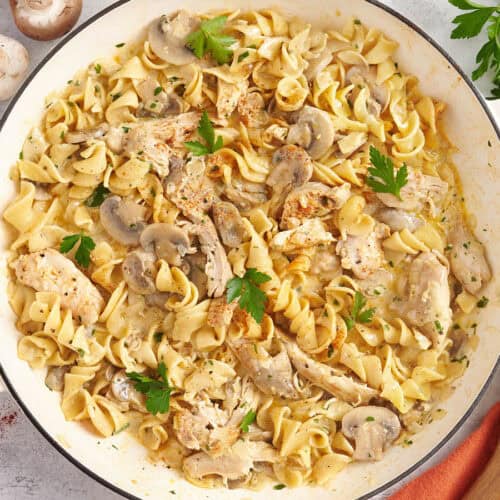
The culinary landscape of the mid-2020s has been increasingly defined by a dual demand for nutritional density and fiscal responsibility, a trend exemplified by the recent release of a refined One-Pot Chicken Stroganoff protocol from the Nashville-based research kitchen at Budget Bytes. This culinary development offers a streamlined, single-vessel preparation of a traditionally complex dish, utilizing chicken thighs, mushrooms, and egg noodles within a cohesive cream-based sauce. Priced at a calculated $8.72 for four servings—averaging approximately $2.18 per portion—the recipe represents a significant departure from the escalating costs associated with traditional beef-based variants. By simmering the pasta directly within the chicken broth, the method eliminates the need for auxiliary boiling, thereby reducing water consumption and post-meal sanitation requirements, all while completing the process within a 40-minute window.

The Evolution of a Russian Classic: From Aristocracy to the Modern Kitchen
To understand the significance of this chicken-based adaptation, one must examine the historical trajectory of Beef Stroganoff. Originating in 19th-century Russia, the dish was reportedly named after Count Pavel Stroganov. The original iteration featured sautéed beef cubes in a refined sauce of mustard and bouillon, finished with a small amount of Russian sour cream (smetana). As the recipe migrated to the United States in the mid-20th century, it underwent a transformation into a household staple, often utilizing ground beef and canned mushroom soups to accommodate the suburban "casserole culture" of the 1950s and 60s.
The transition from beef to chicken thighs in contemporary recipes is not merely a matter of taste but a strategic response to market volatility. According to recent data from the Bureau of Labor Statistics’ Consumer Price Index (CPI), the cost of beef has seen disproportionate increases compared to poultry over the last fiscal cycle. By substituting expensive cuts like sirloin or even standard ground beef with chicken thighs, home cooks can achieve a similar protein profile while maintaining a lower price point. The Nashville Test Kitchen’s decision to utilize thighs specifically addresses the technical requirements of one-pot cooking; the higher fat content and connective tissue in dark meat allow the protein to remain succulent during the extended simmering process required to cook the egg noodles.

Economic Drivers and the Shift Toward Poultry-Based Comfort Food
The fiscal efficiency of the One-Pot Chicken Stroganoff is rooted in its reliance on "pantry staples" and high-yield, low-cost vegetables. The primary ingredients—onions, garlic, mushrooms, and egg noodles—represent some of the most stable commodities in the retail grocery sector. Research into consumer behavior suggests that "one-pot" meals have seen a 15% increase in search engine volume year-over-year, as households seek to mitigate the "time-poverty" associated with modern labor structures.
The $2.18 per serving cost is achieved through several deliberate sourcing strategies. First, the use of white button mushrooms or cremini mushrooms provides a high-umami profile at a fraction of the cost of exotic fungi. Second, the reliance on bouillon concentrates, such as the Better Than Bouillon brand mentioned by the Nashville researchers, significantly reduces the cost-per-liter of cooking liquid compared to pre-packaged cartons of broth. Finally, the "value pack" strategy for chicken thighs—buying in bulk and freezing individual portions—allows for a lower price-per-pound, a common tactic in modern "budget-hacking" communities.
Technical Methodology: The One-Pot Culinary Process
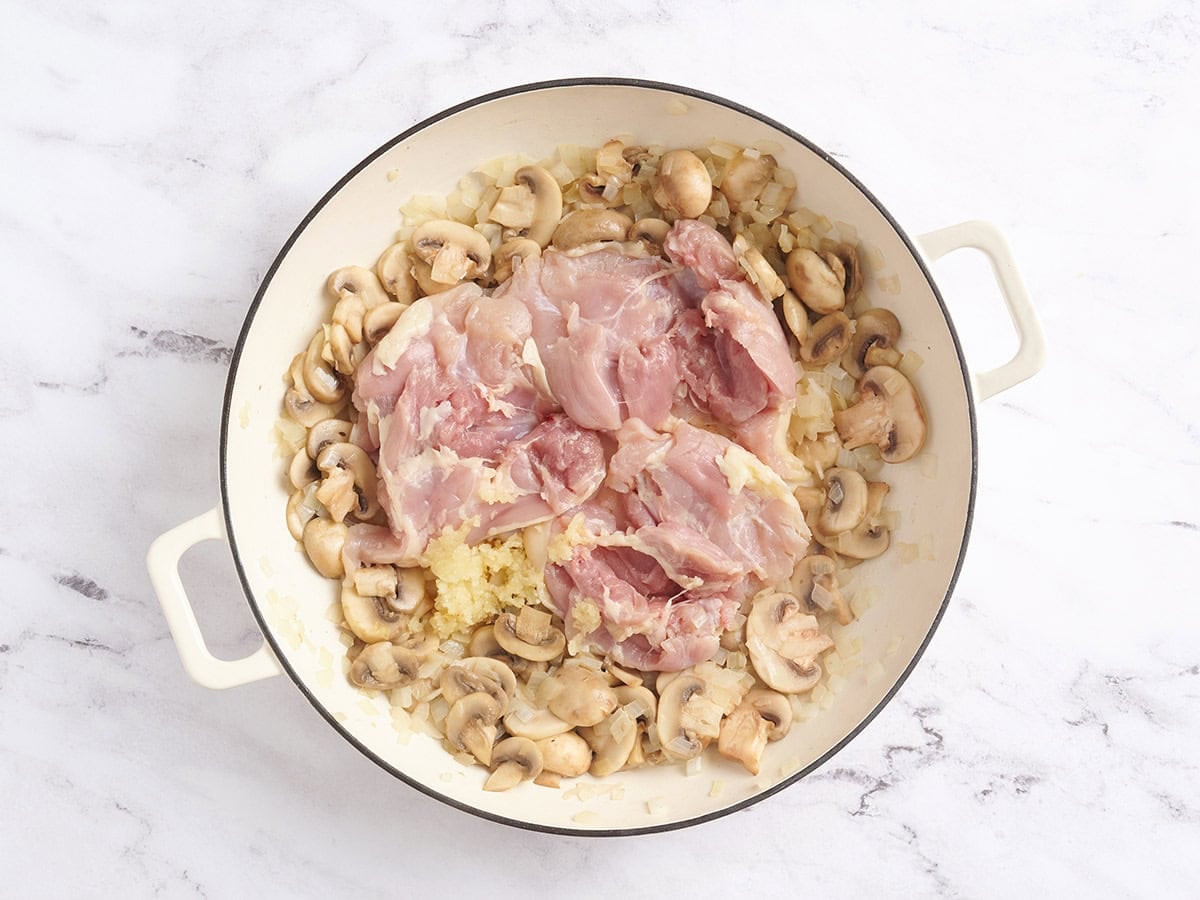
The preparation of the dish follows a specific chronological sequence designed to maximize flavor extraction through the Maillard reaction while ensuring the structural integrity of the pasta. The process begins with the softening of aromatics—specifically diced yellow onions—in butter over medium heat. This creates a flavor base before the introduction of sliced mushrooms.
A critical technical step involves searing the chicken thighs. By pushing the vegetables to the periphery and placing the thighs smooth-side down in the center of the skillet, the cook achieves deep browning. This browning, or fond, is later deglazed when the chicken broth is added, integrating the caramelized proteins back into the sauce. The timeline for this phase is approximately 12 to 16 minutes of total searing time, ensuring the chicken develops a robust crust before the liquid phase begins.

The integration of 8 ounces of extra-wide egg noodles directly into the two cups of broth represents a departure from traditional pasta preparation. In this method, the noodles act as a natural thickener; as they release starch into the simmering broth, the liquid transforms into a velvety sauce. This requires a precise ratio of liquid to solid to ensure the noodles reach an al dente state without the dish becoming either soup-like or excessively dry. The Nashville Test Kitchen specifies a 15-minute simmer under a tight-fitting lid, utilizing trapped steam to cook the noodles that are not fully submerged.
Nutritional Profiles and Ingredient Optimization
From a nutritional standpoint, the One-Pot Chicken Stroganoff offers a balanced distribution of macronutrients suitable for a standard adult diet. According to the data provided by the Nashville facility, one serving contains:

- Calories: 470 kcal
- Protein: 33g
- Carbohydrates: 46g
- Fat: 17g
- Sodium: 618mg
- Fiber: 3g
The protein content, primarily derived from the chicken thighs and egg noodles, fulfills approximately 66% of the recommended daily value for an average adult, making it a highly satiating meal. The moderate fat content is balanced by the inclusion of sour cream, which provides the signature tang of a stroganoff. To prevent curdling—a common failure in cream-based sauces—the technical instructions mandate that the sour cream be folded in only after the heat source has been deactivated. This preserves the emulsion and ensures a smooth aesthetic finish.
Strategic Household Management: The Role of Freezer Inventories
A broader implication of this recipe release is its emphasis on "freezer inventory management" as a tool for economic stability. The Nashville researchers advocate for a monthly "freezer purge," a practice that aligns with zero-waste culinary movements. By freezing chicken thighs flat in labeled bags, consumers can reduce food spoilage and avoid impulse purchases at the grocery store.

This systemic approach to cooking reflects a growing trend in "domestic engineering," where the kitchen is managed with the efficiency of a small business. The ability to produce a high-quality, culturally resonant meal like stroganoff using only what is "on hand" reduces the cognitive load on the household manager. The inclusion of fresh parsley and Dijon mustard provides the necessary acidity and brightness to elevate the basic ingredients, proving that "budget" cooking does not necessitate a sacrifice in gastronomic complexity.
Official Standards and Testing Protocols
The Nashville Test Kitchen, where this recipe was finalized, operates under rigorous testing standards to ensure replicability across various kitchen environments. This involves testing recipes with different heat sources (gas vs. electric) and varying qualities of cookware. The recommendation to use extra-wide egg noodles, for instance, was the result of comparative testing; thinner noodles were found to lose their texture during the one-pot simmering process, whereas the wider variety maintained a desirable "bite."

Furthermore, the cautionary notes regarding salt intake highlight a professional commitment to public health. Because different brands of bouillon and chicken broth contain varying levels of sodium, the researchers suggest a "taste-and-adjust" policy rather than a fixed salt measurement. This level of detail ensures that the final product is accessible to individuals with different dietary requirements or sensitivities.
Long-Term Impact on Home Economics and Sustainable Consumption
The release of the One-Pot Chicken Stroganoff protocol is more than a simple culinary update; it is an artifact of a changing economic era. As inflation continues to pressure household budgets, the shift toward "one-pot" and "poultry-swap" recipes is expected to accelerate. By providing a blueprint that costs less than $2.50 per serving, organizations like Budget Bytes are effectively democratizing access to "comfort food" that was previously seen as more expensive.
Moreover, the reduction in energy usage—achieved by using a single burner for 40 minutes rather than multiple burners for various pots—contributes to a more sustainable model of home cooking. When scaled across thousands of households, these small efficiencies in water and gas/electricity usage represent a meaningful reduction in the domestic carbon footprint.
In conclusion, the One-Pot Chicken Stroganoff stands as a testament to the power of thoughtful recipe engineering. It successfully navigates the constraints of time, money, and labor, offering a solution that is as practically sound as it is culinarily satisfying. As home cooks continue to adapt to the realities of the 21st-century economy, such versatile and cost-effective protocols will likely become the cornerstone of the modern American diet.
