

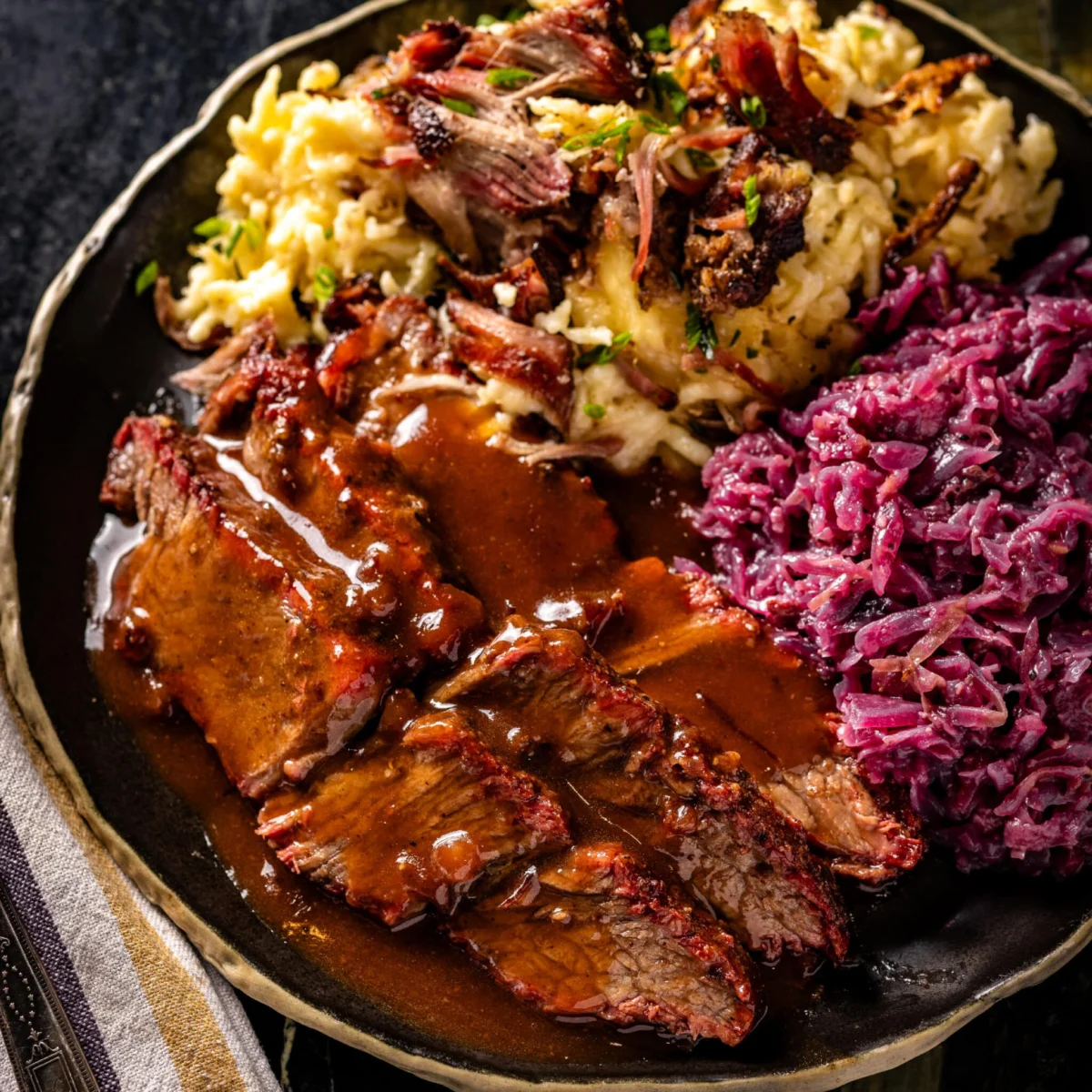
The culinary landscape of contemporary American barbecue continues to expand through the integration of international traditions, as evidenced by the recent emergence of smoked sauerbraten as a centerpiece for autumnal festivities and backyard gatherings. This dish, popularized by barbecue expert Susie Bulloch of the "Hey Grill Hey" platform, represents a sophisticated technical marriage between the centuries-old German tradition of vinegar-marinated pot roast and the low-and-slow wood-smoke methods synonymous with American pitmastery. Developed in collaboration with Sophie Sadler of Dirndl Kitchen, the recipe adapts the labor-intensive requirements of German "sour roast" for the modern pellet grill and offset smoker, providing a culinary bridge between European heritage and the burgeoning outdoor cooking industry.
The Historical and Cultural Origins of Sauerbraten
Sauerbraten is widely regarded as one of Germany’s national dishes, with roots tracing back to the 9th century. Historical accounts suggest that Charlemagne, the King of the Franks, may have been instrumental in the dish’s early popularity as a means of preserving surplus meat. Traditionally, the recipe utilized tougher cuts of meat—historically horse meat, though contemporary versions almost exclusively use beef—which required extensive marination in an acidic solution of vinegar, wine, and aromatic spices. This process, which can last anywhere from three to ten days, serves a dual purpose: it acts as a preservative and a tenderizing agent, breaking down the dense connective tissues found in cuts like the bottom round or chuck roast.

The regional variations of sauerbraten across Germany reflect the local agricultural outputs of the Rhineland, Franconia, and Bavaria. For instance, the Rheinischer Sauerbraten is noted for its inclusion of raisins and gingersnaps in the gravy to provide a sweet counterpoint to the vinegar’s acidity. In the context of American barbecue, the introduction of smoke adds a third dimension—umami and wood-fired depth—that traditional oven-braised versions lack.
Technical Analysis of the Smoked Sauerbraten Process
The execution of smoked sauerbraten involves a multi-stage chronology that requires precision in temperature control and chemical interaction. The process is divided into four distinct phases: marination, smoking, braising, and the reduction of the gravy.
Phase I: The Marinade and Acidic Denaturation
The foundational element of the dish is a red wine and vinegar-based marinade. The acidity, typically derived from a combination of red wine vinegar and dry red wine, initiates the denaturation of proteins. According to culinary science, the acetic acid in the vinegar penetrates the muscle fibers, allowing the meat to retain more moisture during the long cooking process. Aromatic additions, including cloves, bay leaves, peppercorns, and juniper berries, infuse the beef with a characteristic "warm spice" profile that is synonymous with German cuisine. Unlike traditional barbecue rubs that rely heavily on sugar and salt, the sauerbraten marinade focuses on botanical depth.

Phase II: The Initial Smoke Session
Once the marination period is complete, the beef is seasoned with a signature beef rub—typically a blend of salt, pepper, garlic, and onion powder—and placed in a smoker. The objective of this phase is not to cook the meat to completion but to develop a "bark" (a mahogany-colored crust) and to allow the meat to absorb volatile smoke compounds. Hardwoods such as oak, hickory, or fruitwoods like cherry are frequently recommended to complement the robust flavors of the red wine marinade. The meat is typically smoked at a temperature of 225°F (107°C) until it reaches an internal temperature that signifies the surface is sufficiently set.
Phase III: The Braise and Collagen Conversion
Following the smoke session, the beef is transitioned into a braising liquid, often consisting of the strained marinade and beef stock. This "braise-in-smoke" technique is critical for sauerbraten. While the smoke provides flavor, the moist heat of the braise is what transforms the tough roast into a "fall-apart" tender product. During this stage, which occurs at temperatures between 250°F and 300°F, the collagen within the beef converts into gelatin. This transformation is what gives the meat its silky mouthfeel and prevents the dryness often associated with leaner cuts of beef.
Phase IV: Gravy Synthesis
The final technical hurdle is the creation of the gravy. The braising liquid, now enriched with rendered beef fat and smoke particles, is strained and thickened. In a nod to the Rhineland tradition, crushed gingersnaps or a flour-based roux are used to achieve the desired viscosity. The resulting sauce is a complex reduction that balances the acidity of the vinegar with the richness of the beef and the bitterness of the wood smoke.

Nutritional Data and Quantitative Analysis
The nutritional profile of smoked sauerbraten reflects its status as a high-protein, calorie-dense comfort food. Based on standardized recipe analysis for a six-serving yield, the dish provides approximately 619 calories per serving.
The macronutrient breakdown is as follows:
- Protein: 47g per serving, making it a significant source of amino acids.
- Total Fat: 28g, with 12g of saturated fat, largely dependent on the marbling of the beef cut selected.
- Carbohydrates: 29g, primarily derived from the sugars in the wine and the starches used in the gravy thickening process.
- Sodium: 4,368mg, a high figure that results from the combination of the brine-like marinade and the commercial beef rubs used during the smoking phase.
- Micronutrients: The dish is a notable source of Vitamin A (3549 IU) and Iron (7mg), reflecting the nutrient density of slow-cooked bovine muscle and the botanical inclusions in the braise.
Industry Implications: The Rise of Global BBQ
The emergence of recipes like smoked sauerbraten highlights a significant trend within the outdoor cooking industry: the "Global BBQ" movement. Market analysts observe that as the sale of pellet grills and ceramic smokers has surged over the last decade, consumers are moving beyond standard fare like brisket and pork shoulder. There is a growing demand for recipes that utilize the smoker as a versatile outdoor oven capable of producing traditional ethnic dishes.

Susie Bulloch’s adaptation of this German classic serves as a case study in how digital platforms are influencing home cooking habits. By simplifying the "Taste Test Todd" approved flavors for a wider audience, Bulloch and her collaborator Sophie Sadler are effectively preserving cultural heritage while modernizing the method of preparation. This trend has implications for spice and rub manufacturers, who are now seeing increased interest in "specialty" rubs that cater to specific regional profiles rather than one-size-fits-all barbecue seasonings.
Serving Suggestions and Cultural Context
To maintain the authenticity of the Oktoberfest experience, smoked sauerbraten is traditionally served alongside specific German side dishes. These include:
- Rotkohl (Sweet and Sour Red Cabbage): The acidity of the cabbage complements the richness of the smoked beef.
- Käsespätzle (Cheese Noodles): A hearty, dumpling-like pasta that serves as a vehicle for the rich sauerbraten gravy.
- Kartoffelklöße (Potato Dumplings): These starch-heavy sides are designed to absorb the braising liquid, ensuring no part of the flavorful reduction is wasted.
The dish is often presented at "backyard biergartens," a social phenomenon where American homeowners recreate the atmosphere of Munich’s beer halls. This cultural synthesis is particularly prevalent during the months of September and October, coinciding with the official Oktoberfest dates in Germany.

Expert Recommendations and Practical Application
Culinary experts suggest that for those attempting smoked sauerbraten for the first time, patience is the most critical ingredient. The transition from the marinade to the smoker requires the meat to be patted completely dry to ensure proper bark formation; moisture on the surface of the meat can lead to "steaming" rather than smoking, which prevents the Maillard reaction.
Furthermore, the choice of beef is paramount. While premium cuts like ribeye are unnecessary due to the long cooking time, a well-marbled chuck roast is often preferred over the leaner bottom round to ensure the final product remains succulent. Internal temperature monitoring via a digital meat thermometer is recommended, with a target "probe tender" feel usually occurring between 200°F and 205°F (93°C to 96°C).
Conclusion
Smoked sauerbraten represents more than just a meal; it is a testament to the evolving nature of culinary traditions in a globalized world. By applying the principles of American wood-fire cooking to a staple of German gastronomy, pitmasters are creating a new category of "comfort BBQ" that honors the past while embracing modern technology. As the popularity of this dish grows, it is likely to become a permanent fixture in the repertoire of outdoor cooks seeking to bring a taste of the Old World to their own backyards. Through the collaborative efforts of experts like Susie Bulloch and Sophie Sadler, the complex flavors of the German biergarten remain accessible, flavorful, and deeply rooted in the communal spirit of barbecue.
