

The 2022 literary landscape was defined by a profound shift toward narratives of healing, the reclamation of suppressed histories, and a rigorous examination of the human sensory experience. Following a period of global upheaval, the year’s most significant publications moved beyond mere escapism, offering readers deep dives into the science of sound, the intricacies of intergenerational trauma, and the preservation of culinary traditions under threat. Among the most notable contributions to this year’s discourse is a curated selection that bridges the gap between personal struggle and universal truth, often reflecting the unique perspectives of authors living with chronic illness or navigating post-colonial identities.
Culinary Traditions and the Science of Preservation
In the realm of culinary literature, 2022 saw a move toward "encyclopedic" storytelling, where recipes serve as the foundation for broader cultural and historical explorations. Naomi Duguid’s The Miracle of Salt: Recipes and Techniques to Preserve, Ferment, and Transform Your Food emerged as a cornerstone text. Duguid, a multiple James Beard Award winner, utilizes salt as a lens through which to view human civilization. The book documents how fermentation and brining have not only preserved food but have shaped global trade and survival strategies for millennia. For readers with restrictive dietary needs or immune sensitivities, the text serves as an educational resource on the chemical transformations inherent in food preparation.
Simultaneously, the focus on South Asian regional cuisines gained momentum with the release of Rambutan: Recipes from Sri Lanka by Cynthia Shanmugalingam and On the Himalayan Trail: Recipes and Stories from Kashmir to Ladakh by Romy Gill. Shanmugalingam’s work is particularly significant as Sri Lankan cuisine has historically been overshadowed by the broader Indian culinary market in Western contexts. Her book utilizes photography and narrative to present a vibrant picture of a nation’s flavors.

Romy Gill’s contribution, focusing on the volatile regions of Kashmir and Ladakh, carries a heavier geopolitical weight. With over 80 recipes, Gill documents the culinary heritage of an area where political instability threatens the continuity of oral and domestic traditions. Industry analysts note that such "culinary preservation" books are becoming increasingly vital as global conflict and climate change disrupt traditional foodways.
Fiction and the Reimagining of Historical Narratives
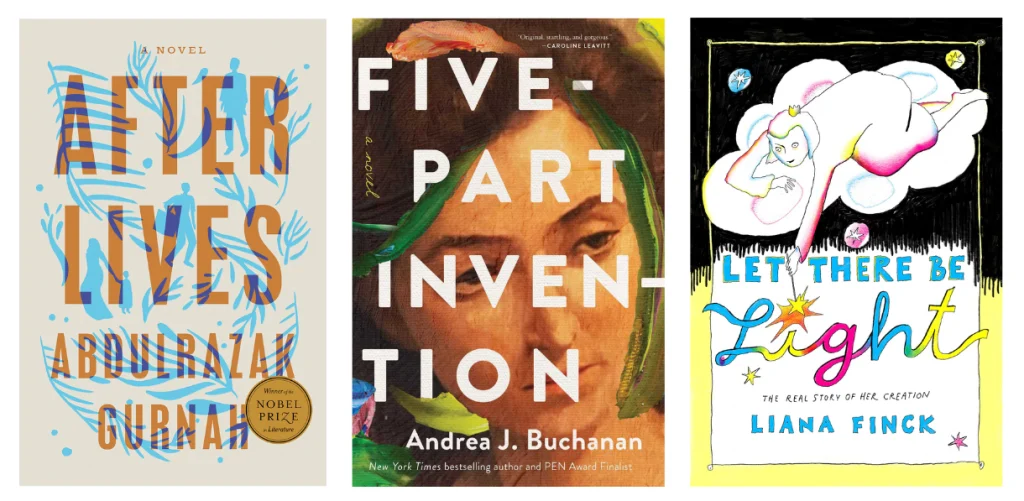
The 2022 fiction market was characterized by a sophisticated blending of personal history and social commentary. Afterlives by Abdulrazak Gurnah, though initially released in 2020, saw its North American paperback debut this year, bringing the 2021 Nobel Laureate’s work to a wider audience. The novel provides a critical examination of German colonial rule in East Africa, tracing the lifelong impact of displacement on four protagonists in what is now Tanzania. Gurnah’s narrative is a stark reminder of the long-term psychological scars left by European expansionism.
In a different vein of historical reimagining, Andrea J. Buchanan’s Five-Part Invention explores the concept of inherited trauma through five generations of women. Buchanan, an established voice in the chronic illness community due to her own experiences with spinal cerebrospinal fluid (CSF) leaks, uses fiction to articulate how physical and emotional pain can be transmitted through family lineages.
Additionally, Liana Finck’s Let There Be Light: The Real Story of Her Creation provided a subversive, illustrated retelling of the Book of Genesis. By portraying God as a female figure and placing biblical patriarchs in modern New York City, Finck’s work reflects a broader 2022 trend of deconstructing religious and cultural myths through a contemporary, often irreverent, lens.

Nonfiction and the Investigation of Hidden Realms
The year’s nonfiction was dominated by authors who translated complex scientific and historical data into compelling narratives. Ed Yong, a Pulitzer Prize-winning science journalist, released An Immense World: How Animal Senses Reveal the Hidden Realms Around Us. Yong’s work is grounded in the concept of "Umwelt"—the unique sensory world experienced by different organisms. By exploring how animals utilize ultrasound, magnetic fields, and vibration, Yong challenges the anthropocentric view of reality, suggesting that human perception is merely one of many valid ways to interact with the environment.
In the sphere of historical investigation, Candice Millard’s River of the Gods re-examines the 19th-century search for the source of the Nile. While historical accounts have traditionally focused on the rivalry between Richard Burton and John Hanning Speke, Millard brings to the fore the story of Sidi Mubarak Bombay. Bombay, an enslaved man who became a pivotal explorer, is credited by modern historians as the essential factor in the expedition’s survival. Millard’s use of primary sources—diaries and letters—serves to correct the colonial bias inherent in previous records of African exploration.
Sociological shifts were also addressed in David McRaney’s How Minds Change: The Surprising Science of Belief, Opinion, and Persuasion. In an era characterized by extreme political polarization and the proliferation of conspiracy theories, McRaney’s research into the neurology of persuasion offers a framework for constructive dialogue. The text posits that belief change is a process of self-persuasion facilitated by empathy and rapport rather than the aggressive presentation of facts.
Health, Trauma, and the Paradigm of Chronic Illness
A significant portion of the 2022 literary output focused on the intersection of biology and environment, particularly regarding chronic illness and trauma. Dr. Gabor Maté’s The Myth of Normal: Trauma, Illness, and Healing in a Toxic Culture, co-authored with his son Daniel, became a seminal text in this category. Maté argues that Western medicine’s failure to account for the "biopsychosocial" nature of health has led to an epidemic of chronic conditions. He distinguishes between "Big T" trauma (catastrophic events) and "small t" trauma (developmental disruptions), suggesting that the latter often acts as an epigenetic trigger for autoimmune and mental health disorders.

Complementing Maté’s research, Meghan O’Rourke’s The Invisible Kingdom: Reimagining Chronic Illness provides a firsthand account of navigating the medical system as a patient with Ehlers-Danlos Syndrome (EDS). O’Rourke’s investigation is particularly timely given the rise of "Long COVID," which has forced the medical establishment to reckon with post-viral syndromes and poorly understood autoimmune responses. Her work has been praised by medical professionals for its articulation of the "marginalization" experienced by those with invisible disabilities.
The theme of resilience was further explored in Mike Mariani’s What Doesn’t Kill Us Makes Us: Who We Become After Tragedy and Trauma. Mariani challenges the cliché of "resilience as a return to the status quo," arguing instead for amor fati—a love of one’s fate. Through a series of case studies involving catastrophic life changes, Mariani illustrates that the goal of recovery is not to "get back on the horse" but to integrate the tragedy into a new, transformed identity.
Broader Impact and Global Implications
The 2022 book selections reflect a society in a state of "post-traumatic growth." From the poetic ruminations of Yung Pueblo in Lighter to the activist prose of Alice Wong in Year of the Tiger, the literature of the year suggests a collective desire for authenticity and systemic change. Wong’s work, in particular, serves as a manifesto for disability rights, utilizing a collage of interviews and essays to highlight the "ableism" baked into modern infrastructure.
Furthermore, the popularity of books like Susan Cain’s Bittersweet: How Sorrow and Longing Make Us Whole indicates a shift in the self-help industry. Moving away from "toxic positivity," authors are now encouraging the embrace of melancholy and longing as essential components of the human experience. Cain’s research suggests that acknowledging grief is a prerequisite for genuine connection and innovation.

As the publishing industry moves into the mid-2020s, the influence of 2022’s key titles remains evident. The emphasis on intergenerational reconciliation, as seen in Maud Newton’s Ancestor Trouble, and the search for beauty in the mundane, as articulated in Ella Francis Sanders’ Everything, Beautiful, continues to shape the cultural zeitgeist. These works collectively suggest that while the challenges of the modern era—be they medical, political, or environmental—are immense, the capacity for narrative to provide clarity and foster empathy remains a powerful tool for global resilience.
The synthesis of these diverse genres—food, fiction, science, and memoir—highlights a year where readers sought not just information, but a deeper understanding of their place in an increasingly complex world. Whether through the science of salt or the retelling of ancient myths, the 2022 literary catalog stands as a testament to the enduring power of the written word to document, preserve, and transform the human condition.
