

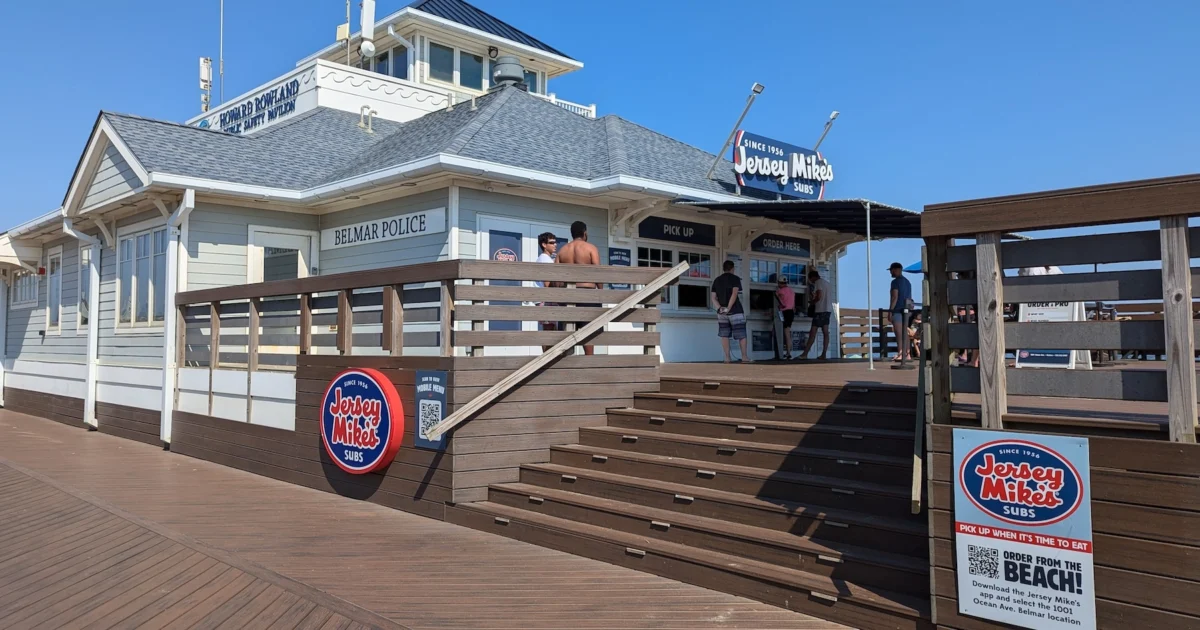
Jersey Mike’s, a prominent name in the fast-casual sandwich segment, has officially transitioned to a publicly traded company, marking a significant milestone less than two years after its acquisition by private equity giant Blackstone. The sandwich chain priced its initial public offering (IPO) at $23 per share, successfully raising approximately $1 billion and achieving a substantial valuation of $7.3 billion. The shares are slated to commence trading on the New York Stock Exchange under the ticker symbol JMKE, beginning Thursday morning.
This move signifies a rapid and successful exit strategy for Blackstone, which acquired Jersey Mike’s in January 2025 for $6.3 billion. The IPO underscores the substantial growth and investor confidence in the brand, which has carved out a strong niche in a highly competitive market.
A Meteoric Rise: From Local Shop to Public Giant
The story of Jersey Mike’s is one of entrepreneurial vision and strategic expansion. Founded by Peter Cancro, the chain’s origins trace back to a single, small sub shop purchased by Cancro at the tender age of 17 with a loan secured from his high school football coach. This humble beginning laid the foundation for what would become a national powerhouse in the sandwich industry. Cancro served as the sole CEO for decades, meticulously guiding the brand’s growth and establishing its reputation for fresh, high-quality ingredients and a commitment to customer service.
The sale to Blackstone marked a pivotal moment in the company’s history, injecting capital and strategic expertise to accelerate expansion. Under Blackstone’s ownership, Jersey Mike’s has continued its aggressive growth trajectory, a testament to the brand’s inherent strength and the private equity firm’s operational acumen. The decision to go public now suggests that the company has reached a critical inflection point, ready to leverage public markets for further capital infusion and increased visibility.
Blackstone’s Swift Turnaround and IPO Strategy
Blackstone’s acquisition of Jersey Mike’s in January 2025 was a significant transaction, valued at $6.3 billion. The private equity firm’s strategy typically involves acquiring companies, implementing operational improvements, and then exiting through a sale or an IPO within a defined timeframe. The swiftness of this IPO, occurring less than two years after the acquisition, highlights the effectiveness of Blackstone’s approach and the rapid value creation they were able to achieve.
Sources close to the deal suggest that Blackstone saw a clear path to enhancing Jersey Mike’s operational efficiency, supply chain management, and marketing strategies. By streamlining operations and further solidifying the franchise model, they were able to significantly boost the company’s profitability and market positioning, making it an attractive prospect for public investors. The IPO price of $23 per share, well oversubscribed earlier in the week, reflects a strong demand from institutional and retail investors eager to participate in the brand’s future growth.
Leadership and Vision for the Future
The leadership team at Jersey Mike’s has been instrumental in its success. Peter Cancro, the visionary founder, remains an integral part of the company. While he transitioned from the CEO role prior to the IPO, he retains a significant stake as a shareholder and continues to serve as the master franchise operator for the United Kingdom and Ireland. Cancro expressed optimism about the international expansion, identifying a target of establishing 300 units in these markets as a starting point. His deep understanding of the brand and unwavering passion are expected to continue influencing its strategic direction.
Blackstone further bolstered the leadership team by appointing Charlie Morrison as CEO last year. Morrison is a seasoned executive with a proven track record in the restaurant industry, notably taking Wingstop public in 2015. His experience in navigating the complexities of an IPO and scaling restaurant brands is invaluable as Jersey Mike’s embarks on its journey as a public entity. Morrison’s leadership is expected to guide the company through its next phase of growth, focusing on both domestic and international expansion.
Robust Financials and Ambitious Expansion Plans
Jersey Mike’s boasts impressive financial metrics that have undoubtedly contributed to the strong investor interest in its IPO. As of the end of the first quarter, the chain operated approximately 3,300 units, with the vast majority being franchised locations across the U.S. and Canada. The company reported system-wide sales of $4.3 billion.
A key differentiator for Jersey Mike’s is its exceptional average unit volume (AUV), which stands at $1.4 million. This figure is nearly triple that of its major competitor, Subway, underscoring the brand’s ability to drive higher sales per location. This strong performance is attributed to factors such as product quality, customer loyalty, and effective franchise operations.
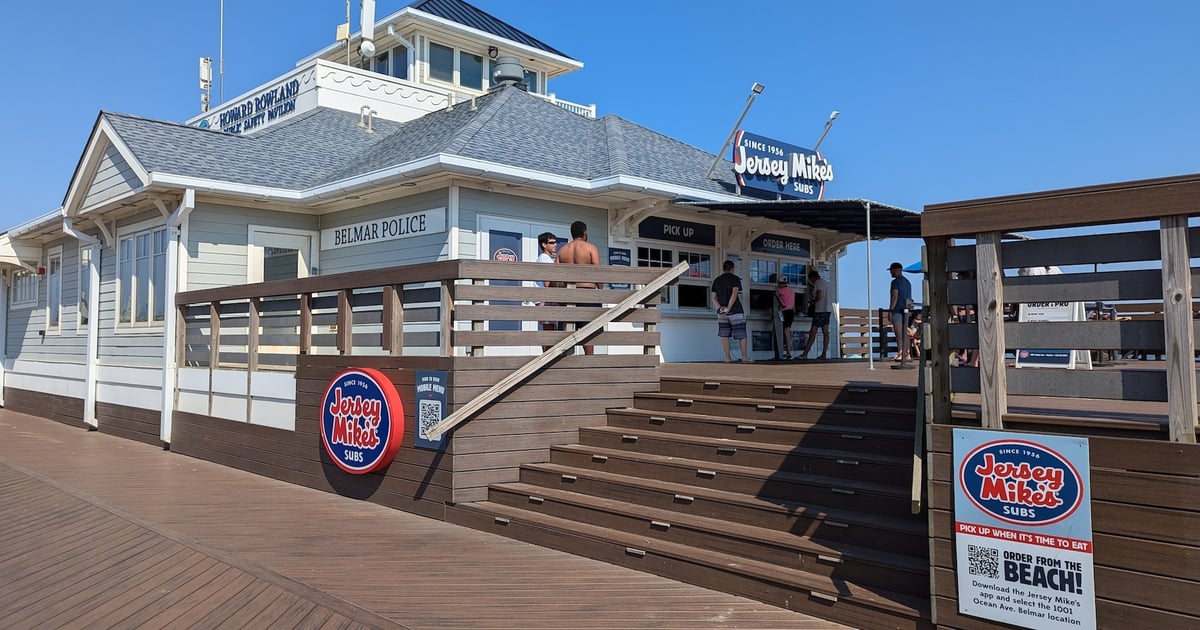
Looking ahead, Jersey Mike’s has outlined ambitious expansion plans. In its filings with the U.S. Securities and Exchange Commission (SEC), the company indicated its strategic vision for growth, targeting a total of 7,500 units domestically and an additional 7,500 units globally. This aspirational goal of 15,000 locations worldwide signifies a long-term commitment to becoming a dominant player in the global sandwich market. This projected expansion is likely to be fueled by the capital raised through the IPO, as well as continued franchise development.
Market Context and Competitive Landscape
The fast-casual sandwich market is characterized by intense competition, with numerous established brands and emerging players vying for consumer attention. Jersey Mike’s has differentiated itself through its focus on "Mike’s Way," a signature preparation style that emphasizes fresh ingredients, premium meats, and a commitment to quality. This has resonated with a growing segment of consumers who are seeking healthier and more customizable dining options.
The success of Jersey Mike’s also provides a compelling case study in the effectiveness of the franchise model when coupled with strong brand identity and operational support. The high AUV achieved by its franchisees suggests a profitable unit economics, which is a crucial factor in attracting and retaining franchise partners.
The comparison with Subway is particularly noteworthy. While Subway remains the largest sandwich chain globally by unit count, Jersey Mike’s higher AUV suggests a different customer proposition and potentially a more premium positioning. The significant difference in sales per unit could reflect varying strategies in menu innovation, marketing, and store-level operations.
Analyst Perspectives and Investor Outlook
While direct analyst commentary on this specific IPO will emerge in the coming days and weeks, the general sentiment around well-performing fast-casual brands in the public market has been positive. Investors are often attracted to companies with demonstrated unit growth, strong same-store sales, and clear pathways for future expansion.
The IPO of Jersey Mike’s is expected to provide greater liquidity for its existing shareholders, including Blackstone, and offer public investors an opportunity to invest in a brand with a proven track record. The company’s ability to continue executing its growth strategy, manage franchise relationships effectively, and adapt to evolving consumer preferences will be key determinants of its long-term success as a public company.
Broader Implications for the Restaurant Industry
The successful IPO of Jersey Mike’s has several broader implications for the restaurant industry. Firstly, it signals continued investor appetite for well-established, growth-oriented restaurant concepts. For private equity firms, it reinforces the viability of acquiring and scaling brands before taking them public.
Secondly, it highlights the enduring appeal of the fast-casual segment. As consumers increasingly prioritize quality, convenience, and customization, brands that can effectively deliver on these fronts are well-positioned for sustained growth.
Finally, the ambitious global expansion plans of Jersey Mike’s suggest a growing trend of U.S. restaurant brands seeking international markets for growth. This can be driven by saturation in domestic markets or the pursuit of new consumer bases.
The journey of Jersey Mike’s from a single sub shop to a publicly traded entity is a testament to strategic vision, operational excellence, and a deep understanding of consumer demand. As it navigates the public markets, the company’s ability to maintain its brand integrity while executing its ambitious growth agenda will be closely watched by investors, competitors, and consumers alike.
