

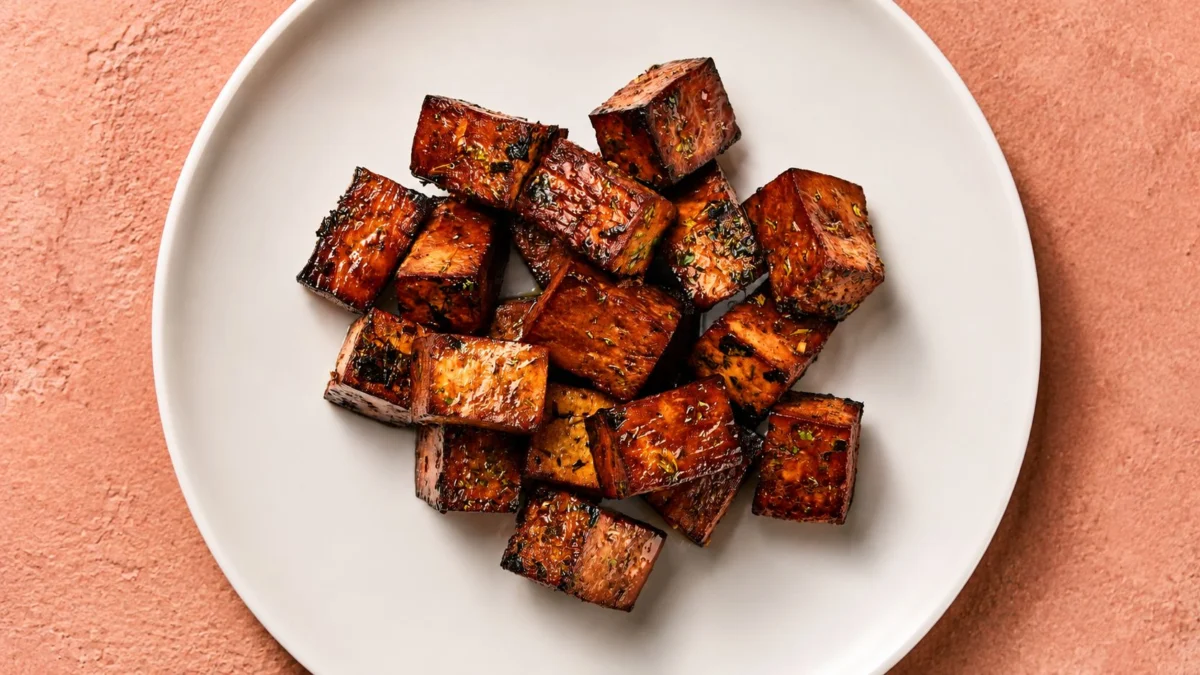
For over two decades, a distinctive balsamic-soy marinated tofu has stood as an unlikely yet beloved fixture on the menu at Carlucci’s Italian bakery in Salt Lake City. This dish, celebrated for its deeply savory flavor profile, achieves a remarkable culinary balance: richly caramelized on the exterior while maintaining a creamy, tender interior. Its enduring presence and widespread acclaim underscore a quiet revolution in local dining preferences and the increasing versatility of plant-based ingredients within diverse culinary landscapes.
The secret to this celebrated tofu lies in its unique marinade, a blend where the umami-rich depth of soy sauce penetrates the tofu to its core, complemented by the acidic tang, inherent richness, and subtle sweetness of balsamic vinaigrette. This combination transforms humble tofu cubes into a flavorful component ideal for a variety of applications, from hearty sandwiches and fresh salads to robust grain bowls and noodle dishes. Its consistent popularity at an establishment primarily known for Italian baked goods speaks volumes about its cross-cultural appeal and the evolving tastes of the consumer base.
The Genesis of a Culinary Icon
The balsamic-soy tofu’s journey to menu staple began more than twenty years ago, a period when vegetarian and vegan options were far less ubiquitous, particularly in traditional Italian bakeries. While the exact genesis remains part of Carlucci’s lore, its introduction marked a prescient move by owner and head baker Therese Martin. It demonstrated an early recognition of the growing demand for plant-forward choices, even before the mainstream surge in plant-based dining.
The dish quickly garnered a loyal following, establishing itself not merely as an alternative, but as a destination item. Its flagship presentation, a generously sized baguette sandwich featuring the baked tofu draped in melted mozzarella, accompanied by fresh sprouts, lettuce, onion, cucumber, and tomato, became particularly iconic. This sandwich exemplifies how a well-executed plant-based component can elevate a simple offering into a highly sought-after culinary experience, transcending dietary preferences.
Unpacking the Flavor Profile and Culinary Science

The success of Carlucci’s tofu is rooted in a thoughtful application of culinary principles. The marinade’s core components – garlic, soy sauce, and balsamic vinaigrette – each play a crucial role. Garlic provides a pungent, aromatic foundation. Soy sauce delivers a powerful umami punch, a savory depth that is fundamental to many Asian cuisines and increasingly appreciated across global palates. This rich, savory element is critical for flavoring tofu, which, due to its mild intrinsic taste, serves as an excellent canvas for absorbing external flavors.
Balsamic vinaigrette, a cornerstone of Italian culinary tradition, introduces complexity. Its characteristic acidity cuts through the richness, brightening the overall flavor. The balsamic’s inherent sweetness, derived from concentrated grape must, contributes to the caramelization process during baking, creating the coveted browned and slightly crisp exterior. Furthermore, the oils in the vinaigrette aid in moisture retention and heat transfer, ensuring the tofu remains tender inside while developing a desirable crust.
The extended marination period practiced by Carlucci’s – allowing the tofu to soak for "a couple of days" – is key to achieving deep flavor penetration. Tofu, particularly extra-firm varieties, acts like a sponge, absorbing liquids and their dissolved flavor compounds over time. This process ensures that each bite delivers a consistent burst of the marinade’s complex profile, a characteristic that differentiates it from hastily prepared versions.
Customer Loyalty and Market Impact
The deep connection customers have developed with this particular tofu dish is evidenced by direct accounts from the bakery. Owner Therese Martin recounted attempts to modify or remove the item from the menu, only to be met with "major backlash" from her clientele. This strong, immediate customer response highlights the product’s embedded status within the community and its significance to Carlucci’s brand identity. It serves as a powerful testament to the enduring appeal of a well-crafted, consistent menu item, irrespective of its traditional culinary category.
Such loyalty is not merely anecdotal; it reflects broader market trends. According to reports from the Plant Based Foods Association, the plant-based food market has seen substantial growth over the past decade, with sales consistently rising year over year. Tofu, as a versatile and protein-rich plant-based staple, has been a significant beneficiary of this trend. While Carlucci’s tofu predates much of this recent surge, its sustained popularity showcases an early adoption and successful integration of plant-based offerings that resonated with consumers long before they became mainstream. The bakery’s experience demonstrates that quality and flavor can drive demand, even for non-traditional items in established culinary settings.
Tofu Selection and Preparation: Expert Insights

For those inspired to recreate or understand the culinary techniques behind such a successful tofu preparation, expert advice emphasizes several critical factors. The choice of tofu is paramount. Extra-firm tofu is consistently recommended for marinated and baked applications. Its dense structure allows it to absorb flavors effectively while maintaining its integrity during cooking, preventing it from crumbling. Firm tofu can also be used, though it is slightly more delicate. Soft or silken tofu, due to its high water content and fragile texture, is generally unsuitable for recipes requiring marination and baking that aims for a firm exterior.
Contrary to common assumptions, pressing tofu extensively before marinating is not always necessary for this style of preparation. While a tofu press can remove excess water, a simple hand squeeze is often sufficient for extra-firm varieties. The goal is to create space for the marinade to penetrate without completely dehydrating the tofu. The process of tearing tofu, rather than uniformly cutting it, is another technique often cited by culinary professionals. Tearing creates irregular, craggy edges, which increase the surface area available for browning and crisping, resulting in a more satisfying texture and greater marinade absorption.
Marination time is crucial, with overnight soaking generally yielding the best results for deep flavor infusion. However, the optimal duration can be adjusted based on the size of the tofu pieces; smaller cubes will absorb flavor more quickly than larger slabs.
Versatile Culinary Applications and Future Implications
Beyond its celebrated role in Carlucci’s signature sandwich, the balsamic-soy marinated tofu’s versatility makes it an ideal component for a wide array of dishes and meal preparation strategies. Its robust flavor profile and satisfying texture allow it to stand alone as a protein or integrate seamlessly into complex meals. It can be crumbled into salads, offering a textural contrast and a flavor boost, especially when drizzled with additional marinade. It transforms tacos into a hearty plant-based meal, pairs excellently with roasted vegetables in grain bowls, or adds substantial depth to noodle dishes and stir-fries. This adaptability underscores its potential as a go-to ingredient for home cooks and culinary professionals alike, reflecting the broader trend towards flexible, flavorful plant-based cooking.
The ongoing success of Carlucci’s balsamic-soy tofu serves as a compelling case study in culinary innovation and consumer demand. It highlights how a single, well-executed dish can define a local eatery, attract a diverse customer base, and even subtly influence regional culinary trends. In an increasingly health-conscious and environmentally aware society, the demand for delicious, satisfying plant-based options continues to grow. Carlucci’s long-standing success with this particular tofu dish demonstrates that authenticity and flavor, irrespective of traditional culinary boundaries, are the ultimate drivers of enduring popularity. As plant-based eating continues its upward trajectory, the lessons from this Salt Lake City bakery provide valuable insights into the power of creative adaptation and the universal appeal of good food.
