

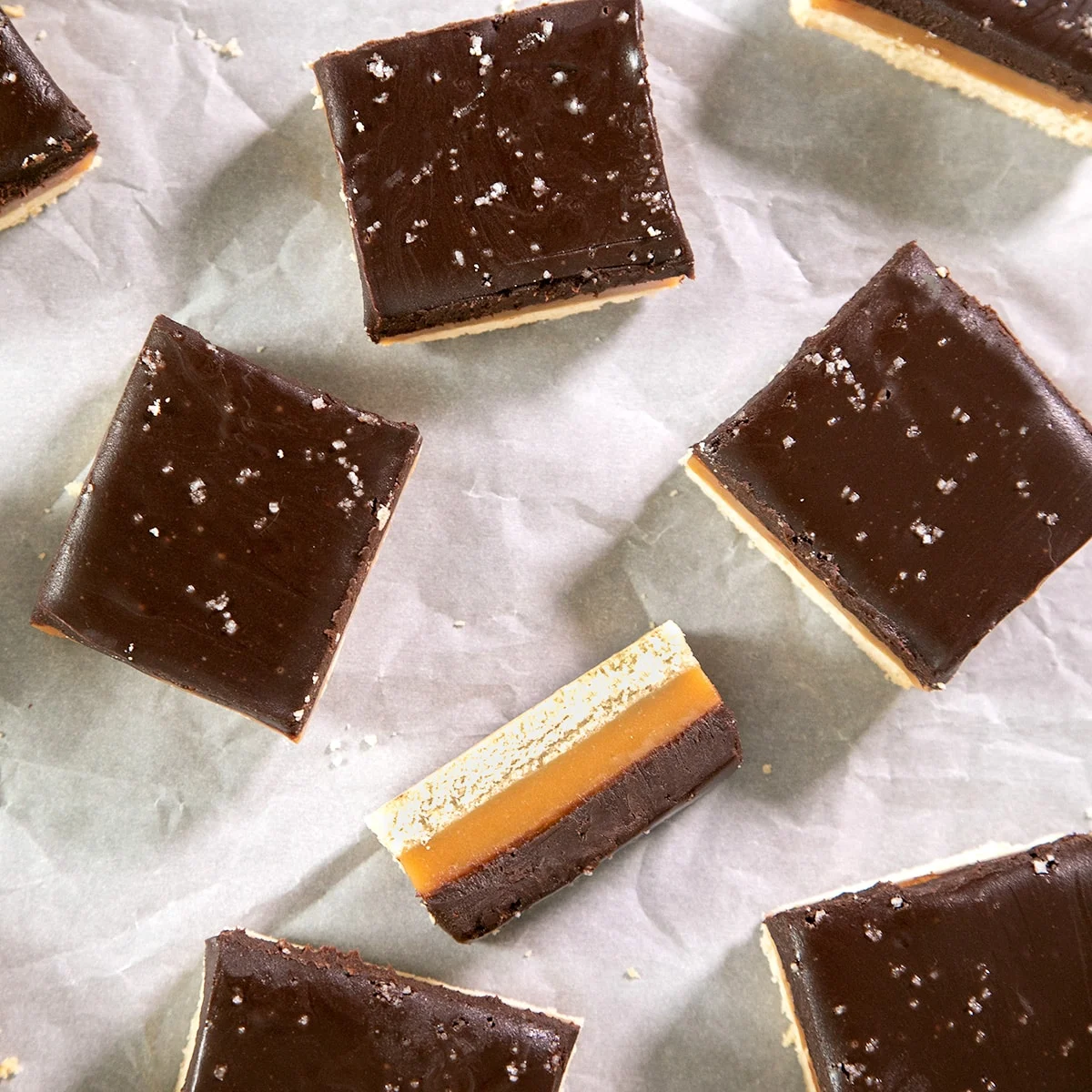
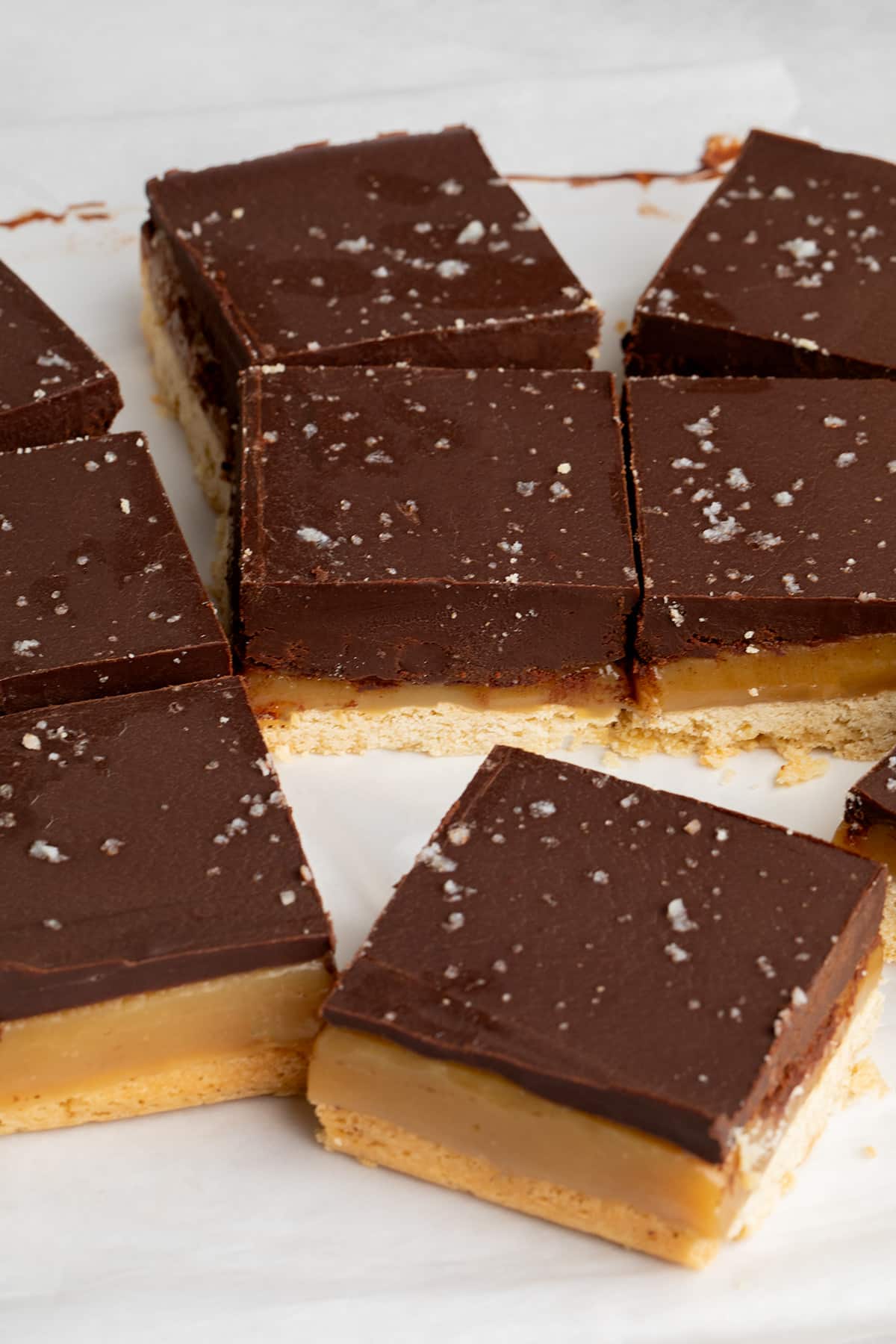
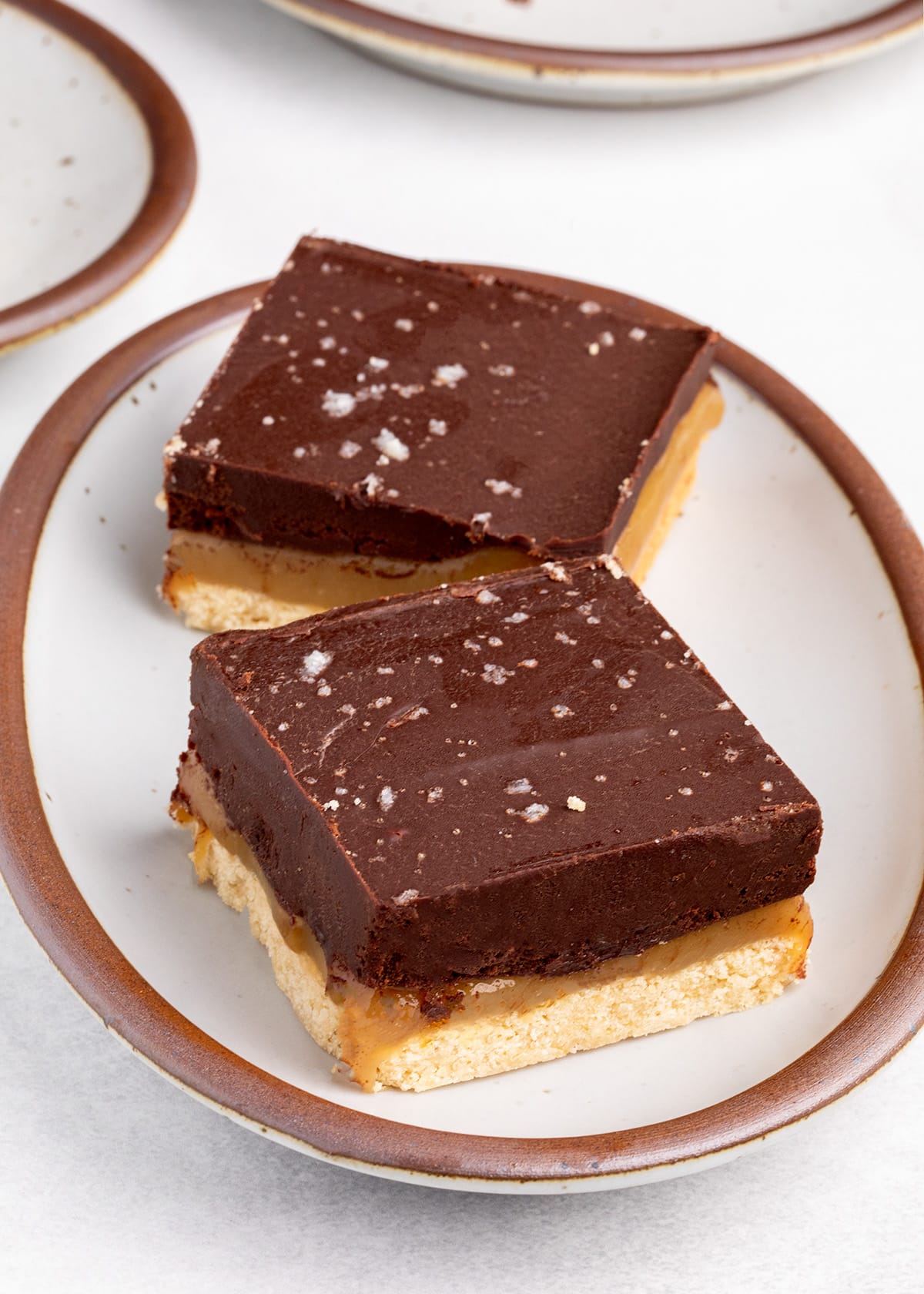
This gluten-free millionaire’s shortbread, often referred to as caramel shortbread, presents a luxurious trifecta of flavors and textures: a tender brown sugar shortbread base, a rich, chewy caramel center, and a smooth, decadent chocolate ganache topping. While its appearance suggests a complex undertaking, this recipe breaks down the creation into manageable, straightforward layers, promising a bakery-quality result without compromising on taste or authenticity. The author emphasizes a streamlined approach, ensuring that even novice bakers can achieve success with this indulgent confection.
Unpacking the Appeal: Why This Recipe Stands Out
The primary hurdle for many in recreating millionaire’s shortbread traditionally lies in achieving the perfect caramel consistency. This gluten-free iteration tackles this challenge head-on by employing a simplified microwave method. This technique relies on clear visual and textural cues, guiding the baker through the crucial cooking stages to achieve a wonderfully chewy caramel that is neither too hard nor too soft. This innovative approach demystifies a traditionally finicky component, making the recipe accessible to a wider audience.
Furthermore, the chocolate ganache layer is engineered for optimal performance. It is formulated to set firm enough to maintain its shape at room temperature, preventing a messy aftermath when slicing or serving. Simultaneously, it remains yielding enough to avoid cracking, ensuring a seamless bite that incorporates all three delightful layers.
The recipe also champions flexibility, offering multiple pathways to completion. While the full recipe allows for the creation of all three components from scratch, it thoughtfully includes shortcuts for those seeking efficiency. Options such as utilizing a no-bake gluten-free cookie crust or pre-made caramels like Kraft’s are presented as viable alternatives, demonstrating a commitment to accommodating different time constraints and skill levels without sacrificing the overall deliciousness of the final product. This adaptability makes the recipe a valuable resource for busy home bakers looking to create a show-stopping dessert.
The Anatomy of Indulgence: Recipe Ingredients
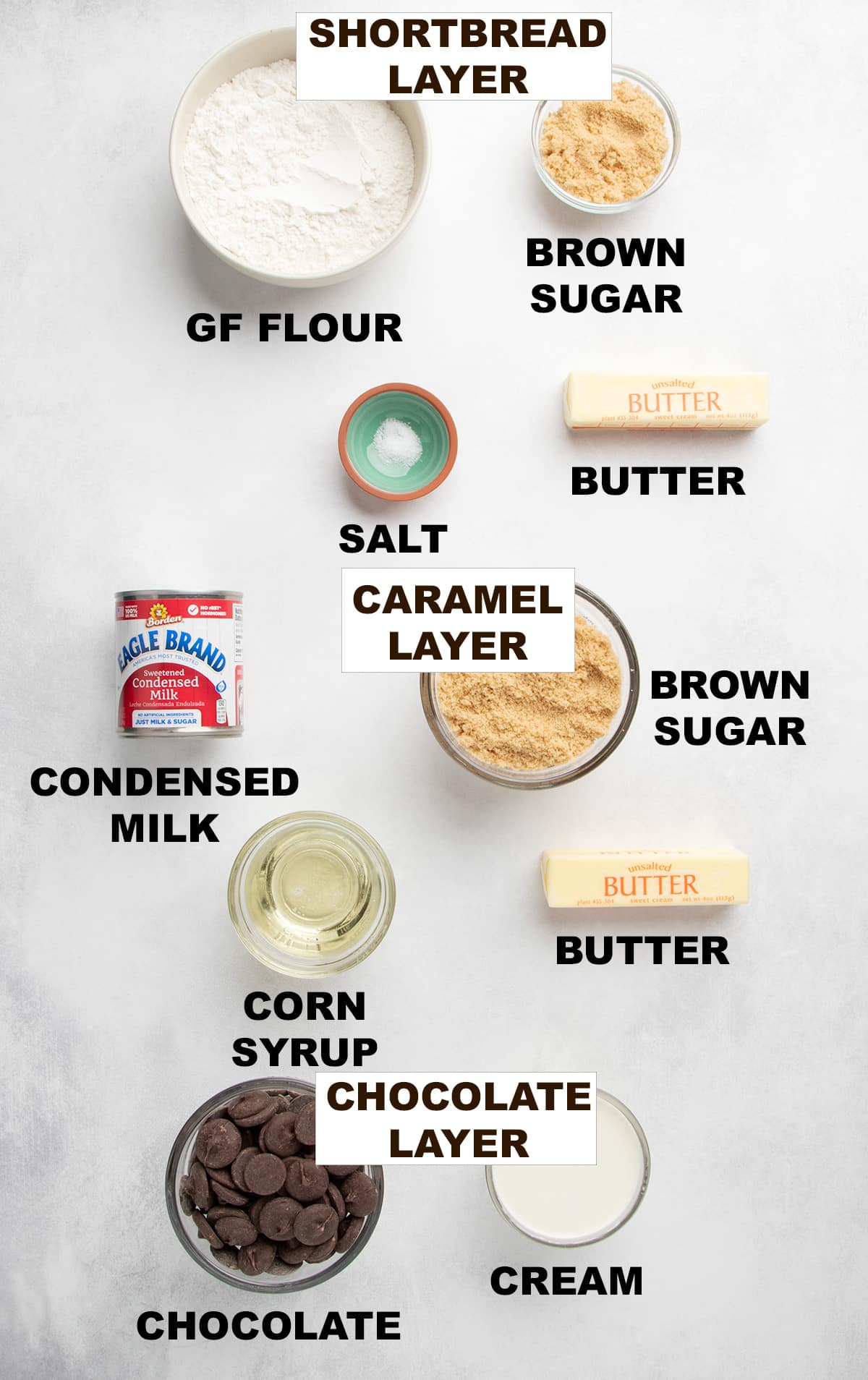
Crafting these gluten-free caramel shortbread bars involves three distinct, yet harmoniously integrated, layers. Each ingredient plays a vital role in achieving the desired balance of flavors and textures. The full ingredient list and precise measurements are detailed in the accompanying recipe card, but a general overview highlights the key components for each layer:
Shortbread Layer: This foundational element provides a buttery, crumbly base. The ingredients typically include a gluten-free flour blend, softened butter, and brown sugar. The precise blend of gluten-free flours is crucial for achieving the characteristic tender crumb.

Caramel Layer: The heart of the millionaire’s shortbread, this layer is characterized by its rich, chewy sweetness. Key ingredients usually comprise brown sugar, butter, sweetened condensed milk, and corn syrup. The combination and cooking method of these ingredients are essential for developing the correct caramel consistency.
Chocolate Ganache Layer: This smooth, glossy topping adds a final touch of decadence. It is typically made with high-quality chocolate and heavy whipping cream. The ratio of chocolate to cream determines the ganache’s texture and setting properties.
A Step-by-Step Guide to Culinary Creation
The process of making gluten-free millionaire’s shortbread, while comprised of three distinct stages, is remarkably straightforward, particularly with the visual guidance provided. Each step is designed for clarity and ease of execution.
Making the Shortbread Base
-
Creaming Butter and Sugar: The initial step for the shortbread layer involves creaming softened butter and brown sugar together for approximately three minutes. This process, best achieved with a mixer, aims to create a very light and fluffy mixture. The aeration trapped within the butter and the dissolving of sugar crystals into the fat are critical for developing a melt-in-your-mouth, delicate crumb in the baked shortbread.
-
Incorporating the Flour: Following the creaming stage, the gluten-free flour blend is gradually mixed in until fully absorbed by the butter and sugar mixture. This can be done using a mixer on low speed or by hand, gently pressing and turning the mixture until a cohesive dough forms.
-
Spreading the Dough: The shortbread dough is then carefully spread evenly across the bottom of a greased and parchment-lined baking pan. Running a knife or offset spatula around the perimeter at this stage facilitates the easy removal of the parchment paper from the finished bars, a small but impactful step for presentation.
-
Baking the Shortbread: The shortbread layer is baked at a moderate temperature of 325°F (163°C) for about 18 minutes. The indicator of doneness is when the shortbread appears matte rather than shiny, signifying that it is set throughout. It is then set aside to cool while the caramel layer is prepared.
Crafting the Caramel Centerpiece
-
Melting the Butter: For the caramel, all ingredients – brown sugar, butter, sweetened condensed milk, and corn syrup – are combined in a large, microwave-safe bowl. A large bowl is essential as the mixture will bubble and expand during cooking. The butter is initially melted by microwaving on high power for about one minute, followed by stirring until a smooth consistency is achieved.
-
Initial Caramel Cooking: The smooth mixture is then microwaved on high power for five minutes. This is the primary cooking phase where sugars transform and moisture evaporates, leading to a slight darkening of the mixture. Stirring the mixture periodically is recommended to mitigate uneven heating, a common characteristic of microwave cooking.
-
Second Caramel Boil: The caramel is microwaved again on high power until it achieves a more pronounced darker color. The author suggests checking the bottom of the mixture for darkening after two minutes, and continuing to cook for up to another two minutes if needed. This careful cooking process aims to reach the "soft ball" stage, approximately 235°F (113°C), which yields a chewy caramel that is tender and does not pose a risk of dental damage.
-
Pouring the Caramel: Once cooked to the desired consistency, the caramel is stirred for evenness and then poured directly over the cooled shortbread layer in the baking pan. It is left to set partially while the chocolate ganache is prepared, ensuring distinct layers in the final bars.
The Decadent Chocolate Ganache Topping
-
Heating the Cream: Heavy whipping cream is gently heated to a simmer over low heat. It is crucial that the cream is heated through but does not form a skin.
-
Combining Chocolate and Cream: The warmed cream is poured over the chopped chocolate pieces in a heat-safe bowl, ensuring all chocolate is submerged. The mixture is then left to sit for a few minutes, allowing the residual heat to melt the cocoa butter.
-
Emulsifying the Ganache: The chocolate and cream are then stirred or whisked together until a smooth, emulsified ganache is formed. For an exceptionally smooth finish, an immersion blender can be used, though it is not strictly necessary.
-
Pouring the Ganache: The perfectly smooth ganache is poured over the partially set caramel layer and spread evenly to create a uniform topping.
Setting and Serving
-
Initial Setting: The bars are allowed to set at room temperature. This allows for a more natural setting process and avoids introducing excessive heat to the refrigerator. For an added touch of flavor complexity, a light sprinkle of coarse salt can be applied to the ganache before it fully sets, creating a delightful sweet and salty contrast.
-
Chilling and Slicing: While the bars can be served at room temperature, chilling them significantly facilitates easier slicing. This ensures clean cuts and maintains the integrity of the distinct layers.
Expert Insights for Culinary Excellence
To elevate the homemade gluten-free millionaire’s shortbread experience, several expert tips and potential substitutions can be considered.
Strategic Shortcuts for Efficiency
For those seeking to expedite the process, the shortbread layer can be adapted by crushing approximately 8 ounces of pre-made gluten-free shortbread cookies (such as Schar or Walkers brands) into crumbs. These crumbs are then combined with 8 tablespoons of melted butter, similar to the method used for gluten-free graham cracker crusts.
The caramel layer also offers a convenient shortcut. By melting unwrapped caramels from an 11-ounce bag with 1/4 cup (2 fluid ounces) of milk and 4 tablespoons (56 grams) of butter, and whisking frequently until smooth, a satisfactory caramel can be achieved.
Stovetop Caramel Alternative
For individuals without access to a microwave or who prefer traditional stovetop methods, the caramel layer can be prepared in a medium, heavy-bottomed saucepan. It is imperative to use an instant-read candy thermometer to accurately gauge doneness, aiming for an amber color. The butter should be diced and all caramel ingredients placed in the saucepan. Bring the mixture to a gentle boil over low heat until the butter is fully melted. Then, increase the heat to medium and continue to cook the mixture without stirring for 8 to 10 minutes, or until it reaches 235°F (113°C).
The Nuances of Chocolate Selection
While chocolate chips are a common pantry staple, they are generally not recommended for the ganache layer in this recipe. Chocolate chips contain stabilizers designed to resist melting, which can hinder their ability to fully liquefy when combined with the gently heated cream. For the smoothest and most reliable ganache, using chopped baking chocolate bars is advised.
Adapting for Dietary Needs: Ingredient Substitutions
The recipe is designed to be adaptable for various dietary requirements and preferences.
Dairy-Free Modifications
To create a dairy-free version, block-style vegan butter alternatives, such as those from Melt or Miyoko’s, are recommended for both the shortbread and caramel layers. A combination of butter-flavored shortening and Earth Balance buttery sticks can also be used, potentially with a reduction or omission of added salt. For the sweetened condensed milk, dairy-free alternatives from brands like Nature’s Charm or Let’s Do Organic are suitable. The chocolate layer can be made dairy-free by using dairy-free whipping cream or coconut cream and ensuring the chocolate used is also dairy-free.
Corn Syrup Alternatives
Light corn syrup is distinct from high-fructose corn syrup. If corn syrup must be avoided, glucose syrup or Lyle’s Golden Syrup can be used as a substitute. It is important to note that Lyle’s Golden Syrup may impart a slightly different flavor profile. While honey can be used, it is less effective in preventing sugar crystallization, which is crucial for achieving the desired caramel texture.
Storage Guidelines for Optimal Freshness
These gluten-free millionaire’s shortbread bars maintain their quality for over a week when stored properly in the refrigerator. For best results, each bar can be individually wrapped in plastic wrap. Alternatively, they can be arranged in a single layer within a glass container with a tight-fitting lid. For extended storage, the bars can be wrapped securely in freezer-safe material and frozen for up to three months. Thawing can be done either in the refrigerator or at room temperature before serving.
