

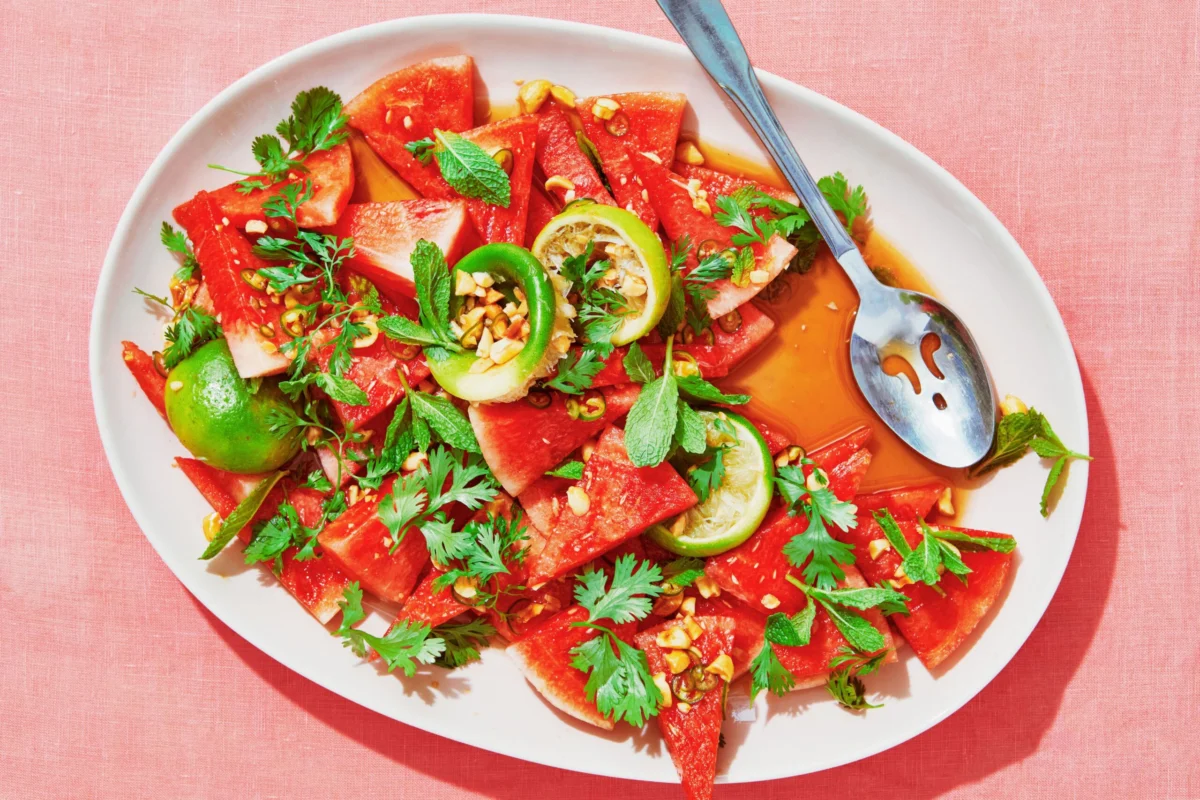
For many individuals, the very mention of som tam instantly conjures vivid images of finely shredded green papaya, a cornerstone ingredient that has defined this iconic Thai salad for generations. However, the essence of Thai-style salad—a masterful combination of sour (som) and vigorously pounded ingredients (tam)—is not rigidly confined to a single type of produce. This culinary philosophy, rooted in balance and vibrant flavor, proves remarkably versatile, capable of transforming a wide array of fruits and vegetables into equally compelling dishes. A recent culinary innovation, gaining traction in both professional kitchens and home cooking circles, applies this revered som tam treatment to planks of fresh, sweet watermelon, resulting in a salad that challenges traditional perceptions and delivers an unparalleled sensory experience. Dressed in a lively concoction of fresh lime juice, fiery serrano chile, umami-rich fish sauce, and crunchy peanuts, this watermelon som tam packs a serious punch. It masterfully balances hot, sweet, spicy, salty, and savory notes, creating a buzzing intensity that tantalizes the palate and lingers long after the first bite. This versatile dish can be enhanced with additions such as perfectly poached shrimp or tender cold cooked chicken, or it can be savored on its own as a supremely refreshing summer side, showcasing the boundless adaptability of Thai culinary principles.
The Genesis of a Refreshing Twist
The introduction of watermelon into the traditional som tam framework represents a fascinating evolution in modern gastronomy. While the original som tam (papaya salad) remains a beloved staple, chefs and home cooks alike are increasingly exploring unconventional ingredients to reimagine classic dishes. This particular adaptation, highlighted by publications like Bon Appétit, speaks to a broader trend of culinary experimentation that seeks to blend familiar flavor profiles with unexpected textures and seasonal ingredients. The choice of watermelon, known for its high water content and natural sweetness, offers a stark contrast to the crisp, slightly bitter profile of green papaya, introducing a new dimension of juiciness and a refreshing quality that is particularly appealing during warmer months. The dish is not merely a substitution but a reinterpretation, demonstrating how core culinary techniques can transcend specific ingredients to create entirely new, yet recognizably authentic, experiences.
Som Tam: A Pillar of Thai Cuisine
To fully appreciate the innovation of watermelon som tam, it is essential to understand the historical and cultural significance of its namesake. Som tam, often considered the national dish of Thailand, particularly popular in the northeastern (Isaan) region, boasts a rich history intertwined with the agricultural practices and communal eating habits of the region. Its origins can be traced back centuries, evolving from simple preparations utilizing local produce and fermented ingredients. The dish is not exclusive to Thailand; similar pounded salads, known as tam mak hoong, are central to Laotian cuisine, reflecting the shared cultural heritage of the Mekong region.
Traditionally, som tam is prepared using a mortar and pestle, a crucial tool that defines the "tam" (pounded) aspect of its name. This method is not merely about mixing; it’s about bruising the ingredients, releasing their essential oils and juices, and allowing the flavors to meld intimately. The core ingredients typically include green papaya, yard-long beans, tomatoes, garlic, chilies, peanuts, lime juice, fish sauce, and palm sugar. Regional variations are numerous, ranging from som tam boo plara (with fermented crab and fish sauce) to som tam sua (with rice vermicelli). This inherent adaptability has allowed som tam to remain a dynamic dish, constantly evolving while retaining its fundamental characteristics of sour, spicy, sweet, and salty balance.
The Art of Pounding: "Som" and "Tam" Unpacked
The very name som tam is a linguistic key to its preparation and flavor profile. "Som" (ส้ม) translates to sour, referring to the prominent acidic notes typically derived from lime juice, tamarind, or sometimes fermented ingredients. This sourness is not merely a background flavor; it is often the leading taste, cutting through richness and awakening the palate. "Tam" (ตำ) means to pound, indicating the traditional method of preparation. This isn’t just a gentle toss; it’s a vigorous, rhythmic pounding of ingredients in a clay mortar (krok) with a wooden pestle (sak). This process breaks down cell walls, releasing the full spectrum of flavors and creating a textural complexity that cannot be achieved by simply chopping and mixing. The deliberate act of pounding ensures that the dressing permeates every piece of produce, creating a cohesive and intensely flavored salad.
For the watermelon som tam, this pounding technique is adapted. While delicate watermelon planks wouldn’t withstand the same vigorous pounding as firm green papaya, the principle of bruising and marrying flavors remains. The chilies, garlic, and peanuts are typically pounded first to create a pungent base, followed by a lighter touch with the watermelon and other tender ingredients to ensure they absorb the dressing without becoming mushy. This nuanced application of the "tam" principle highlights the chef’s understanding of both tradition and ingredient sensitivity.
Watermelon Som Tam: An Unconventional Pairing
The decision to pair the robust flavors of som tam with the delicate sweetness of watermelon might seem unconventional at first glance. However, it aligns perfectly with broader trends in modern culinary arts that embrace sweet-savory combinations. Watermelon, a fruit primarily consumed fresh or in sweet preparations, finds a surprising new role here. Its natural sugars provide the "sweet" component often supplied by palm sugar in traditional som tam, but with an added juiciness and refreshing quality. The fruit’s high water content (over 90%) also contributes to the salad’s refreshing nature, making it an ideal dish for warm climates or as a palate cleanser.
The dressing remains true to the som tam spirit:
- Lime juice: Provides the essential "som" (sour) element, bright and zesty.
- Serrano chile: Delivers a potent, immediate heat that is characteristic of Thai salads. Depending on preference, bird’s eye chilies are also commonly used for a sharper spice.
- Fish sauce: Offers a crucial layer of umami and saltiness, grounding the dish with its distinctive fermented aroma and flavor.
- Peanuts: Add a delightful crunch and a nutty depth that complements the other ingredients.
This combination of ingredients creates a multi-layered flavor profile that is both familiar in its Thai essence and innovative in its application. It represents a daring yet successful venture into expanding the boundaries of traditional cuisine.
A Symphony of Flavors: Deconstructing the Profile
The resulting watermelon som tam is a masterclass in flavor balance. The initial bite is often characterized by a burst of sweetness from the watermelon, immediately followed by the searing heat of the serrano chile. This interplay is quickly mellowed and complicated by the sharp tang of lime and the profound umami of the fish sauce. The peanuts introduce a textural contrast and a subtle nutty finish, rounding out the experience. This harmonious blend of hot, sweet, spicy, salty, and savory elements creates what culinary experts often describe as a "fifth taste" or a truly holistic flavor experience, a hallmark of well-executed Thai cuisine. The "buzzing intensity" mentioned in the original description refers to the lingering heat and complex aftertaste, a sign of a dish that engages all parts of the palate.
According to Chef Nuit Regular, co-owner of several popular Thai restaurants in Toronto and a proponent of regional Thai cuisine, "The beauty of som tam is its ability to surprise and delight. Using watermelon is a bold move, but it shows how adaptable and exciting Thai flavors can be. It’s about respecting the balance while embracing new ingredients." This sentiment underscores the philosophy behind such culinary innovations.
Beyond Green Papaya: The Evolution of Som Tam Variants
The watermelon som tam is not an isolated phenomenon but part of a broader trend in the evolution of som tam. While green papaya remains the classic, countless regional and modern variations exist:
- Som Tam Mamuang (Mango Salad): Utilizing unripe, sour mangoes for a similar crisp texture and tart flavor profile.
- Som Tam Polamai (Mixed Fruit Salad): Incorporating various fruits like guava, apple, and pineapple.
- Som Tam Khorat: A hybrid style blending characteristics of traditional Thai som tam with Isaan som tam plara.
- Som Tam Tua (Long Bean Salad): Focusing on the crunchy texture of yard-long beans.
These variations illustrate the inherent flexibility of the som tam concept, which prioritizes the "som" (sour) and "tam" (pounded) methodology over strict adherence to a single main ingredient. The watermelon version simply pushes this boundary further, demonstrating the dish’s capacity for contemporary relevance and appeal. This ongoing evolution ensures som tam remains a vibrant and exciting part of the culinary landscape.
Culinary Innovation and Global Palates
The emergence of dishes like watermelon som tam reflects a global movement towards culinary innovation, often termed "fusion cuisine" or "modern traditional cuisine." This trend involves reinterpreting classic dishes through the lens of different cultures, ingredients, or contemporary dining preferences. It is driven by increased global travel, access to diverse ingredients, and a growing consumer appetite for novel food experiences. The success of such dishes hinges on maintaining a respectful dialogue with the original cuisine while introducing creative elements.
Food critics have increasingly lauded such innovations when executed thoughtfully. As noted by a prominent food journalist, "The best fusion dishes aren’t just about throwing disparate ingredients together; they’re about understanding the fundamental flavor profiles and textures of each cuisine and finding intelligent points of convergence. Watermelon som tam achieves this delicate balance, offering something new yet deeply rooted in tradition."
Nutritional Insights into the Watermelon Som Tam
Beyond its intriguing flavor profile, the watermelon som tam offers notable nutritional benefits, aligning with increasing consumer demand for healthy and flavorful options.
- Watermelon: A powerhouse of hydration, rich in vitamins A and C, and a good source of antioxidants like lycopene, which has been linked to heart health and cancer prevention. Its natural sugars offer a healthier alternative to refined sugars.
- Lime Juice: An excellent source of Vitamin C, known for its immune-boosting properties and its role in collagen production.
- Serrano Chile: Contains capsaicin, the compound responsible for its heat, which has been studied for its metabolism-boosting and pain-relieving properties.
- Fish Sauce: While high in sodium, it provides essential amino acids and a unique umami flavor that allows for reduced reliance on other flavor enhancers.
- Peanuts: A good source of protein, healthy fats, fiber, and various vitamins and minerals, contributing to satiety and overall nutritional intake.
A nutritionist consulted on such innovative dishes might comment, "Incorporating a fruit like watermelon into a savory salad significantly boosts its hydration and antioxidant content. While traditional som tam is already quite healthy, this version offers a refreshing twist that can appeal to those looking for lighter, more fruit-forward options, especially when paired with lean proteins like shrimp or chicken."
Market Trends and Consumer Appetite for Novelty
The growing popularity of dishes like watermelon som tam is indicative of several key market trends. The global market for ethnic foods continues to expand, driven by multicultural populations and an adventurous consumer base. Within this, there is a particular interest in "authentic" yet accessible international flavors, as well as creative interpretations of traditional dishes. Data from market research firms consistently show an uptick in consumer interest for unique flavor combinations and dishes that offer a sensory adventure. The "sweet-savory" flavor profile, once a niche, has become mainstream, with consumers actively seeking out combinations that challenge conventional culinary boundaries.
Furthermore, the emphasis on seasonal and fresh produce, often championed by initiatives like Bon Appétit‘s "Farmers Market Challenge," encourages cooks to experiment with ingredients readily available locally. Watermelon, a ubiquitous summer fruit in many parts of the world, becomes an ideal candidate for such creative adaptations, driving demand for innovative recipes that utilize seasonal bounty.
Implications for Modern Gastronomy and Home Cooking
The advent of dishes like watermelon som tam carries significant implications for both professional gastronomy and everyday home cooking. In restaurants, it signals a willingness to push boundaries, attracting diners who seek novel culinary experiences without straying too far from comforting flavor profiles. It encourages chefs to delve deeper into the versatility of traditional techniques and ingredients.
For home cooks, such recipes are inspirational. They demystify traditional dishes, making them more approachable by substituting less common ingredients (like green papaya, which can be difficult to source in some regions) with readily available ones like watermelon. This democratization of global cuisine empowers home cooks to experiment, fostering a greater appreciation for diverse food cultures and encouraging culinary exploration within their own kitchens. The potential for bulking out the salad with poached shrimp or cold cooked chicken further demonstrates its adaptability as a complete meal, fitting into modern lifestyles that prioritize both flavor and convenience. Ultimately, the watermelon som tam is more than just a recipe; it is a testament to the dynamic nature of food, a bridge between tradition and innovation, and a vibrant example of how global culinary dialogue enriches our palates.
