

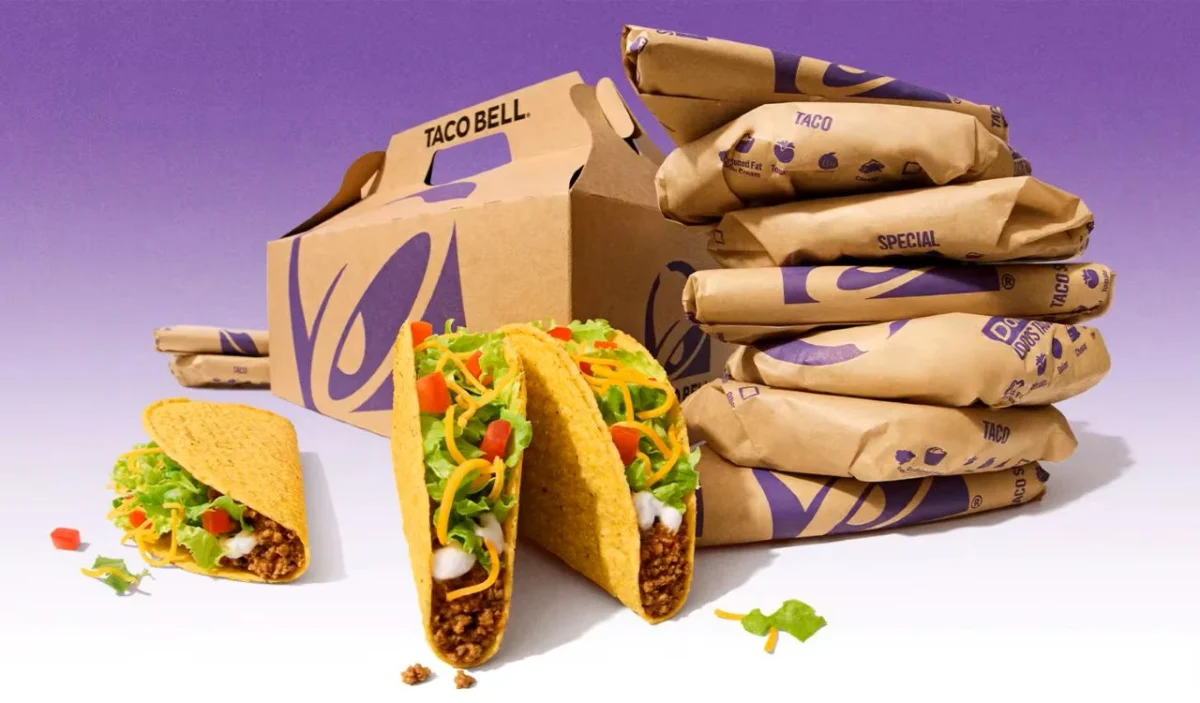
Taco Bell announced Friday evening that it has initiated a nationwide recall of all lettuce supplied by Taylor Farms, a significant move taken out of an abundance of caution as public health officials continue to investigate a widespread outbreak of cyclosporiasis. The fast-food giant confirmed that the affected ingredient has been entirely removed from its supply chain, aiming to ensure the safety of its patrons as they enjoy their meals. This proactive measure underscores the company’s commitment to guest well-being, even as the investigation into the outbreak’s precise origins remains ongoing.
Escalating Health Concerns and the Emerging Link to Taco Bell
The urgency behind Taco Bell’s swift action stems from an escalating health crisis linked to the parasitic infection known as cyclosporiasis. For over a week, health authorities have been grappling with a surge in reported cases, with thousands falling ill and at least 100 individuals requiring hospitalization across more than 30 states. Early investigative findings have pointed towards shredded lettuce, specifically that sourced by Taylor Farms and distributed to Taco Bell locations in Michigan, Ohio, West Virginia, and Kentucky, as a primary suspect in the widespread contamination.
Anonymous sources close to the investigation have revealed to The Washington Post that a significant majority of individuals reporting illness had recently dined at Taco Bell. When questioned about commonalities in their dietary choices leading up to their sickness, lettuce frequently emerged as a recurring item. This consensus among affected individuals has strongly guided public health officials in narrowing down the potential source of the outbreak, prompting a closer examination of the food supply chain.
Understanding Cyclosporiasis: Symptoms and Transmission
Cyclosporiasis is an intestinal illness caused by the microscopic parasite Cyclospora cayetanensis. This parasite is typically transmitted to humans through the consumption of contaminated fresh produce or water. The incubation period can range from a few days to over a week, and symptoms often include severe watery diarrhea, a notable loss of appetite, significant weight loss, abdominal cramps and bloating, nausea, and profound fatigue. In some cases, the illness can persist for weeks or even months if left untreated, and can be particularly severe for individuals with weakened immune systems.
The widespread nature of this outbreak, affecting a significant portion of the United States, highlights the complex challenges in tracing foodborne illnesses through intricate supply chains. The sheer volume of individuals falling ill and the geographical spread suggest a broad distribution of the contaminated product.
Taco Bell’s Response: A Proactive Stance
In a statement released Thursday evening, prior to the full recall announcement, Taco Bell outlined its immediate actions. "Based on ongoing conversations with public health officials, and out of an abundance of caution," the company stated, "Taco Bell has taken immediate action to voluntarily remove potentially impacted lettuce from a supplier in select states. The affected ingredient from our supplier is being indefinitely removed from our supply chain nationwide and will be replaced within 24 hours in select states."
The company further emphasized its commitment to public health, adding, "While no official advisory has been issued, we believe public health is a shared responsibility among restaurants, their suppliers, and authorities, and we are proud to have consistently acted quickly and proactively to protect our guests. Taco Bell has taken precautionary action, and we encourage all relevant restaurants, retailers, and foodservice operators to do the same." This statement positioned Taco Bell as a responsible actor in a challenging situation, urging broader industry cooperation.
The Role of Taylor Farms: A History of Scrutiny
Taylor Farms, a California-based company that identifies itself as a "leading global producer of salads and healthy fresh foods," has found itself at the center of this health scare. While the company has not yet responded to requests for comment regarding the current outbreak, this is not the first time it has been associated with food safety incidents.
In late 2024, Taylor Farms was identified as the supplier of slivered onions linked to a significant E. coli outbreak that affected McDonald’s restaurants. That incident impacted approximately 900 locations across 12 states, leading to widespread concern and operational disruptions for the fast-food giant. Furthermore, a food safety attorney representing individuals affected by another E. coli outbreak last year cited Taylor Farms as the source, although the company reportedly denied any connection to that particular case. These past associations cast a shadow of scrutiny over the company’s current situation and raise questions about its food safety protocols.
Legal Repercussions and the Broader Industry Impact
The current cyclosporiasis outbreak has already prompted legal action. A complaint has been filed in the U.S. Court for the Northern District of Ohio, Eastern Division. The lawsuit names Taco Bell franchisee Pacific Bells, along with unidentified growers, suppliers, and distributors, as defendants. This legal development underscores the serious financial and reputational consequences that can arise from widespread foodborne illnesses, affecting not only the primary restaurant brand but also its franchisees and supply chain partners.
The implications of this outbreak extend beyond Taco Bell and Taylor Farms. It serves as a stark reminder of the fragility of food safety systems and the critical importance of stringent oversight at every stage of the supply chain, from farm to fork. For consumers, such incidents erode trust and can lead to heightened anxiety about the safety of the food they purchase and consume. For the restaurant industry, it highlights the need for robust traceability systems, rigorous supplier vetting, and rapid response mechanisms to mitigate the impact of potential contamination events.
The Chronology of the Outbreak and Response
The timeline of events leading to Taco Bell’s nationwide lettuce recall can be pieced together through public health announcements and company statements:
- Early July 2026: Reports of a growing number of individuals experiencing cyclosporiasis symptoms begin to emerge across multiple states.
- Mid-July 2026: Public health agencies, including the Centers for Disease Control and Prevention (CDC) and state health departments, initiate investigations into the outbreak. Early data suggests a clustering of cases among patrons of certain fast-food establishments.
- July 16, 2026: The Washington Post reports on anonymous sources linking the outbreak to lettuce supplied by Taylor Farms to Taco Bell restaurants in four states.
- July 17, 2026 (Morning): Taco Bell issues a statement acknowledging ongoing conversations with public health officials and announcing the voluntary removal of "potentially impacted lettuce from a supplier in select states," with plans for nationwide removal from its supply chain and replacement within 24 hours in affected states.
- July 17, 2026 (Evening): Taco Bell announces the complete nationwide recall of all lettuce supplied by Taylor Farms, citing an abundance of caution and the removal of the affected ingredient from its supply chain.
This timeline demonstrates a reactive, albeit swift, approach by Taco Bell, driven by escalating public health concerns and investigative findings. The company’s decision to recall the product nationwide, rather than limiting it to specific states, suggests a broader concern about the potential for further contamination or a desire to err on the side of maximum caution.
Broader Food Safety Landscape and Future Considerations
The Taco Bell cyclosporiasis outbreak is the latest in a series of high-profile food safety incidents that have plagued the food industry in recent years. These events underscore persistent vulnerabilities in food production and distribution systems. Factors such as globalization, complex international supply chains, and the increasing reliance on processed and pre-prepared ingredients can create environments where contamination can spread rapidly and widely.
Regulatory bodies like the Food and Drug Administration (FDA) play a crucial role in overseeing food safety, but their capacity to monitor and inspect the vast number of food facilities and products is a constant challenge. Recent discussions within the health and human services sector have raised concerns about the FDA’s ability to conduct sufficient food safety inspections, potentially impacting its effectiveness in preventing such outbreaks.
For consumers, the recurring nature of these incidents necessitates a heightened awareness and a demand for greater transparency from food companies. The development of advanced traceability technologies, such as blockchain, could offer more robust solutions for tracking food products from origin to consumption, enabling faster and more precise recalls when issues arise. Furthermore, continued investment in public health surveillance and rapid diagnostic capabilities is essential for quickly identifying and responding to emerging foodborne threats.
The proactive removal of lettuce by Taco Bell, while a significant step, is part of a larger, ongoing effort to ensure the integrity and safety of the global food supply. As investigations continue and legal proceedings unfold, the industry will undoubtedly face renewed scrutiny and pressure to enhance its food safety practices, ensuring that consumers can dine with confidence.
