

The global spirits industry has witnessed a significant transformation over the last decade, characterized by a movement toward premiumization and the creative expansion of traditional categories. Within this landscape, gin has emerged as perhaps the most versatile medium for artisanal expression. Legally defined by the predominant presence of juniper berries, gin nonetheless offers a "blank canvas" that allows distillers to incorporate a nearly limitless array of botanicals. In the past five years, this flexibility has birthed a specialized sub-sector: the Christmas gin. What began as generic "winter editions" featuring warming spices has evolved into a sophisticated market of highly specific, evocative holiday portraits captured in liquid form.
The shift toward seasonal spirits is not merely a marketing gimmick but a response to a more discerning consumer base seeking "liquid storytelling." As the craft gin movement—often referred to as the "Gin-naissance"—continues to mature, distillers are moving beyond standard citrus and floral profiles to embrace the complex, nostalgic flavors of the festive season. From the inclusion of entire gingerbread houses in the still to the use of century-old wine barrels for aging, the modern Christmas gin represents a pinnacle of contemporary distillation technology and culinary inspiration.
Market Context and the Growth of Seasonal Expressions
According to market analysis data, the global gin market was valued at approximately USD 15.3 billion in 2022 and is projected to reach over USD 20 billion by 2030. A significant driver of this growth is the "limited edition" or "seasonal" release strategy. Industry analysts note that seasonal offerings provide distilleries with a dual advantage: they create a sense of urgency and "FOMO" (fear of missing out) among collectors, and they offer a perfect entry point for gift-buyers during the fourth-quarter holiday surge.
Historically, gin was categorized strictly by styles such as London Dry, Plymouth, or Old Tom. However, the relaxation of traditional boundaries has allowed for "New Western" or "Contemporary" styles that prioritize local and seasonal botanicals. The Christmas gin category specifically taps into the "Experience Economy," where consumers are not just purchasing a beverage, but a sensory reminder of holiday traditions, family gatherings, and winter nostalgia.
Technical Innovation in Holiday Distillation
The production of Christmas-themed gins often requires departures from standard distillation methods. While traditional gin is produced by boiling botanicals in a neutral spirit, many holiday expressions utilize maceration, vacuum distillation, or barrel aging to preserve the delicate flavors of festive ingredients like dried fruits, peppermint, or baked goods.
Corgi Spirits: The Culinary Influence of Figgy Pudding
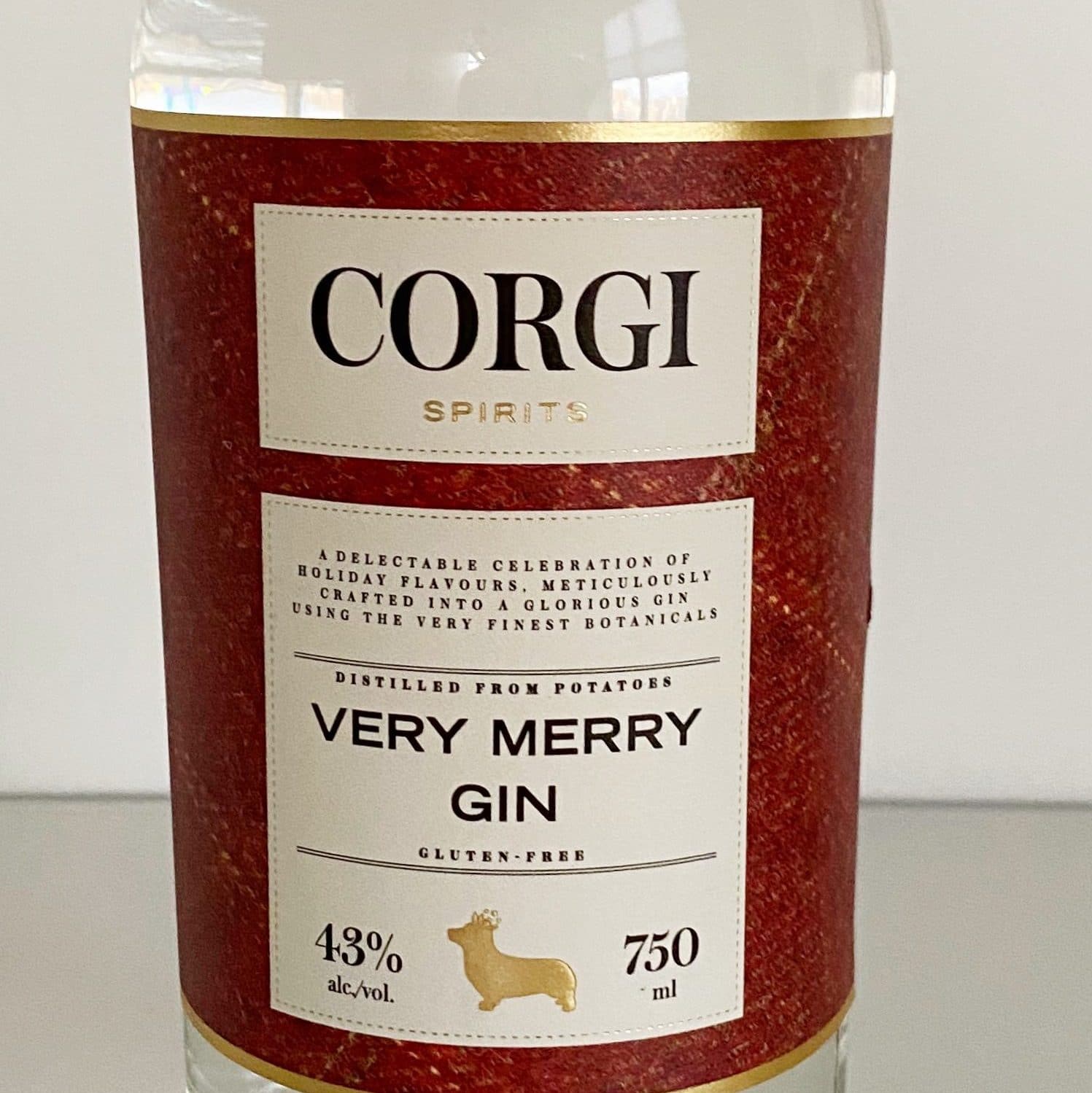
Based in Jersey City, New Jersey, Corgi Spirits has gained recognition for its "Very Merry Gin," a spirit that serves as a prime example of the "culinary gin" trend. The botanical bill is explicitly inspired by figgy pudding, a staple of British Christmas tradition. By incorporating figs, currants, and vanilla alongside the requisite juniper, the distillery achieves a flavor profile that balances the resinous qualities of the evergreen with the unctuous sweetness of dried fruit.
From a technical standpoint, the Very Merry Gin is classified as a spice-forward expression. Distillers often find that ingredients like figs require longer maceration periods to extract the essential oils necessary for a robust mouthfeel. The result is a warming spirit that functions effectively in both cold and hot applications. Industry experts suggest that such gins are best utilized in cocktails that can stand up to heavy spice, such as a Gin and Cola—which mirrors the spice profile of Rum—or a classic Hot Toddy, where the steam amplifies the vanilla and currant aromatics.
That Boutique-y Gin Company: Maximalism and Literal Symbolism
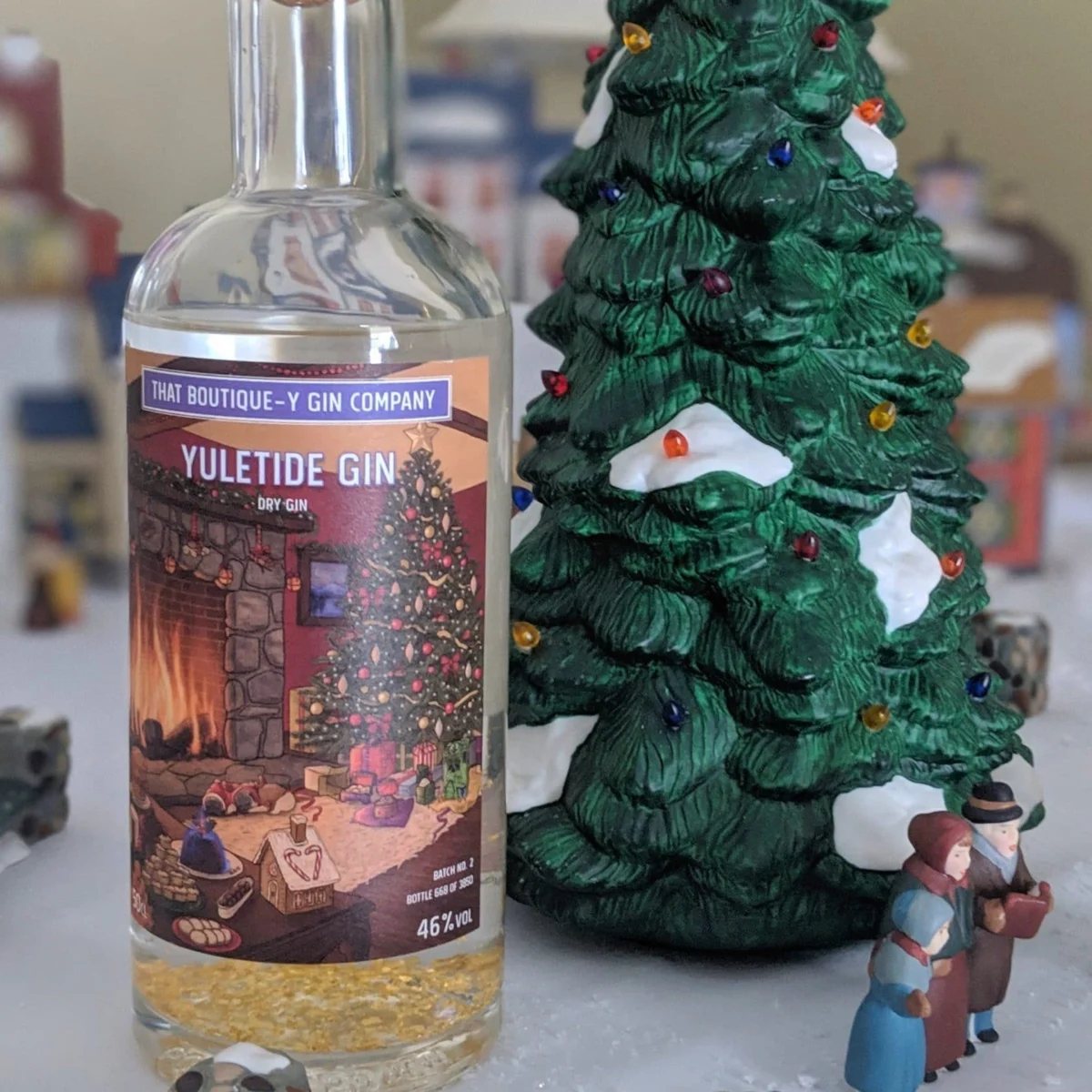
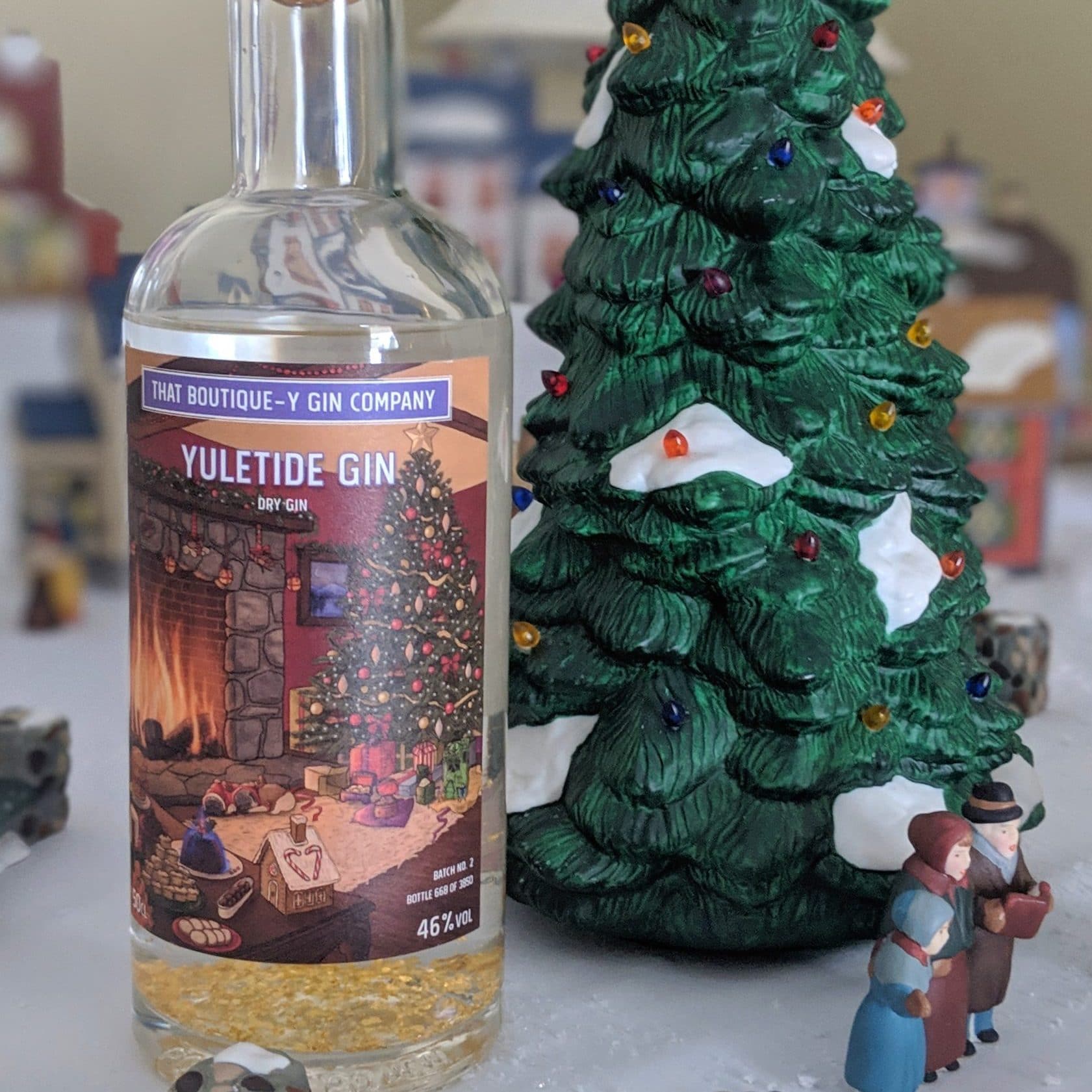
If Corgi Spirits represents culinary inspiration, That Boutique-y Gin Company’s "Yuletide Gin" represents the maximalist extreme of the category. This expression gained notoriety in the industry for its literal interpretation of Christmas. The botanical list includes an entire gingerbread house placed directly into the still, alongside traditional holiday treats.
Furthermore, the Yuletide Gin incorporates the "Gifts of the Magi"—gold, frankincense, and myrrh. While frankincense and myrrh provide a resinous, balsamic depth that complements juniper, the inclusion of edible gold leaf adds a visual element of luxury designed for the premium gift market. This approach highlights a broader trend in the industry: the move toward "experiential packaging," where the contents of the bottle are as much a conversation piece as they are a drink.
Sacred Spirits: Precision via Vacuum Distillation
In London, Sacred Spirits has taken a more scientific approach to the holiday tradition with their "Christmas Pudding Gin." Developed by distiller Ian Hart, the process involves steaming full Christmas puddings for eight hours based on a traditional family recipe. These puddings are then macerated in grain spirit before distillation.
The defining characteristic of Sacred Spirits is the use of high-pressure vacuum distillation. Traditional stills operate at high temperatures, which can "cook" or alter the flavor of delicate botanicals. By reducing the pressure inside the still, Hart is able to boil the spirit at much lower temperatures—sometimes as low as room temperature. This preserves the "bright" and "fresh" notes of the pudding, ensuring that the finished gin tastes like a freshly made dessert rather than a burnt or caramelized approximation. This technological edge has made Sacred a favorite among mixologists who require precise, clean flavor profiles for high-end cocktail programs.
Regional Variations: From Peppermint to the Southern Hemisphere
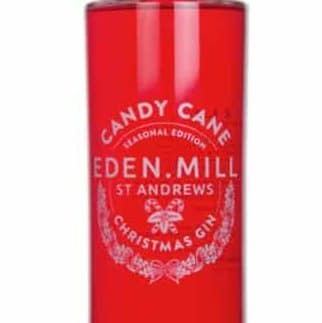
The geographical origin of a gin heavily influences its Christmas character. In Scotland, Eden Mill has found success with its "Candy Cane Gin," which leans into the peppermint-forward flavor profile. Unlike many clear gins, this expression features a distinct red hue. In an industry increasingly wary of artificial additives, Eden Mill achieves this color naturally through the infusion of bilberries and hibiscus flowers.
The Candy Cane Gin serves as a bridge between seasons. While its peppermint notes make it a natural fit for winter "Southside" cocktails or hot drinks, the floral hibiscus notes provide a tartness that appeals to summer palates. This versatility is a key strategic move for distilleries looking to extend the shelf life of seasonal products beyond the month of December.
Conversely, Four Pillars in Australia offers a reminder of the global nature of the holiday season. Their "Australian Christmas Gin" is designed for a summer Christmas. The process is labor-intensive: they distill Christmas puddings and then age the resulting spirit for twelve months in 100-year-old Moscato wine barrels. This aging process imparts a complexity similar to a light brandy or aged rum, with the wine-soaked wood adding layers of stone fruit and oak. This product highlights the "Solera-style" thinking now entering the gin world, where aging and blending are used to create depth that a standard clear spirit cannot achieve.
Beyond Gin: The Aquavit Alternative
While gin dominates the seasonal market, Aquavit is emerging as a formidable competitor, particularly in Nordic-inspired contexts. Knaplund’s "Yuletide Akvavit" demonstrates how the savory profile of caraway and dill can be adapted for the holidays. By leaning into sweet anise, clove-pierced orange, and "holiday cookie" aromatics, this Danish spirit offers an alternative for consumers who find the juniper-heavy profile of gin too aggressive. The rise of holiday Aquavit suggests that the "seasonal spirit" trend is expanding across all categories of botanical liquors.
Broader Implications and Future Outlook
The proliferation of Christmas gins reflects a broader shift in consumer behavior toward "super-premium" spirits. Data from the Distilled Spirits Council of the United States (DISCUS) indicates that the super-premium segment has consistently outperformed value and premium segments over the last three years. Seasonal gins, often priced at a premium due to their limited run and expensive botanicals, fit perfectly into this "drink less, but drink better" philosophy.
Moreover, these gins are driving innovation in the hospitality sector. Bars and restaurants now use these specific flavor profiles to create seasonal menus that do not rely solely on syrups or infusions, as the complexity is already present in the base spirit. This reduces labor costs for high-volume establishments while maintaining a high standard of cocktail complexity.
As we look toward future holiday seasons, the trend is likely to move toward even more hyper-local and sustainable practices. Distillers are beginning to explore "foraged Christmas" profiles, using local pine needles, winter berries, and bark to create a sense of place. The success of the gins from Corgi, Sacred, and Four Pillars proves that the holiday spirit is no longer just a feeling—it is a sophisticated, technologically advanced, and highly profitable sector of the global beverage industry. For the consumer, this means a richer array of choices; for the distiller, it means the canvas of gin remains as vast and inviting as ever.
