

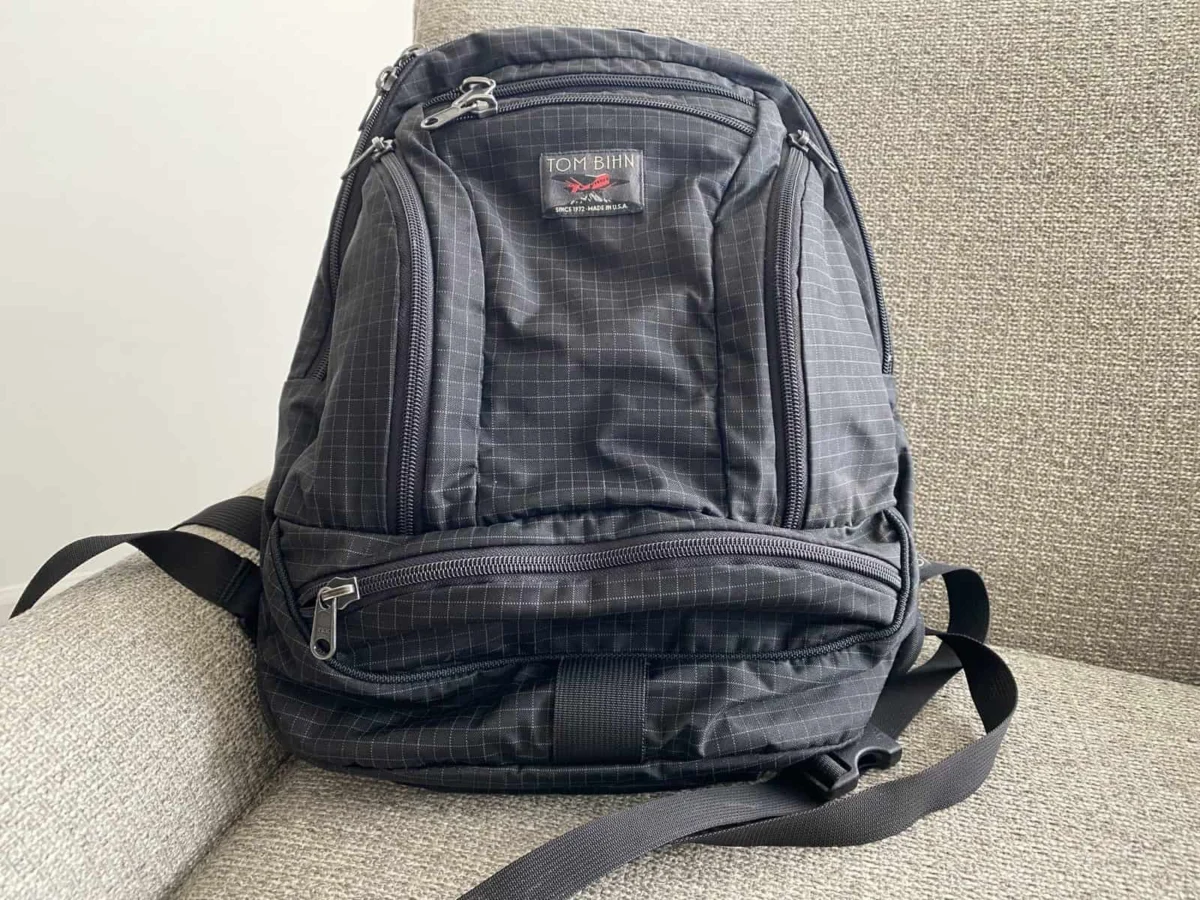
In an era where digital connectivity often facilitates the return of lost property, the case of a stolen backpack recovered in the Park Slope neighborhood of Brooklyn serves as a poignant study of the enduring impact of crime and the complex nature of personal trauma. Recovered more than three years after a residential burglary, the item—a durable Tom Bihn Synapse daybag—was discovered under unusual circumstances, eventually leading to a reconciliation between the victim and a period of life-altering upheaval.
The 2017 Burglary and Concurrent Medical Trauma
The origins of this recovery trace back to August 2017, a month that marked a definitive shift in the life of the victim, Jodi Ettenberg, a former lawyer and travel writer. While Ettenberg was undergoing a medical procedure at a local hospital, the apartment she was occupying as a temporary resident was breached by an unidentified intruder. According to surveillance footage from the residence’s internal security system, the burglary occurred at the exact moment Ettenberg was receiving a spinal tap (lumbar puncture).
The medical procedure, intended to be routine, resulted in a severe complication known as a spontaneous cerebrospinal fluid (CSF) leak, which left Ettenberg with a chronic disability. Simultaneously, the burglar utilized Ettenberg’s own backpack to consolidate stolen items from the apartment, including high-value electronics, jewelry, and cash. In a notable display of selective theft, the perpetrator left behind Ettenberg’s Canadian passport and a small amount of currency, taking the bag and its contents into the Brooklyn night.
Chronology of Recovery: From Rooftop to Inbox
For over three years, the location of the stolen property remained unknown, and the case was effectively dormant. However, in late 2020, a routine maintenance event in Park Slope led to an unexpected discovery. A homeowner residing a few doors down from the original crime scene hired a professional chimney sweep to service her residence. During the inspection, the worker discovered the backpack wedged into the side of a chimney vent on the roof.
The homeowner, identifying the victim’s name from expired credit cards and business cards found within the bag, attempted to facilitate a return. The sequence of events following the discovery highlights the "digital purgatory" often associated with social media platforms. The homeowner’s message, sent via Facebook in December 2020, remained in the "Message Requests" folder—a secondary inbox for messages from non-contacts—until Ettenberg discovered it a month later.

The contents of the bag provided a snapshot of the 2017 incident. While the primary targets of the theft—the laptop and jewelry—were absent, the bag still contained:
- Two pairs of prescription eyeglasses (warped by three years of exposure to New York’s seasonal temperature fluctuations).
- Expired credit cards.
- Personal business cards related to travel industry events.
- Minor personal items, such as hand lotion and over-the-counter analgesics.
- An anomalous blue die, presumably belonging to the perpetrator.
Statistical Context: Property Crime in New York City’s 78th Precinct
The recovery of stolen property years after the fact is a statistically rare occurrence in metropolitan areas. According to NYPD CompStat data for the 78th Precinct, which encompasses Park Slope, burglary rates have seen significant fluctuations over the last decade. In 2017, the year of the initial theft, property crimes were a persistent concern for the precinct, though Park Slope generally maintained a reputation as one of the safer residential corridors in Brooklyn.
Criminological studies suggest that "dumping" stolen bags is a common practice among opportunistic thieves. Once high-value, liquidable assets (such as laptops or jewelry) are removed, the containers—often carrying identifying information or less valuable personal effects—are discarded in locations where they are unlikely to be immediately found, such as alleyways, dumpsters, or, in this rare instance, rooftops. The durability of the specific brand of backpack, manufactured from high-denier ballistic nylon, allowed the item to withstand three years of rain, snow, and UV exposure without total structural failure.
The Psychological Impact of "Triggering" Artifacts
The return of the backpack was not merely a logistical success but a significant psychological event. For the victim, the object served as a "holding environment" for the memories of the night her health and security were simultaneously compromised. Psychologists specializing in trauma note that physical objects can act as powerful triggers for "anniversary reactions" or PTSD-related flashbacks.
The confluence of the burglary and the medical injury created what Ettenberg described as a "liminal weight." The bag represented the "before" and "after" of her transition from a mobile, global traveler to an individual managing a chronic, debilitating condition. The sudden reappearance of the bag forced a confrontation with the "sediment" of past trauma, requiring a process of emotional re-regulation.
Community Intervention and the "Llamafication" of the Recovery
The final chapter of the backpack’s journey involved a significant act of community support. A long-time associate and former legal colleague, identified as Cheryl, took responsibility for retrieving the item from the Park Slope resident. Understanding the emotional volatility associated with the object, Cheryl performed a ritual of restoration.

The bag was professionally cleaned and then filled with "llamas"—a collection of themed gifts including apparel, stationery, and ornaments. This act of "transmuting the bad into something useful and kind" is recognized in social psychology as a form of communal healing. By overwriting the negative associations of the stolen bag with new, positive gestures from a trusted friend, the object was transformed from a relic of a crime into a vessel of support.
Analysis of Implications: The Resilience of Objects and People
This incident underscores several broader themes in contemporary urban life:
- The Durability of Quality Goods: The fact that a textile-based product survived three years on a New York City rooftop speaks to the engineering of modern outdoor gear. This has implications for forensic recovery and environmental sustainability.
- The Limitations of Digital Communication: The delay in the bag’s return due to Facebook’s filtering algorithms highlights a flaw in how "lost and found" interactions occur in the digital age. Important, life-impacting communications can easily be lost in automated spam filters.
- The Intersection of Health and Security: The case provides a rare look at how physical security and medical vulnerability can intersect, creating a compounded trauma that lasts long after the legal case is closed.
Ultimately, Ettenberg chose not to keep the backpack, opting instead to gift it to another friend. This decision represents a final stage of "letting go," ensuring the bag continues its utility without the shadow of its history.
Conclusion and Future Outlook
While the perpetrator of the 2017 burglary was never apprehended, and the most valuable items were never recovered, the return of the Synapse daybag provides a sense of closure that is rarely afforded to victims of property crime. It serves as a reminder of the persistence of the past and the potential for community members to act as catalysts for healing.
As Ms. Ettenberg continues to navigate the complexities of her medical condition, the story of the recovered backpack remains a testament to what she calls being an "outlier of possibilities." In a city of millions, the odds of a stolen bag traveling a few doors down, landing on a roof, and being identified three years later are astronomical. Its return signifies a closing of a chapter, allowing for a renewed focus on the present rather than the unresolved echoes of a Brooklyn night in 2017.
The case remains a notable example of the resilience of the human spirit when faced with the unexpected "waves" of life, and the power of small, decent acts by strangers to rectify, if only partially, the injustices of the past.
