

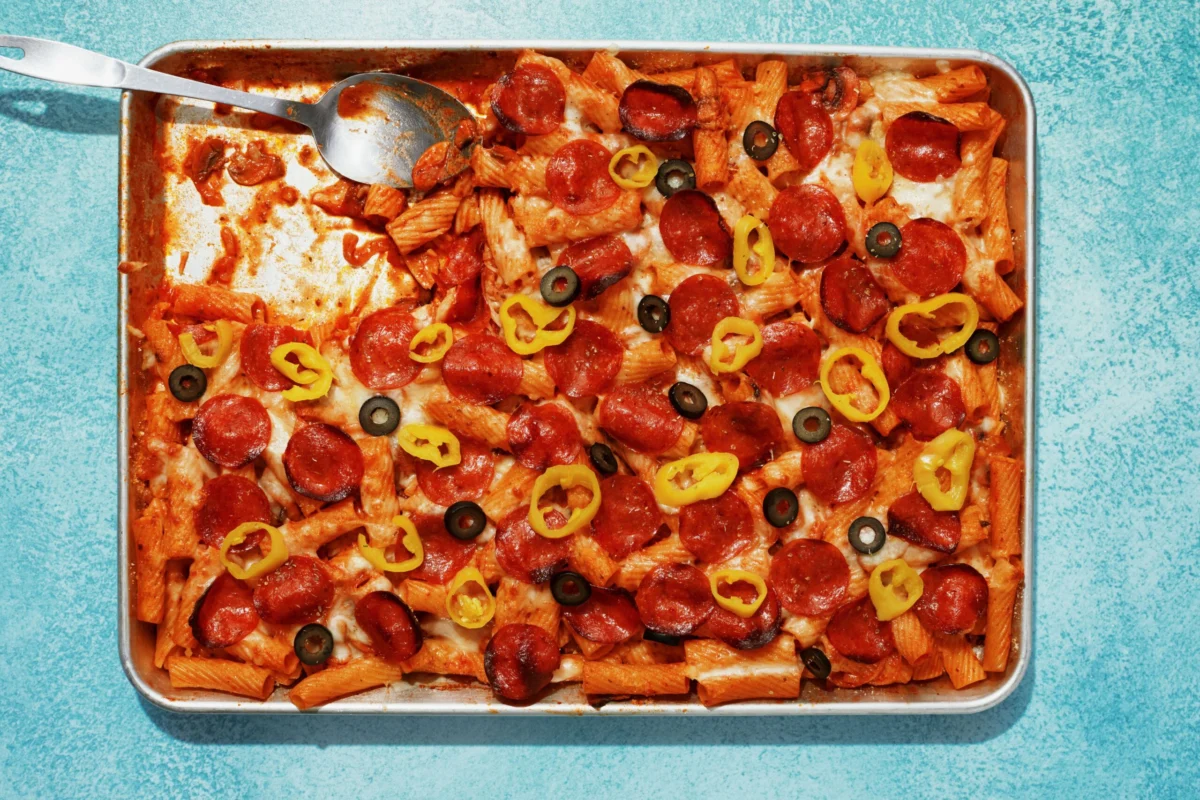
In a significant development for home cooking enthusiasts and the culinary landscape alike, Bon Appétit magazine has recently unveiled a novel sheet-pan pasta recipe that promises to deliver the quintessential flavors of a classic take-out pizza with remarkably reduced effort. This innovative dish, designed to capture the essence of a "good pie with the works"—complete with tangy sauce, gooey cheese, and glistening pepperoni—represents a notable evolution in convenience cuisine, offering a compelling alternative to both traditional baked pasta dishes and the weekend ritual of ordering delivery. The recipe’s strategic design addresses a pervasive modern dilemma: the desire for comforting, flavorful food without the associated labor often required for entertaining or the financial outlay of frequent takeout.
The Genesis of a Culinary Crossover: Bridging Pizza and Pasta Paradigms
The introduction of Bon Appétit’s sheet-pan pizza pasta is not merely the launch of another recipe; it signifies a deeper trend in contemporary food culture, reflecting a synthesis of convenience, flavor, and culinary innovation. For decades, pizza and pasta have stood as twin pillars of comfort food globally, each boasting a rich history and an unparalleled capacity for satisfying diverse palates. Pizza, with its crisp crust, rich toppings, and communal appeal, has transcended its Italian origins to become a universal favorite, while pasta, in its myriad forms and sauces, serves as a versatile foundation for countless hearty meals. The challenge for modern cooks, however, often lies in reconciling the desire for these deeply satisfying flavors with the constraints of time, effort, and cleanup.
Sheet-pan cooking itself has experienced an exponential surge in popularity over the past five to ten years, driven largely by its promise of minimal fuss and maximum flavor. This methodology, which involves cooking an entire meal on a single baking sheet, significantly reduces preparation and cleanup time, making it an attractive option for busy individuals and families. Culinary historians note that while oven baking has always been a staple, the explicit marketing and popularization of "sheet-pan meals" as a distinct category began gaining traction in the mid-2010s, with food media outlets playing a crucial role in disseminating these streamlined techniques. The convenience factor became particularly pronounced during and after the global pandemic, as more people cooked at home and sought efficient ways to prepare nutritious and enjoyable meals.
This sheet-pan pasta recipe, therefore, emerges as a logical progression within this culinary timeline, leveraging the efficiency of sheet-pan cooking to reimagine two classic comfort foods. It speaks directly to the desire for "crossover cuisine"—dishes that ingeniously blend elements from different culinary traditions or formats to create something new yet familiar. The concept of infusing pasta with pizza’s distinct flavor profile is not entirely novel, with "pizza pasta bakes" existing in various forms. However, the sheet-pan approach offers a unique twist, promising enhanced crispness and a more concentrated flavor base, distinguishing it from traditional stove-top or casserole-style preparations.
Deconstructing the Dish: An Innovative Approach to Flavor and Efficiency
At the core of this Bon Appétit creation lies an ingenious methodology that diverges significantly from conventional baked pasta recipes. Typically, baked pasta sauces are meticulously prepared in a pot on the stovetop, often involving sautéing aromatics, simmering tomatoes, and reducing liquids. This new sheet-pan technique bypasses these initial steps, opting instead to build a concentrated, intensely flavored base directly on the sheet pan.
The process begins with a robust foundation of finely grated garlic, double-concentrated tomato paste, and extra-virgin olive oil, generously seasoned with dried oregano, kosher salt, black pepper, and optional crushed red pepper flakes. These ingredients are tossed directly on the sheet pan with thinly sliced red or yellow onions and button mushrooms. This mixture is then roasted, allowing the vegetables to caramelize and the tomato paste to deepen in flavor, transforming into a sticky, aromatic base. This initial roasting step is critical, as it concentrates the flavors in a way that simmering on the stovetop might not achieve as efficiently, laying down a rich umami foundation reminiscent of a slow-cooked pizza sauce.
Following this, the roasted vegetable mix is scraped into a pasta pot, where it is combined with al dente rigatoni or another short pasta, along with some of the starchy pasta-cooking water. This pasta water serves a crucial role, emulsifying with the concentrated tomato base to create a luscious, cohesive sauce that clings perfectly to the pasta. The entire mixture is then returned to the sheet pan, spread evenly, and blanketed with a generous layer of low-moisture mozzarella and finely grated Parmesan. A final trip to the oven allows the cheese to melt and bubble, forming a golden, inviting crust, while the pepperoni slices crisp up, forming their characteristic "cups" that hold tiny pools of savory fat.
The final flourish comes with the optional addition of beloved toppings after baking, such as spicy banana peppers, sliced black or green olives, and even a few oil-packed anchovy fillets. These additions not only enhance the visual appeal but also allow for personalization, echoing the customizable nature of a traditional pizza. The result is a dish that, in each bite, delivers a remarkably authentic "pizza slice" experience, balancing tangy, savory, and umami notes with a satisfying textural contrast.
The Data Behind the Demand: Trends in Home Cooking and Consumer Preferences
The timing and nature of this recipe are particularly pertinent given current consumer trends and economic realities. Data from various market research firms consistently indicate a sustained interest in home cooking, a trend significantly amplified by the events of 2020. According to reports from the NPD Group and other food industry analysts, while restaurant dining has rebounded, the share of meals prepared at home remains elevated compared to pre-pandemic levels. Consumers are actively seeking recipes that balance flavor with efficiency, often citing "time-saving" and "minimal cleanup" as top priorities.
Furthermore, the economic implications of home cooking versus takeout are substantial. A 2023 study by LendingTree found that cooking at home can be significantly more cost-effective, with the average home-cooked meal costing considerably less than a restaurant or takeout equivalent. For a family meal, this difference can quickly accumulate, making innovative and easy home-cooking solutions like the sheet-pan pasta particularly attractive in an inflationary environment. This recipe, utilizing relatively inexpensive and widely available ingredients—garlic, tomato paste, onions, mushrooms, pasta, and cheese—offers a budget-friendly way to enjoy a gourmet-like experience.
The enduring popularity of pizza and pasta also provides a robust backdrop for this recipe’s potential success. Global market analyses routinely place both categories among the most consumed foods worldwide. The global pizza market, for instance, was valued at over $150 billion in 2022 and is projected to continue growing, underscoring its immense appeal. Similarly, pasta consumption remains high across continents. By combining the beloved attributes of these two staples in an accessible format, Bon Appétit taps into a vast and eager audience.
Beyond convenience and cost, there is a strong psychological component to comfort food. In an increasingly fast-paced and often stressful world, dishes that evoke nostalgia, warmth, and satisfaction hold a special place. Pizza and pasta inherently fulfill this role. This sheet-pan pasta, by delivering those familiar, comforting flavors in a novel, approachable way, caters to a deeper human need for culinary solace and enjoyment, particularly on a Saturday night when the craving for effortless deliciousness is paramount.
Expert Perspectives and Consumer Reception
Culinary experts and food industry observers have lauded such innovations for their ability to democratize sophisticated flavors and cooking techniques. "Recipes like Bon Appétit’s sheet-pan pasta are brilliant examples of culinary engineering," remarks Dr. Anya Sharma, a food sociologist specializing in consumer trends. "They recognize the modern cook’s constraints—time, energy, kitchen space—and offer creative solutions that don’t compromise on taste. It’s about making gourmet accessible." She adds that the fusion aspect, blending pizza and pasta, appeals to a generation of diners accustomed to diverse culinary influences and open to experimentation within familiar frameworks.
Food critics, while maintaining their discerning standards, often point to the ingenuity of methods that enhance texture and flavor without added complexity. The sheet-pan method for building a concentrated sauce is particularly praised for its ability to develop deep, roasted flavors that might otherwise require longer cooking times or more complex techniques. "The initial roast of the tomato paste and vegetables on the sheet pan is a game-changer," observes Chef Marc Dubois, a seasoned restaurateur and culinary consultant. "It’s a smart way to achieve a Maillard reaction and intense flavor development that forms the backbone of a truly satisfying dish, far exceeding what one might expect from such a straightforward recipe."
While direct public statements on this specific recipe are still emerging, the broader trend indicates strong consumer approval for similar "mash-up" or convenience-focused recipes. Online food communities and social media platforms are rife with positive feedback for sheet-pan meals, praising their practicality, versatility, and delicious outcomes. Home cooks widely report a sense of accomplishment when they can produce a flavorful, restaurant-quality meal with minimal effort and cleanup, often sharing photos and variations of such dishes, fueling their viral spread. This particular recipe is poised to resonate strongly with those seeking a satisfying alternative to their usual takeout routine, especially when entertaining, as it elevates the home-cooked meal to a celebratory level without the associated stress.
Broader Implications for the Culinary Landscape
The emergence and popularization of dishes like Bon Appétit’s sheet-pan pizza pasta carry significant implications for the future of cooking, recipe development, and the food industry at large. Firstly, it underscores a continued shift towards "convenience gourmet," where high-quality ingredients and sophisticated flavors are delivered through simplified processes. This trend challenges the traditional notion that elaborate meals require extensive labor, suggesting that culinary excellence can be achieved through clever technique and thoughtful ingredient selection.
Secondly, such recipes contribute to the blurring lines between restaurant-quality dining and home-cooked meals. As home cooks gain access to more innovative techniques and inspiring recipes, the perceived gap in quality between what can be prepared at home and what is served in casual dining establishments narrows. This could have a subtle but sustained impact on the takeout and casual restaurant industries, as consumers become more confident and adept at replicating their favorite flavors at home, often at a fraction of the cost.
Thirdly, the focus on adaptable, customizable recipes like this one empowers individuals to tailor dishes to their preferences, dietary needs, and available ingredients. The optional toppings—banana peppers, olives, anchovies—highlight this versatility, encouraging cooks to experiment and make the dish their own. This trend towards personalization is a key driver in modern food consumption, reflecting a desire for agency and creativity in the kitchen.
Finally, the role of influential food media outlets like Bon Appétit remains paramount in shaping culinary trends. By spotlighting innovative and accessible recipes, they not only educate and inspire home cooks but also set benchmarks for flavor, efficiency, and creativity within the broader food industry. The ripple effect of such publications can be seen in subsequent recipe development across various platforms, as others seek to emulate and expand upon successful formats.
In conclusion, Bon Appétit’s sheet-pan pasta is more than just a recipe; it is a culinary statement. It embodies a contemporary ethos that values efficiency without sacrificing flavor, offering a smart, delicious solution for the modern craving for comfort food. By skillfully merging the beloved flavors of pizza with the streamlined process of sheet-pan cooking, this dish stands as a testament to ongoing innovation in the kitchen, poised to become a staple for countless home cooks seeking an effortlessly satisfying meal.
