

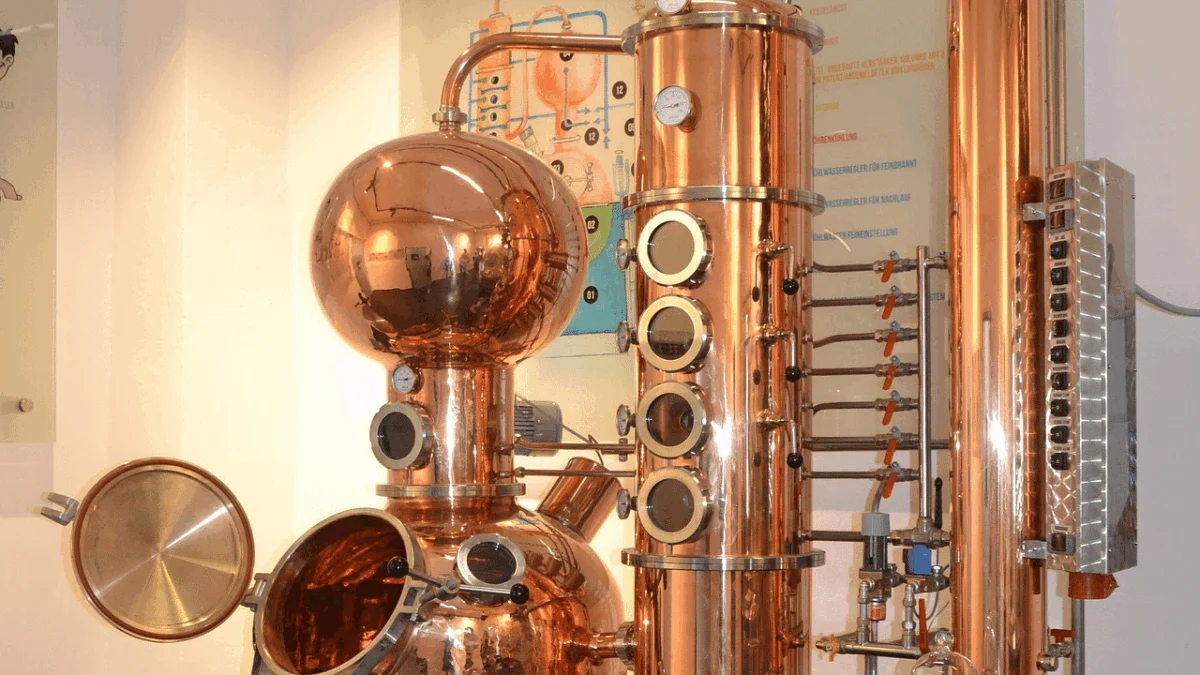
The global gin market, valued at approximately $15.3 billion in 2023 and projected to grow significantly over the next decade, owes its diversity not merely to the selection of botanicals but to a rigorous sequence of technical decisions made by distillers during the production cycle. While the consumer often focuses on the label’s list of herbs, fruits, and spices, the final sensory profile of a gin is dictated by the physics of ethanol extraction, the timing of distillation cuts, and the specific method of botanical integration. To understand the complexity of this spirit, one must look past the ingredients and into the operational mechanics of the distillery, where the same raw materials can produce vastly different results based on the distiller’s methodology.
The Foundational Element: Neutral Grain Spirit and the Baseline of Distillation
The production of gin typically begins with a Neutral Grain Spirit (NGS), a highly rectified alcohol usually distilled to at least 96% alcohol by volume (ABV). This substrate acts as a blank canvas, stripped of the heavy congeners and esters found in whiskies or brandies. While some artisanal distillers choose to produce their own base spirit from scratch—using barley, wheat, or even grapes—the industry standard relies on NGS to ensure that the botanical profile remains the primary focus.
The use of NGS is not merely a matter of convenience; it is a structural necessity for the London Dry style, which remains the most regulated and prestigious category of gin. By starting with a clean, high-proof ethanol, the distiller can precisely control how the volatile oils of the botanicals interact with the spirit. This phase represents the "zero point" of gin production, where the chemistry of flavor extraction begins.
Botanical Ratios and the Mathematical Precision of Flavor Balancing
The first critical decision involves the ratio of botanicals to spirit. Industry benchmarks suggest a concentration of 20 to 35 grams of botanicals per liter of spirit, though this varies based on the desired intensity. Central to this calculation is juniper, the defining characteristic of the spirit. Under both European Union and United States regulations, gin must possess a "predominant flavor of juniper." Consequently, most traditional recipes allocate approximately 60% of the total botanical weight to juniper berries.
Beyond juniper, the "holy trinity" of gin botanicals usually includes coriander seeds and angelica root. Distillers often apply a mathematical hierarchy to their recipes: if juniper is the baseline, coriander may be used at half that weight, while "fixative" botanicals like angelica or orris root—which help bind the more volatile citrus notes—are used at one-tenth of the juniper’s weight. Highly potent ingredients, such as cassia bark, cinnamon, or dried citrus peels, may be reduced to as little as one-hundredth of the juniper volume. This precision ensures that no single ingredient overwhelms the delicate balance required for a cohesive spirit.
Extraction Methodologies: Maceration versus Vapor Infusion
Once the ratios are established, the distiller must choose the physical method of flavor extraction. This decision fundamentally alters the "weight" and mouthfeel of the gin.
The most traditional method is maceration, or the "steep and boil" technique. In this process, botanicals are soaked in the NGS within the pot still. This can occur at room temperature for extended periods—such as the 24-hour maceration period utilized by Beefeater—or the botanicals can be added immediately before the heat is applied. Maceration tends to produce a "heavier" gin with a robust mid-palate, as the boiling ethanol extracts more of the heavier, earthier compounds from the roots and barks.
Conversely, vapor infusion offers a more delicate alternative. Popularized by brands like Bombay Sapphire, this method involves placing the botanicals in specialized baskets suspended in the neck of the still. As the ethanol vapor rises, it passes through the botanicals, gently volatilizing the essential oils without subjecting the plant matter to the direct heat of the boiling liquid. This typically results in a brighter, more floral, and top-note-heavy gin. The placement of the basket—high in the neck for cooler vapor or lower for hotter vapor—further allows the distiller to fine-tune the extraction of specific aromatic compounds.
The Chronology of the Distillation Run: Managing the "Cuts"
Distillation is a temporal art. As the still is heated, different compounds reach their boiling points at different times, creating a chronological sequence of flavors known as "fractions." The distiller’s primary responsibility during the run is making the "cuts"—deciding which parts of the distillate to keep for the final product and which to discard or recycle.
- The Foreshots and Heads: These are the first liquids to emerge from the still. They are high in ABV but often contain undesirable, volatile compounds like methanol or harsh, "nail polish remover" notes. In gin production, the heads often carry the most intense citrus aromas, but if too many are kept, the gin becomes aggressive.
- The Heart: This is the "sweet spot" of the distillation. The heart contains the cleanest ethanol and the most balanced botanical flavors. The distiller aims to capture as much of the heart as possible while maintaining the desired flavor profile.
- The Tails: As the run nears its end, the ABV drops and heavier, oilier compounds begin to emerge. These "tails" can provide necessary body and earthy depth, but if the cut is made too late, the gin may develop "feinty" or "cooked vegetable" notes.
The timing of these cuts is often managed by sensory analysis—smelling and tasting the distillate as it leaves the condenser—rather than relying solely on temperature or ABV readings. This human element is what distinguishes craft distillation from industrial-scale ethanol production.
Single-Shot versus Multi-Shot Distillation: Economic and Structural Impacts
The final technical hurdle in the distillation process is the choice between single-shot and multi-shot methods. In a single-shot process, the distiller uses the exact amount of botanicals required for the volume of spirit being produced. Once the distillation is complete, only water is added to bring the spirit down to bottling strength (typically between 40% and 47% ABV).
In the multi-shot method, a much higher concentration of botanicals is used relative to the spirit in the still, creating a "gin concentrate." After distillation, this concentrate is diluted not only with water but also with additional neutral grain spirit before bottling. While purists often argue that single-shot distillation produces a more integrated flavor, the multi-shot method is an industry standard for many high-volume brands. It allows for greater production efficiency and a smaller carbon footprint by reducing the number of still runs required to produce large quantities of gin. According to industry analysis, there is no quantifiable difference in chemical quality between the two, provided the dilution is handled with precision.
The Regulatory Framework and Global Standards
The decisions made in the distillery are often hemmed in by strict legal definitions that vary by jurisdiction. In the European Union, under Regulation (EU) 2019/787, "London Gin" (or London Dry) must be produced using traditional stills, all flavors must be imparted through distillation in the presence of natural botanicals, and no sweetening beyond 0.1 grams of sugar per liter is permitted. Furthermore, no colorants or flavorings can be added after distillation.
These regulations serve as a quality benchmark, ensuring that the complexity of the gin is a result of the distiller’s skill during the "hot" side of the process rather than "cold" compounding (adding extracts to alcohol after the fact). For the global market, these standards provide a level of transparency that has helped gin maintain its premium status among spirits.
Broader Implications: The Evolution of the Modern Palate
The technical evolution of gin distillation has had a direct impact on the "Gin Renaissance" of the 21st century. The ability to manipulate vapor infusion and precise cuts has allowed for the rise of "New Western" or "Contemporary" gins, which de-emphasize juniper in favor of local fruit, floral, or spice notes. This flexibility has allowed distillers in regions like Japan, Australia, and the United States to create spirits that reflect their local terroir while remaining within the technical category of gin.
Furthermore, the industry’s focus on technical precision has led to increased experimentation with "fractional distillation" and vacuum distillation. Vacuum distillation, conducted at lower pressures, allows ethanol to boil at much lower temperatures, preventing the "cooked" flavor that can occur with delicate botanicals like fresh cucumber or mint.
In conclusion, the flavor of a gin is the culmination of a sophisticated series of engineering and sensory choices. From the mathematical weighting of juniper to the timing of the tails cut, each step represents a pivot point that can alter the spirit’s trajectory. As the market continues to expand, the mastery of these technical variables remains the primary differentiator between standard commercial offerings and the world’s most celebrated spirits. For the discerning consumer and the professional distiller alike, the true "magic" of gin lies not in the secret recipe, but in the rigorous application of the distillation craft.
