

In the landscape of contemporary mixology, the Purl is frequently characterized as a straightforward combination of British bitter ale and a shot of gin. According to modern bar manuals and historical retrospectives, this pairing represents a vestige of 18th and 19th-century British tavern culture, typically utilizing cellar-temperature ale and Old Tom gin—a slightly sweetened style of the spirit that predates the modern London Dry. However, a deep dive into the archival record reveals that the Purl’s lineage is far more intricate and medically oriented than its current iteration suggests. Far from being a simple two-ingredient "boilermaker" variant, the Purl originated as a prophylactic against the bubonic plague, evolving through centuries of social change, culinary complexity, and shifting distillation practices to become the drink known today.
The 17th-Century Medicinal Foundation: Wormwood and the Plague
The earliest iterations of the Purl were not designed for recreational enjoyment but for survival. During the 17th century, particularly in London, the term "Purl" referred to a mixture of ale or wine infused with wormwood (Artemisia absinthium). Wormwood, a bitter herb known for its antiseptic and digestive properties, was a staple of the early modern pharmacopeia. In an era before germ theory, the pungent aroma and bitter taste of wormwood were believed to ward off the "miasma" or foul air thought to carry the plague.
Historical evidence from 1665, a year synonymous with the Great Plague of London, highlights the drink’s role in public health. The manual Directions for the Prevention and Cure of the Plague Fitted for the Poorer Sort explicitly recommended that citizens consume "a draught or two of Purle… especially in the morning." The targeting of this advice toward the "poorer sort" indicates that the Purl was an accessible, low-cost remedy. At this stage, the drink was likely devoid of distilled spirits, relying instead on the fortifying properties of fermented malt and the perceived medicinal power of the bitter herb.
By the late 1600s, the Purl’s reputation as a health tonic was firmly established. In the 1690 publication An English Herbal, the benefits of wormwood-infused Purl were further extolled, cementing its place in the daily routine of the English working class. This medicinal association would eventually transition into a social one, as the habit of "morning constitutional" drinking took root in London’s expanding network of alehouses.
The Georgian Era: From Medicine to Vice
As England moved into the 18th century, the Purl began to shed its strictly medicinal skin. The "Gin Craze" of the early 1700s fundamentally altered British drinking habits, and it was during this period that spirits began to find their way into the traditional wormwood-ale mixture. The Purl-shop became a fixture of the London landscape, catering to laborers and tradesmen who sought a potent start to their workday.

However, this transition from medicine to recreation was met with significant social backlash. By 1733, the Grub Street Journal and other periodicals of the time began to characterize Purl consumption as a vice rather than a virtue. Critics often grouped Purl drinking with smoking and excessive gin consumption, viewing it as a symptom of moral and physical decay. A character attack published in September 1733 illustrates this shift, portraying the habitual Purl drinker as a figure of derision.
Despite the stigma, the drink continued to diversify. The 1684 text Aphorisms upon the New Way of Improving Cyder suggests that the cider industry attempted to capture a share of the market by promoting "purl cider" as a viable alternative to the ale-based original. This indicates that by the late 17th and early 18th centuries, the term "Purl" was becoming a broader category of bittered, fortified beverages rather than a single, static recipe.

The Victorian Flip: Complexity in a Tankard
The 19th century marked the apex of the Purl’s complexity. As the British middle class grew and the "Golden Age" of the cocktail began to dawn, the Purl evolved into a sophisticated "flip"—a category of drinks involving ale, spirits, sugar, and often eggs, served warm.
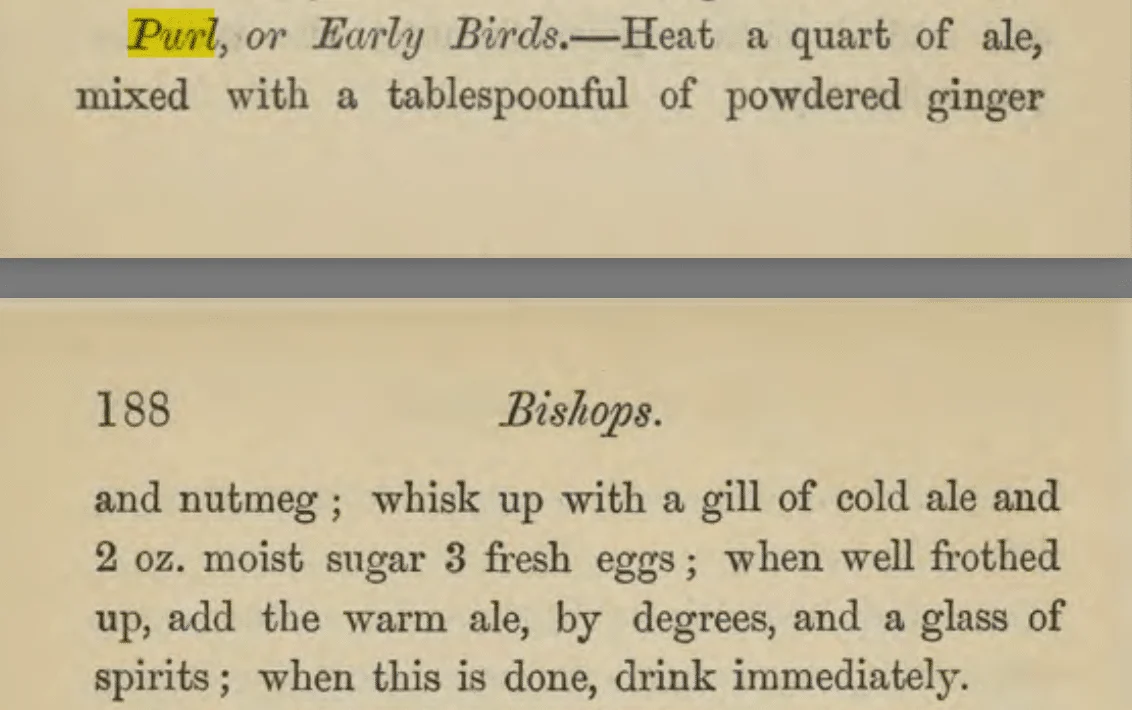
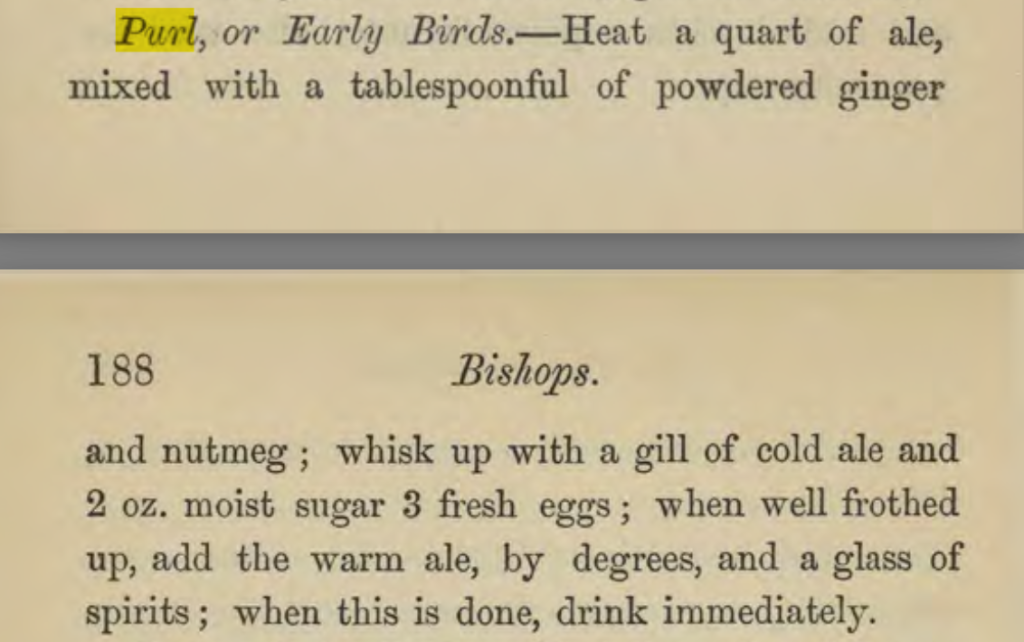
William Terrington’s 1869 volume, Cooling Cups and Dainty Drinks, widely regarded as the first British cocktail book, provides a window into this era. Terrington’s recipes for the Purl bear little resemblance to the modern gin-and-ale combination. His instructions often called for warmed beer mixed with multiple eggs and sugar, creating a rich, custard-like consistency. Notably, gin was not the mandatory spirit of choice; depending on the patron’s preference or the bar’s inventory, a Victorian Purl might be fortified with brandy, whisky, or rum.

Terrington also documented a related beverage known as the "Ale Cup." While the Purl remained a broad term for bittered and fortified ales, the Ale Cup specifically called for gin and ale, signaling the beginning of the specialization that would eventually define the Purl in the 20th century. During this period, the "cellar temperature" tradition was established, as publicans sought to balance the warmth of the added spirits and spices with the natural coolness of ale stored in subterranean casks.
The 20th-Century Standardization: The Emergence of Gin
The transition into the 20th century saw a dramatic simplification of the Purl. The labor-intensive process of tempering eggs and warming ale to specific temperatures began to fade from common practice, likely due to the acceleration of urban life and the industrialization of the bar trade. The wormwood that had defined the 17th-century Purl also largely disappeared, replaced by commercial cocktail bitters which were easier to store and standardize.

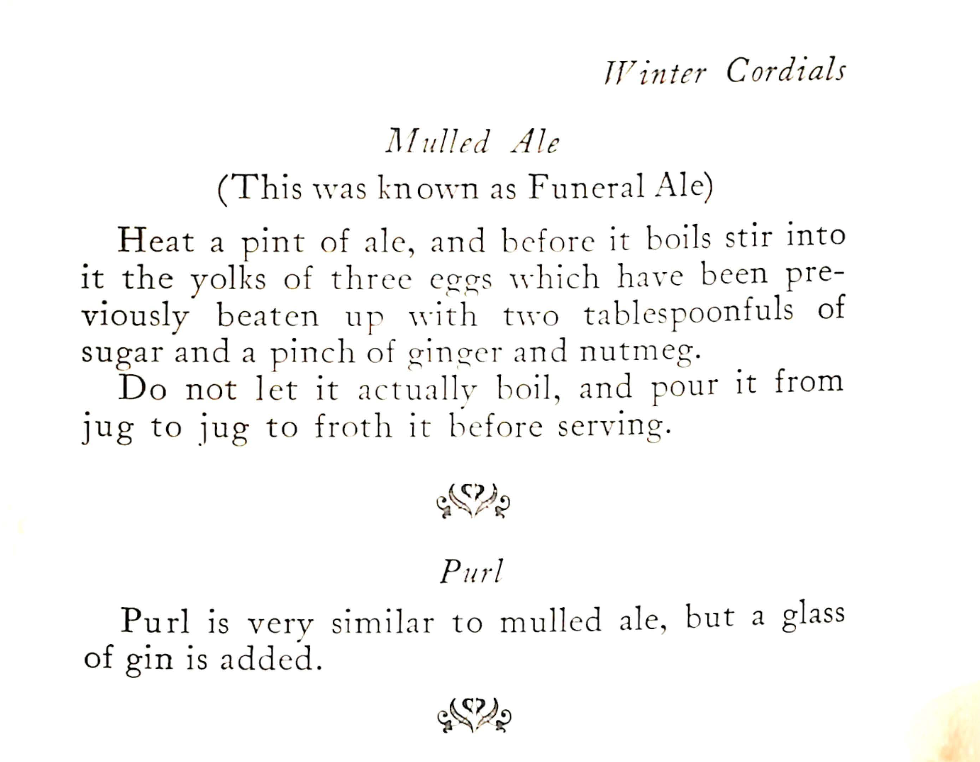
By 1925, publications such as Summer Drinks and Winter Cordials began to reflect a more streamlined recipe. While the warming of the ale remained a common feature for winter consumption, the egg-based "flip" elements were increasingly omitted. The spirit of choice also began to narrow. By the mid-1930s, as seen in The Art of Mixing Drinks (1935), gin had become the canonical spirit for the Purl.
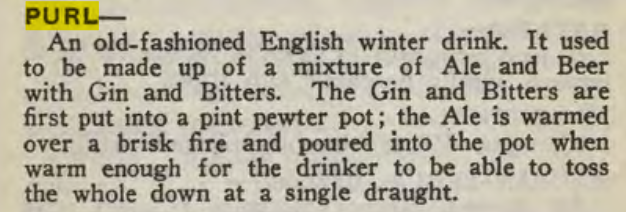
The final stage of this evolution is captured in the 1966 edition of The Barman’s Bible (published by Cocktail and Wine Digest). In this mid-century period, the Purl was firmly defined as a simple mixture of gin, ale, and bitters. The complexity of the 1800s had been stripped away, leaving behind a drink that was efficient to produce and consistent in flavor—a far cry from the plague-fighting herbal infusions of the 1600s.

Technical Specifications: Old Tom and British Bitter
To understand the Purl in its "canonical" 19th-century form, one must examine the specific ingredients that defined the era. The gin used was almost exclusively Old Tom. This style of gin was more botanical-forward and significantly sweeter than modern London Dry gin, which emerged later with the invention of the column still. Old Tom acted as a bridge between the heavy, malty Dutch Genever and the crisp, juniper-heavy spirits of today. Its sweetness was essential for balancing the inherent bitterness of the ale and the added wormwood or bitters.
The ale component was typically a British Bitter or a Mild Ale. These beers were characterized by their low carbonation and malt-forward profiles, which complemented the botanical notes of the gin. Served at cellar temperature (approximately 10–13°C or 50–55°F), the ale provided a sturdy base that did not overwhelm the other ingredients. In the Victorian era, the addition of ginger, nutmeg, or roasted lemon slices was also common, adding layers of warmth and aroma to the drink.

Chronology of the Purl’s Evolution
The history of the Purl can be divided into four distinct phases:
- The Medicinal Phase (1600s): Purl is a "poor man’s" remedy for the plague, consisting of ale or wine infused with bitter wormwood. It is consumed primarily in the morning for health benefits.
- The Transitional Phase (1700s): The drink moves from the apothecary to the alehouse. Spirits (specifically gin) are added as the "Gin Craze" takes hold of London. It gains a reputation as a vice of the working class.
- The Culinary Phase (1800s): The Purl becomes a complex "flip." It is served warm with eggs, sugar, spices, and various spirits (gin, brandy, or whisky). It is documented in the first formal British cocktail books.
- The Modern Phase (1900s–Present): The recipe is simplified to its current form: gin and ale with a dash of bitters. The eggs, wormwood, and heating process are largely abandoned in favor of speed and simplicity.
Broader Impact and Implications for Modern Mixology
The story of the Purl is more than a footnote in drink history; it is a case study in how social, economic, and medical shifts dictate culinary evolution. The transition of the Purl from a plague remedy to a recreational cocktail mirrors the broader history of spirits like gin and absinthe, which also began as medicinal tonics before becoming social staples.
For the modern craft cocktail movement, the Purl offers a rich template for experimentation. Contemporary bartenders have begun to look back at the Victorian "flip" style, reintroducing elements like whole eggs and house-made wormwood tinctures to bring depth back to the drink. Furthermore, the Purl’s reliance on specific beer styles has encouraged a closer collaboration between the brewing and distilling industries.
Ultimately, the Purl serves as a reminder that the "simple" drinks found in modern bar manuals often possess a hidden depth. What is now a quick shot of gin in a pint of bitter was once a vital tool for survival in a plague-stricken city, a symbol of Georgian-era debauchery, and a masterpiece of Victorian culinary technique. Understanding this 400-year journey allows modern drinkers to appreciate the Purl not just as a beverage, but as a liquid chronicle of British history.
